 Pro Armory Editorial Team
Quick Answer
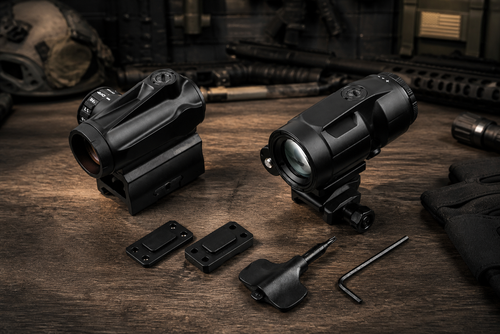
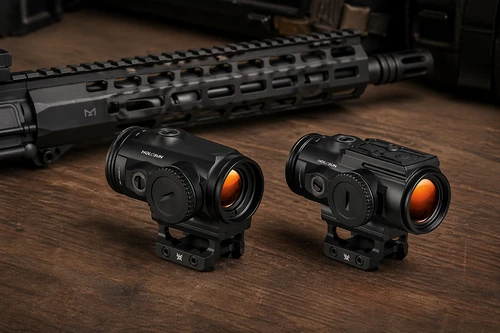
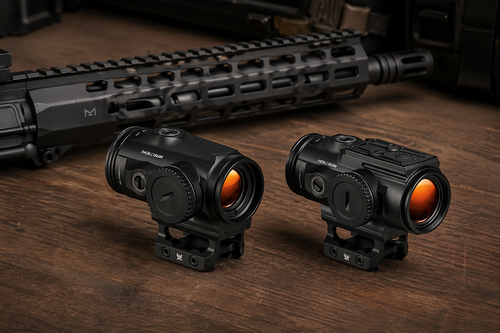
The Vortex Spitfire HD Gen 2 3X and 5X are compact prism optics built for AR owners who want real magnification without LPVO bulk. The 3X handles close-range and mixed-distance work more naturally. The 5X stretches out to 500 yards and accepts a top-mounted red dot, but demands a stricter cheek weld. Both offer clear glass, an etched reticle, and strong value for the price. It typically land in the $300 to $450 range. But it depends on the model and current availability.
Key Takeaways
- The 3X suits close-range and mixed-distance shooting best.
- The 5X is the stronger pick for 100 to 500-yard work.
- Both models use an etched AR-BDC4 reticle that stays visible without battery power.
- Glass clarity is strong for a mid-priced prism optic.
- Eye box and eye relief are the main trade-offs, especially on the 5X.
Many people building an AR face the same problem. A red dot is fast and light but offers zero magnification. An LPVO gives you reach but adds bulk and cost. Prism optics sit right in that middle space. They deliver real magnification in a body close to the size of a full-size red dot.
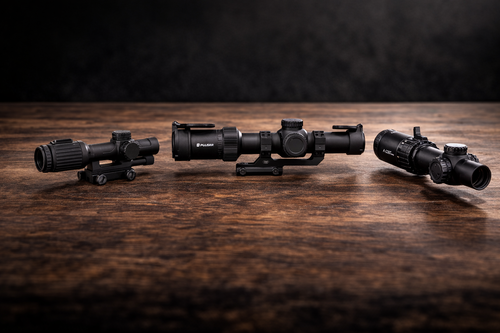
The Vortex Spitfire HD Gen 2 line tackles this with two options: a 3X and a 5X model. Both share similar features but serve different roles. This review breaks down how each one performs and which one makes the most sense for your setup.
What the Vortex Spitfire HD Gen 2 Line Is Built to Do
Prism optics are fixed-power optics that offer magnification in a smaller, lighter body than an LPVO. Compared to a magnifier and red dot setup, a prism optic is generally more compact and can be lighter depending on the specific configuration. That is a real advantage if you want to keep your rifle light and balanced without giving up magnification.
The original Spitfire series launched with a 1X and 3X model. Vortex updated the Gen 2 lineup in 2021 to include a 3X and 5X option. Both new models feature an etched AR-BDC4 reticle, 12 brightness settings, and a compact body. The etched reticle is one of the most practical features on these optics. It stays fully visible even when the battery dies. For people who want a backup option if electronics fail, that matters a lot.
Vortex Spitfire 3X vs 5X at a Glance
| Feature | 3X Model | 5X Model |
|---|---|---|
| Magnification | 3× | 5× |
| Objective Lens | 21 mm | 25 mm |
| Eye Relief | 2.6 in | 2.7 in |
| Field of View | 37.9 ft @ 100 yds | 23.3 ft @ 100 yds |
| Length | 3 in | 3.6 in |
| Weight | 9 oz | 10.3 oz |
| Reticle | AR-BDC4 | AR-BDC4 |
| Illumination Settings | 12 | 12 |
| Included Mounts | AR-height and low | AR-height and low |
| Top Red Dot Mount | No | Yes |
The 3X is the lighter and shorter option at 9 ounces and 3 inches long. That puts it among the smallest 3X prism optics available. The 5X adds a bit more length and weight but stays lighter than alternatives like the 4X ACOG. The biggest practical difference between the two is the 5X's top-mounted mini red dot platform. That feature alone changes how the optic fits into a full shooting setup.
Reticle Design and Core Features
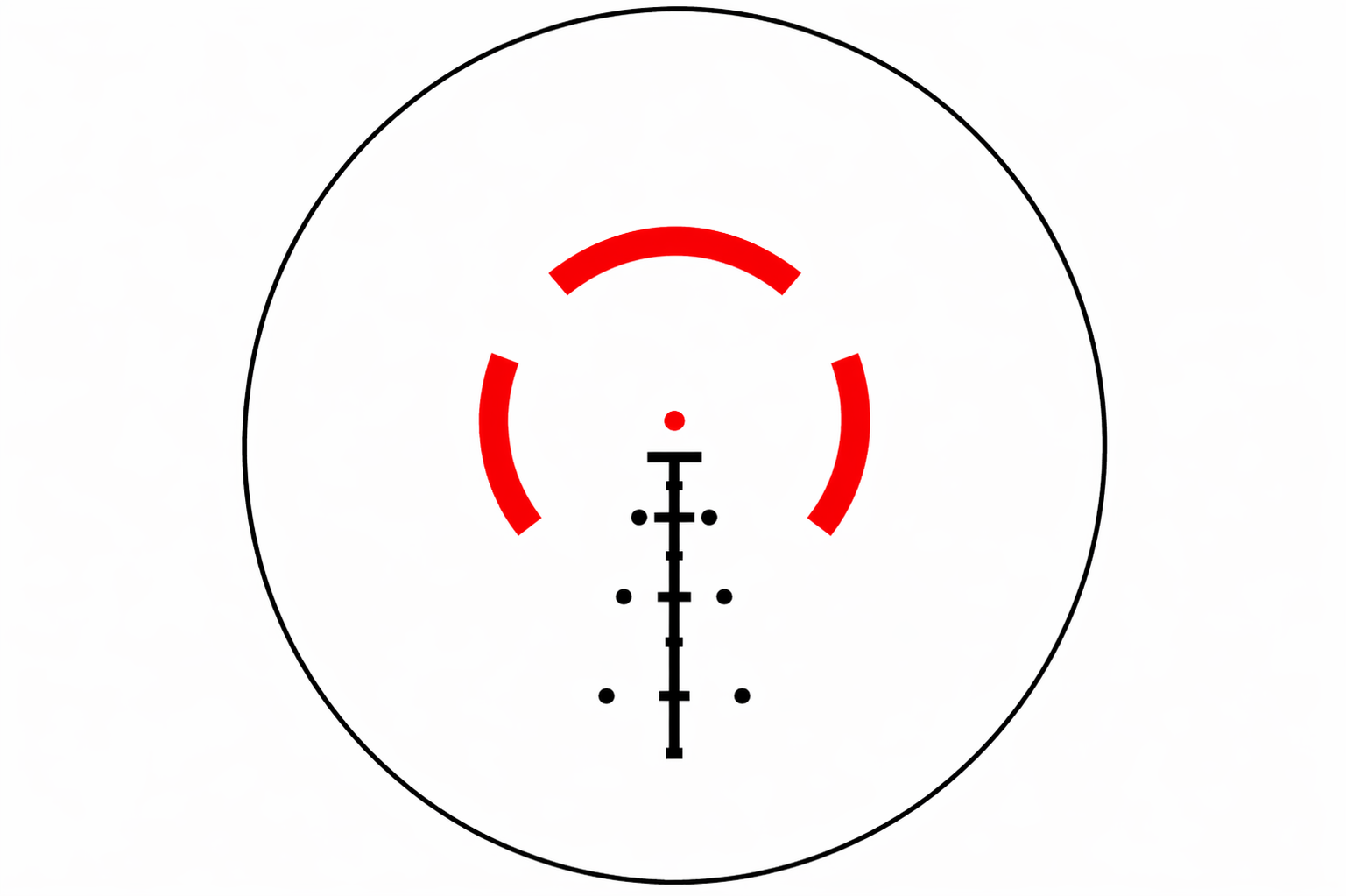
Both models share the AR-BDC4 reticle. It features a 3/4 circle around a 1 MOA center dot with holdover hashmarks below. The reticle is designed around typical 5.56 NATO ballistics from a standard carbine-length barrel, with holdovers that can be adapted based on your specific load and setup. That makes it a natural fit for standard AR-15 setups. If you run a different caliber or barrel length, the reticle can still be useful. You just need to know your ballistics and find the right holds from there.
The etched design keeps the reticle crisp at all times. That is a real benefit for people who deal with astigmatism. Red dots often appear blurry or starburst-shaped for people with astigmatism. An etched prism reticle sidesteps that problem entirely. The 12 brightness settings cover daylight and low-light use, with two settings that work with night vision devices. The controls use large plus and minus buttons that are easy to press and adjust without breaking your sight picture. A CR2032 battery powers the illumination, and a 14-hour auto-shutoff protects battery life.
The 5X has one additional feature worth noting. A mini red dot mounting plate on top accepts Nobelx and Docter footprint dots. That includes the Vortex Venom, Vortex Viper, and Burris FastFire 3. This setup lets you use the prism for mid-range work and flip to a red dot for fast shots up close.
Mounting, Setup, and Zeroing
Both models include an AR-height mount and a low mount. These cover most setups right out of the box. Both are compatible with the Aimpoint T2 mount pattern, which opens up third-party options if the included mounts do not fit your rail. A small flathead tool is included for mounting and turret work.
Both optics use 1 MOA click adjustments. For the 3X, this works fine in practice. For the 5X, 1 MOA adjustments can feel slightly coarse compared to optics designed for more precision-focused use. Most people can still dial in a solid zero, but finer adjustments would be a welcome improvement. Based on feedback from people who have used these optics, starting with a 25-yard bore sight and confirming at 100 yards produces the most efficient zeroing experience.
How the 3X Performs Inside 300 Yards
The 3X handles close-range use more naturally than the 5X. One effective method for close-range shooting with a prism optic is called occluded shooting. You keep both eyes open, focus on the target with your non-dominant eye, and the illuminated reticle appears to sit on the target. It takes some practice for newer users, but the 3X's more forgiving eye box makes this method feel manageable with a bit of repetition.
At 50 yards, the magnification puts small targets clearly in view. Users generally report reliable hits on common steel targets at these distances when using supported positions and proper technique. At 100 yards on IPSC-sized steel, the 3X handles it with ease from standing and supported positions. On a PCC, the magnification adds useful detail at 50 to 100 yards, though bullet drop becomes a bigger factor than the optic past that range. The 3X is the stronger pick for anyone who wants one compact optic that covers close work and targets inside about 300 yards.
How the 5X Performs From 100 to 500 Yards

The 5X starts to show its value once distances stretch past 100 yards. At 200 and 300 yards, the extra magnification makes it easier to see targets, track hits, and use the holdover hashmarks accurately. With standard 5.56 loads, the AR-BDC4 reticle provides useful reference points for engaging targets at distances like 300 yards, though actual results depend on zero, ammunition, and conditions. Users describe consistent hits on 12-inch steel at that distance. Stretch out to 500 yards and the 5X gives you enough detail to identify and engage targets that would be hard to see through a 3X.
At 400 yards, clear target shapes stay visible through the glass. At 500 yards, groups open up compared to closer distances, but that reflects conditions and shooter input more than optic performance. For hunting, steel shooting, or general-purpose mid-range use on an AR-15, the 5X covers those roles well. Up close, it is less natural. The tighter eye box and higher magnification make fast instinctive shots harder. The top-mounted red dot is the cleanest answer for that problem.
Glass Clarity and Daylight Visibility
The glass quality on both models stands out for the price tier. Colors look true and vivid. Edge clarity holds up even in backlit conditions. When you look from a bright outdoor area into a shaded zone, the sight picture stays usable. This level of performance is competitive within its price class and stands out compared to many similarly priced prism optics. Some competing prism optics at similar prices show noticeable color fringing or soft edges. These models do not.
Daylight illumination is good but not as intense as a dedicated red dot. You will want it near the highest setting on bright days to see the red layer clearly. The etched reticle stays fully visible without power. So you always have a usable reference point regardless of battery state. That combination of clear glass and a battery-free reticle is what sets these optics apart from many alternatives in this price range.
Eye Box and Eye Relief
The 3X gives you 2.6 inches of eye relief. That is workable but less forgiving than a red dot. You need a fairly consistent cheek weld to get a full sight picture. Most people adjust to this after a range session or two. The eye box on the 3X gives you a bit of room for minor head position variation, which makes it the more approachable model of the two.
The 5X gives you 2.7 inches of eye relief, but its eye box is noticeably tighter. Any head movement outside your consistent position brings in scope shadow fast. You also need to mount the optic as far rearward on the rail as possible. Even then, a slight forward lean is often needed to get a clean full picture. If you want an optic that snaps into view from any head angle, a red dot is still the easier tool. If you are willing to commit to consistent technique in exchange for clearer magnified glass and a crisp etched reticle, these prisms deliver. The trade-off is real, but many people find it worth the adjustment.
Who These Optics Are For
The 3X fits people who want a compact optic for both close work and moderate distances. AR owners, PCC users, and people who want more detail than a red dot gives will find it a solid step up. It is the easier model to manage day to day and suits a wider range of use cases.
The 5X fits people who spend more time past 100 yards. It also works well for anyone who wants to pair prism magnification with a top-mounted red dot for a practical dual-distance setup. Both models are strong choices for people with astigmatism and anyone who values a battery-independent sight picture. If compact size, clear glass, and a useful reticle are your top priorities, either model fits that need well.
Pros and Cons
Pros:
- Compact and lightweight for the magnification offered
- Strong glass clarity for a mid-tier price point
- Etched reticle works without battery power
- Practical AR-BDC4 reticle for standard AR setups
- Good fit for people with astigmatism
- Included mounts cover most setups out of the box
- 5X accepts a top-mounted micro dot for close-range speed
Cons:
- Eye box is stricter than a red dot
- Eye relief requires a consistent cheek weld
- 5X is less natural up close without a top-mounted dot
- 1 MOA adjustments feel coarse for a 5X optic
- Illumination does not match the intensity of a true red dot
By the Numbers
| Category | 3X | 5X |
|---|---|---|
| Glass Clarity | 5 / 5 | 5 / 5 |
| Reticle Usefulness | 5 / 5 | 5 / 5 |
| Close-Range Usability | 4 / 5 | 3 / 5 |
| Mid-Range Performance | 4 / 5 | 5 / 5 |
| Mounting Flexibility | 5 / 5 | 5 / 5 |
| Value for Money | 4.5 / 5 | 4.5 / 5 |
The 3X wins on speed and forgiveness. The 5X wins on reach and target detail.
Vortex Spitfire 3X vs 5X: Which Should You Buy?
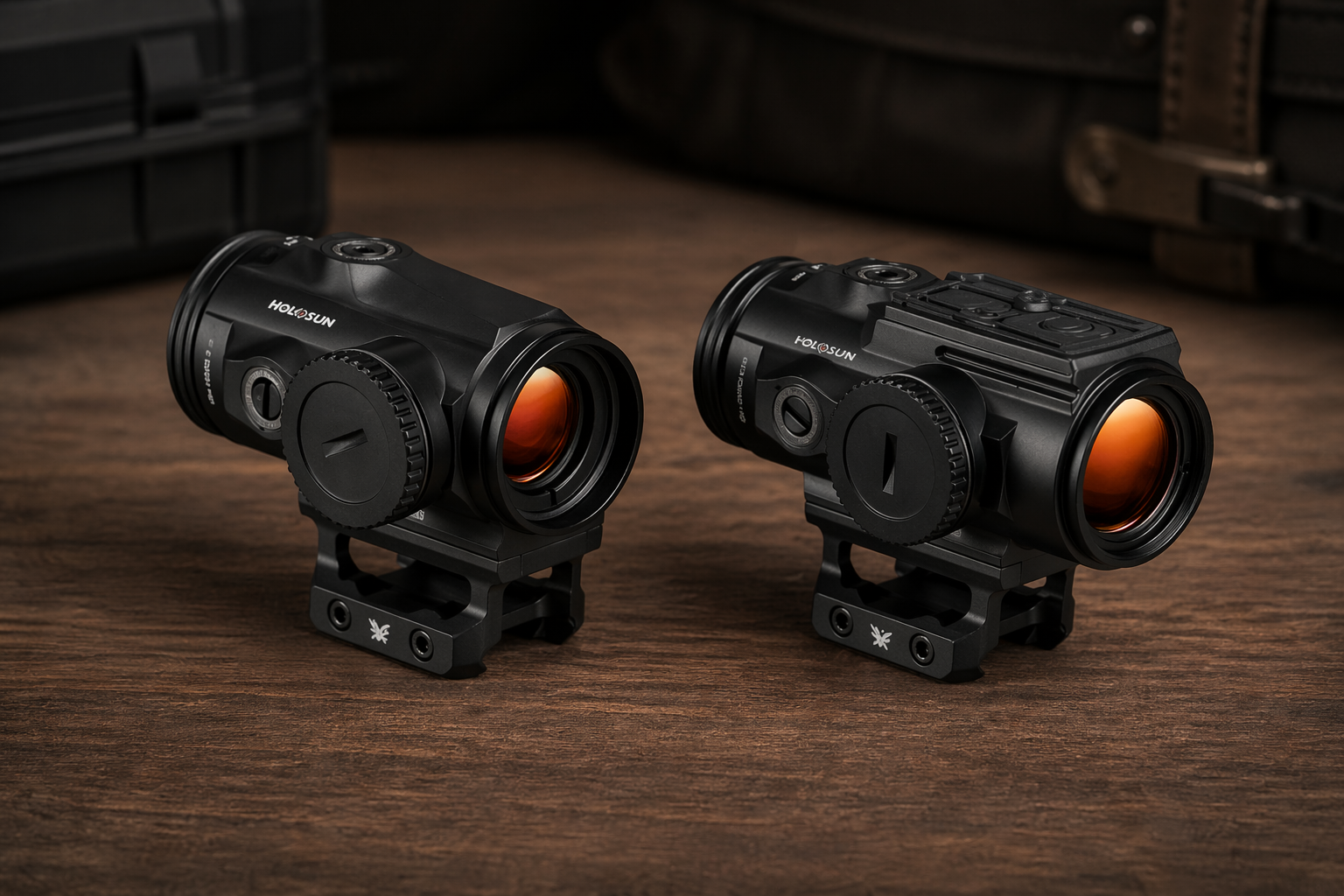
Buy the 3X if you want the easier all-around option. It handles close work, moderate distances, and mixed shooting without demanding much from your technique. It suits most general-purpose AR and PCC builds and is the better fit for people who want one compact optic to cover a wide range of distances.
Buy the 5X if your shooting leans harder into 100 to 500-yard territory. Add a top-mounted red dot and you cover short distances too. Skip both if you want the most forgiving sight picture and true close-range speed. Choose either of these if you want a compact prism with crisp glass, a practical reticle, and no full dependence on battery power.
Final Verdict
Both the 3X and 5X Vortex Spitfire HD Gen 2 models deliver strong performance for optics typically priced between $300 and $450. It can also depends on the model and current market conditions. The glass is genuinely clear. The AR-BDC4 reticle is practical. The size and weight specs are impressive for what you get in return.
The 3X is the more approachable pick for most people. It is easier up close, forgiving at moderate range, and fits a wide variety of rifle setups. The 5X is the better tool for anyone focused on mid-range work, better target identification at distance, and the option to add a red dot on top. Either way, you get a well-built prism optic that earns its price.
The Vortex Spitfire 3x and 5x are excellent prism optics for shooters who want durability and simplicity—but they aren’t a one-size-fits-all solution. If you’re not completely sure this style of optic fits your needs, check out Best Beginner AR-15 Optic to explore other setups.
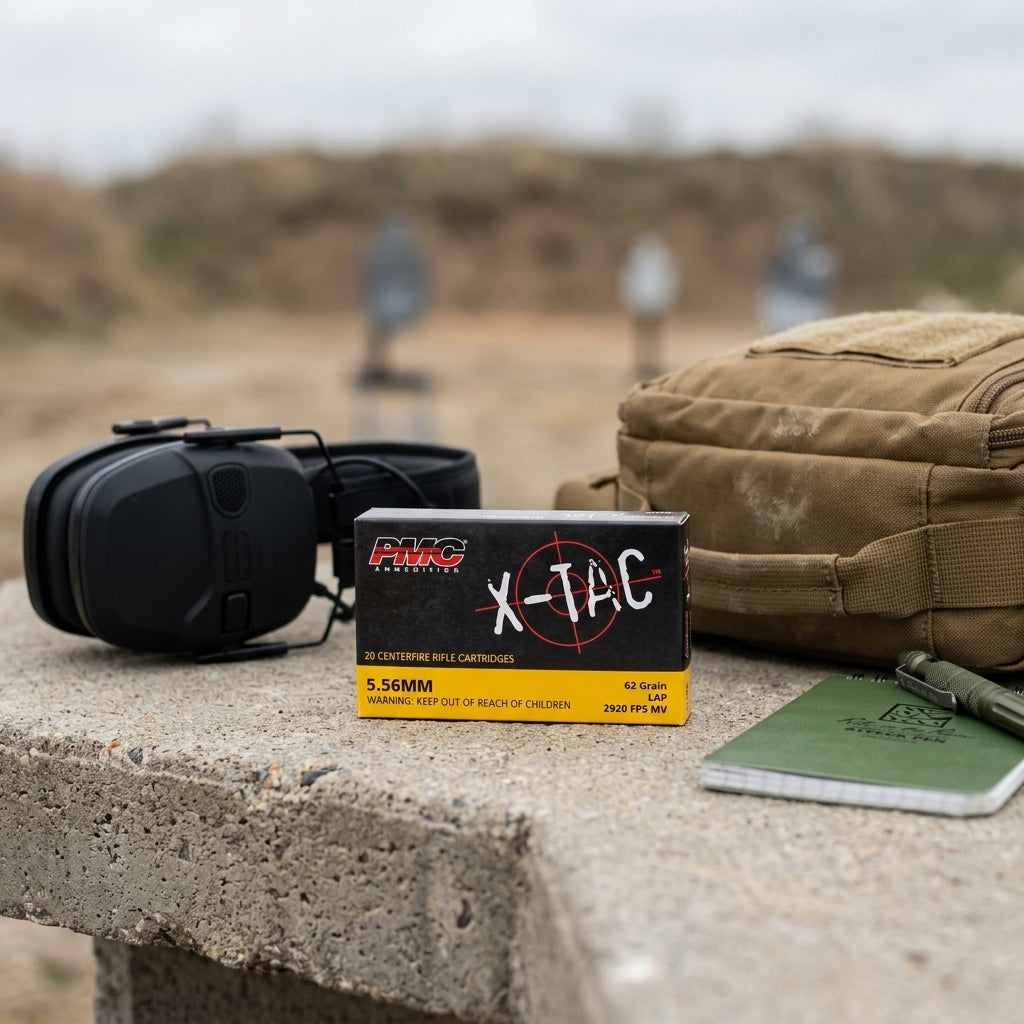
PMC X-tac 5.56 NATO 62 Grain - Box of 20
$20.00
at Pro Armory
Prices accurate at time of writing
Frequently Asked Questions
Is the Vortex Spitfire HD Gen 2 3X or 5X better for an AR-15?
It depends on how you use your rifle. The 3X is the better fit for general-purpose work and targets inside 300 yards. The 5X suits setups focused on 100 to 500-yard shooting. Both work on AR-15 platforms.
Is the Vortex Spitfire HD Gen 2 good for astigmatism?
Yes. The etched glass reticle avoids the starburst or blurry effect that many red dots create for people with astigmatism. This is one of the strongest reasons to choose a prism optic over a red dot.
Can you use the 5X model at close range?
You can, but it takes practice. The higher magnification and tighter eye box make fast close-range shots less natural. A top-mounted mini red dot is the more practical fix for close-range work on the 5X.
Does the etched reticle still work with a dead battery?
Yes. The reticle is etched into the glass. It stays visible in good light without any power. The illumination adds a red layer on top, but the reticle does not depend on it.
How far can you realistically shoot with the 3X and 5X models?
The 3X is best used inside about 300 yards. The 5X extends that to around 500 yards. The BDC reticle reaches to 650 yards on paper, but real-world results depend on conditions and skill level.
Is the eye relief a problem on the Vortex Spitfire HD Gen 2?
It can be. Both models require the optic to be mounted far back on the rail and demand a consistent cheek weld. The 5X is more demanding than the 3X in this area. People coming from red dot use will notice the difference.
Can you mount a red dot on top of the 5X?
Yes. The 5X has a mounting plate on top that accepts Nobelx and Docter footprint dots. This includes the Vortex Venom, Vortex Viper, and Burris FastFire 3. The 3X does not have this feature.
Is the AR-BDC4 reticle only useful with 5.56 ammo?
No. It is designed around a 55-grain 5.56 round from a 16-inch barrel, but Vortex publishes the subtension values for each holdover point. That means you can apply the holdovers to other calibers if you know your ballistics.
About the Author
This article was written by the ProArmory writing team based on current product research, manufacturer specifications, and industry knowledge surrounding prism optics and AR-platform accessories.
Disclaimer: This article is for informational purposes only. All product details and performance notes are based on published sources and feedback from people who have used these products. Always follow safe firearm handling practices. Verify product compatibility with your specific setup before purchase. Laws and regulations regarding firearms and optics vary by location. Check your local rules before buying or using any firearm accessory.

Best Ammo Deals, Training, & Accessories
Subscribe to ProArmory sales and deals email.