 Pro Armory Editorial Team
Carrying a gun doesn’t automatically mean you’re well prepared to use it. In high-stress situations, performance doesn’t improve — it degrades. Under pressure, you will default to the level of your training, not your intentions.
That’s why effective training matters. But training is often misunderstood as something that only happens at the range, requires expensive ammunition, and demands constant access to professional instruction. While live-fire training is essential, many of the most important shooting skills can be developed without firing a single round.
Dry fire training allows shooters to practice with their own firearms, at home, without ammunition. When done correctly and safely, it builds fundamental skills that translate directly to improved performance during live fire. Over time, dry fire training can dramatically improve efficiency, consistency, and confidence — especially when range access or ammunition cost is a limiting factor.
You may already be familiar with dry fire systems like Mantis, SIRT, or laser-based trainers. But do these systems actually add value, or are they just expensive gadgets? Let’s break down what dry fire training really is, what it can and can’t do, and which systems stand out.
What is Dry Fire Training?
Dry fire training is the practice of shooting-related skills without using live ammunition. Before beginning, the firearm must be completely unloaded — no magazine inserted and no ammunition in the chamber. Once verified, the shooter can safely press the trigger, manipulate controls, and rehearse movements without firing a projectile.
The purpose of dry fire training is not to simulate noise or recoil, but to reinforce fundamental skills. Trigger control, sight alignment, grip consistency, draw mechanics, reloads, and movement can all be practiced without live fire.
A useful analogy is boxing. No competent coach throws a beginner into full-contact sparring without first developing footwork, conditioning, and technique. Range time is similar to sparring — valuable, but too expensive and inefficient for learning fundamentals. Dry fire training is where those fundamentals are built and refined.
Dry Fire Training Drills
Dry fire allows you to rehearse skills that are difficult or impossible to practice at most ranges. Common drills include:
-
Drawing from concealment
-
Trigger press without disturbing sights
-
Reload mechanics
-
Malfunction clearance
-
Shooting from unconventional positions
These drills should be practiced in different conditions: standing, seated, low light, moving, and with both dominant and non-dominant hands. Even short, consistent sessions build long-term proficiency. Thousands of correct repetitions are required to make skills automatic under stress.
Technology-enhanced systems can accelerate this process by providing feedback and structure.
Why Use Technology-Enhanced Dry Fire Training Solutions?
Modern dry fire systems add value by addressing the biggest limitation of solo training: lack of feedback.
Supplemental coaching
Many systems analyze movement, trigger press, and timing, providing insights similar to what a coach would offer.
Mobile-based analytics
Smartphone integration allows shooters to track progress, identify patterns, and correct issues that may not be obvious.
Engagement and consistency
Gamified training increases adherence. Shooters who enjoy training practice more often — and consistency matters more than intensity.
Cost efficiency
While some systems have an upfront cost, they often pay for themselves quickly when compared to ammunition and range fees.
Our Top Picks: The 5 Best Dry Fire Training Systems
The dry fire training system market has a wide variety of options available. While this list is far from complete, it gives you a good general idea of how technology has been applied to the problem and what solutions are available right now.
Choosing the right dry fire system will depend on several factors, such as your goals, current skill level, access to coaching, etc. Here’s a quick list of our favorites:
- Mantis X10 Elite: Best for fundamental skill development and diagnostic feedback
- CoolFire Trainer: Best for grip development and recoil management
- Strikeman Laser Firearm Training System: Best for accuracy development
- iTarget Cube: Best for dynamic accuracy and tactical development
- SIRT Pistol: Best for realistic force-on-force scenarios
If you can afford it, you could benefit from including all these systems in your training arsenal. Some can even be combined, such as the Mantis X10 and the CoolFire Trainer, a perfect symbiotic pair.
But before you spend a dime on any fancy technology, make sure you’ve learned all you can with normal dry firing. Let’s take a closer look at each of these.
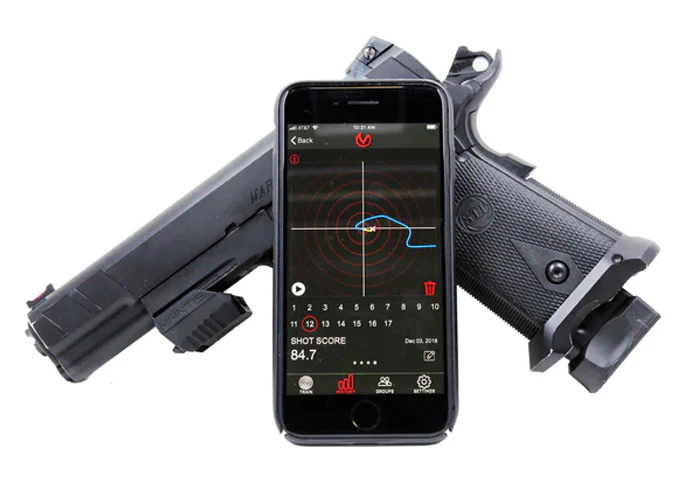
1. Mantis X10 Elite
The Mantis X10 Elite attaches to a firearm and tracks movement data related to trigger press, stability, and overall handling. That data is sent to a mobile app that provides diagnostics, drills, and performance tracking that help to correct your mistakes.
It works with pistols, rifles, and shotguns, and can be used for both dry fire and live fire. This versatility makes it one of the most useful training tools for shooters who want measurable improvement without constant coaching.
Strengths
-
Real-time feedback and diagnostics
-
Extensive drill library
-
Works with dry and live fire
Limitations
-
No recoil or trigger reset
Bonus: Mantis Blackbeard / BlackbeardX
Designed for AR-pattern rifles, Blackbeard replaces the bolt carrier group to provide an auto-resetting trigger. The BlackbeardX adds motion tracking, making it one of the most realistic dry fire tools for rifle training.
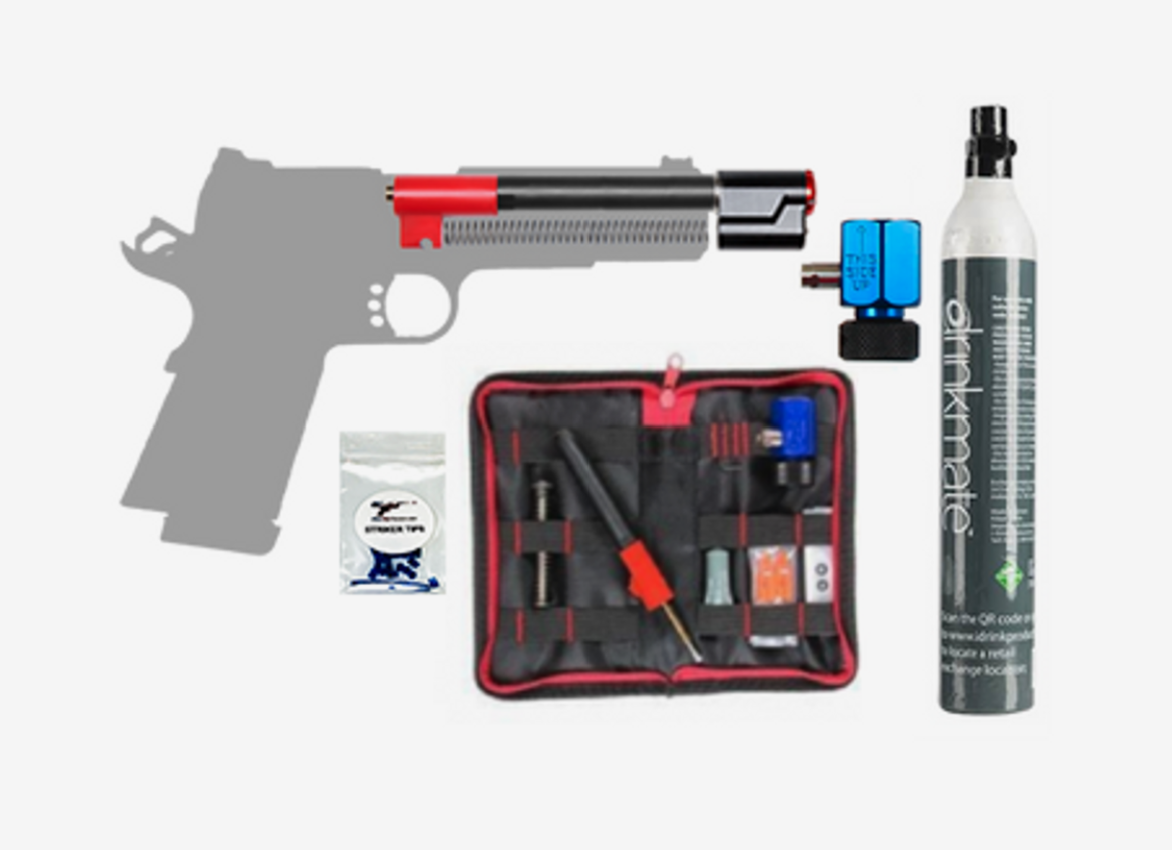
2. CoolFire Trainer
CoolFire addresses the biggest gap in traditional dry fire training: recoil. By replacing the barrel and recoil system with a CO₂-powered unit, it simulates recoil and slide movement.
This allows shooters to train grip, recoil control, and sight reacquisition — skills that normally require live fire. Because live ammunition cannot be chambered while the system is installed, it also adds an extra layer of safety.
Strengths
-
Simulated recoil
-
High realism
-
Excellent safety design
Limitations
-
No built-in analytics
-
Requires CO₂ refills
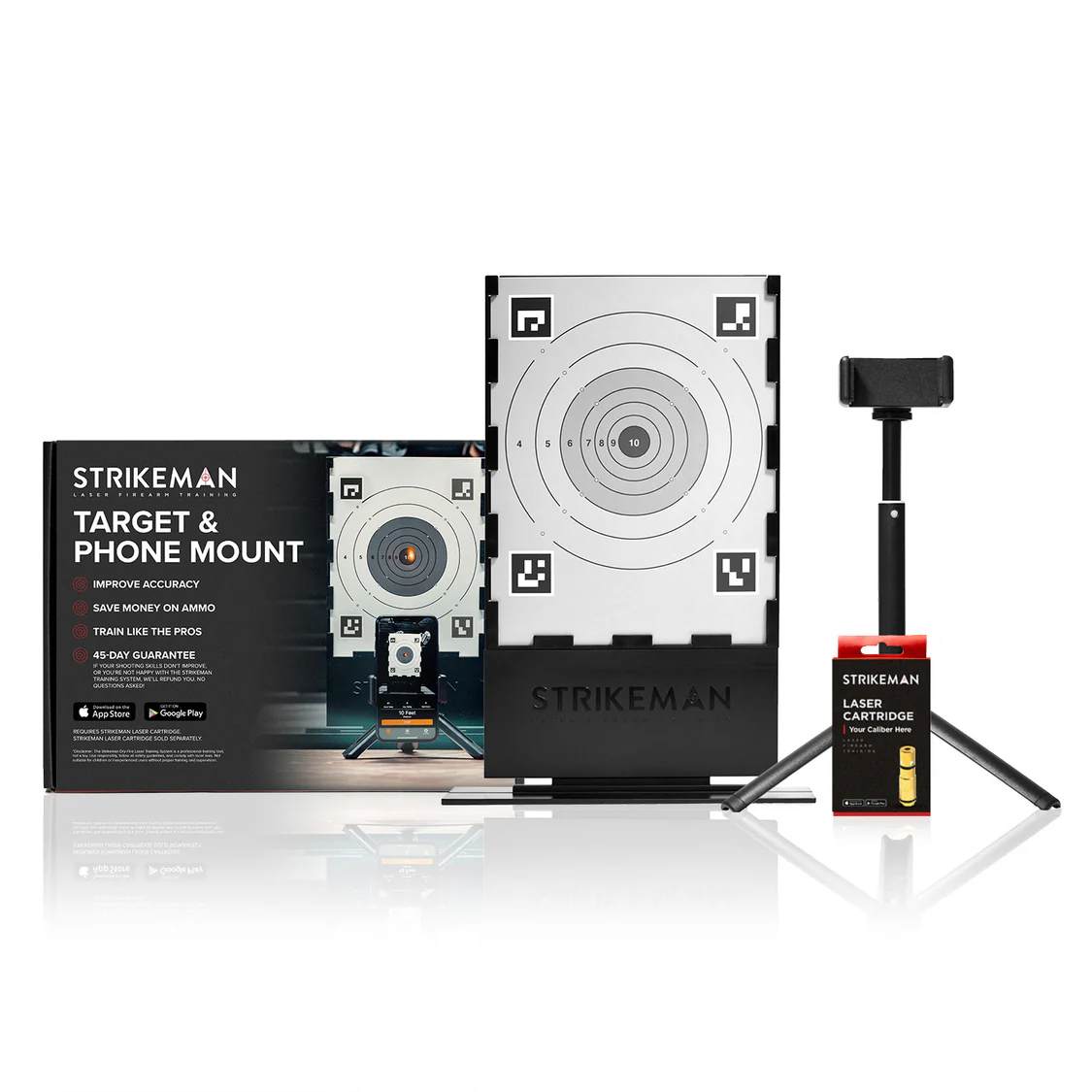
3. Strikeman Laser Firearm Training System
Strikeman uses a laser cartridge, target, and smartphone app to track shot placement. It excels at accuracy-focused training and is especially useful for beginners.
Setup is simple, and the app provides visual feedback and performance tracking over time.
Strengths
-
Accuracy tracking
-
Simple setup
-
Multi-caliber compatibility
Limitations
-
No recoil
-
Stationary training focus
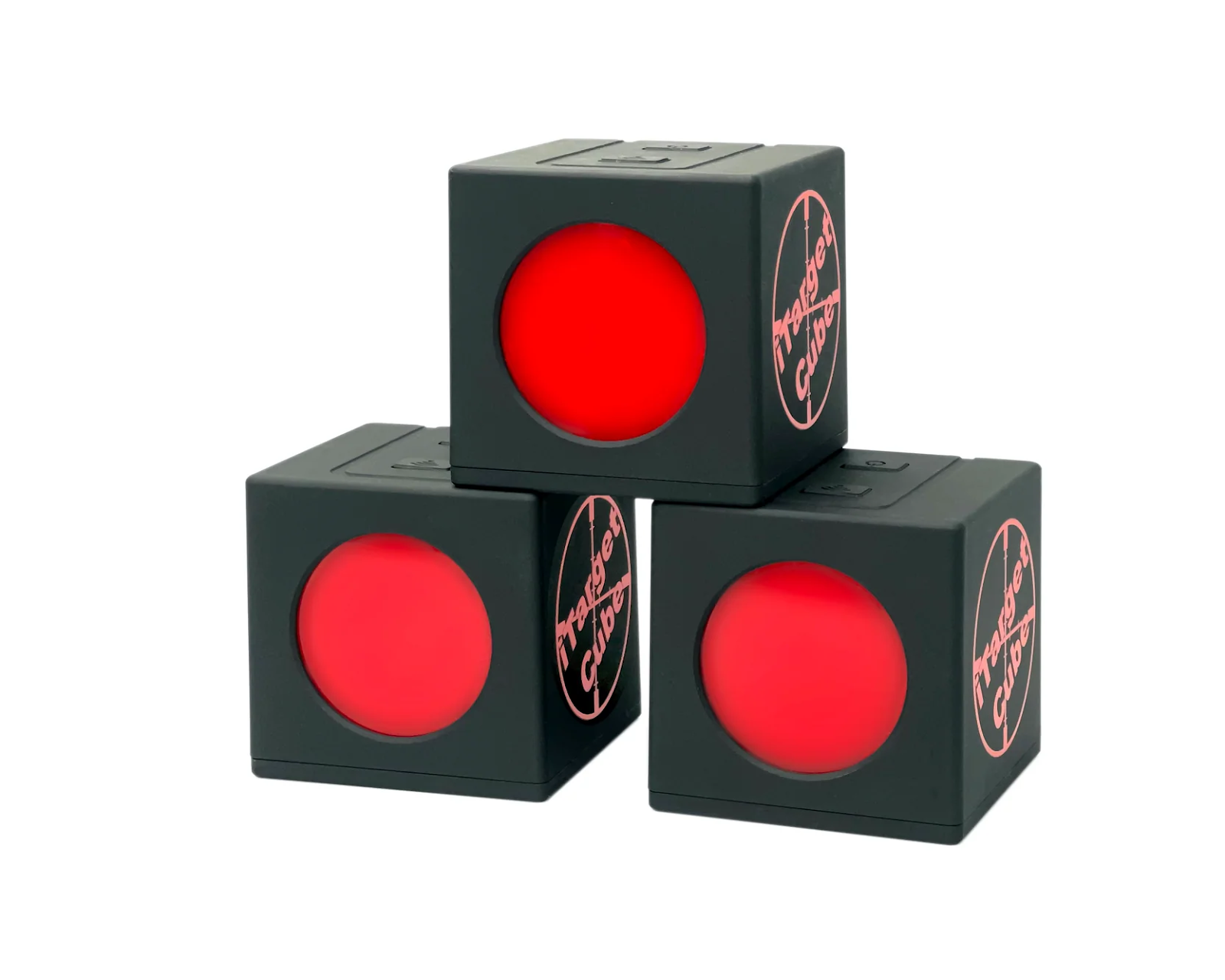
4. iTarget Cube
The iTarget Cube system uses multiple reactive targets that communicate with a mobile app. This allows shooters to build dynamic, movement-based drills and multi-target scenarios.
It’s particularly useful for developing transitions, target prioritization, and movement — areas most ranges prohibit.
Strengths
-
Dynamic, 360-degree training
-
Modular and scalable
-
Movement-based drills
Limitations
-
No recoil
-
Components sold separately
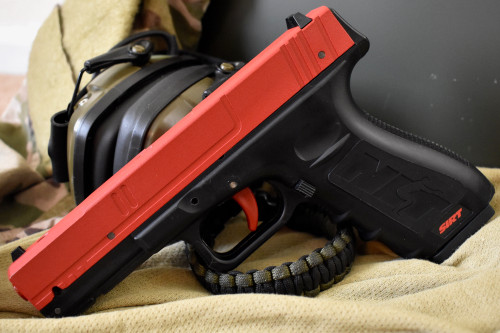
5. SIRT Training Pistol
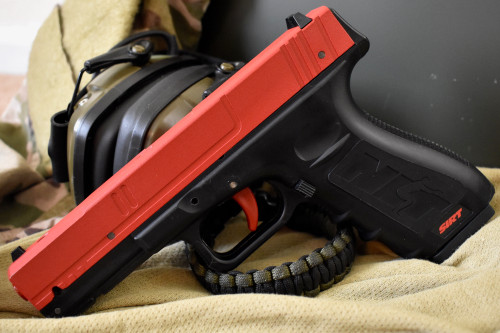
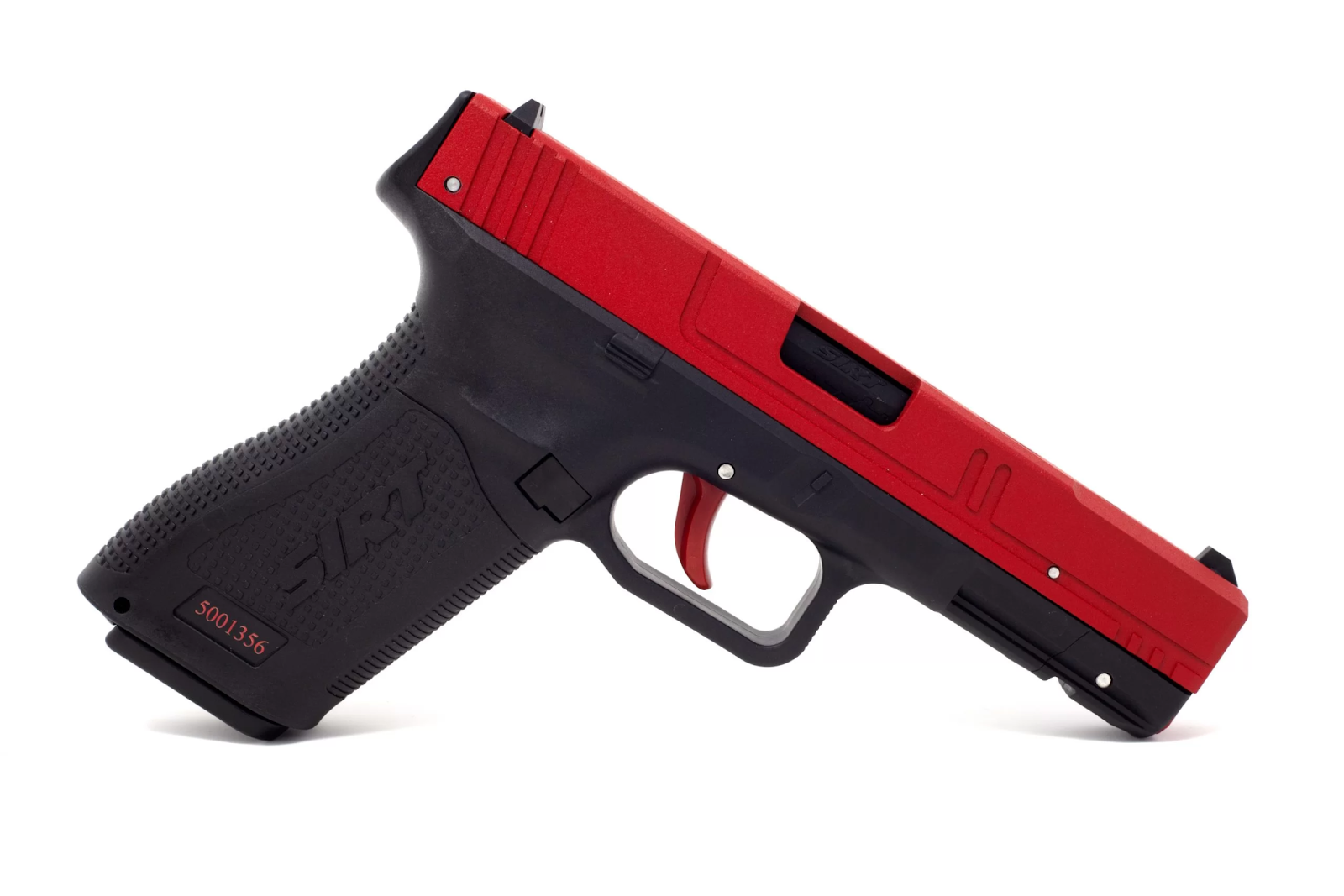
Created by Next Level Training, the Shot Indicating Resetting Trigger (SIRT) Pistol is a realistic replica handgun featuring a dual laser system to measure accuracy. Because it isn’t a real gun, it can be safely used for force-on-force training, tactics, and firearm familiarization for non-shooters. This allows users to gain valuable experience in realistic scenarios without the risks associated with live firearms. The idea of pointing a gun at another person may seem horrifying, but that’s the nature of the beast.
The SIRT Pistol is available in Glock 17/22 or Smith & Wesson M&P models, offering realistic resetting triggers for consecutive shots, enhancing muscle memory and trigger control. Users appreciate the safety and practicality of the SIRT system, which enables training options no other system can offer.
The SIRT Training Pistol is ideal for improving accuracy and reaction time in simulated scenarios. It allows for realistic training without the danger of live ammunition, making it a versatile and effective tool for enhancing shooting skills in a controlled, safe environment. Users benefit from its realistic feel and the ability to practice complex drills without the need for CO2 or other expendable components.
The SIRT is available in Glock 17/22 or Smith & Wesson M&P models.
Key Features
-
Strengths
-
Resetting trigger
-
Extremely safe
-
Force-on-force capable
Limitations
-
Limited model selection
-
No native analytics app
-
Benefits of Dry Fire Training
Can’t decide if dry fire training is the way to go? Here is a breakdown of some of the benefits of dry fire training:
- Develop shooting fundamentals: If you’re a total beginner, there’s a lot to learn before you start burning through live ammo. Through dry fire training, you can develop the baseline skills you’ll need when you finally get to the range.
- First shot focus: In a self-defense situation, the person who places on-target rounds first will most likely survive. Everything right or wrong about your first shot occurs before the bullet exits the gun, which means this can be practiced without live ammo.
- Identify and fix mistakes: Most shooting accuracy problems come down to trigger manipulation and sight picture, both of which can be improved through dry fire. Practice rapidly acquiring a sight picture and maintaining it through your trigger squeeze.
- Shooting is a perishable skill: Even if you’ve trained in the past, your skills will diminish rapidly without regular practice. Dry fire training is a way to get in the reps you need to keep your skills intact between range trips.
- Train immediate actions: Using a firearm in real life requires a series of specific actions performed under extreme stress. If you haven’t practiced drawing, reloading, clearing jams, reseating magazines, etc., Murphy’s law guarantees you will fail when it matters most. Dry fire training helps make these actions instinctive.
- Explore movement & tactics: Real-life self-defense situations occur in a dynamic, 360-degree environment, but most ranges won’t allow you to move, draw, reload, pie corners, or shoot from unusual positions — all necessary skills for effective defense. With dry fire training, you can develop these critical skills in your own home.
- Improved training frequency: Most skills are better learned in small, frequent doses rather than large chunks (e.g., daily 15-minute sessions rather than weekly two-hour blocks). Shooting is the same. The problem is, 15-minute range trips are impractical. With dry fire, you can get daily reps to build and reinforce your skills in the comfort of your own home, any time.
- Save money: Range trips are expensive. Dry fire training can save you money by minimizing range trips while still helping you develop and maintain shooting proficiency. When you do get to the range, your time there will be more productive.
- Professionals do it: Police officers, competitive shooters, and even Special Ops units with unlimited ammo budgets all practice dry firing. Just as world champion boxers still train on the heavy bag, pro shooters still dry fire — and so should you.
- Online training: We don’t all have access to expert coaches in person, but online training is the next best thing. More and more shooting courses are being offered that use dry fire as a primary method of instruction.
- Dry fire is not a shortcut — it’s how high-level shooters train.
Limitations of Dry Fire Training
We want to be clear that dry fire training alone is not enough to develop complete competence (and confidence) with a firearm. Range training and expert instruction are required. Here are some limitations to keep in mind with dry fire training:
- Lack of recoil: Every time you shoot live ammo, the gun will kick, testing your grip and forcing you to reacquire your sight picture. Dry fire shots don’t recoil (with the exception of some systems like CoolFire and SIRT), so be careful not to let your grip get sloppy. Recoil management is a skill that must be trained.
- Lack of trigger reset: Semi-automatic handgun triggers reset after each round is fired, but this won’t happen during dry fire, unless you’re using something like the SIRT or Mantis Blackbeard. In most cases, the trigger must be reset manually after each shot. However, this isn’t a problem with revolvers.
- Weight distribution: Lack of ammo disrupts the proper weight and balance of the gun, especially during a first shot. Be sure to use dummy rounds to compensate for the missing mass and improve the accuracy of the experience.
- Sensory experience: Dry fire lacks the extreme sensory experience associated with shooting, such as the flash, the sound, and the smell — all things that can be shocking to an untrained shooter.
- Bad habits: It’s critical to stay honest when dry firing to develop useful skills. Always behave as though the weapon is loaded, don’t sweep yourself or anyone else, and don’t become complacent. Always treat the gun as if it were deadly.
Dry fire must be combined with live fire and strict safety protocols.
FAQ
What’s the difference between Mantis X3 and X10?
The X10 offers more detailed analytics, additional training modes, and broader firearm compatibility.
Can dry fire damage my firearm?
Modern centerfire firearms are generally safe to dry fire. Rimfire firearms should use snap caps.
How often should I dry fire?
Short, frequent sessions (15–20 minutes, several times per week) are ideal.
Do laser-based systems really work?
Yes, for fundamentals and accuracy tracking. They complement live fire but don’t replace it.
What firearms can be used?
Most pistols, rifles, and shotguns, depending on system compatibility.
Conclusion
Dry fire training alone won’t make you proficient — but skipping it will slow your progress dramatically. The systems covered here add structure, realism, and accountability to training you should already be doing.
If you carry a firearm, you owe it to yourself and others to be prepared. Consistent, disciplined training is how that preparation happens.
Dry fire is not a replacement for the range. It’s how you make every range trip count.
Ready to start training at home? You can learn gun safety, tactical tips, and more from shooting experts with real experience in the field. Pro Armory’s online training courses to improve accuracy and learn shooting techniques for different scenarios right in your own home! Sign up for our newsletter to be notified when training officially launches.
Best Ammo Deals, Training, & Accessories
Subscribe to ProArmory sales and deals email.