 Pro Armory Editorial Team
Choosing the right caliber for a concealed carry firearm is an important decision. The goal is to balance effectiveness, controllability, and comfort, ensuring the handgun you choose is one you can realistically carry and operate with confidence. While centerfire calibers dominate most concealed carry discussions, .22 LR is still considered by some shooters for specific, limited use cases.
The .22 LR cartridge has benefited from improvements in ammunition consistency and reliability over the years, but it remains a rimfire round with inherent limitations. It is not generally recommended as a primary self-defense caliber when larger centerfire options are manageable. However, for shooters who are extremely recoil-sensitive, have limited hand strength, or require the lightest possible firearm for concealment, a .22 LR handgun may be considered as a last-resort defensive option rather than an ideal one.
The primary advantages of .22 LR handguns are their low recoil, minimal muzzle blast, and lightweight platforms. These characteristics can make them easier to shoot accurately for some individuals and more comfortable to carry in situations where larger handguns are impractical. That said, reliability, penetration, and terminal performance are critical concerns that must be weighed carefully when evaluating .22 LR for defensive use.
In this guide, we’ll take a realistic look at .22 LR revolvers and pistols that are best suited for deep concealment, focusing on designs that prioritize reliability, ease of operation, and shootability for those who understand the tradeoffs involved in choosing this caliber.
Best .22 LR Revolvers for Concealed Carry
The Ruger LCR .22 LR is one of the most refined rimfire revolvers available for concealed carry. Built on Ruger’s lightweight LCR platform, it offers an eight-round capacity in a compact, snag-free design that is easy to carry for extended periods. Its smooth exterior and enclosed hammer make it well suited for pocket carry, purse carry, or inside-the-waistband use:
Ruger LCR .22 LR
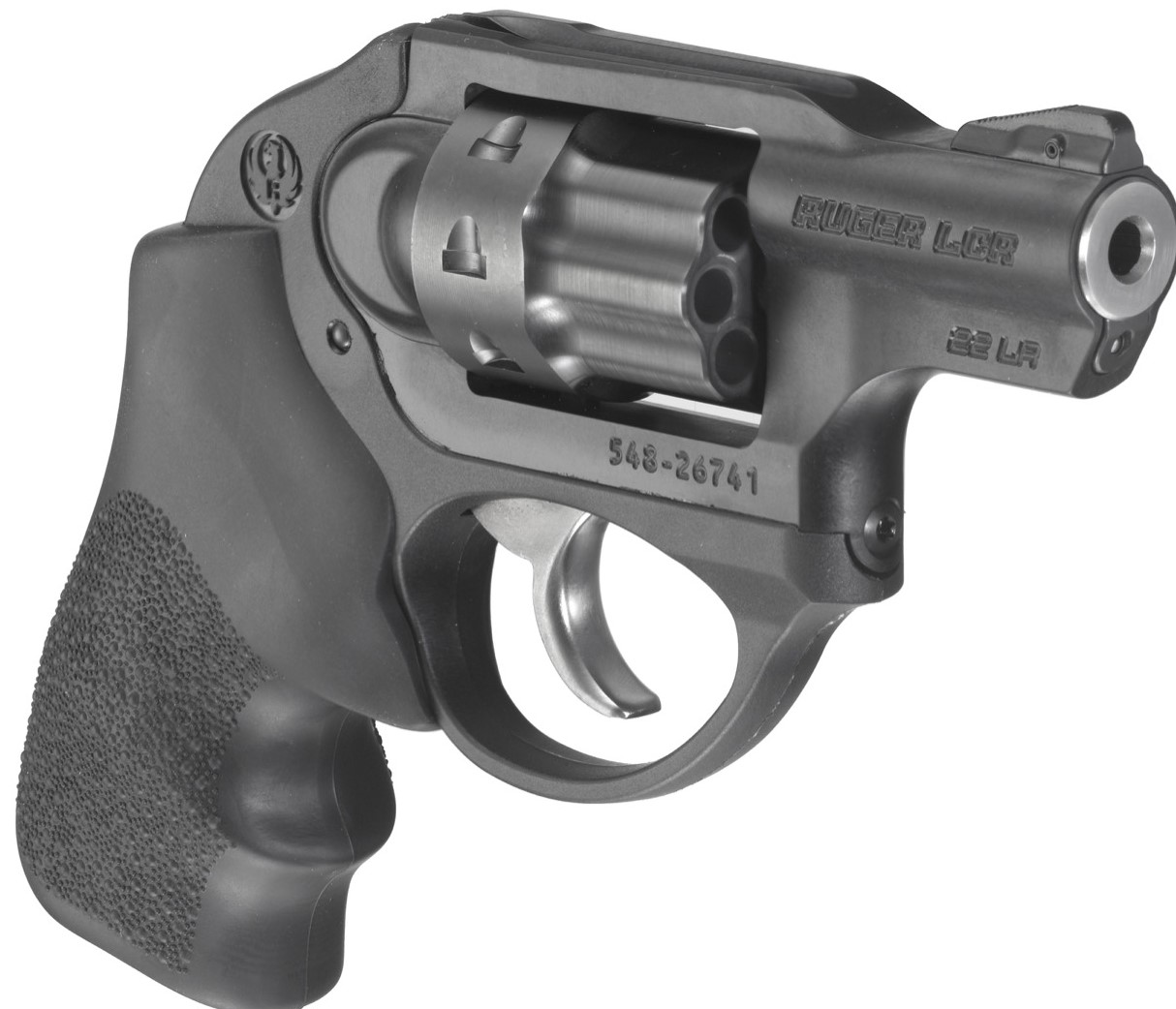
Unlike many small rimfire revolvers, the LCR .22 LR is designed with shootability in mind. The polymer fire control housing and aluminum cylinder help keep weight low while maintaining durability. The Hogue Tamer grip provides excellent purchase, which is especially important when running a long double-action trigger. While recoil is already minimal with .22 LR, the grip design improves control and consistency during rapid trigger pulls.
Overview
Price and availability: Typically priced in the mid-$500 range and widely available
Features and Specifications
- Action: Double-action only revolver
- Caliber: .22 LR
- Capacity: 8 rounds
- Barrel Length: 1.87 inches
- Weight: Approximately 15 ounces unloaded
- Grips: Hogue Tamer Monogrip
- Sights: Fixed ramp front with integral rear notch
The enclosed hammer allows for smooth, snag-free draws, and the revolver’s overall profile minimizes printing when carried discreetly. The double-action trigger is heavier than centerfire revolvers, which is typical for rimfire designs, but it is smooth and consistent, allowing practiced shooters to maintain accuracy.
Pros
-
Extremely lightweight and easy to carry for long periods
-
Eight-round capacity offers more margin than many small revolvers
-
Smooth, consistent double-action trigger for a rimfire revolver
-
Minimal recoil encourages practice and control
-
Simple manual of arms with no slide or magazine manipulation
Cons
-
Rimfire ignition is less reliable than centerfire ammunition
-
Long, heavy trigger requires deliberate practice
-
Limited penetration and terminal performance compared to larger calibers
-
Higher cost compared to some rimfire alternatives
User Experience
The Ruger LCR .22 LR is often praised for being one of the most shootable rimfire revolvers in its size class. Users consistently note that the revolver is easy to control, comfortable to shoot, and simple to operate under stress. Its lightweight design makes it especially appealing for shooters who struggle with heavier firearms or recoil-sensitive platforms.
Reliability is generally reported as strong when quality ammunition is used, though rimfire ammunition variability remains a consideration. The revolver’s ability to fire multiple rounds without relying on cycling makes it more forgiving than semi-automatic .22 pistols in defensive contexts.
While it is not a substitute for a centerfire defensive handgun, the Ruger LCR .22 LR fills a specific role well. For shooters who understand its limitations and prioritize ease of carry and controllability, it remains one of the strongest .22 LR revolver options for concealed carry.
Smith & Wesson 43C
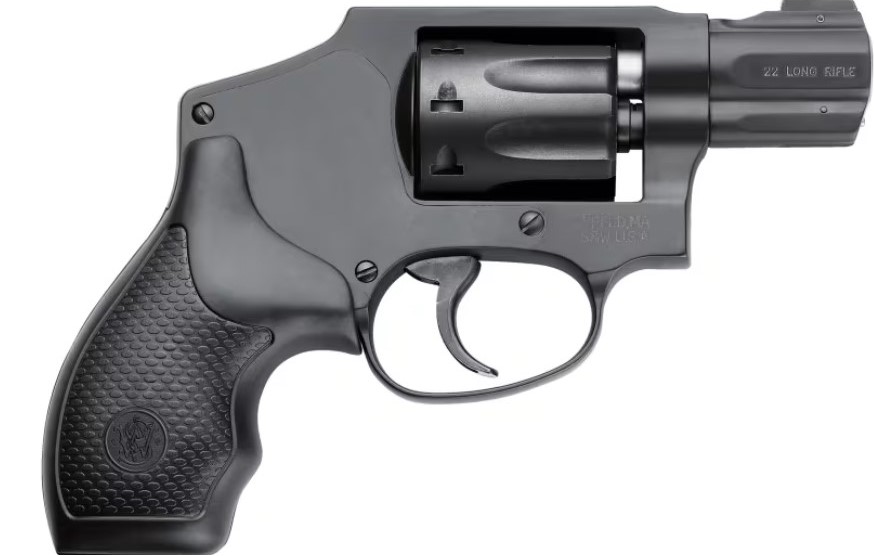
The Smith & Wesson Model 43C is a lightweight J-frame revolver chambered in .22 LR that has long appealed to shooters who prioritize minimal weight and simple operation. Built on Smith & Wesson’s classic small-frame revolver platform, the 43C offers eight rounds of rimfire ammunition in a compact, easy-to-carry package that works well for deep concealment.
While it is not designed to compete with centerfire defensive handguns, the Model 43C remains relevant for shooters who need an ultra-light revolver with very mild recoil. Its traditional revolver design eliminates the need for slide manipulation, making it an option for those who prefer or require a straightforward manual of arms.
The extremely light weight of the Model 43C makes it easy to carry for extended periods, even in situations where heavier handguns may be impractical. Its slim J-frame profile lends itself well to inside-the-waistband carry, pocket holsters, or discreet off-body options.
Overview
- Price and availability: Typically priced in the upper range for rimfire revolvers and available through select retailers
Features and Specifications
- Action: Double-action revolver
- Caliber: .22 LR
- Capacity: 8 rounds
- Barrel Length: 1.875 inches
- Weight: Approximately 11.5 ounces unloaded
- Construction: Alloy frame with stainless steel cylinder
- Sights: Fixed rear notch with pinned high-visibility front sight
Pros
-
Extremely lightweight and comfortable for all-day carry
-
Simple, reliable revolver operation
-
Eight-round capacity offers more margin than many small revolvers
-
Minimal recoil allows for better control and accuracy for some shooters
Cons
-
Rimfire ignition is less reliable than centerfire cartridges
-
Long, heavy double-action trigger requires dedicated practice
-
Limited terminal performance compared to larger calibers
-
Premium pricing relative to similar rimfire options
User Experience
Owners of the Smith & Wesson Model 43C frequently praise its carry comfort and ease of handling. At just over eleven ounces unloaded, it is one of the lightest revolvers available, which makes it particularly appealing for shooters who are sensitive to weight or who struggle to carry heavier firearms consistently.
The double-action trigger is heavy, as expected with rimfire revolvers, but it is generally described as smooth and predictable. Shooters who invest time into mastering the trigger often report good accuracy at close defensive distances. The grip frame accommodates small to medium hands well, contributing to controllability despite the revolver’s light weight.
Reliability is generally strong when quality, high-velocity ammunition is used, though rimfire variability remains a consideration. While the Model 43C is not intended to deliver significant stopping power, it fills a specific role as a deep-concealment revolver for shooters who understand its limitations. For those seeking a lightweight, American-made .22 LR revolver that carries effortlessly, the Smith & Wesson Model 43C remains a viable option within its niche.
North American Arms Black Widow
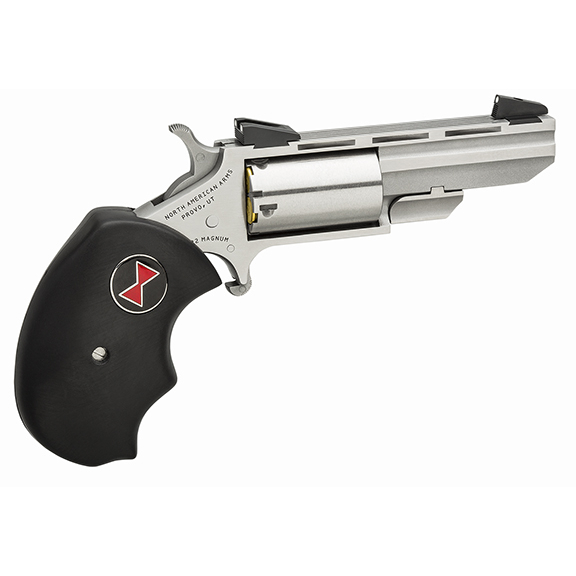
The North American Arms Black Widow is a compact, stainless-steel mini-revolver designed for extreme concealment. Chambered in .22 LR with an interchangeable .22 Magnum cylinder, it offers a unique level of versatility in an ultra-small platform. Its overall size makes it easy to carry in situations where even small-frame revolvers or compact pistols may be impractical.
Unlike traditional double-action revolvers, the Black Widow operates in single-action only, meaning the hammer must be manually cocked before each shot. This design choice simplifies the internal mechanics and contributes to reliability, but it also slows follow-up shots and requires deliberate handling. As a result, the Black Widow is best viewed as a deep concealment or back-up firearm, not a primary defensive handgun.
Overview
- Price and availability: About $307
Features and Specifications
- Price and availability: Commonly priced in the low-to-mid $300 range and widely available
- Action: Single-action revolver
- Caliber: .22 LR / .22 Magnum (interchangeable cylinders)
- Capacity: 5 rounds
- Barrel Length: 2 inches
- Weight: Approximately 8.4 ounces unloaded
- Construction: Stainless steel
- Sights: Fixed rear notch with blade front sight
Pros
-
Extremely compact and lightweight for deep concealment
-
Interchangeable .22 LR and .22 Magnum cylinders add versatility
-
Simple, mechanically robust design
-
Easier to aim than smaller NAA mini-revolvers due to usable sights
Cons
-
Single-action operation limits speed under stress
-
Five-round capacity
-
Very small grip compared to traditional revolvers
-
Rimfire reliability and limited defensive performance
The Black Widow is larger and easier to handle than some of North American Arms’ smallest models, thanks to its longer barrel and fuller grip. The rubberized grip allows for better control than many mini-revolvers, though it still requires focused practice to use effectively.
User Experience
Shooters familiar with the Black Widow generally emphasize the importance of realistic expectations. Its small size and light weight make it easy to carry, but they also amplify recoil, especially when using .22 Magnum ammunition. While the grip is more substantial than other mini-revolvers, it still requires careful handling and deliberate trigger control.
Accuracy is acceptable at very close distances when shooters take advantage of the single-action trigger, which typically breaks cleanly. The fixed sights, while basic, are usable and represent an improvement over smaller, sight-less mini-revolvers. Most users report the best reliability with high-quality ammunition, as rimfire cartridges can be inconsistent, particularly in ultra-short barrels.
The North American Arms Black Widow fills a very specific role. It is best suited for experienced shooters who need maximum concealment and understand the limitations of a single-action, rimfire revolver. While it is not ideal as a primary defensive firearm, it can serve as a discreet, last-resort option for those who prioritize size and simplicity above all else.
Best .22 LR Semi-Auto Pistols for Concealed Carry
Revolvers aren’t the only firearms chambered in .22 LR suitable for concealed carry. Several semi-automatic pistols offer slim profiles, lightweight frames, and higher capacity than most rimfire revolvers. While semi-automatic .22 LR pistols come with additional reliability considerations compared to centerfire designs, certain models have proven dependable when paired with quality ammunition and realistic expectations.
Semi-automatic .22 LR pistols are best suited for shooters who prioritize low recoil, ease of shooting, and discreet carry over ballistic performance. They are commonly chosen as backup firearms or deep-concealment options rather than primary defensive handguns:
Ruger LCP II .22 LR
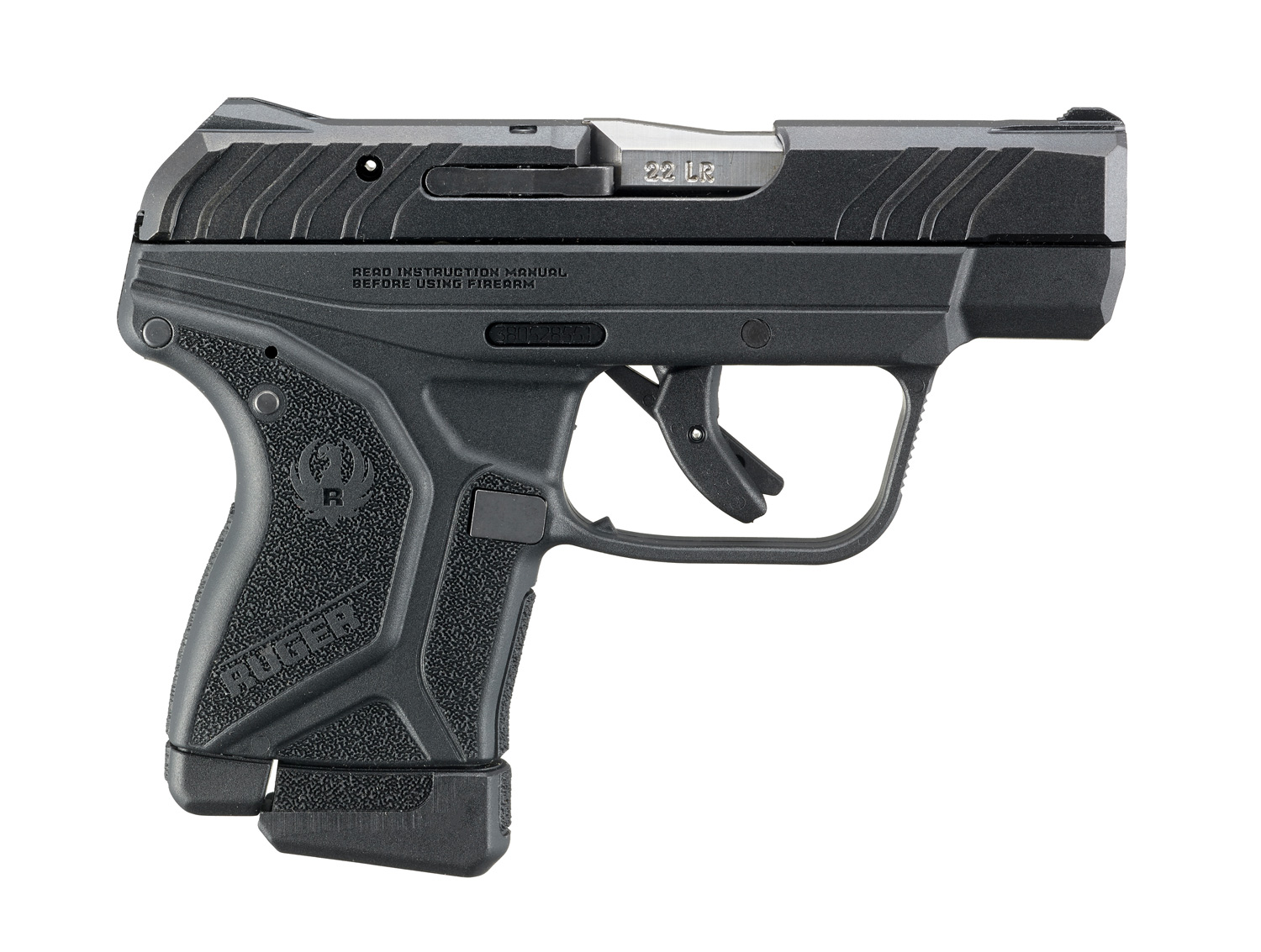
The Ruger LCP II .22 LR adapts the popular LCP design into a rimfire platform that emphasizes ease of shooting and concealment. Unlike the centerfire LCP variants, the .22 LR version benefits from extremely mild recoil, making it easier to control for shooters who are recoil-sensitive or new to handgun training.
The pistol’s slim profile and lightweight construction make it well suited for pocket carry or discreet inside-the-waistband carry. Ruger improved the trigger and ergonomics compared to earlier LCP models, resulting in better controllability and a more usable shooting experience. The sights, while still compact, are more visible than those found on earlier pocket pistols.
Overview
Price and availability: Commonly priced in the mid-$300 range and widely available
Features and Specifications
- Action: Semi-automatic
- Caliber: .22 LR
- Capacity: 10 rounds
- Barrel Length: 2.75 inches
- Weight: Approximately 11.2 ounces unloaded
- Grip: Glass-reinforced nylon
- Slide: Alloy steel
- Sights: Fixed front and rear
- Safety: Manual thumb safety and internal safeties
Pros
-
Very lightweight and easy to conceal
-
Low recoil allows for faster, more controllable shooting
-
Higher capacity than most rimfire revolvers
-
Simple controls and approachable ergonomics
Cons
-
Small sights limit precision at distance
-
Rimfire semi-auto reliability depends heavily on ammunition
-
Limited terminal performance
User Experience
Owners generally describe the LCP II .22 LR as easy to shoot and comfortable to carry. The mild recoil allows for quick follow-up shots, and the improved trigger compared to earlier LCP models helps with accuracy at close defensive distances. The pistol’s small size makes it easy to carry in situations where larger firearms are impractical.
Reliability is typically strong when using high-quality ammunition. Bulk-pack .22 LR loads can cause inconsistent cycling, while premium loads tend to perform more reliably. With realistic expectations, the LCP II .22 LR functions well as a deep-concealment or backup firearm.
Beretta 21A Bobcat
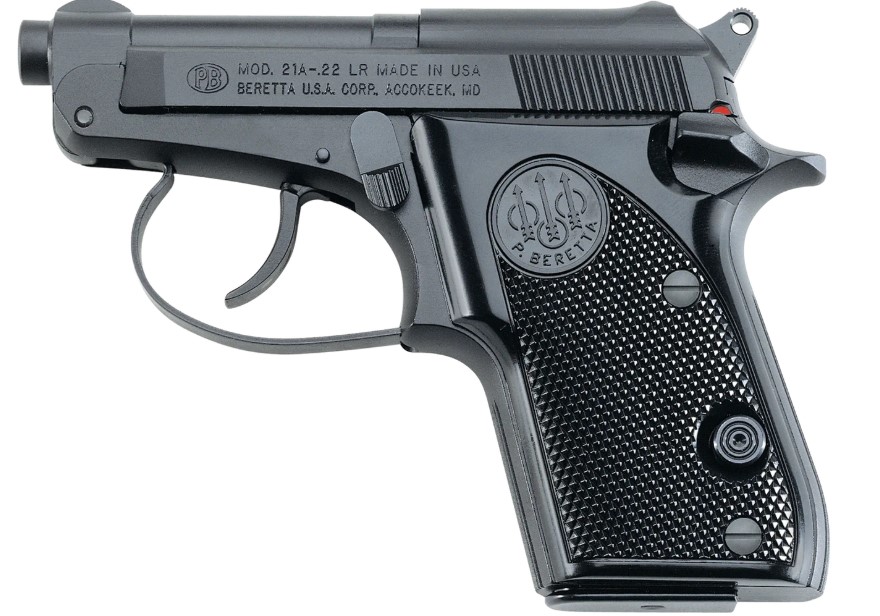
The Beretta 21A Bobcat is a classic .22 LR pistol known for its distinctive tip-up barrel design. This feature allows the chamber to be loaded without racking the slide, making it especially appealing to shooters with limited hand strength or joint issues.
The Bobcat’s compact size and snag-free profile make it easy to conceal, while its all-metal construction provides a solid feel in the hand. The double-action/single-action trigger system allows the first shot to be fired without manually cocking the hammer, though the double-action pull is long and heavy.
Overview
Price and availability: Typically priced in the mid-$500 range
Features and Specifications
- Action: Blowback semi-auto with tip-up barrel
- Caliber: .22 LR
- Capacity: 7 rounds
- Barrel Length: 2.4 inches
- Weight: Approximately 11.8 ounces unloaded
- Frame: Aluminum alloy
- Grip: Polymer
- Sights: Fixed front and rear
Pros
-
Tip-up barrel eliminates the need to rack the slide
-
Easy to load and unload
-
Compact and easy to conceal
-
Mild recoil
Cons
-
Lower capacity than some competitors
-
Long double-action trigger
-
Limited defensive performance
User Experience
Users consistently praise the Bobcat for its ease of operation. The tip-up barrel simplifies loading and unloading, making it accessible to shooters who struggle with slide manipulation. Recoil is mild, and accuracy is adequate at close range with proper ammunition selection.
While capacity is limited compared to other semi-automatic pistols, the Bobcat’s reliability and user-friendly design have kept it relevant for decades. It remains a niche option for concealed carry when ease of use is the top priority.
Budget-Friendly .22 LR Option
Concealed carry firearms can become expensive, and .22 LR pistols often represent a more accessible entry point. While budget models may lack refinement, some still offer functional reliability for shooters with realistic expectations, here is out budget friendly option:
Taurus PT-22
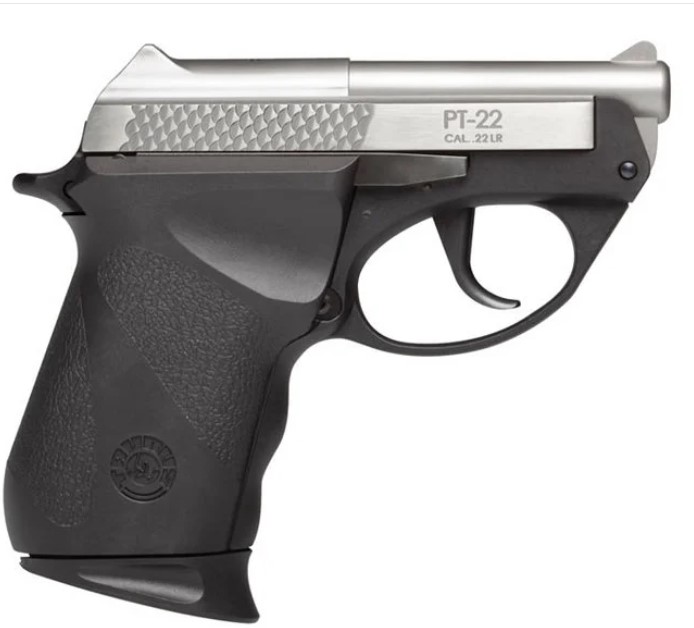
The Taurus PT-22 is a compact, budget-friendly .22 LR pistol featuring a tip-up barrel similar to the Beretta Bobcat. Its lightweight polymer frame and simple controls make it approachable for new shooters or those seeking an affordable deep-concealment option.
While not as refined as premium models, the PT-22 offers a useful feature set for its price point, including a loaded chamber indicator and last-round slide hold-open. Its small size and low recoil make it easy to carry and control.
Overview
- Price and availability: Commonly priced in the low-$200 range
Features and Specifications
- Action: Semi-auto with tip-up barrel
- Caliber: .22 LR
- Capacity: 8 rounds
- Barrel Length: 2.8 inches
- Weight: Approximately 11 ounces unloaded
- Frame: Polymer
- Grip: Textured polymer
- Sights: Fixed front and rear
- Safety: Manual thumb safety and internal firing pin block
Pros
-
Very affordable entry point
-
Lightweight and easy to conceal
-
Tip-up barrel simplifies loading
-
Low recoil and manageable ergonomics
Cons
-
Fit and finish are basic
-
Short sight radius
-
Ammunition sensitivity
User Experience
The PT-22 is often described as functional and easy to shoot, particularly for new or recoil-sensitive shooters. The grip provides adequate control, and accuracy is acceptable at close defensive distances once the long trigger pull is mastered.
Reliability depends heavily on ammunition choice, with standard-velocity loads generally performing better than hyper-velocity rounds. While it lacks the refinement of higher-end pistols, the PT-22 offers practical utility for shooters seeking an affordable .22 LR concealed carry option with simple operation.
Revolver vs. Pistol: Which is Better for You?
Choosing between a revolver and a semi-automatic pistol for concealed carry comes down to how you plan to carry, your experience level, and what tradeoffs you’re willing to accept. Both platforms have strengths, but neither is universally “better” for every shooter or situation.
Revolvers are valued for their mechanical simplicity and straightforward operation. With no magazine to seat and no slide to rack, a revolver’s manual of arms is easy to understand under stress. Rimfire revolvers in particular avoid many cycling issues that can affect semi-automatic .22 LR pistols, since each trigger pull rotates a fresh cartridge into place. This makes revolvers appealing to shooters who prioritize simplicity and consistency. However, revolvers are not immune to problems, and heavy double-action triggers require deliberate practice to master.
The primary limitations of revolvers are capacity and reload speed. Most small-frame revolvers hold between five and eight rounds, and reloading is slower than swapping magazines in a semi-automatic pistol. Even with speedloaders or moon clips, reloads take more time and coordination than a magazine change.
Semi-automatic pistols offer higher capacity and faster reloads, which is why they dominate modern concealed carry. In .22 LR, semi-autos often provide 7 to 10+ rounds in a slim, lightweight package. This additional capacity can be appealing, especially given the limited terminal performance of rimfire ammunition. Magazine changes are quick and intuitive, and the slimmer grip profiles of many pistols aid concealment.
That said, rimfire semi-automatic pistols demand greater attention to ammunition selection and maintenance. .22 LR is more sensitive to load variation, and failures to feed or eject are more common than with centerfire calibers. Slide manipulation and malfunction clearance are also required skills, which may be a drawback for some shooters.
Ultimately, the best choice depends on what you can operate confidently and carry consistently. Revolvers often appeal to those who want simplicity and minimal manipulation, while semi-autos suit shooters who value capacity and faster reloads. Training, comfort, and realistic expectations matter more than platform loyalty.
Ammunition Recommendations for .22 LR Handguns
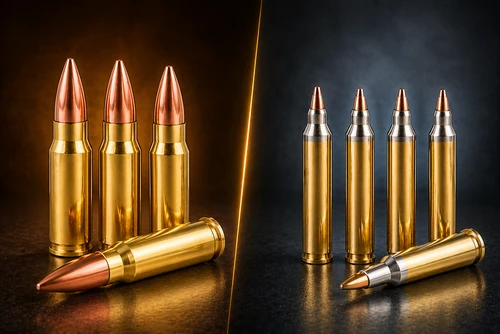
While .22 LR is widely used for training, not all ammunition is suitable for defensive use. Rimfire cartridges vary significantly in consistency, and bulk-pack ammunition is more prone to misfires and cycling issues, especially in short-barreled handguns.
For concealed carry, reliability should be the top priority. Ammunition from established manufacturers such as CCI, Federal, Winchester, and Remington generally offers better quality control. Standard and high-velocity loads from these brands tend to produce more consistent ignition and performance in compact handguns. Copper-plated bullets are also preferable, as they reduce fouling and help maintain reliable feeding.
High-velocity hollow-point loads are often chosen to maximize penetration and potential expansion from short barrels. Loads such as CCI Mini-Mag HP or similar offerings are commonly favored because they strike a balance between velocity and reliability. However, higher velocity often comes with increased muzzle blast and noise, particularly in compact firearms.
Regardless of brand or bullet type, defensive ammunition must be tested in your specific firearm. Any failure to fire, feed, extract, or eject should be considered unacceptable for carry use. While bulk ammunition is fine for practice, defensive carry demands ammunition that performs consistently every time. Investing in quality loads and verifying reliability through live-fire testing is essential when choosing .22 LR for any defensive role.

250 Rounds of Aguila 22LR + 5 Splatter Targets
$16.75
at Proarmory
Prices accurate at time of writing
Conclusion
The .22 LR caliber is often dismissed outright for defensive use, largely due to its limited ballistic performance compared to centerfire cartridges. While those limitations remain, modern firearm design and improved ammunition consistency have allowed .22 LR handguns to occupy a narrow but legitimate role in concealed carry. When selected with realistic expectations, these firearms can serve as deep-concealment or last-resort defensive tools.
Compact .22 LR revolvers and pistols offer advantages that matter to certain shooters, including extremely low recoil, lightweight carry, and ease of concealment. Models such as the Ruger LCR, Smith & Wesson Model 43C, Beretta 21A Bobcat, and similar platforms prioritize portability and simplicity, making them practical in situations where larger handguns are difficult to carry consistently.
That said, .22 LR handguns are not substitutes for full-power defensive firearms. Their effectiveness depends heavily on ammunition quality, shot placement, and reliability testing. Choosing proven loads from reputable manufacturers and thoroughly testing them in your firearm is essential before relying on a rimfire handgun for any defensive role.
Ultimately, the best concealed carry firearm is the one you can carry consistently and operate with confidence. For some shooters, a compact .22 LR handgun may fit that role when other options do not. With responsible selection, proper training, and realistic expectations, these firearms can still provide a meaningful layer of personal protection when needed most.
Frequently Asked Questions (FAQs)
Are .22 LR handguns effective for self-defense and concealed carry?
.22 LR handguns are not ideal primary self-defense weapons, but they can serve as deep-concealment or last-resort options. Modern ammunition offers improved consistency and penetration compared to older loads, but rimfire cartridges still lack the reliability and terminal performance of centerfire calibers. Their effectiveness depends on reliable ammunition, close-range accuracy, and proper shot placement.
Is a revolver or semi-automatic pistol better for .22 LR concealed carry?
Both platforms have advantages. Revolvers are mechanically simple and do not rely on cycling energy, which can be beneficial with rimfire ammunition. Semi-automatic pistols offer higher capacity and faster reloads but require careful ammunition selection and more user input. The better choice depends on what you can operate confidently and reliably.
Why would someone choose a .22 LR for concealed carry instead of a larger caliber?
Some shooters choose .22 LR due to recoil sensitivity, limited hand strength, or the need for extreme concealment. Lightweight .22 LR handguns are often easier to carry consistently and easier to control, which may outweigh ballistic limitations for certain individuals.
What features matter most in a .22 LR concealed carry handgun?
Key features include reliability with quality ammunition, a snag-free profile, manageable trigger operation, usable sights, and a size that allows consistent carry. Revolvers should have a protected or enclosed hammer, while pistols should have controls that are easy to manipulate under stress.
What ammunition should be used in a defensive .22 LR handgun?
High-quality ammunition from reputable manufacturers is essential. Loads such as CCI Mini-Mag and similar offerings are commonly favored due to consistent ignition and reliable performance. Any ammunition chosen for carry should be thoroughly tested in the specific firearm to ensure proper function.
Are .22 LR handguns suitable for everyday concealed carry?
They are best suited for niche roles such as deep concealment, backup carry, or situations where larger firearms are impractical. While not ideal as primary defensive weapons, they can still provide a level of personal protection when carried responsibly and used with realistic expectations.
What type of holster works best for small .22 LR handguns?
Holsters designed for small revolvers or micro pistols work best. Look for secure retention, full trigger coverage, and materials that keep the firearm stable during movement. Pocket, inside-the-waistband, and discreet off-body options are commonly used with these platforms.
References
https://www.pewpewtactical.com/best-22-lr-pistols-pocket-carry/
Best Ammo Deals, Training, & Accessories
Subscribe to ProArmory sales and deals email.