 Pro Armory Editorial Team
Quick Answer
Looking to upgrade your Ruger 10/22 with better glass? The Leupold VX-Freedom Rimfire (3-9x40) offers the best overall package with rimfire-specific features and clear glass. Budget-minded shooters should check out the Vortex Crossfire II 2-7x32. For red dots, the Sig Sauer ROMEO5 delivers excellent value with motion activation and long battery life. Match your optic to your shooting style - not every 10/22 needs the same solution.
Key Takeaways
- The 10/22 works best with low to mid-power scopes and compact red dots.
- Purpose-built .22LR reticles make holdovers from about 25 to past 150 yards simple.
- Red dots are great for close plinking, training, and fast target changes.
- Good support, strong build, and clear glass matter more than high magnification.
- Budget optics can still do good work at normal 10/22 ranges.
Millions of Ruger 10/22 rifles sit in safes and racks. Many still wear basic iron sights or cheap combo-pack scopes. That setup holds the rifle back.
These bargain sights often share the same problems. Reticles go fuzzy in low light. Zero moves after a few range trips. Glass can get so dim you barely see the target at dusk. Your 10/22 can do better than that.
This guide cuts through the ads and hype. It shows you which scopes and red dots really fit this rimfire and why. Simple, clear advice you can use on your next range day.
How We Picked These Ruger 10/22 Scopes & Red Dots
We built this guide using three main information sources.
- First, we analyzed manufacturer specs like magnification ranges, reticle designs, weight, parallax settings, and durability claims.
- Second, we studied published reviews from established gun media and optics reviewers.
- Finally, we gathered long-term feedback from actual owners through forums and user reports
We also focused on optics that match the .22LR cartridge and typical Ruger 10/22 use cases. Price-to-performance ratio was key across budget and premium categories. We also prioritized scopes and red dots with .22-friendly magnification ranges and reticles. Finally, we also considered warranty support and the manufacturer's track record for standing behind their products.
Best Ruger 10/22 Scopes – In-Depth Reviews
1. Vortex Crossfire II 2-7x32 Rimfire
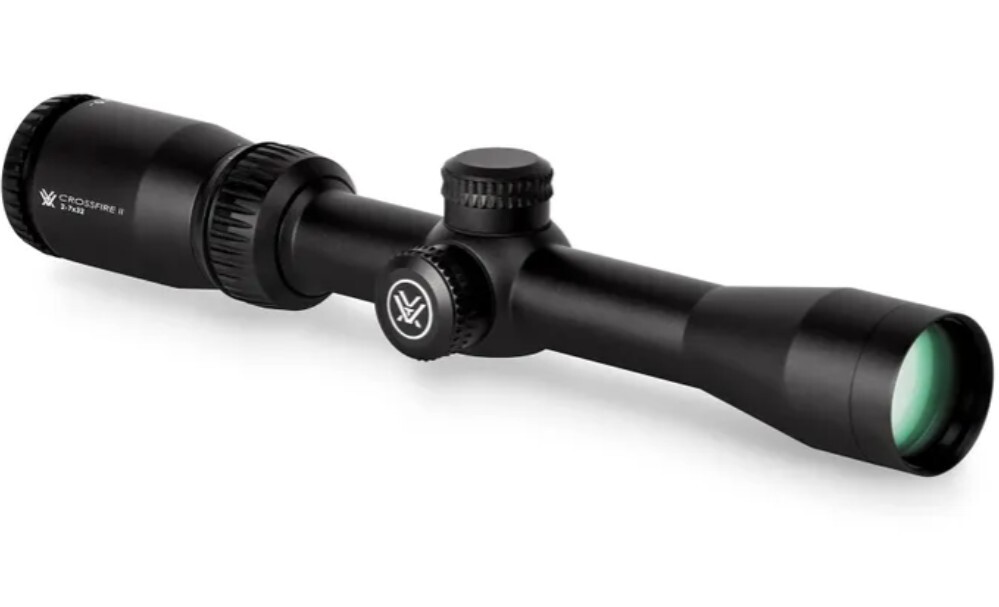
This Vortex scope hits the sweet spot for most 10/22 owners - good quality glass without emptying your wallet. The 2–7x magnification range covers everything from backyard plinking to small-game hunting and casual target shooting out to 100 yards.
What sets this apart from generic budget scopes is its clarity at the edges and forgiving eye box. The V-Plex reticle keeps things simple and uncluttered - just a classic duplex crosshair that won't distract new or young shooters. When zeroed at 50 yards, you can still make hits at 25 and 75 without much holdover.
This scope feels at home on a 10/22 because it is short and light. Your rifle does not feel heavy at the front, so it stays easy to carry in the woods or use at the range. For most casual 10/22 owners, you mount it, zero it, and then just leave it alone.
Price: $169.99
Specs
- Magnification: 2–7x
- Objective lens: 32 mm
- Tube diameter: 1 inch
- Reticle: V-Plex (MOA), second focal plane
- Eye relief: 3.9 in
- Field of view: 42–12.6 ft @ 100 yd
- Adjustment value: ¼ MOA per click
- Total adjustment: 60 MOA elevation / 60 MOA windage
- Length: 11.52 in
- Weight: 14.3 oz
- Construction: one-piece aircraft-grade aluminum, nitrogen purged, waterproof and fogproof
- Parallax: fixed at ~50 yd (rimfire model)
Features
- Low-end 2x setting for close shots and fast target pickup
- 7x top end for small targets and group shooting at 50–100 yards
- Fully multi-coated lenses for a clear, bright image in normal daylight
- Capped turrets to prevent accidental adjustment in the field
- Long eye relief that works well for different stock lengths and shooting positions
Pros
- Great magnification range for general 10/22 use
- Clean, easy-to-read duplex-style reticle
- Forgiving eye relief for kids and adults
- Durable build with a strong reputation for rimfire use
- Good long-term warranty support
Cons
- Parallax is set for 100 yards instead of a rimfire-specific distance
- No illuminated reticle for low-light hunting
- No dedicated rimfire holdover marks
- Parallax is fixed (non-adjustable), so you can’t fine-tune it for every distance—though the rimfire model is factory-set around 50 yards.
2. Sig Sauer ROMEO5 1x20mm Red Dot
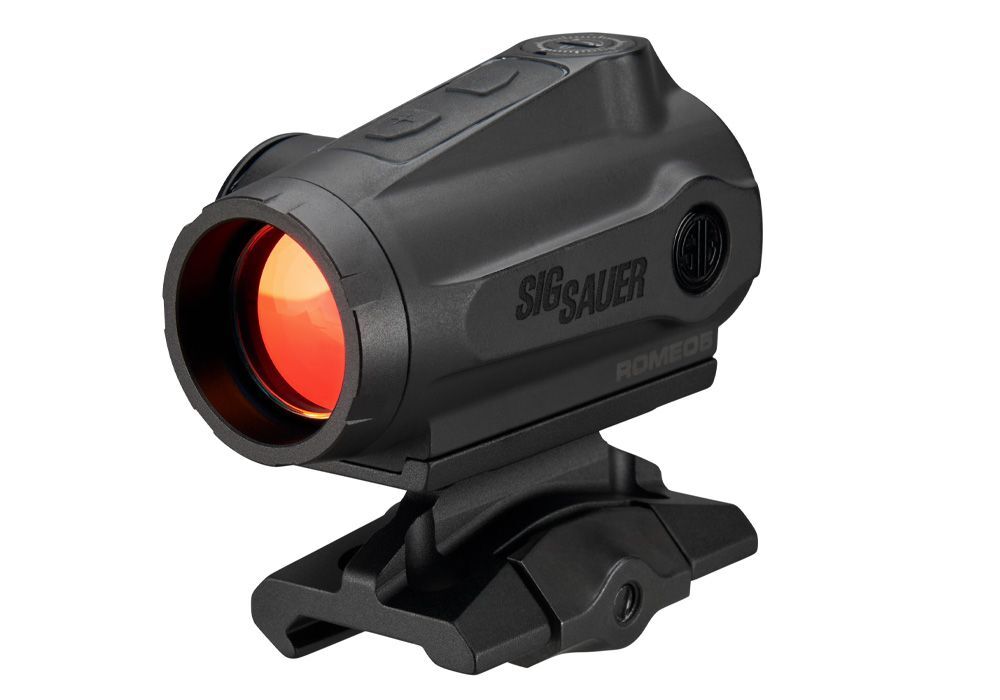
The ROMEO5 transforms your 10/22 from a traditional plinking rifle into a quick-pointing fun machine. The 2 MOA dot strikes a perfect balance - small enough for precise aiming at 50+ yards but big enough to find quickly when you're shooting reactive targets or steel.
What makes this red dot stand out is the motion-activated illumination system (MOTAC). Pick up your rifle, and the dot turns on automatically. Set it down for a few minutes, and it turns off to save battery. This smart feature means you'll almost never grab your gun to find a dead battery - perfect for rifles that might sit in the safe for weeks between range trips.
The ROMEO5 comes with both high and low mounts in the box, so you can set it up for your preferred cheek weld. The unlimited eye relief means you can mount it almost anywhere on your 10/22's rail and still get a clear sight picture. For plinking, steel challenges, small pest control, or teaching new shooters, this dot delivers tremendous value.
Price: $139.99
Specs
- Magnification: 1x
- Objective lens: 20 mm
- Reticle: 2 MOA red dot
- Brightness settings: 10 total (8 daylight, 2 night-vision compatible)
- Battery: CR2032, side-loading
- Eye relief: unlimited
- Adjustment range: 100 MOA elevation / 100 MOA windage
- Click value: ½ MOA per click
- Weight: approx. 5.1 oz
- Waterproof rating: IPX7
Features
- MOTAC motion-activated on/off system for battery savings
- Low and high mounts included for different cheek welds and rail setups
- Compact housing that looks proportional on a 10/22 receiver
- Simple top buttons for brightness control
- Parallax-free design at typical shooting distances
- Ultra-low parallax at practical distances, so point-of-aim stays very close to point-of-impact.
Pros
- Very fast target acquisition on close and mid-range targets
- Long battery life with smart auto-on/auto-off behavior
- Lightweight and compact for a handy 10/22 build
- Easy to mount on any Picatinny rail or adapter
- Crisp 2 MOA dot suitable for both plinking and more careful shooting
Cons
- Slight glass tint compared to top-tier red dots
- Needs a rail on the 10/22 if one isn't already installed
- No built-in magnification for small targets past 75–100 yards
3. Leupold VX-Freedom Rimfire 3-9x40 (Rimfire MOA)
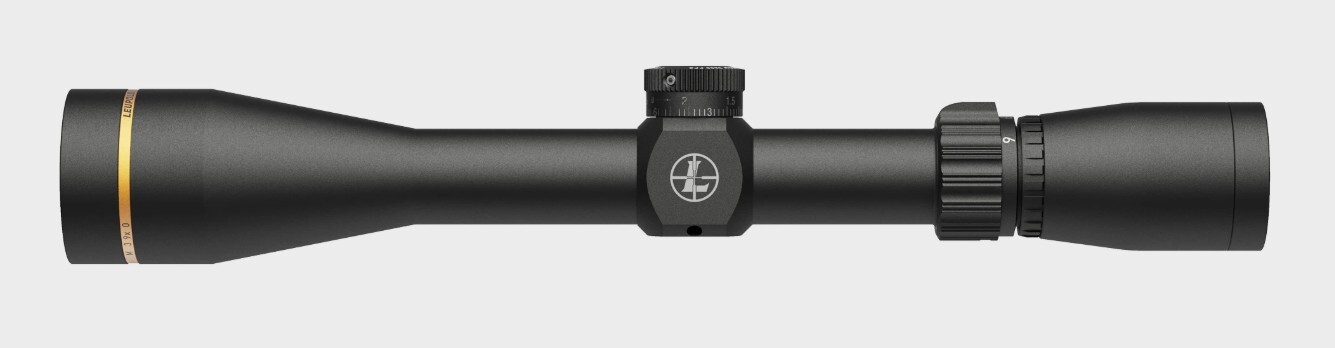
This is the upgrade that makes a 10/22 feel more like a precision tool than a simple plinker. The VX-Freedom Rimfire is built around .22 LR ballistics, with parallax set at 60 yards instead of the usual 100 yards on centerfire scopes. That setup gives you a sharper sight picture at normal rimfire ranges.
The glass is a clear step up from budget scopes, with natural color and very little distortion at 9x. The Rimfire MOA reticle gives you clean holdover marks without crowding the view. When you are trying to hit small targets at 75 or 100 yards, like a squirrel’s head in broken forest light, that extra clarity helps.
The scope sits at just over 12 ounces, so it adds some presence but does not drag the rifle down. The 40mm objective pulls in enough light for early morning and late evening shots, so you can stay on the rifle a bit longer each day. For anyone who runs a 10/22 as a real hunting or training rig, not just for casual plinking, this scope earns its higher price.
Price: $299.99
Specs
- Magnification: 3–9x
- Objective lens: 40 mm
- Tube diameter: 1 inch
- Reticle: Rimfire MOA, second focal plane
- Parallax setting: 60 yd (rimfire-tuned)
- Eye relief: about 4.17 in (low) to 3.66 in (high)
- Field of view: 34.6–13.6 ft @ 100 yd
- Adjustment value: ¼ MOA per click
- Total adjustment: 60 MOA elevation / 60 MOA windage
- Length: about 12.4 in
- Weight: about 12.2 oz
- Waterproof, fogproof, impact-tested
Features
- Rimfire-specific parallax and reticle subtensions for .22 LR distances
- Leupold's optical system for better light transmission and reduced glare
- Capped turrets with tactile clicks for simple zeroing
- Robust construction that holds zero through normal field use
- Lifetime service policy from a well-known American manufacturer
Pros
- Purpose-built version for rimfire rifles rather than a generic 3–9x
- Bright, clear glass with good edge clarity
- Generous eye relief and forgiving eye box
- Lightweight for a 3–9x40 scope
- Strong brand reputation and support
Cons
- More expensive than entry-level rimfire scopes
- No illumination for extreme low-light shots
- Reticle has more marks than a basic duplex, which can feel busy for beginners
4. Primary Arms SLx 1-6x24 Gen III ACSS .22 LR
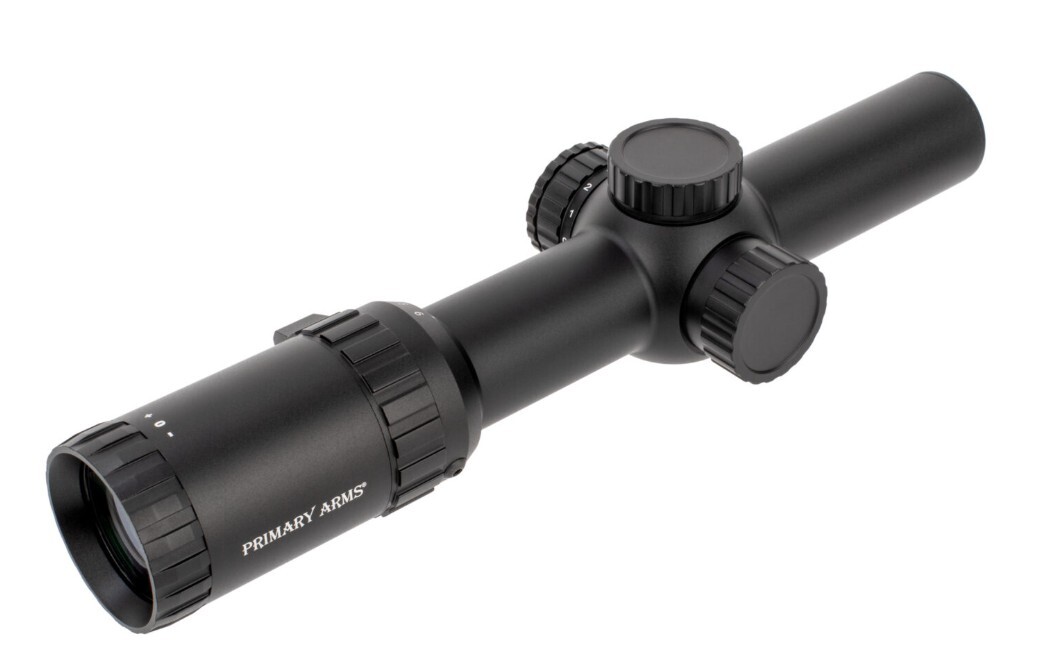
Primary Arms built this optic for people who want AR-style LPVO training on a cheaper .22 LR gun. At one power it runs almost like a red dot. You can keep both eyes open and use the lit center dot for fast shots. Turn it up to six power and you get enough magnification to work on small targets with more care.
This one is for the serious 10/22 user who wants a first-focal-plane LPVO for training or match use (note: the ACSS Nova reticle isn’t rimfire-calibrated). It will run fine on a .22 LR once you build your own dope—there are no dedicated .22 LR BDC holds. The etched reticle still works even if the battery quits.
This scope really shines for 10/22 owners who run more structured practice sessions, like steel challenges or rimfire tactical matches. Parallax is fixed (typical for LPVOs), but close-range rimfire drills are still easy at 1x. It's heavier than traditional rimfire scopes, but the versatility makes the weight worthwhile for many shooters.
Price: $289.99
Specs
- Magnification: 1–6x
- Objective lens: 24 mm
- Tube diameter: 30 mm
- Reticle: ACSS Nova, first focal plane, illuminated
- Eye relief: roughly 3.3–3.5 in
- Click value: typically ½ MOA per click
- Length: about 10 in
- Weight: around 16–17 oz
- Nitrogen purged, waterproof, and shock-resistant
Features
- ACSS Nova reticle with usable stadia; not a .22 LR-specific BDC
- Wide field of view at 1x for close targets and reactive drills
- Multiple brightness settings for different light conditions
- Durable 30 mm tube that works with common AR-style mounts
- Etched design so the reticle remains visible with the power off
Pros
- Combines red-dot speed and scope precision in one optic
- General-purpose ACSS Nova reticle; you can map .22 LR holds after zero
- Illumination improves contrast on dark targets or shadows
- Well-built tube suitable for frequent range use
Cons
- Heavier and larger than simple 2–7x rimfire scopes
- Tight eye box at 6x demands proper cheek weld
- Not a rimfire-specific BDC; requires dope charting for .22 LR
Rimfire-friendly alternative to consider: Mueller APV 4.5–14×40 AO
- Higher magnification for precision rimfire shooting
- Adjustable objective for parallax correction
- Great for small-game hunting
5. Primary Arms SLx 1-6x24 Gen IV ACSS Nova (FFP)
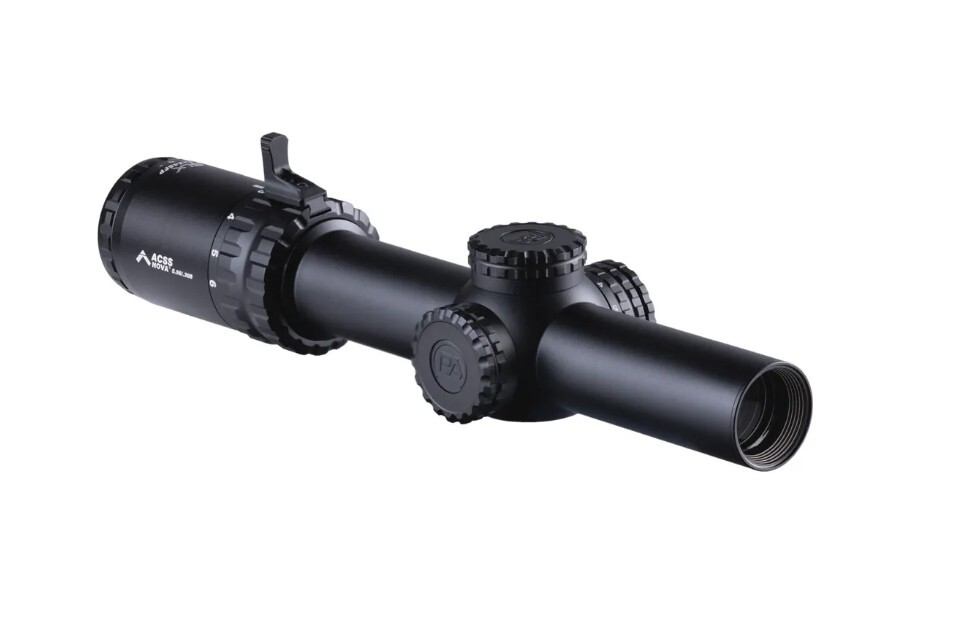
This one is for the serious 10/22 user who wants a first focal plane rimfire scope. The FFP design lets the reticle grow and shrink with the zoom setting. On the FFP Nova version, your holdover marks stay true at any power. At one power the bright center dot behaves like a red dot for close work. At six power the full ACSS Nova reticle shows clear marks for more precise shots.
The glass has strong clarity, even near the edges. Daylight-bright illumination keeps the center easy to see in the strong sun. The thirty millimeter tube gives solid build quality and plenty of adjustment for different ammo and distances.
This scope does cost more than many factory 10/22 rifles. It targets a narrow group of shooters who treat the 10/22 as a real training gun or match rifle. If you run drills to match your centerfire practice or shoot precision rimfire, this one makes sense. It brings features you often see only on scopes that sit in a much higher price tier.
Price: $349.99
Specs
- Magnification: 1–6x
- Objective lens: 24 mm
- Tube diameter: 30 mm
- Reticle: ACSS Nova, first focal plane, illuminated
- Eye relief: about 4.0–4.2 in
- Field of view: roughly 109–15 ft @ 100 yd
- Click value: typically 0.1 MIL or ¼ MOA (depending on version you choose)
- Length: about 10.4 in
- Weight: about 20.7 oz
- Waterproof, fog-resistant, impact-rated
Features
- FFP reticle keeps all holds and ranges correct at any zoom level
- ACSS Nova adds detailed markings for more advanced shooting problems
- Bright central aiming element at low powers for fast up-close work
- Strong turrets and tube suitable for frequent dial-up/dial-down use
- Works well in one-piece AR-style mounts on a railed 10/22
Pros
- True training-grade optic for serious rimfire practice
- Reticle designed for complex holds and rapid decision making
- Daylight-bright illumination improves speed at 1x
- Built to handle more recoil and abuse than a .22 LR can deliver
Cons
- Noticeably heavier than traditional rimfire scopes
- Reticle complexity can overwhelm casual or new shooters
- Costs more than many 10/22 rifles
Possible replacement option (if you prefer an SFP alternative):
Bushnell Banner Dusk & Dawn 3–9×40
- Optimized for low-light shooting
- Waterproof and fog-proof
- Fast-focus eyepiece for quick target acquisition
6. Athlon Neos 4-12x40 BDC 22 Rimfire
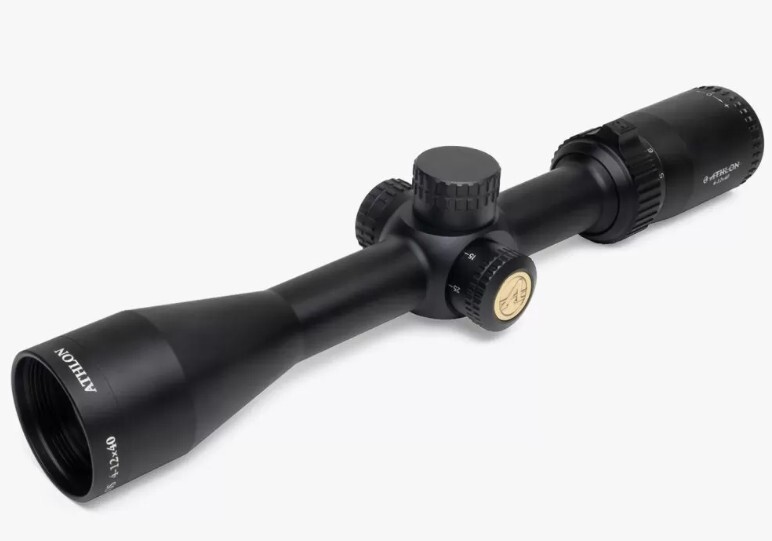
The Athlon Neos works well for 10/22 owners who want more magnification without a high price tag. The four to twelve power range lets you see small targets and tight groups clearly at one hundred yards and beyond. That helps people who enjoy tracking every impact and pushing their rimfire skills.
This scope stands out because of the BDC 22 Rimfire reticle and the adjustable parallax. The reticle has holdover marks laid out just for common .22 LR paths. That makes longer shots easier and cuts down on guessing. The side-focus parallax knob goes down to ten yards, which is great for indoor ranges or short backyard lanes.
The glass is quite good for this price. Images stay clear across the zoom range. The forty millimeter objective feels like a sweet middle ground. It gathers enough light for mild low-light use but still looks right on a 10/22. For rimfire fans who want to push distance without paying for high-end glass, this scope gives strong value.
Price: $212.49
Specs
- Magnification: 4–12x
- Objective lens: 40 mm
- Tube diameter: 1 inch
- Reticle: BDC 22 Rimfire, second focal plane
- Eye relief: about 3.1 in
- Field of view: 27.3–8.9 ft @ 100 yd
- Parallax: adjustable from 10 yd to infinity (side focus)
- Adjustment value: ¼ MOA per click
- Length: around 12.4 in
- Weight: around 17.6 oz
- Nitrogen purged, waterproof, and shockproof
Features
- Dedicated .22 LR BDC reticle for quick elevation holds
- Side parallax knob that dials all the way down to 10 yards
- Fully multi-coated lenses for improved image quality
- Capped turrets for protection in the field or case
- One-piece tube for better strength and alignment
Pros
- 12x top end is helpful for small targets and fine sighting work
- Adjustable parallax is a big plus for rimfire ranges
- BDC reticle reduces the need to dial turrets for distance
- Competitive price for the feature set
Cons
- Shorter eye relief than some rimfire-specific scopes
- BDC marks only match perfectly with certain loads and zero setups
- No illuminated reticle option
7. Burris FastFire 3 (3 MOA)
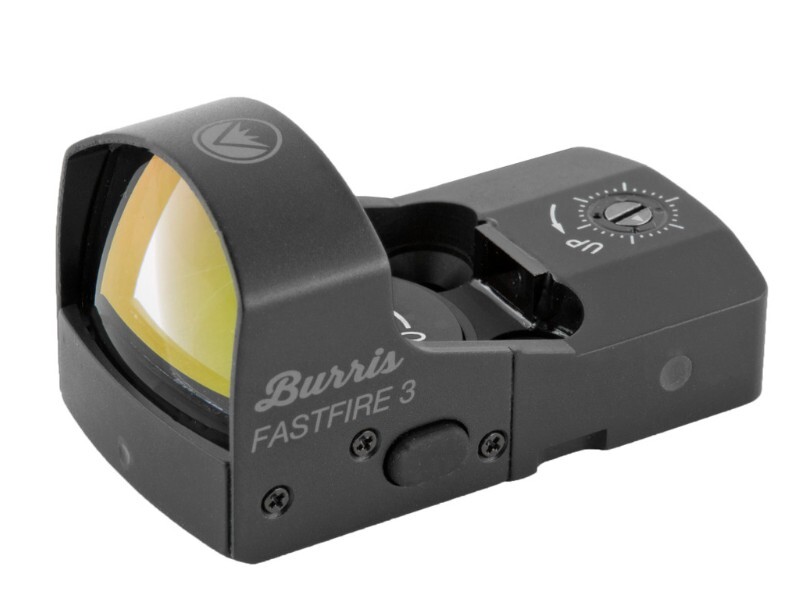
The Burris FastFire 3 is all about staying light. At less than an ounce, it adds almost no weight to your 10/22. This tiny reflex sight keeps the rifle balanced and easy to move. It suits hunters who walk a lot and anyone who wants a light, quick setup. The 3 MOA dot gives enough precision for normal rimfire ranges and is still easy to see fast.
One handy feature is the automatic brightness control. As you go from bright fields to dark timber, the dot changes to match the light around you. You do not need to keep chasing buttons or settings. For days when you want control, you still get three manual brightness levels so you can set the dot for your eyes and the light.
The top-loading battery tray is a simple but smart detail. You can change the battery without taking the sight off or losing zero. The low profile keeps the sight close to the bore and gives a natural point of aim that many people find easy to use. For squirrel hunters, steel plate days, or anyone who wants a small, simple, light optic, the FastFire 3 is an easy pick.
Price: $276.00
Specs
- Magnification: 1x
- Dot size: 3 MOA (also available in 8 MOA)
- Lens/window size: roughly 21 x 15 mm
- Battery: CR1632, top-loading
- Brightness: 3 manual levels plus one automatic setting
- Weight: about 0.9 oz (sight only)
- Waterproof and shockproof housing
Features
- Very light and compact open-emitter design
- Auto-brightness mode for hands-off operation in changing light
- Manual brightness override for precise control
- Simple windage and elevation adjustments with protective housing
- Fits a variety of footprint-specific mounts for the 10/22 and other platforms
Pros
- Adds almost no weight to the rifle
- 3 MOA dot balances precision and speed nicely
- Top battery access is convenient and quick
- Good for small-game hunting where fast shots matter
Cons
- Small viewing window compared to tube-style red dots
- Exposed lens and emitter need more care in dusty or muddy conditions
- Requires a correct adapter plate or mount for the 10/22 receiver
8. Bushnell TRS-25 1x25 Red Dot
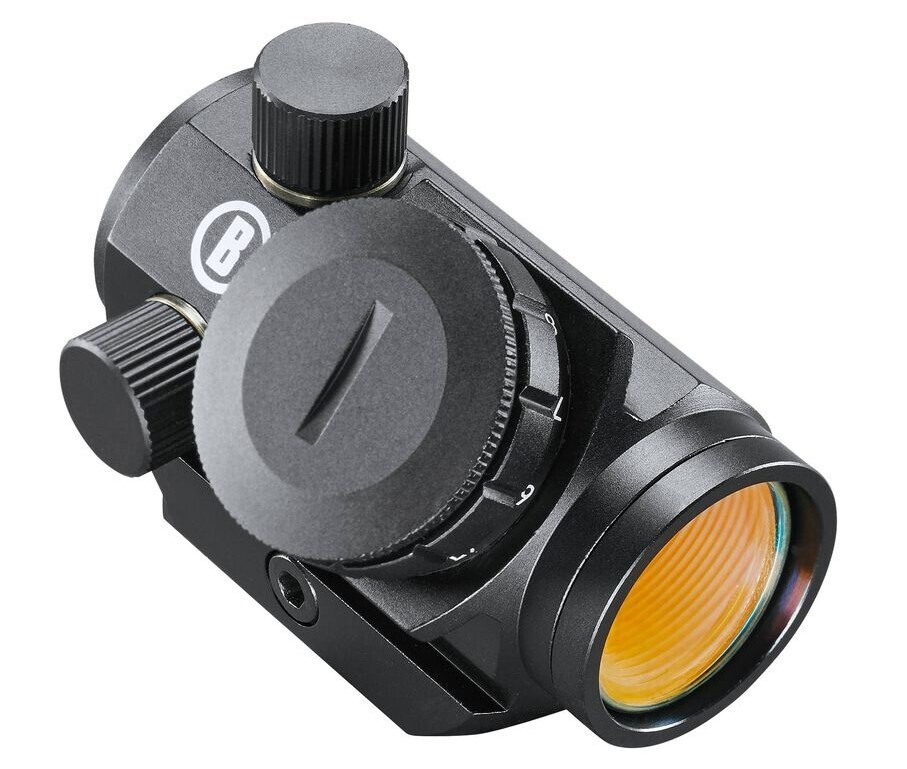
The TRS-25 has gained a huge following as the "gateway" red dot for budget-conscious 10/22 owners. This compact tube-style sight delivers the essentials without fancy bells and whistles. The 3 MOA red dot is just right for rimfire distances - small enough for precise aiming at 50 yards but large enough to pick up quickly on close targets.
Operation couldn't be simpler - one knob controls both power and brightness. The eleven brightness settings let you match the dot intensity to your lighting conditions, from indoor ranges to bright sunlight. The unlimited eye relief means you can mount it wherever feels most natural on your rifle, and you'll still get a full sight picture.
The TRS-25 is a budget red dot that can still take a beating. The nitrogen-filled tube is waterproof and fogproof, so rain and quick shifts in temperature do not stop it. It suits new 10/22 owners and anyone building a low-cost plinker who still wants a solid red dot. For the price, the TRS-25 offers very good value and steady performance.
Price: $79.99
Specs
- Magnification: 1x
- Objective lens: 25 mm
- Reticle: 3 MOA red dot
- Brightness settings: 11 manual levels
- Battery: CR2032
- Eye relief: unlimited
- Adjustment range: around 70 MOA (typical for this model)
- Weight: about 3.7 oz
- Waterproof, fogproof, and shock-tested
Features
- Compact tube design that looks at home on small rifles
- Simple rotary dial for brightness and power control
- Multi-coated lenses to improve clarity and light transmission
- Integrated Picatinny/Weaver base for easy mounting
- Rugged little package intended for general shooting use
Pros
- Very affordable way to add a red dot to the 10/22
- Easy to use and understand for new shooters
- Lightweight and compact with a low profile
- Reasonably durable for casual range and field tasks
Cons
- Battery life is modest compared to higher-end dots
- Slight green or amber tint noticeable in some light
- Dot and brightness adjustments are less refined than premium optics
9. Simmons .22 Mag 3-9x32
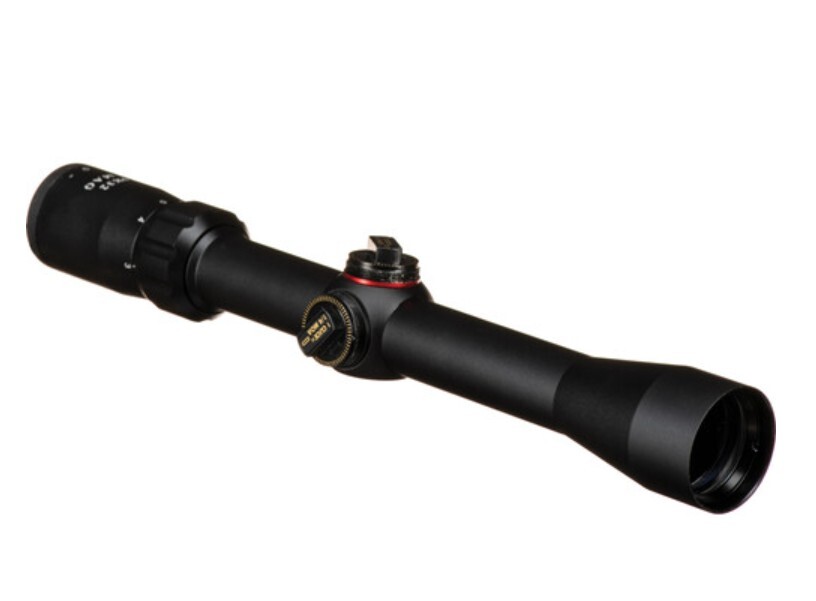
The Simmons .22 Mag has sat on budget 10/22 builds for many years for a simple reason. It works. This scope stays simple and cheap and still gets the job done. The 3-9x range fits rimfire use well. You get enough power for small targets at one hundred yards and still stay wide enough at low power for closer shots.
One big advantage over many cheap scopes is the 50-yard parallax setting. That range lines up with most rimfire shooting. Many low-cost scopes use a one hundred yard parallax, which can make close targets look a bit soft. The Truplex reticle, Simmons’ take on a duplex, keeps the view clean and easy to read. It is great for teaching new gun owners and for anyone who wants a simple sight picture.
At about ten ounces, this is one of the lighter full-size scopes you can add to a 10/22. Your rifle stays handy and quick to shoulder. The glass is clear and the image is bright for this price range. For new 10/22 owners, younger shooters, or anyone building a rimfire on a tight budget, the Simmons .22 Mag brings a lot of value and keeps the key features that matter most.
Price: $67.66
Specs
- Magnification: 3–9x
- Objective lens: 32 mm
- Tube diameter: 1 inch
- Reticle: Truplex
- Parallax setting: 50 yd
- Eye relief: about 3.75 in
- Field of view: about 31.4–10.5 ft @ 100 yd
- Adjustment value: ¼ MOA per click
- Total adjustment: about 60 MOA elevation / 60 MOA windage
- Weight: around 10 oz
- Waterproof, fogproof, shockproof
Features
- Rimfire-appropriate 50-yard parallax from the factory
- Simple duplex-style reticle for straightforward aiming
- Often includes rimfire rings for easy mounting on a 10/22
- Lightweight tube that doesn't overpower the rifle
- Textured magnification ring for quick power changes
Pros
- Very budget-friendly scope option
- Light and compact for youth and small-frame shooters
- Simple reticle that's easy to teach with
- Commonly sold as an all-in-one package with rings
Cons
- Glass quality and coatings trail mid-range optics
- No illumination or advanced reticle functions
- Turret feel and tracking are basic and not built for constant dialing
10. Burris XTR III 5.5-30x56 (SCR2 MIL)
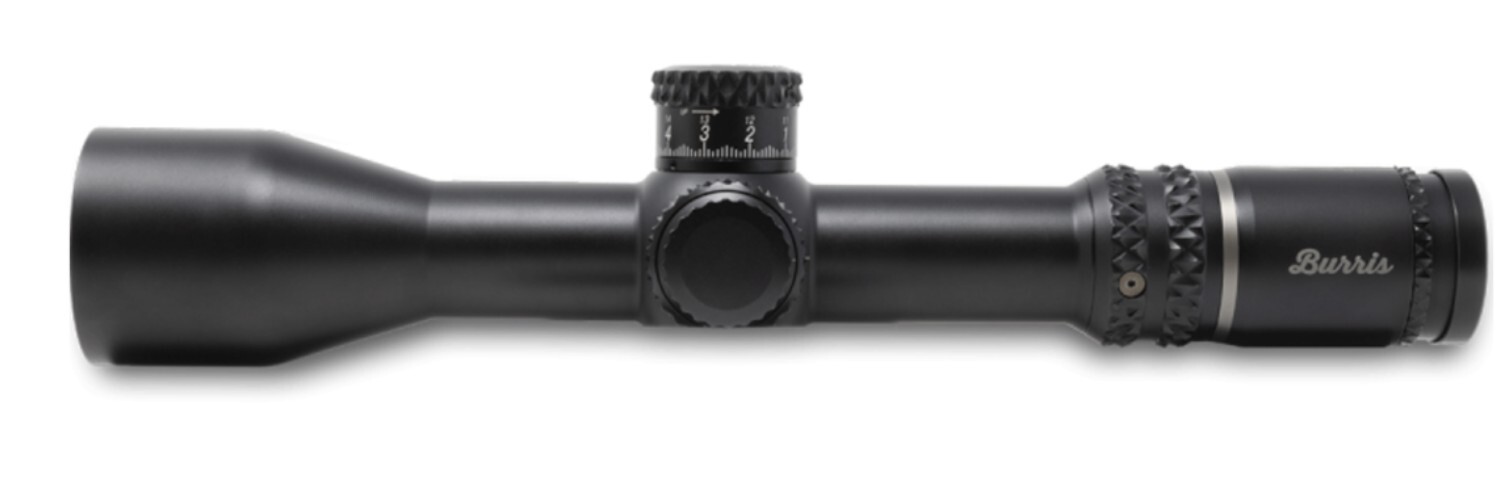
The Burris XTR III sits at the top end of 10/22 glass. It often costs several times more than the rifle. This scope fits the serious precision rimfire crowd who shoot matches like NRL22 and stretch shots to three hundred yards and beyond. The wide 5.5-30x zoom lets you see tiny targets in detail even at long rimfire ranges.
The first focal plane SCR2 MIL reticle is a true match tool. Your holdovers and ranging marks stay accurate at every magnification. The etched glass reticle stays sharp against most backgrounds. When you pair it with MIL turrets, you get a steady system for dialing or holding for distance and wind. That can mean faster and cleaner stage runs for match shooters.
Build quality is high, with a 34mm main tube that gives a deep pool of internal adjustment. The zero-stop elevation turret lets you dial up for far targets and then snap back to your base zero without counting clicks. Side parallax and generous eye relief make long match days more comfortable on the line. For the most demanding 10/22 precision shooter, this scope brings features usually kept for long-range centerfire rigs.
Price: $2,219
Specs
- Magnification: 5.5–30x
- Objective lens: 56 mm
- Tube diameter: 34 mm
- Reticle: SCR2 MIL, first focal plane, illuminated (on illuminated models)
- Click value: 0.1 MIL per click
- Zero stop: yes (elevation turret)
- Length: around 15.4 in
- Weight: about 32–33 oz (depending on exact model)
- Side parallax: adjustable from close range to infinity
- Waterproof, fogproof, and impact-rated
Features
- FFP MIL reticle paired with MIL turrets for consistent corrections
- Zero-stop turret design for fast return to base zero
- Large elevation and windage travel for significant drop compensation
- High-quality lenses and coatings for clarity at high magnification
- Strong 34 mm main tube built for demanding use
Pros
- Serious precision tool for long-range rimfire and training
- Reticle and turret system suitable for detailed ballistic work
- Excellent low-light performance for a high-magnification optic
- Built to withstand hard use on much heavier-recoiling rifles
Cons
- Price is far above typical rimfire budget levels
- Very heavy and large for a compact rifle like the 10/22
- Overkill for casual plinking or simple small-game hunting
How to Choose the Right Ruger 10/22 Scope or Red Dot
Step 1 – Define Your Primary Use
Your first job is figuring out what you actually do with your 10/22. Plinking cans at 25 yards needs different glass than shooting groups at 100 yards. Do you mostly shoot for fun on weekends? Hunt squirrels in the woods? Teach new shooters? Compete in rimfire matches? Each activity pushes you toward different features.
Be honest with yourself here. Buying a complex competition scope when you mainly shoot for fun is like buying a race car for grocery runs - expensive overkill.
Step 2 – Pick Magnification or Dot Type
For close plinking under fifty yards, fun range days, or teaching new shooters, a simple one-power red dot often makes life easiest. You get unlimited eye relief and can shoot with both eyes open. That gives a forgiving sight picture and a very natural feel.
For mixed use, a 2-7x or 3-9x scope hits a sweet spot. You get enough zoom for careful shots when needed and still stay usable at close range. For most 10/22 owners, this range feels just right for hunting, paper, and steel.
Higher magnification, such as 4-12x and above, makes sense if you often shoot tiny targets past seventy-five yards, run precision rimfire matches, or chase the smallest groups you can print. Just remember that more power cuts your field of view and can dim the image. You gain detail but lose some speed and light.
Step 3 – Understand Reticle Options
Simple duplex/V-Plex/Truplex reticles work great for general shooting and hunting. They keep the view clean and don't overwhelm new shooters with extra markings.
BDC and ACSS .22LR reticles add holdover points calibrated for typical .22LR ballistics. These can be super helpful for longer shots without dialing turrets. Just remember the holdovers only match perfectly with certain ammo at certain zero distances.
MIL/MOA grid reticles are ideal for precision work and competition. They offer consistent reference points for wind and elevation holds but come with a steeper learning curve.
Step 4 – Durability, Warranty & Weight
Even though the 10/22 has mild recoil, your optic still needs to handle bumps, moisture, and changes in temperature. Look for fogproof, waterproof, and shockproof ratings from brands with a good track record. That way the scope keeps working when the weather turns bad.
A strong warranty brings peace of mind. Brands like Vortex, Leupold, Burris, and Primary Arms stand behind their gear and can help you out years later if something fails. That support can save both time and money.
Weight also matters more than many people expect. A heavy scope on a light 10/22 can make the rifle feel nose-heavy and slow. For hunting or long days at the range, a lighter optic often feels better in the hands and on the shoulder.
Step 5 – Budget Planning
In the sub-$150 range, focus on simple scopes with clear glass and basic features that match your needs. The Vortex Crossfire II and Simmons .22 Mag deliver solid performance here.
Between $150-300, you gain better glass quality, more precise adjustments, and some specialized features like rimfire-specific reticles. The Leupold VX-Freedom and Athlon Neos live here.
Above $300, you're paying for premium glass, advanced reticles, and features like first focal plane designs or extreme magnification. These make sense for competition or dedicated precision shooting, but can be overkill for casual use.
How to Mount a Scope on a Ruger 10/22 – Step-By-Step How-To
Tools & Parts You'll Need
- Scope base compatible with the 10/22 receiver (Weaver or Picatinny style)
- Rings that match your scope's tube diameter (typically 1" or 30mm)
- Torque screwdriver or wrench
- Bubble level or scope mounting levels
- Blue threadlocker (medium strength)
- Gun vise or stable rest
Step-By-Step Mounting Overview
- Prepare the Receiver: Remove any existing sights or bases. Clean the mounting surfaces.
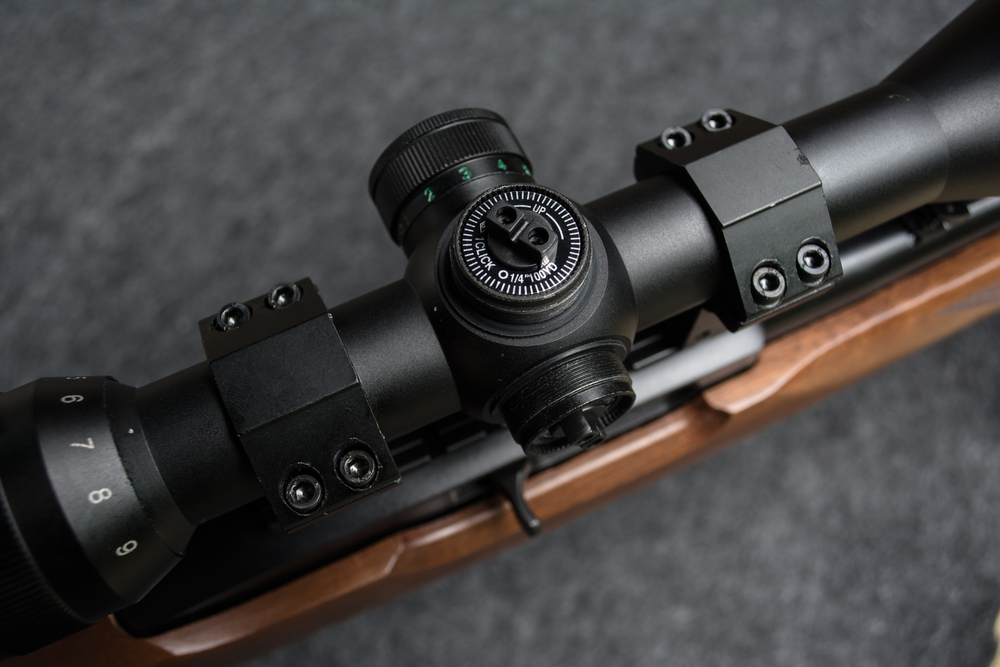
- Attach the Base: Apply a tiny drop of threadlocker to the base screws. Attach to receiver, tightening screws to about 20 inch-pounds (or hand tight plus a small turn for the 10/22's aluminum receiver). Let the threadlocker cure per the manufacturer’s directions (usually several hours or overnight) before hard use.
- Attach Ring Bottoms: Place the lower halves of your rings on the base, roughly positioned where you think they should go. Tighten just enough to hold position.
- Position the Scope: Set the scope in the lower rings and adjust its position forward/backward to get proper eye relief. To check eye relief, hold the rifle in your normal shooting position with the scope at maximum magnification.
- Level Everything: Use a bubble level to ensure the rifle is level, then use another level on top of the scope to align the reticle properly.
- Secure the Rings: Place the top halves of the rings on. Tighten screws in a cross-pattern (like lug nuts on a car), about a quarter-turn at a time, until you reach proper torque (usually 15-18 inch-pounds for most rings).
- Final Check: Ensure everything is tight and the scope doesn't move. Check reticle alignment one more time.
Basic Zeroing Plan for a Ruger 10/22
For most 10/22 use, a 50-yard zero works very well. With standard velocity ammo, this keeps your hits close to point of aim at 25 yards and still close at 75 yards.
Start at 25 yards to get on paper. Then move to 50 yards to fine-tune your zero. Use sandbags or a solid rest so the rifle stays steady.
A scope with 1/4 MOA clicks moves the point of impact about 1/4 inch at 100 yards. At 50 yards that is about 1/8 inch per click. Take your time and make small, clear changes between groups.
Final Thoughts
The 10/22 is one of the most flexible rimfire platforms out there. Your optic should match how you use the rifle in real life. A squirrel hunter needs something different than a steel challenge shooter or a rimfire match shooter.
From this list of ten options, you can find glass that fits your style and your wallet. If you are new to scopes, start simple with a basic optic like the Vortex Crossfire II or Bushnell TRS-25. You can move to higher-end glass later when your skills and goals grow.
No scope turns anyone into a great shot on its own. Practice does that. A modest scope that lets you buy plenty of ammo beats high-end glass that leaves your range bag empty. The best scope for your 10/22 is the one that helps you shoot more and enjoy your time on the range.
A good 10/22 scope helps you shoot better, but your results still come down to the ammo you feed the rifle. If you want to get the most accuracy out of any optic on this list, check out our Best .22 LR Rimfire Ammo: Top Picks for Accuracy, Hunting, and Plinking guide for proven loads.

Federal Automatch 22LR 40GR | 325RD BOX
$87.75 (975 Rounds)
at Pro Armory
Prices accurate at time of writing
Frequently Asked Questions (FAQs)
What magnification is best for a Ruger 10/22?
For most general use, 2-7x or 3-9x works very well. These ranges give you enough power for common rimfire distances from about 25 to 100 yards. They also stay easy to use at closer ranges. For match work or tiny targets at longer rimfire ranges, 4-12x or higher can help you see more detail.
Is a red dot or scope better for plinking with a 10/22?
For close plinking under about 50 yards, a red dot feels fast and simple. You get quick target picks and can keep both eyes open. For mixed ranges or more careful shots, a low-power variable scope gives you more control over the picture.
What’s a good zero distance for .22LR with a scope or red dot?
A 50-yard zero is a great all-round choice for most .22LR rifles. With standard velocity ammo, it usually keeps your hits within about an inch or two of point of aim from 25 to 75 yards.
Do I need a special mount for red dots on a 10/22?
Most 10/22 rifles do not ship with rails on top. You will need to add a Weaver or Picatinny base on the receiver before you mount most red dots. These bases are low cost and easy to install with simple hand tools.
Are .22LR-specific reticles worth it on a 10/22?
Yes, they can be very handy if you often shoot past 50 yards. Rimfire BDC reticles are set up for the arched path of .22LR. They make it easier to hold for longer shots once you learn your drops. For close plinking at short ranges, a plain reticle works just fine.
About the Author
This article comes from the Pro Armory writing team. The team used current research and open data from trusted places such as the Journal of Military Science, Firearms News, and the National Shooting Sports Foundation. They also checked information against official defense publications, the ATF, the NRA, and maker manuals for the products covered.
Disclaimer: This review is for education only. Laws change and can be different in each state and city. Follow safe gun handling at all times and read your owner’s manual. Check local rules and legal guides before you buy, carry, or train with any firearm or part.

Best Ammo Deals, Training, & Accessories
Subscribe to ProArmory sales and deals email.