 Pro Armory Editorial Team
Quick Answer
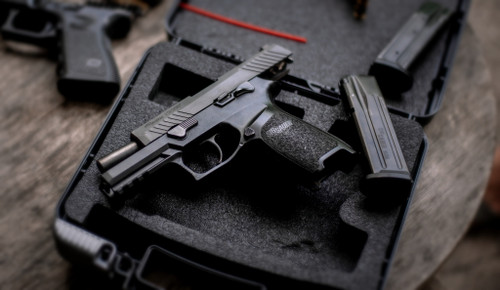
The Sig Sauer P320 lineup includes several model families built around the same modular platform but tuned for different jobs. Some focus on duty and military-style use, others on competition, optics, concealment, or premium styling. The biggest differences come down to size, grip module, barrel length, optics compatibility, trigger style, sights, and intended purpose.
Key Takeaways
- The P320 lineup is modular, but each family targets a different role.
- Size matters just as much as features when choosing a P320.
- M17 and M18 are military-style variants with distinct features.
- X Series, Legion, and Spectre add performance-oriented upgrades.
- The best P320 depends on carry, duty, range, or competition use.
You walk into a gun store and ask about the P320. The person behind the counter rattles off names like Nitron, XCarry Legion, AXG Scorpion, Spectre Comp, and M17. You nod along. Then you leave more confused than when you came in. Does that sound familiar? That's the real problem with the P320 lineup. It's not that guns are bad. The sheer number of variants just makes it hard to know what you're actually looking at. This guide cuts through that confusion and gives you a clear breakdown of what each model family is, what it does, and who it's best for.
What Makes the Sig Sauer P320 Different?
The P320 is a modular striker-fired pistol platform. The modular part is real and it actually matters. At the heart of the gun is a removable fire control unit that holds the trigger, sear, and striker components together as one self-contained piece. You can move this unit between different grip modules and slide sizes, which is what gives the P320 its flexibility.
The platform launched in January 2014 and won the United States Army's Modular Handgun System competition in January 2017. That win pushed the P320 into a dominant position across military, law enforcement, and commercial markets. According to Wikipedia, the services planned to procure up to 421,000 weapons in total across the Army, Air Force, Navy, and Marines. The broad commercial lineup that followed is both a product of that success and the reason buyers find the model list so hard to sort through.
Sig Sauer P320 Sizes Explained
Before you even look at model families, you need to understand sizes. Picking the wrong size can mean a poor fit for your body, carry setup, or intended role.
Full-Size
The full-size P320 comes with a 4.7-inch barrel, stands 5.5 inches tall, measures 8 inches in overall length, and runs 1.4 inches wide. Magazine capacity ranges from 10 to 17 rounds depending on caliber. This size fits duty, range, and home defense roles well.
Carry
The Carry model pairs a full-size grip frame with a shorter compact slide. You get full grip capacity with a more compact top end. The barrel measures 3.9 inches and overall length drops to 7.2 inches.
Compact
The compact trims things further. The grip frame shortens, height drops to 5.2 inches, and capacity falls to 15 rounds in 9mm. Barrel length stays at 3.9 inches with a 7.2-inch overall length.
XCompact
The XCompact combines a compact-size grip with a shorter subcompact slide. You get a 3.6-inch barrel, 5.2-inch height, and 6.7-inch overall length. It keeps solid capacity in a smaller footprint.
Subcompact
The older P320 Subcompact is no longer a central part of SIG’s current catalog. For most buyers looking at today’s lineup, Compact, XCompact, XCarry, M18, and other carry-oriented variants are the more relevant reference points.
How We Organized the P320 Lineup in This Guide
The full catalog can feel cluttered because This guide groups the major P320 families and notable variants into practical buyer categories. That matters because SIG’s current catalog changes over time, and some older names remain important for used-market shopping even when they are no longer front-and-center in the current lineup. Some sub-variants are still referenced within the appropriate sections so you get the full picture without the noise.
Quick Comparison Table
| Model Family | Best For | Common Size | Standout Feature | Optics Ready | Typical Role |
|---|---|---|---|---|---|
| P320 Nitron | Entry-level buyers | Full-size / Compact | Affordable base model | No | Range / Duty |
| M17 / M18 | Military-style use | Full-size / Carry | Manual safety and night sights | Yes | Duty |
| X Series | Step-up buyers | Full-size / Carry / XCompact | Improved ergonomics and magwell | Yes (RXP models) | Range / Carry |
| X-VTAC | Niche tactical buyers | Carry / Full-size | Dual day/night sight system | Yes | Tactical |
| P320MAX | Competition shooters | Full-size | ROMEO3MAX optic and TXG grip | Yes | Competition |
| AXG | Premium metal feel | Carry | Aluminum grip module | Yes | Range / Carry |
| P320 TACOPS | Tactical and duty use | Full-size / Carry | High-capacity mags and threaded barrel | Yes | Duty / Tactical |
| Legion | Performance-focused users | Full-size / Carry | TXG grip, flat trigger, slide cuts | Yes | Competition / Range |
| Spectre | Premium styling | Full-size / Carry / XCompact | Laser engraving, gold trigger, compensator | Yes | Range / Collector |
| XTEN | 10mm buyers | Full-size | 10mm chambering and bull barrel | Yes | Range |
The 10 Main Sig Sauer P320 Model Families Explained
The model families below are arranged for clarity rather than brand order so you can understand the lineup faster.
P320 Nitron
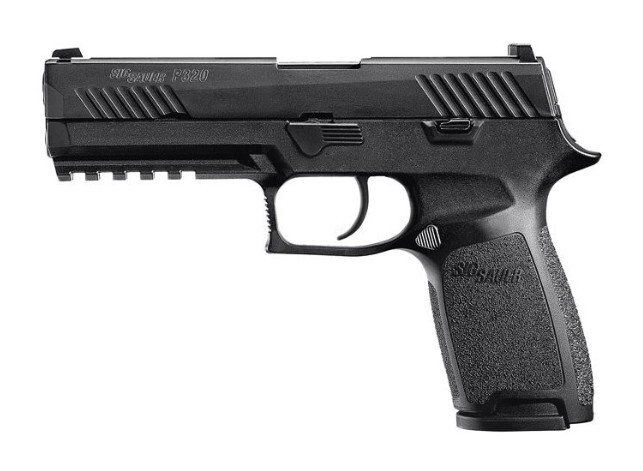
The Nitron is the base P320 and the entry point into the platform. It gets its name from Sig's Nitron finish on the metal parts, which gives the gun a slightly gray look. Steel high-contrast sights come standard and a polymer grip frame includes a Picatinny rail for accessories. Retail pricing on standard Nitron / base full-size and compact P320 models typically lands around the mid-$500s to low-$600s depending on the exact SKU and current seller pricing. This is the P320 lane for buyers who want the core experience without stepping into X Series, Legion, or AXG pricing.
X Series
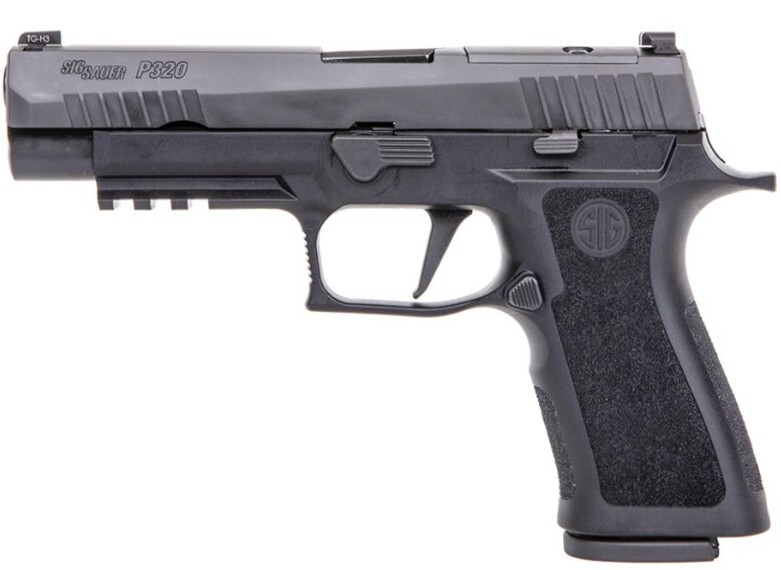
The X Series is a clear step up from the Nitron. Sig redesigned the grip module with a higher trigger undercut, extended beavertail, and a fastback carry cut. A built-in low-profile magwell helps speed up reloads. You also get a flatter X Series trigger and XRAY3 day and night sights. The X Series includes carry, compact, and full-size variants with upgraded ergonomics, flatter triggers, and optics-ready configurations on current models like the XFULL, XCARRY, and XCOMPACT. Pricing typically starts around the mid-$600 range and climbs from there depending on the exact variant and optic package.
M17 and M18
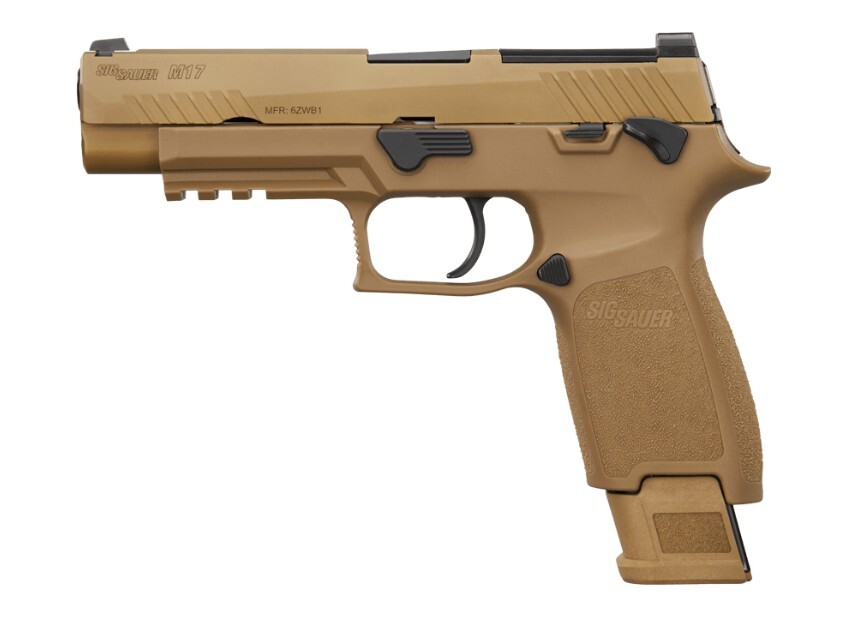
These two models are the commercial versions of the military handguns selected through the Modular Handgun System competition. The M17 is the full-size variant and the M18 is the carry-size counterpart. Both come in 9mm and closely mirror the military pattern, with optic-ready slides, military-style coyote finish, and manual-safety variants strongly associated with the MHS guns. The M17 is the full-size model and the M18 is the carry-size counterpart. These models appeal to buyers who want a military-style setup in a commercial package. with pricing typically around $600.
AXG
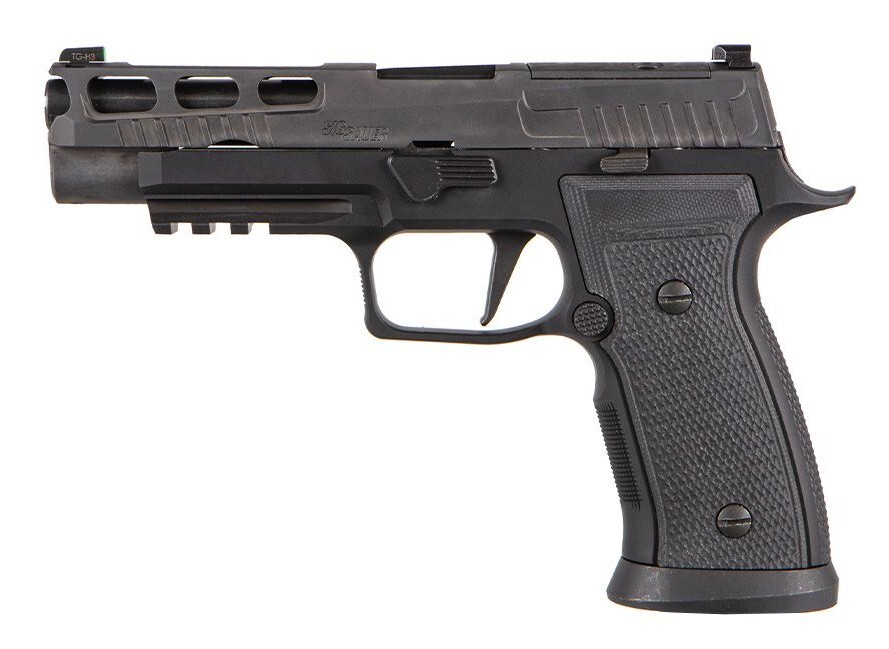
The AXG family gives the P320 platform an aluminum grip module and a more metal-framed feel. Current AXG variants include models like the AXG Carry, AXG Combat, and AXG Legion rather than one single fixed configuration. These pistols combine AXG alloy grip modules with optics-ready slides and upgraded sights, and they are aimed at buyers who want a heavier, more premium shooting experience than the standard polymer-frame guns provide. Retail pricing usually starts around the $1,000 mark and goes higher for Legion and Custom Works variants.
Legion
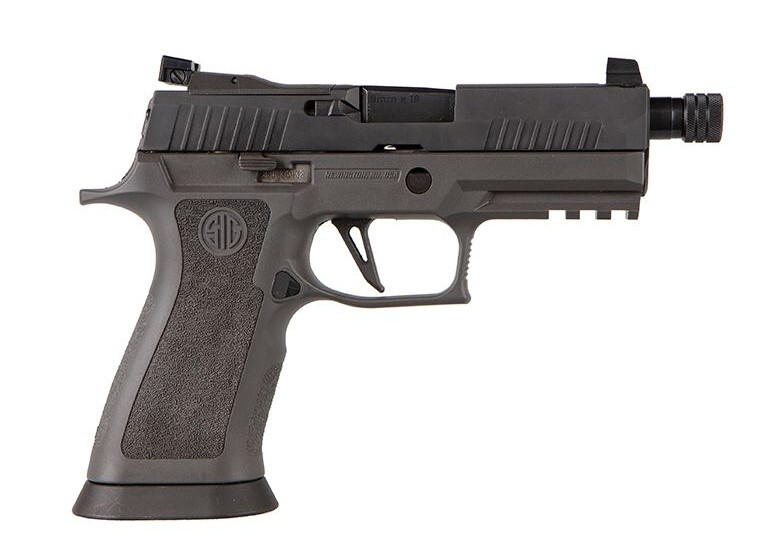
The Legion family sits at the performance end of the P320 lineup. The current core Legion variants are the P320-XFIVE LEGION and P320-XCARRY LEGION, with the AXG LEGION now overlapping that premium-performance space as well. The XFIVE LEGION uses a 5-inch bull barrel, Dawson Precision adjustable sights, and the TXG tungsten-infused grip module that SIG says reduces muzzle flip by up to 50 percent. The XCARRY LEGION keeps the Legion concept in a more practical carry-sized format. Retail pricing generally starts around $1,000 and climbs higher depending on the exact Legion variant.
Spectre
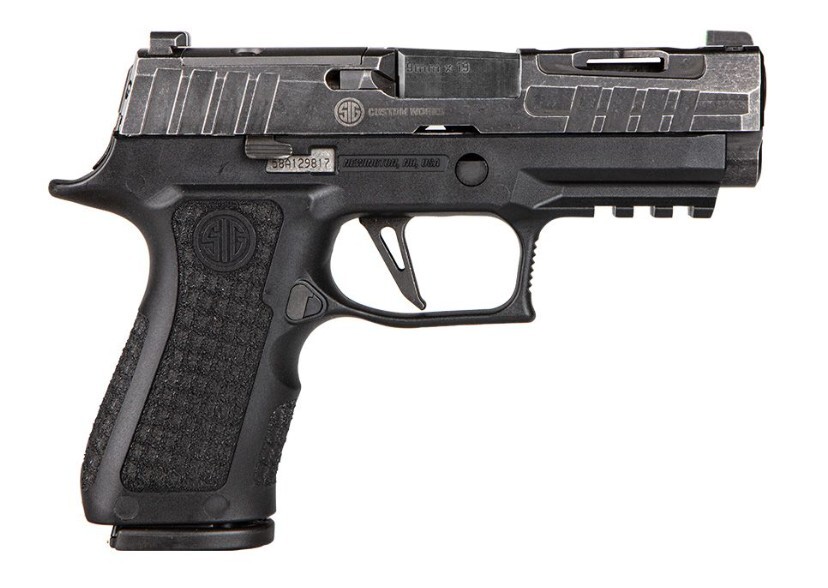
The Spectre line is best understood as a Custom Works premium-style branch of the P320 family rather than a broad current core family. Spectre variants such as the XCarry and XCompact emphasized laser-engraved LXG grip modules, slide lightening cuts, gold-finished triggers and barrels on some models, and optics-ready slides.
P320 TACOPS
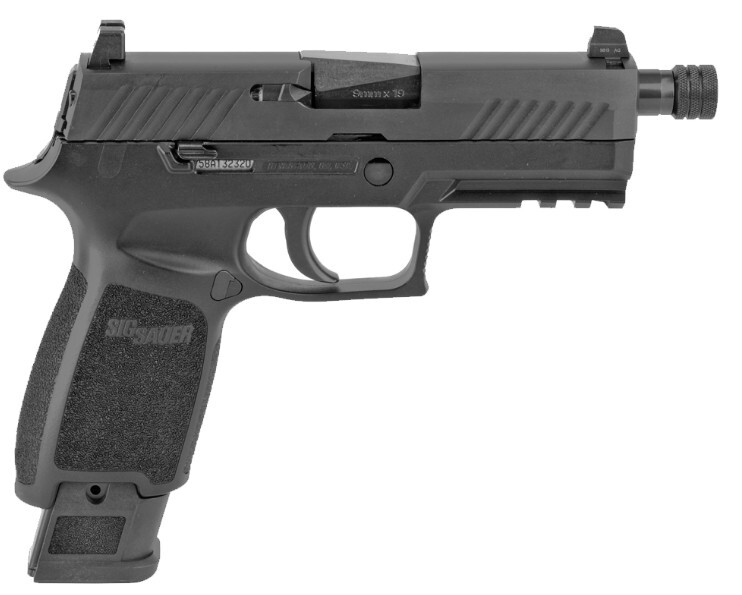
The TACOPS name in the P320 line is less central in the current catalog than it was in earlier configurations, and buyers should verify the exact variant before using ‘TACOPS’ as a shopping shortcut. Historically, TACOPS-branded P320s emphasized higher-capacity magazines, tactical-style accessory support, and in some versions threaded barrels.
X-VTAC
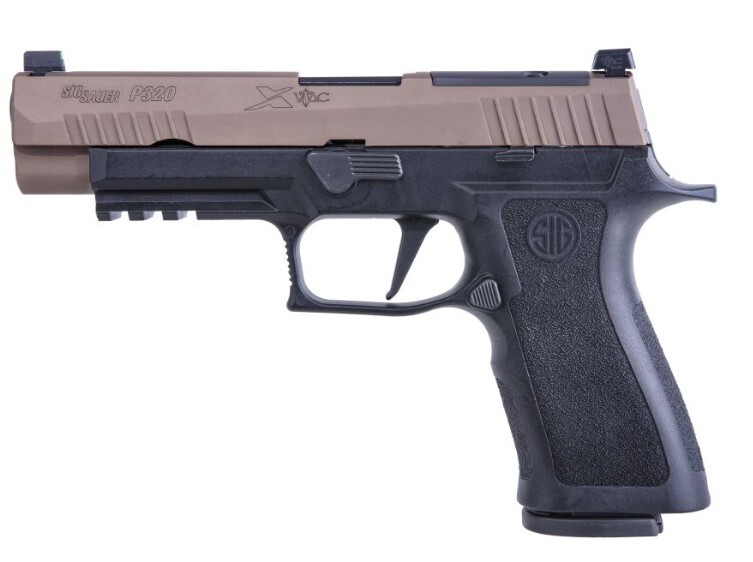
The X-VTAC is best treated as a niche or legacy-feature variant rather than a central P320 family today. Its main appeal was the Viking Tactics day/night sight system paired with X-series-style ergonomics and optics compatibility. An optics cut is included for red dot use. Pricing typically runs around $700.
P320MAX
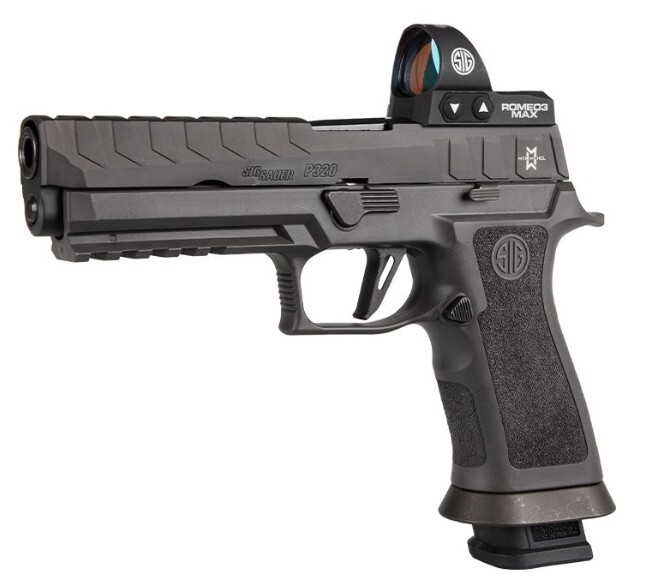
The P320MAX targets competition use. The original P320MAX centered on a ROMEO3MAX optic, TXG grip module, 5-inch bull barrel, and competition-ready tuning. In today’s lineup, buyers should also be aware of the updated P320-MAX 2.0 and other competition-oriented P320s like the XFIVE LEGION and XFIVE DH3. Pricing on MAX-style competition packages typically sits well above standard duty or carry P320s. Sig also included two recoil spring options at 12 and 14 pounds for load customization. Budget around $2,000 for this one.
XTEN
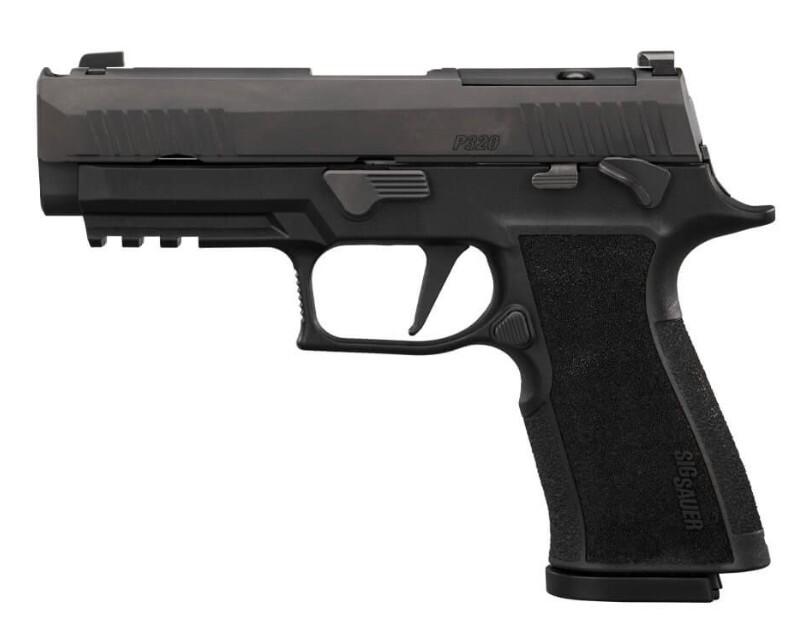
The XTEN is the 10mm branch of the P320 family. It features an X Series grip module, a 5-inch bull barrel, and a flat X Series trigger. The Nitron-finished stainless steel slide includes an optics cut and magazine capacity is 15 rounds. The gun weighs 33 ounces and measures 8.5 inches overall. The standard XTEN is a full-size 10mm built for range use, backcountry use, and buyers who want more power than the 9mm branch of the P320 family offers. SIG’s current lineup also includes XTEN variants like the XTEN Comp and XTEN Endure/Endure Comp, so buyers should treat XTEN as its own sub-family now rather than as a single standalone model. Retail pricing for XTEN-family pistols generally falls in the upper-$700s to around $1,000-plus depending on the exact variant.
Key Differences Between Sig Sauer P320 Model Families
Grip modules and ergonomics
Standard polymer grip modules keep the gun lighter. AXG alloy grip modules and TXG tungsten-infused grip modules add weight, change balance, and generally soften perceived recoil compared with the lighter base guns. Each choice changes the weight, feel, and control of the gun.
Barrel length and slide size
Longer barrels extend the sight radius and increase accuracy potential. Competition models like the MAX and XFIVE Legion use 5-inch barrels. Carry-oriented models use 3.6 to 3.9-inch barrels. This also affects overall length and how easy the gun is to conceal.
Trigger style
Standard models use curved triggers. X Series and Legion models add flatter triggers for a different feel at the break. The Legion trigger is skeletonized and flat-faced.
Optics readiness
Not every P320 family emphasizes optics compatibility equally. X Series, AXG, Legion, Spectre, and TACOPS variants generally come optics-ready. Base Nitron models are less consistently outfitted for optics.
Sights and controls
Night sights, suppressor-height sights, adjustable competition sights, and standard contrast sights are spread across the lineup. Manual safety is present on M17 and M18 models. Other families skip it by default.
Intended use
Nitron works for range and general duty. M17/M18 and TACOPS lean toward service-style use. Legion and MAX target competition. AXG and Spectre serve the premium buyer. X Series and XCarry models serve carry-focused buyers well.
Which Sig Sauer P320 Model Is Best for Different Uses?
Best for first-time P320 buyers
P320 Nitron and X Series. The Nitron costs less and keeps things simple. The X Series adds useful ergonomic upgrades for buyers ready to spend a bit more.
Best for military-style or duty-oriented buyers
M17, M18, and TACOPS. These models ship with service-ready features out of the box, including manual safety on the military-style variants and extra-capacity magazines on the TACOPS.
Best for premium metal-frame feel
AXG. The aluminum grip module sets it apart from every other P320 family.
Best for competition
P320MAX and Legion. Both families add competition-grade features that the standard lineup doesn't offer.
Best for premium styling and upgraded looks
Best for premium styling and upgraded looks: Spectre, AXG, and selected Custom Works variants.
Best for a specialized tactical or enthusiast setup
X-VTAC, TACOPS, and XTEN. Each serves a narrower audience but does it well. The XTEN suits buyers who want a 10mm option on the P320 platform.
What to Consider Before Choosing a P320 Model
Start with intended role
Range use, carry, competition, duty, or enthusiast collection. Knowing your primary job for the gun narrows your choices fast.
Choose size before trim level
Many buyers benefit from locking in full-size, carry, compact, or XCompact first. Then pick the model family that matches.
Decide how important optics-ready features are
Not every buyer needs an optic. Some families prioritize optics more than others. Check before buying.
Consider grip feel and overall weight
Polymer, aluminum, and tungsten-infused grips each feel different in hand and change the shooting experience. Standard polymers are lighter. AXG and TXG grips add weight and a different feel at the draw.
Be realistic about budget
Base P320 models generally retail in the mid-$500s and up. Premium branches like AXG, Legion, Spectre-style Custom Works guns, and MAX competition models move well past $1,000 and can climb significantly higher depending on variant and included optics. Match your features to your budget rather than chasing the most expensive option.
Final Thoughts
The P320 lineup gets easier once you stop trying to memorize every name and start sorting by size and role instead. Pick your size first, then narrow down to the model family that fits your intended use. A Nitron suits the buyer who wants a no-fuss entry point. A Legion or MAX suits buyers who want competition-grade features. AXG and Spectre serve the premium market. M17, M18, and TACOPS appeal to buyers who want service-style or tactical-leaning setups. The best P320 is the one that fits your actual use, your preferred size, and your honest budget.
The SIG P320 platform stands out for its adaptability and wide range of configurations, making it suitable for nearly any shooting role. If you’re narrowing down your options within the lineup, read SIG Sauer P320 vs M17 vs M18 to compare some of the most popular variants.

Sig Sauer Elite Performance V-Crown Ammunition 9mm 115gr JHP- 50 Rounds
$39.99
at Pro Armory
Prices accurate at time of writing
Frequently Asked Questions
What are the main Sig Sauer P320 models?
The current P320 lineup is easiest to understand as base P320 models, M17/M18, X Series, AXG variants, Legion variants, XTEN variants, and a smaller group of premium or niche variants such as Spectre, MAX, TACOPS, and X-VTAC.
What is the difference between the P320 M17 and M18?
The M17 is the full-size military-style model. The M18 uses a carry-sized configuration with a shorter slide and grip.
What is the difference between P320 Nitron and X Series?
Nitron models are the standard, more affordable entry point. X Series models add upgraded ergonomics, a flatter trigger, a magwell, and better sights.
Which P320 model is best for competition?
P320MAX and Legion-family models are the clearest competition-oriented choices in the lineup.
Are all Sig Sauer P320 models optics ready?
No. Optics compatibility varies by family and configuration. Always check the specific variant before buying.
Which P320 model is best for carry?
M18, XCompact-style models, and some X Series and Spectre variants fit carry roles better than larger competition-oriented models.
About the Author
This article was written by the Pro Armory writing team based on current research, including studies from reputable sources like the Journal of Military Science, Firearms News, and the National Shooting Sports Foundation. We also referenced trusted information from official defense publications and respected firearm authorities such as the ATF, NRA, and manufacturer manuals.
Disclaimer: This article is for informational purposes only and does not constitute legal advice, safety certification, or a product endorsement. Firearm laws, agency policies, competition rules, and manufacturer configurations can change over time. Always verify current product specifications and applicable requirements before purchasing or carrying any firearm.
Best Ammo Deals, Training, & Accessories
Subscribe to ProArmory sales and deals email.