 Pro Armory Editorial Team
Quick Answer
The Ruger GP100 is a solid first .357 Magnum revolver because its weight and frame design make recoil easier to manage. It feels tough and steady in your hands. And it handles .38 Special loads with ease. The extra weight helps a lot. It soaks up recoil that can scare new owners. The sights look clear. The trigger feels smooth enough to help you learn double action faster. It is not light. It is not cheap. But many first time revolver owners buy it once and keep it for years.
Key Takeaways
- Heavy steel frame tames .357 recoil for beginners.
- Start with a mild .38 Special and then step up to .357 Magnum later.
- The GP100 uses a triple-locking cylinder that locks at the front, rear, and bottom for strong, consistent lockup.
- Adjustable rear sight and bright front sight help new users hit targets.
- Limited customization compared to semi-autos, but solid upgrade options exist.
When you start with revolvers, weight helps you out. It keeps the gun steady. That is why the GP100 feels so friendly at the range. The very heft that makes some people pass it by on the gun store shelf becomes your best ally when that .357 Magnum round goes boom.
Many instructors point to the GP100 as a perfect teaching tool precisely because it doesn't punish new shooters with excessive recoil. Its substantial frame soaks up what would otherwise become a hand-stinging kickback.
Unlike those featherweight snub-nosed revolvers that look so appealing until you pull the trigger, the GP100 lets you focus on learning technique instead of managing discomfort. For beginners stepping into the world of wheel guns, that's exactly the kind of friendly introduction you want.
What Is the Ruger GP100
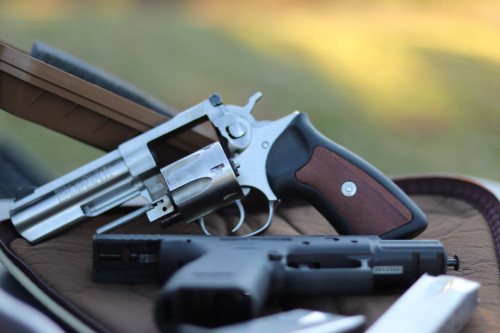
The Ruger GP100 is a medium-frame double-action revolver. It’s best known in .357 Magnum. Besides .357 Magnum, the GP100 has been offered in other chamberings like .22 LR and .327 Federal, and Ruger has also released GP100 variants in 10mm and .44 Special.
Beginners look at it because it keeps things simple. You get recoil that feels more manageable because the gun has weight. You get a straightforward setup with no tricky controls. And you get serious toughness. It forgives small mistakes. Like training wheels that don’t snap the first time you wobble. Unlike some "starter guns" that you outgrow, the GP100 can take you from first-timer to experienced shooter without missing a beat.
First-time revolver buyers often struggle with the weight vs. recoil tradeoff. The GP100's design gives you a fighting chance with full-power .357 Magnum loads, unlike lighter guns that may look more appealing on the gun store shelf but punish you at the range.
Specs
Weight: The GP100 runs from 36 ounces with a 3-inch barrel to 45 ounces with a 6-inch barrel. That weight can surprise you. It feels like a brick at first. But it works in your favor because it absorbs recoil that would hit your hand harder. For learning, the extra weight can help you stay steady.
Barrel Length Options: The GP100 comes in 3-inch, 4-inch, and 6-inch barrel choices. Longer barrels stretch the sight radius. That makes aiming simpler because the sights are farther apart. Longer barrels usually give you a longer sight radius and often a bit more velocity, while the added weight out front can feel steadier to some shooters. The downside is the gun gets heavier and harder to handle in tight spaces.
Capacity: Most GP100 models hold 6 rounds. Some special versions hold 7. That sounds huge on paper. In practice, it matters less at the start. Slow down and make each shot count.
Sights: This is where the GP100 really helps newcomers. The adjustable rear sight lets you dial in your zero, and the front sight options (especially fiber optic versions) draw your eye naturally to where it needs to be.
Example spec (GP100 Model 1782):
- Caliber: .357 Magnum
- Capacity: 7 rounds
- Barrel Length: 3" (76 mm)
- Overall Length: 8.50" (21.5 cm)
- Weight: 36 oz (1.02 kg)
- Material: Stainless steel
- Finish: Satin stainless
- Grips: Checkered hardwood
- Front Sight: Fiber optic
- Rear Sight: Adjustable
- Rifling Twist: 1:18.75" RH
- Rifling Grooves: 5
- UPC: 7-36676-01782-9
Background and Design
The GP100 showed up in 1985. Ruger made it as a step up from the Security Six. The older revolver worked fine with .357 Magnum once in a while. But steady use of full-power rounds was not its strong suit. So Ruger built the GP100 from scratch. It was meant to run .357 Magnums all day and keep going.
The GP100 stays strong because of how it locks up. It uses a triple-locking cylinder system. Ruger’s design locks the cylinder into the frame at the front, rear, and bottom for more consistent alignment. That gives you a firm and stable lockup. A stable lockup helps accuracy. It also supports safety over the long run. The one-piece frame with no side plate adds more strength too. It’s like a solid door with no weak hinge side.
For new owners, the tool-free takedown is a big plus. You can field strip a GP100 for basic cleaning without special equipment, unlike some more complex firearms. This design choice encourages proper maintenance habits from day one.
The GP100’s reputation mainly comes from long-term civilian use and its durability-focused design. That is a strong nod. It shows the gun’s tough image reaches past the civilian market.
Is the GP100 Easy to Shoot for New Revolver Owners?
Recoil control: The GP100’s steel frame and heavy build help it stay stable when you fire. So your muzzle does not jump as much. Your grip feels more in control. That makes it easier to stay confident and keep shots on track. With .38 Special target loads, recoil is mild and beginner-friendly, especially in the 4-inch model. Like training wheels, but for recoil.
Learning curve: The double-action trigger takes effort to master. You will feel the weight in the pull. But the GP100’s trigger is smoother than many competing models. That steady pull helps you build good trigger control over time. In single-action mode (where you manually cock the hammer first), the light, crisp break makes precision work satisfying for beginners.
Balance: The GP100 feels "pointable" – a quality that helps new shooters naturally align with targets. Many shooters find the GP100 points naturally, especially in the 4-inch version, because the weight feels evenly balanced.
Training progression for beginners:
- Start with .38 Special wadcutters or target loads for minimal recoil
- Graduate to standard .38 Special as your technique improves
- Move to .38 Special +P for a taste of more power
- Finally, introduce .357 Magnum, starting with lighter loads
- Always double up on ear protection when firing magnums indoors!
.38 Special vs .357 Magnum in the GP100
The GP100 can fire both .38 Special and .357 Magnum. That gives you two options in one revolver. It also gives you a smooth path from easy practice to harder practice.
.38 Special Benefits: These lighter loads kick less than full .357 Magnum. That makes it easier to lock in the basics like grip, sight picture, and trigger control. You can focus on your hands and eyes. Not the punch of the gun. The ammo also costs less, so you can practice more often. And the lower noise and muzzle blast can help you avoid a flinch.
.357 Magnum Reality: When you move up to .357 Magnum, it feels like a different ride. The noise jumps fast. Double ear protection is a smart move indoors. Recoil also hits harder, and the muzzle flash can surprise you. But the GP100 takes this better than many lighter revolvers. Its heavier frame helps soak up the hit.
Applications: For home defense, many experienced users recommend .38 Special +P in a GP100. Many people prefer .38 Special +P in a GP100 because it’s easier to control and usually has less blast and flash than full-power .357. Either caliber can still penetrate walls, so ammo choice and safe angles matter. For outdoor use against predators, the full power of .357 Magnum offers superior stopping power and range.
Fit and Feel: Ergonomics That Make or Break a First Revolver

Grip design: The standard Hogue Monogrip on most GP100 models gives you comfort and control. The rubber soaks up shock. The pebbled texture stays in place in sweaty hands. If your hands are small, an aftermarket grip can help you reach the trigger better.
Cylinder release: The push-button release on the GP100 feels natural to use. You can run it fast even when you feel rushed. That helps when you practice reload drills as a new shooter. The cylinder also swings out smoothly. That smooth feel can calm your nerves during reloads.
Trigger reach: The GP100’s trigger reach fits most average hands. If your hands are very small, double-action can feel tough at first. The trigger face is smooth. That helps your finger stay comfortable during longer practice.
Sights: The adjustable rear sight and bright front sight give you a clean sight picture. That makes it easier to learn sight alignment. Some fixed-sight revolvers can hit off center with certain loads. With the GP100, you can zero the rear sight for the ammo you use.
The mix of these ergonomic details gives you a revolver that feels steady in your hands. It stays manageable even with full-power loads.
Dependability and Durability
Based on the design and what long-term owners report, the GP100 is built to take a beating. The one-piece frame avoids a weak spot found on revolvers with removable side plates. The triple-locking cylinder system gives consistent lockup. That helps keep timing and accuracy on track across many rounds.
The GP100 was engineered to handle steady use with full-power .357 Magnum ammunition. This overbuilt approach pays dividends for beginners, who might not yet understand the maintenance needs of more delicate firearms. The GP100 is known for durability, but regular cleaning and lubrication still matter for long-term reliability.
Accuracy
The GP100 gives beginners several advantages in the accuracy department. The substantial weight reduces movement during trigger pull and help maintain sight alignment. The crisp single-action mode lets you get clean shots early. That early win helps you feel steady and in control.
For double-action shooting, the GP100's trigger pull is long. But it stays even from start to finish. You can learn good trigger control without dealing with a gritty feel or sudden stacking. The full-sized grip helps your hands stay planted. And the adjustable sights let you line up the gun with how you naturally aim and the ammo you like.
At common defensive distances (3-7 yards), most beginners can keep every shot on a standard silhouette target with a bit of practice. Then your skill starts to grow. And the GP100’s built-in accuracy keeps up with you at longer ranges. This is even more true with the 4-inch and 6-inch barrel models.
The mix of clear sights, a decent trigger, and steady balance makes it easier to learn than many other revolvers. Less fighting the gun. More learning the skill.
What Sets the GP100 Apart From Other Beginner Revolvers
The GP100 stands out in the crowded revolver market for several reasons. Its purpose-built magnum design means it's not just tolerating .357 Magnum rounds – it's built for them from the ground up. Many competing revolvers were designed for milder cartridges and later adapted.
The sight system deserves special mention – unlike many revolvers that come with minimal fixed sights, most GP100 models feature adjustable rear sights and highly visible front sights. This matters tremendously for new shooters developing their skills.
The balance of carry-ability versus shoot-ability varies with barrel length. The 3-inch models remain portable while offering better performance than snub-nose options. The 4-inch hits the sweet spot for many users, balancing range performance with practical size.
The GP100 has a “tank-like” name that sticks. And it’s not just sales talk. You can spot the tough build in the thick cylinder walls and the strong frame. You can also feel it the moment it’s in your hand. Heavy on purpose.
You can also look at the Smith & Wesson 686 and the reintroduced Colt Python. They bring similar features to the table. But the GP100 often comes in cheaper. And it still keeps the key build quality you want.
Accessories and Upgrades
If you’re starting out with the GP100, focus on upgrades that make a clear difference:
Grips: Aftermarket grips can make the gun feel better in your hand. They can also help with control. This matters if your hands are smaller or larger than average. Brands like Altamont, Badger, and Hogue offer options that range from simple to great-looking.
Reload Tools: Speed loaders from 5 Star or HKS make reloading practice more efficient. For everyday carry, Bianchi Speed Strips offer a flatter profile. Learning efficient reloading early builds good habits.
Sight Upgrades: While the factory sights are good, fiber optic replacements from Hiviz or Williams can make sight acquisition even faster in varied lighting conditions.
Holsters: A quality holster matched to the barrel length of your GP100 makes practice safer and more comfortable. For a heavy steel revolver, good belt support is crucial – look for reinforced gun belts.
Spring Kits: For more advanced users, trigger spring kits can smooth out the double-action pull without compromising reliability or safety.
These upgrades make the GP100 more comfortable to run. The core of the revolver stays the same. Strong and proven.
Who Should Buy the GP100 (And Who Should Skip It)?

The GP100 is ideal for:
- New revolver owners who want an easy gun to learn on
- People who want one gun for softer .38 Special and harder .357 Magnum
- Those who care about long life more than light weight
- Outdoor people who want a sidearm for protection against predators
- Home defenders looking for simplicity and power
Skip the GP100 if:
- Concealed carry is your primary concern (the weight may become burdensome)
- You're seeking extensive customization options (semi-autos offer more)
- You strongly prefer the lightest possible trigger pull (striker-fired pistols may suit you better)
- Budget constraints are severe (there are cheaper options, though with compromises)
How-To: Choose a GP100 Setup for Your First Revolver
Picking the right barrel length changes how your GP100 feels. A 4-inch barrel hits the sweet spot for home defense and range days. It points fast. It also stays easy to control. Go with the 3-inch barrel if you may carry it later. And pick the 6-inch barrel for the range. You get a longer sight radius and a bit more velocity. But it feels bulky to carry. It also turns slower in tight spaces.
When you first get your revolver, start with the .38 Special. Don’t jump straight to magnums. These lighter rounds let you learn grip and trigger control without wrestling recoil. Your hands stay calmer. Your shots stay cleaner. You’ll also spend less money because .38 Special often costs less than .357 Magnum. Get your basics locked in first. Then step up to the full-power loads.
Take time to check if the factory sights work well with your eyes. Can you see the front sight clearly against both dark and light backgrounds? Some folks find the stock sights perfect, others need something brighter. If you struggle to pick up the sights quickly, set aside some cash for upgrades like fiber optics that match your vision needs.
Don't ignore the grip fit on your new GP100. The standard Hogue grips on most models work for many hands. But they won’t fit everyone. Try a few grip styles before you buy if you can. A grip that fits your hand will give you better control. It also feels better, even with magnum loads.
Finally, pick one reload method and drill it until it feels natural. Speed loaders reload fast. But they take more pocket space. Speed strips sit flat in a pocket. But they load slower. Pick the one you will carry and use. Then practice with dummy rounds at home until your hands know the move. Only move to live rounds after you can do the basics safely.
Always put safety first with your new revolver. The GP100 is built tough. But it still needs your full attention every time. Read the manual. Follow the rules. Enjoy learning the wheelgun craft.
Final Verdict
The Ruger GP100 earns its name as a strong beginner's .357 Magnum revolver. The design feels smart and practical. The weight may look like a downside at first. But on the range, that weight helps a lot. It calms recoil and keeps your aim steadier.
If you’re new to revolvers, the GP100 gives you a smooth path to learn. Start with .38 Special to build basics. Then step up to .357 Magnum as your skill grows. The adjustable sights and good trigger help you improve without fighting the gun. Many “starter guns” get replaced fast. The GP100 tends to stay. It can grow with you from first shots to harder drills.
Yes, you can find lighter options. Yes, you can find cheaper options. But few revolvers blend strength, control, and value like the GP100. If you want to learn revolvers and you want gear that lasts, it’s money spent well.
The Ruger GP100 easily holds its own among .357 Magnum revolvers for shooters who value reliability and all-around performance. To explore other excellent wheel guns chambered in .357, check out our full buyer’s guide: Best .357 Magnum Revolvers Reviewed.

Federal Fusion 357 Mag 158gr
$27.29
at Pro Armory
Prices accurate at time of writing
Frequently Asked Questions (FAQ)
Is the Ruger GP100 too heavy for concealed carry?
At 36-45 ounces depending on barrel length, the GP100 is heavier than most dedicated carry guns. You can carry it with a proper holster and a sturdy belt. But you will notice the weight. Many people find the 3-inch barrel version the easiest to carry.
Can you shoot .38 Special in a .357 Magnum GP100?
Yes! This is one of the GP100's biggest advantages. You can practice with milder and cheaper .38 Special ammunition. Save the .357 Magnum for times you need more power. This makes it a great learning platform.
What barrel length is best for a beginner?
The 4-inch barrel gives you the best balance for learning. You get a longer sight radius for better aim. You also get good velocity for ammo performance. And it still feels manageable in different shooting positions.
Is a 7-shot GP100 worth it over a 6-shot model?
For most beginners, the extra round is not worth a big price jump. Put your money into training and ammo first. That said, if the price gap is small, an extra round can be a nice bonus.
What upgrades should you do first?
Start with the grip if the factory one does not fit your hand well. Next, add speed loaders or speed strips to make reload practice smoother. Save sight upgrades for later, once you’ve built skill with the factory sights.
Is .357 Magnum safe for indoor ranges?
Yes, but it is much louder and sharper than the .38 Special. Wear quality ear protection. Use plugs and muffs for indoor magnum shots. Also check range rules on magnum ammunition and be mindful of other lanes.
About the Author
This article was written by the Pro Armory writing team based on current research, including studies from reputable sources like the Journal of Military Science, Firearms News, and the National Shooting Sports Foundation. We also referenced trusted information from official defense publications and respected firearm authorities such as the ATF, NRA, and manufacturer manuals.
Disclaimer: This review is for education only. Laws vary by state and city and can change. Follow safe handling at all times. Read your owner's manual. Verify local rules before you buy or train.
Best Ammo Deals, Training, & Accessories
Subscribe to ProArmory sales and deals email.