 Pro Armory Editorial Team
Quick Answer
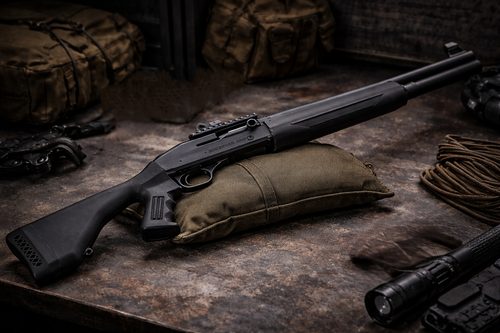
The Mossberg 930 SPX Tactical is a gas-operated semi-auto 12-gauge built for defensive and tactical use. It stands out for fast follow-up shots, reduced recoil, solid capacity, and practical controls. Based on documented field testing by those who've put serious rounds through it, it performed well with birdshot, buckshot, and slugs. That makes it a strong option for home defense, training, and range use.
Key Takeaways
- The Mossberg 930 SPX Tactical is a semi-auto shotgun built for defensive use.
- Its gas system cuts recoil compared with many pump guns.
- Large controls and ghost ring sights support faster operation under stress.
- It handled multiple shell types well in referenced testing.
- Capacity, speed, and consistent function make it attractive for home defense.
- Accessory support is decent, though not as broad as some pump platforms.
For years, pump shotguns held the throne in defensive and law enforcement circles. The thinking was simple and hard to argue with: if you need it to work when everything else fails, go pump. Semi-auto shotguns were often pushed aside as finicky, too sensitive to ammo choices, and not worth trusting when the stakes were high. That reputation stuck around for a long time — and honestly, it wasn't entirely without reason.
The Mossberg 930 SPX Tactical shows up to challenge that old assumption directly. It's not a hunting gun with a fresh coat of black paint slapped on it. It's a purpose-built tactical semi-auto with upgraded controls, a defensive-ready sighting system, and a gas-operated action designed to run across a range of 12-gauge loads. This review covers controls, ergonomics, ammo behavior, recoil, accuracy, and overall value for the money.
What Is the Mossberg 930 SPX Tactical?
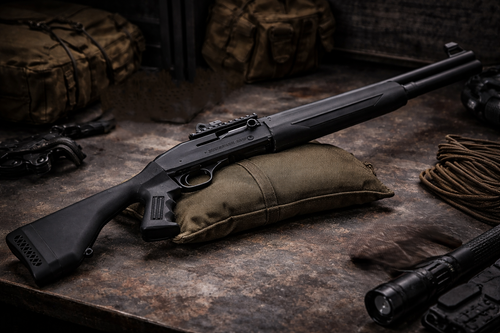
The Mossberg 930 SPX Tactical is a gas-operated, semi-automatic 12-gauge shotgun. It's built on the same gas-operated 930 platform as Mossberg’s hunting family, but configured specifically for defensive and tactical use with an 18.5-inch barrel, extended magazine tube, and upgraded controls and sights on SPX models. The "SPX" stands for Special Purpose, and the feature list backs that name up. You get an 18.5-inch steel barrel, an extended magazine tube, a synthetic stock, and a ghost ring sight system straight out of the box — no additional setup needed before heading to the range.
Its self-regulating gas system uses two gas ports in the barrel to power a piston around the magazine tube. The system vents excess gas not needed to cycle the action. This produces a softer recoil impulse and less mechanical stress on internal parts across a broad range of shell types. The design traces back to the Mossberg 930 hunting lineage and carries over into the tactical version without losing its core function. The intended role is home defense, tactical training, and defensive preparedness — not waterfowl season.
Mossberg 930 SPX Tactical Specs at a Glance
| Spec | Detail |
|---|---|
| Action | Gas-operated semi-auto |
| Gauge | 12 gauge |
| Chamber | 2.75-inch and 3-inch shells |
| Barrel Length | 18.5 inches |
| Sights | Ghost ring rear with fiber-optic or protected front sight (variant dependent) |
| Capacity | 7+1 (2.75-inch shells); 6+1 (3-inch shells) |
| Receiver | Aluminum |
| Stock | Synthetic |
| Rail | Receiver-mounted Picatinny rail |
Semi-Auto vs Pump Shotgun: Where Does the 930 SPX Tactical Fit?
Pump shotguns earned their reputation through decades of field and law enforcement use. The manual cycling action keeps things simple. Rack the handle, fire, repeat. Very little can go wrong mechanically, and that simplicity built real trust over time.
Semi-auto shotguns play a different game. Load up, rack once, and the gun handles its own cycling on every trigger pull. The payoff is faster follow-up shots and less manual effort between rounds. The long-standing concern with semi-autos is ammo sensitivity — not all of them cycle lighter or cheaper loads without trouble. The 930 SPX Tactical enters this conversation with Mossberg’s dual gas-vent, self-regulating gas system, which is intended to handle a broad range of 2.75-inch and 3-inch 12-gauge loads more gracefully than older semi-auto designs. That single feature separates it from semi-autos with a rougher reputation. It challenges the idea that a defensive shotgun must be a pump to be trusted.
Tactical Features That Set the Mossberg 930 SPX Tactical Apart
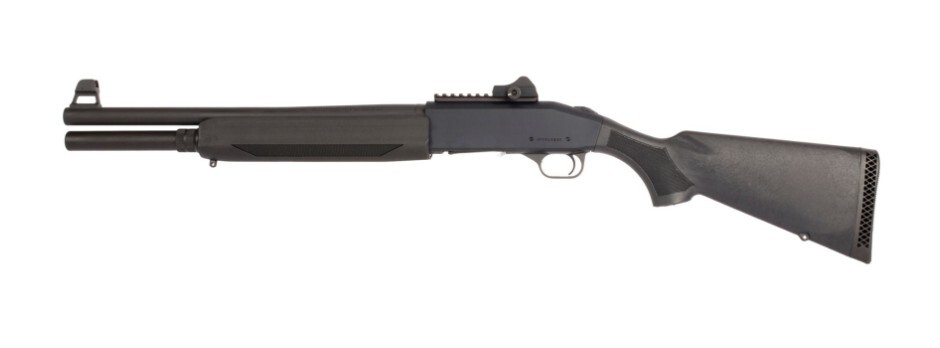
The 930 SPX Tactical earned its name through a specific set of design choices. The feature set is built around one core idea: when your heart rate spikes and fine motor control starts slipping — which research shows happens around 115 to 120 beats per minute — you need controls you can actually find and work. The 930 SPX Tactical is built with that reality in mind.
- The charging handle is large and knurled. It's designed to be grabbed and pulled hard, not operated carefully.
- The bolt release button is oversized and positioned where you can hit it under pressure.
- The ghost ring rear sight and fiber-optic front sight create a fast, precise sight picture at close to mid-range distances.
- A receiver-mounted Picatinny rail comes standard for optic or accessory mounting.
- Some models include a pistol grip for better control during tight maneuvering.
- The extended magazine tube increases capacity above what a standard field gun offers.
- The wide loading port supports faster, smoother shell insertion.
Contrast that with a hunting shotgun. Field guns are built for clean lines and snag-free profiles — great for the field, far less useful when you're running speed reloads under pressure. The 930 SPX Tactical flips those priorities on purpose.
Ergonomics and Handling on the Range
The 930 SPX Tactical is consistently noted as surprisingly light for its category and well-balanced once shouldered. The aluminum receiver keeps overall weight manageable for a full-size defensive shotgun. On pistol-grip models, the grip shape and textured surface give a secure hold that many users find comfortable, though hand fit will vary by shooter. The forend has a textured surface with enough length to support different hand placements depending on body size or shooting position.
Loading the gun consistently draws positive feedback from those who've put time into it. The wide loading port and smooth mechanics make the process feel fast and intuitive. Dropping a shell into the open chamber, clearing your hand, and hitting the bolt release is straightforward. Adding subsequent shells into the tube goes smoothly too. The design clearly had fast, low-friction feeding in mind. For a full-size defensive shotgun, it handles well in close spaces and doesn't feel heavy or hard to move.
Mossberg 930 SPX Tactical Ammunition Testing
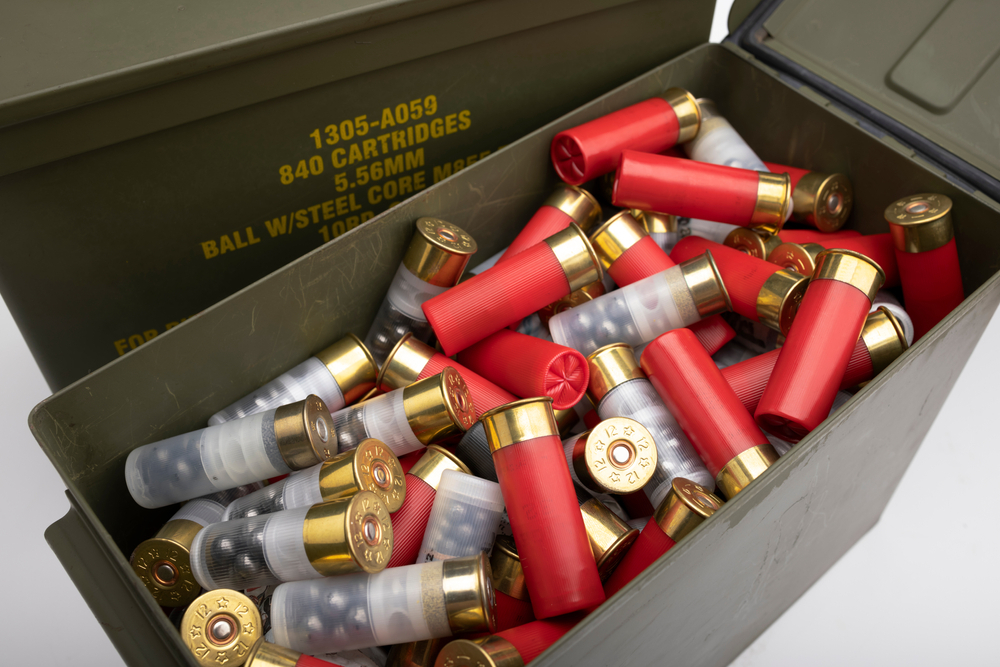
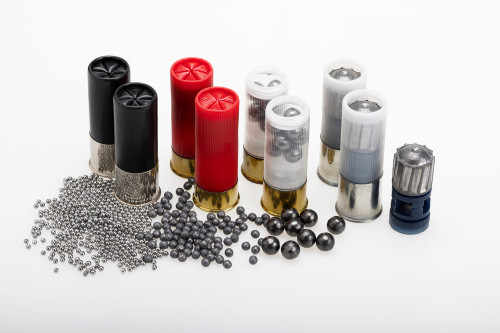
Testing a defensive shotgun across different shell types tells you far more than any single ammo run. In referenced hands-on reviews, the 930 SPX Tactical was run with birdshot, buckshot, and slugs, and those reviews generally reported good function across mixed 2.75-inch and 3-inch loads when the gun was kept properly maintained.
Birdshot is the lightest option in the testing cycle. In cited review testing, the 930 SPX Tactical cycled birdshot loads successfully, which is a useful sign on a semi-auto defensive shotgun.
Buckshot is where the defensive case for this gun gets made. Referenced testing reported reliable cycling with defensive buckshot loads, while still keeping recoil more manageable than many pump guns.
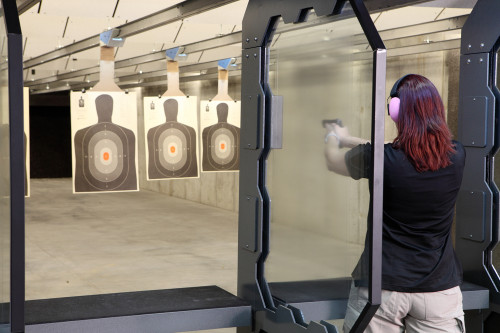
Slugs are the best check on the sighting system and practical accuracy. Referenced reviews reported easy center-mass hits at 40 to 50 yards with the ghost-ring setup, which is strong performance for a defensive shotgun.
On shell sizing, extended-tube SPX models are commonly listed at 7+1 with 2.75-inch shells and 6+1 with 3-inch shells. The heavier 3-inch loads still increase recoil and heat noticeably during longer strings.
Reliability: Can the Mossberg 930 SPX Tactical Be Trusted?
This is the main question — and the one that kept people away from semi-auto defensive shotguns for decades. Based on feedback from those who've run the 930 SPX Tactical extensively, the answer leans strongly positive. Multiple range sessions with hundreds of shells — including birdshot, buckshot, and slugs from several different brands — produced zero malfunctions in referenced testing. That's a meaningful number for a semi-auto shotgun running mixed ammunition without a mid-session cleaning. The dual-gas vent system held up throughout.
That said, fairness matters here. Some earlier-user reports flagged issues with rail hardware or setup details, so buyers of used examples should inspect the rail, screws, and overall condition carefully, and semi-auto actions in general need more maintenance attention than a pump. They're more sensitive to fouling over long firing strings. The 930 SPX Tactical holds up well in documented testing, but it still benefits from regular cleaning and solid ammo selection. The practical takeaway from those who've spent real time with this gun: it performs well across realistic ammo choices and holds up through serious range work when fed the right loads and kept clean.
Recoil and Shooting Comfort
The gas-operated action changes the recoil equation in a clear and noticeable way. Instead of the sharp, quick kick common to pump guns, the 930 SPX Tactical spreads the recoil impulse over a slightly longer moment. People who grew up on pumps notice the difference right away. With low-brass birdshot and target loads, the gun is genuinely easy to shoot for extended sessions. Buckshot brings more push but stays within a manageable range for most users.
The 3-inch magnums and heavy slugs are where Newton's third law starts to assert itself. No gas system fully absorbs that much energy from a 12-gauge — and that's just physics. But even then, the 930 SPX Tactical is consistently reported as shooting softer than comparable pump-action 12-gauge options by people who've run both back to back. That's a real advantage for training volume and session length.
Accuracy and Pattern Performance
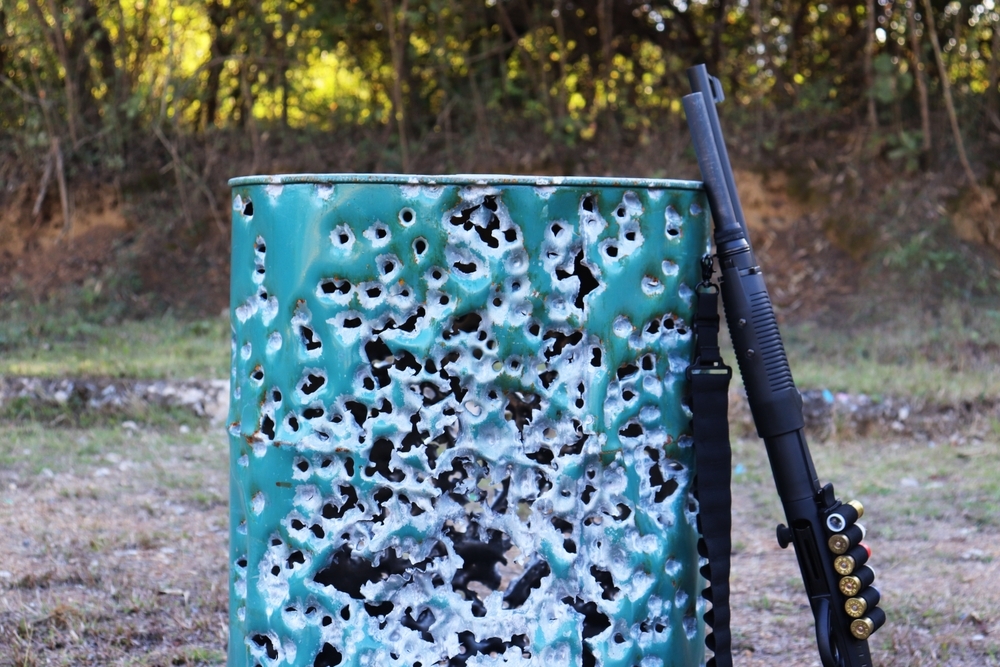
A common myth about shotguns is that pulling the trigger sends a wide spray of pellets everywhere with no real aim required. That's simply not accurate. Tactical shotguns need real precision, and the 930 SPX Tactical delivers it. With buckshot, referenced testing showed practical defensive patterns at typical indoor-to-yard distances, with all pellets staying on a man-sized target at moderate range.That performance at distance helps explain why the tactical shotgun remains a respected tool in defensive roles.
With slugs, the ghost ring and fiber-optic sighting system supported accurate fire on targets at 40 yards shooting offhand. The sights are functional and fast — not just visual additions to a tactical-looking platform. At 50 yards, center-mass hits on man-sized targets were described as easy by those who documented range testing on this shotgun. That level of precision matters for a defensive gun operating at the outer limits of its practical range.
Home Defense Use: Is the Mossberg 930 SPX Tactical a Good Choice?
The direct answer is yes. The 930 SPX Tactical is purpose-built for this role and the feature set backs that up clearly.
Strengths for home defense:
- Fast follow-up shots from the semi-auto action
- Strong 7+1 capacity with standard shells
- Reduced recoil compared with pump shotguns
- Ghost ring and fiber-optic sights support aimed fire in lower light
- Picatinny rail for mounting a light or optic
Limitations worth noting:
- Full-size shotgun — larger and harder to maneuver than a handgun
- Heavy loads still produce substantial recoil
- Semi-auto actions need more regular maintenance than pump guns
- Some users need time to get comfortable with the control layout
For home defense use, the combination of speed, capacity, recoil control, and defensive-ready features builds a strong and honest case.
Accessory and Customization Potential
On rail-equipped SPX variants, the receiver-mounted Picatinny rail opens the door for red dot sights and close-range optics without additional mounting hardware. A weapon light is a near-essential addition for any defensive shotgun. The 930 SPX Tactical supports light mounting through aftermarket solutions like magazine tube clamps with integrated rail sections. A sling mount exists at the stock, but a forward sling attachment typically requires an aftermarket solution as well.
The customization potential is adequate for a defensive platform. It's not the deepest accessory ecosystem in the category — that goes to platforms with decades of aftermarket development behind them. But the core needs — light, sling, and optic — can all be addressed. Users should research mounting hardware quality and installation steps carefully before committing to any specific setup.
Mossberg 930 SPX Tactical Pros and Cons
Pros:
- Fast semi-auto follow-up shots
- Reduced recoil compared with many pump shotguns
- Strong capacity for a defensive shotgun
- Large, practical controls built for high-stress use
- Useful ghost ring and fiber-optic sight setup
- Documented consistent function across birdshot, buckshot, and slugs
- Solid value compared with premium tactical semi-autos
Cons:
- Heavier loads still produce serious recoil
- Semi-auto maintenance demands more attention than pump guns
- Accessory ecosystem is not the broadest in the category
- Some users may not prefer pistol-grip configurations
- Price may push some buyers toward competing tactical shotguns
Is the Mossberg 930 SPX Tactical Worth It?
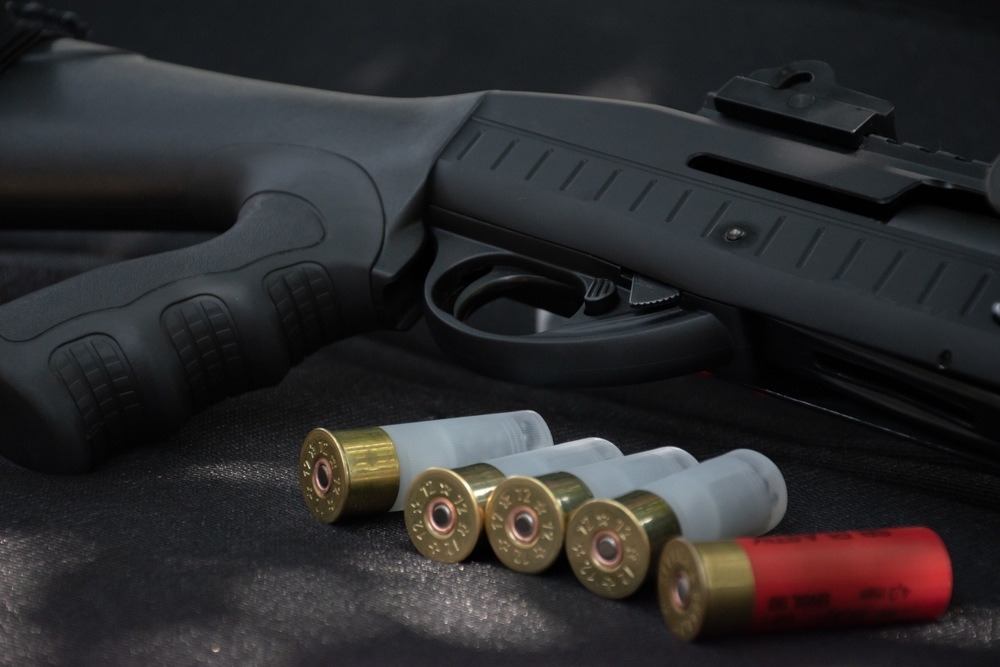
Current retail pricing on remaining 930 SPX Tactical inventory generally falls around $830 to $930, depending on finish and exact variant, with some listings running higher on scarcer configurations. That's still more than a dependable pump gun. But the 930 SPX Tactical offers something a pump simply can't: automatic cycling, faster follow-up shots, and a noticeably softer recoil impulse. You're paying for speed and comfort, not just a name on the receiver.
Compared with premium tactical semi-autos priced above this range, the 930 SPX Tactical still makes a solid value case when you can find one at normal retail. The value is not that it is cheap. The value is that it delivers defensive-oriented controls, good mixed-load function, and semi-auto speed without jumping all the way into premium-tier pricing.
Final Verdict
The Mossberg 930 SPX Tactical builds a compelling case for itself in the defensive semi-auto category. It runs across a broad spread of shell types, holds up well at the range, and arrives from the factory with controls and sights designed for real defensive use. It's not a hunting shotgun dressed in tactical clothing. It's purpose-built for this role, and everything about the design reflects that clearly.
For home defense applications, the combination of speed, capacity, recoil management, and documented consistent function through extended range use puts it ahead of many alternatives at the price point. It does ask more of its owner in terms of maintenance compared with a pump. But in return, it delivers faster operation and a meaningfully softer shooting experience. For those who want a semi-auto defensive shotgun without a luxury price tag, the Mossberg 930 SPX Tactical deserves serious consideration.
The Mossberg 930 SPX remains a popular choice for shooters who want a semi-auto shotgun built for defensive use. If you’re still exploring your options or comparing different platforms, check out Best Shotguns for Home Defense to see how it stacks up against other top picks.

FEDERAL POWER-SHOK 12GA 2.75 12P 00 BUCK 5RD BOX
$10.62
at Pro Armory
Prices accurate at time of writing
Mossberg 930 SPX Tactical FAQ
Is the Mossberg 930 SPX Tactical reliable?
Based on documented testing across multiple range sessions, it showed consistent function with birdshot, buckshot, and slugs through over 350 rounds of mixed ammunition. That's a strong track record for any semi-auto shotgun.
Is the Mossberg 930 SPX Tactical good for home defense?
Yes. The semi-auto action, useful capacity, practical sights, and reduced recoil compared with many pump shotguns make it a strong defensive choice.
What shells does the Mossberg 930 SPX Tactical take?
It chambers both 2.75-inch and 3-inch 12-gauge shells.
What is the capacity of the Mossberg 930 SPX Tactical?
It holds 7+1 with 2.75-inch shells and 6+1 with 3-inch shells.
Is the Mossberg 930 SPX Tactical better than a pump shotgun?
A pump is mechanically simpler and generally more forgiving of neglect. The 930 SPX Tactical offers faster follow-up shots and softer recoil when kept properly maintained. Both are strong choices — it comes down to whether you prioritize simplicity or semi-auto speed and comfort.
Does the Mossberg 930 SPX Tactical reduce recoil?
Yes. Its gas-operated system spreads out the recoil impulse. Most users report it shoots noticeably softer than comparable pump-action 12-gauge shotguns, especially with standard loads.
About the Author
This article was written by the ProArmory writing team based on current research, including studies from reputable sources like the Journal of Military Science ,Firearms News,and the National Shooting Sports Foundation. We also referenced trusted information from official defense publications and respected firearm authorities such as the ATF, NRA, and manufacturer manuals.
Disclaimer: The information in this article is for educational purposes only and does not constitute legal or safety advice. Always follow safe firearm handling practices. Check all applicable local, state, and federal laws before purchasing or using any firearm. ProArmory assumes no liability for actions taken based on information provided in this article.
Best Ammo Deals, Training, & Accessories
Subscribe to ProArmory sales and deals email.