 Pro Armory Editorial Team
Quick Answer
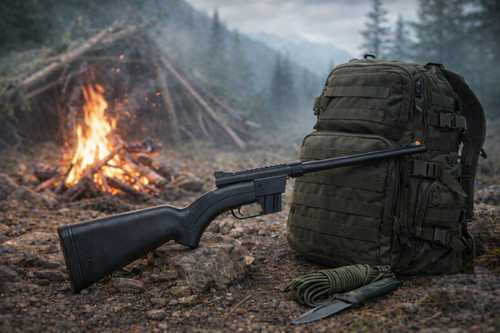
The Henry AR-7 is a lightweight takedown .22 LR survival rifle built for portability, compact storage, and utility use. It is easy to assemble, easy to stash in a pack, and works well with the right high-velocity ammo. It is not a precision rifle, but for backpacking, small game, emergency storage, and casual range use, it fills a specific role well.
Key Takeaways
- The Henry AR-7 is built around portability first.
- It stores inside its own stock for compact carry.
- Function improves with hotter .22 LR ammo.
- Accuracy is practical, not match-grade.
- Its biggest strength is utility in survival and backpack settings.
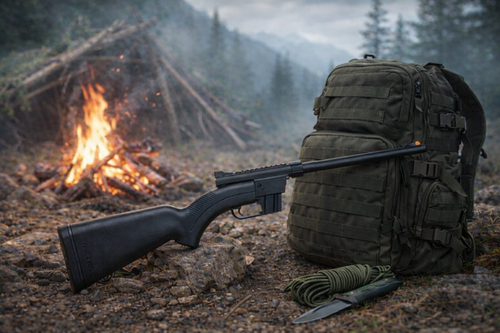
You're packing light for a camping trip. Space matters, and every extra pound feels heavier after a few miles on the trail. That's where the Henry AR-7 starts to make sense. It's not trying to be a full-featured rimfire for every job. It's trying to be a rifle you can stash, carry, assemble quickly, and use when portability matters most.
What Is the Henry AR-7 and Why Does It Still Matter?
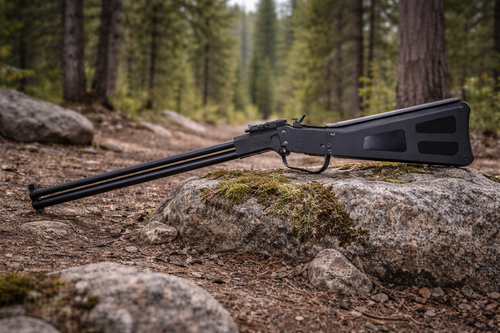
The Henry AR-7 is a semi-auto takedown .22 LR survival rifle. The core idea is straightforward: the barrel, action, and magazines all store inside the stock itself. You get one self-contained package that opens up when you need it and closes back down when you don't. That unusual design is what still draws backpackers, preppers, campers, and rimfire fans to this rifle today.
The design traces back to Eugene Stoner, who developed it at ArmaLite in 1959. The original purpose was practical: give air crash survivors a compact, easy-to-carry tool for hunting food in the wild. The rifle later passed through Charter Arms before Henry Repeating Arms acquired the production rights. Henry rebuilt it from scratch with new tooling and later completed a mid-production redesign that addressed several remaining weak points in the earlier design.
Henry AR-7 Specs at a Glance
- Caliber: .22 LR
- Barrel length: 16.125 inches
- Overall length: 35 inches
- Weight: 3.5 pounds
- Capacity: 8 rounds
- Action type: semi-auto blowback
- Stock: ABS plastic floating stock
- Sights: rear peep, front blade
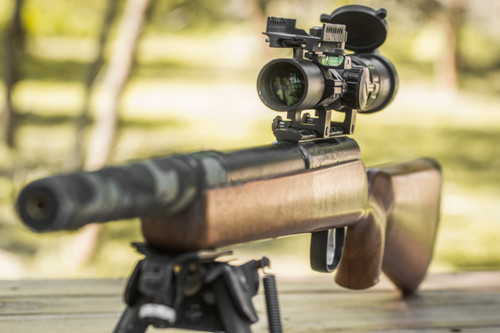
- Optics mounting: 3/8-inch rimfire dovetail rail on the receiver (compatible with tip-off style mounts)
In practical terms, 3.5 pounds is genuinely light for a rifle. The ABS stock is tough enough for field and trail use. Two 8-round magazines come in the box, and the stock can store multiple magazines depending on configuration The 35-inch assembled length gives you a usable rifle in a compact form.
Who Should Consider the Henry AR-7?
This rifle works best for:
- Backpackers who want a light rifle with minimal bulk in the pack
- Campers who want a compact utility gun for the campsite
- Preppers building a go-bag or emergency kit
- Drivers who want a small rifle stored in the vehicle for emergencies
- Rimfire fans who want a fun, unusual takedown gun
The AR-7 is not for buyers who expect match accuracy, premium ergonomics, or centerfire-level performance. It was purpose-built for a specific job. Outside that lane, it's simply the wrong tool.
What Makes the Henry AR-7 Different From Other Rimfire Rifles?
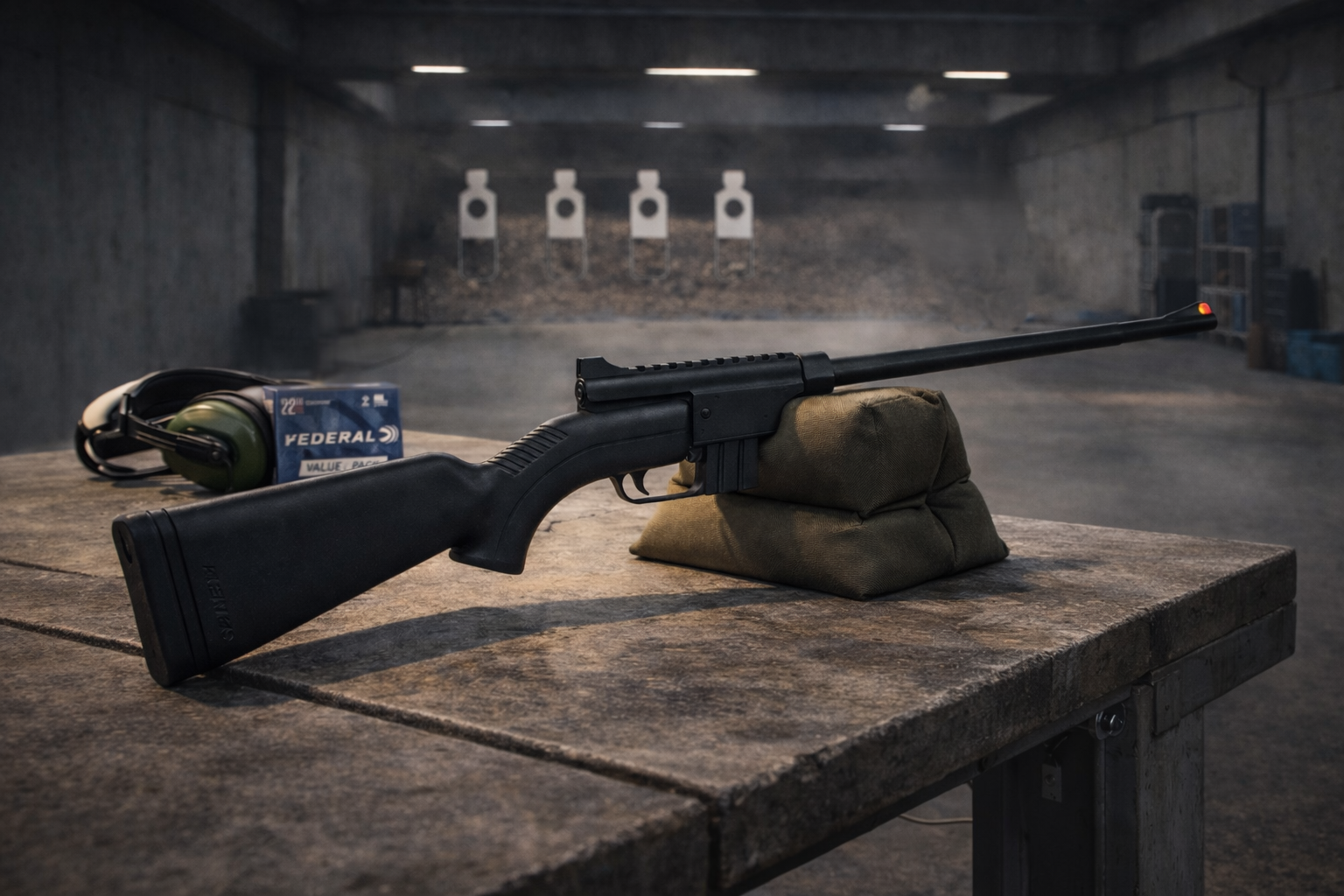
Most rimfire rifles are just rifles. They shoot, store in a case, and go back on the rack when range day is done. The AR-7 works differently. Everything breaks down and stows inside the stock itself. Your barrel, receiver, and magazines all travel in one ABS shell. One compact, self-contained unit designed for pack carry and transport.
That design separates the AR-7 from regular takedown rifles. The Ruger 10/22 Takedown breaks down well but does not store inside itself. The AR-7 does, and that makes it far easier to drop in a bag and pull it out when needed. The trade-off is a thick, chunky stock that looks very different from any traditional rifle. Most users adjust to it quickly once they understand why it's shaped that way. The thickness is not a flaw; it is the design doing its job.
Fit, Feel, and Assembly in Real Use
How the Takedown System Works
Assembly follows a clear sequence:
- Open the buttstock compartment by removing the buttpad
- Pull out the receiver, barrel, and magazines
- Attach the receiver to the stock and tighten the knob on the bottom of the grip
- Secure the barrel to the receiver using the barrel nut
- Load the magazine only after confirming the rifle is fully assembled and pointed in a safe direction
How Fast Can You Assemble It?
With a few practice runs, most users report assembly in well under a minute. The steps are simple and become natural very quickly. A handful of dry runs at home before a trip pays off the moment you actually need the rifle ready in the field.
How It Feels in the Hand
The stock is the first thing people notice. It's thick, and that's completely expected because it holds all the rifle's components inside. The grip shape can feel unfamiliar at first. After a few sessions, most users stop noticing it. This rifle typically sees light, occasional use rather than extended range sessions, so the thick stock becomes a minor concern in practice rather than a real problem.
Controls and Handling
The mag release sits on the left side of the receiver. The safety is a simple lever on the right side. The bolt handle sits in a recessed channel when not in use, helping keep the profile compact during storage Sights consist of a rear peep and a bright front blade. None of these controls feel refined or premium. They're functional, simple, and easy to learn.
How Does the Henry AR-7 Shoot?
Recoil and Shooting Experience
Recoil from a 3.5-pound .22 LR rifle is about as mild as it gets. There's very little muzzle movement to manage. Users consistently describe the experience as fun and easy, which makes this a solid casual range option beyond just its survival use.
Trigger Impressions
The trigger has some creep but breaks cleanly, with a clear, tactile reset. User reports describe it as decent for its category. It's not a match trigger. For field use and casual plinking, it gets the job done without getting in the way.
Sight Picture and Practical Use
The rear peep and front blade setup works well for close-range field use. In low-light or dense wooded areas, the smaller peep setting can slow things down noticeably. Most users stick with the open peep setting for general field work, which gives a usable picture for practical shooting.
Henry AR-7 Accuracy
Accuracy at Short to Moderate Range
The AR-7 was never designed as a precision rifle. It was built for field situations where putting food on the table at modest distances is the real goal. Based on user reports and field experience, it handles that task well within its intended range.
What Accuracy Looks Like in Real Terms
Hitting small reactive targets at 35 yards is very doable. Taking a small game at 25 yards from a steady position is a realistic expectation. At typical small-game distances, careful shot placement from a stable position is realistic within the rifle’s intended range. This is a field accuracy tool, not a competition one, and it should be evaluated as such.
What Limits Its Accuracy
The lightweight platform moves more than a heavier gun. The basic sights are functional but not fine. The rifle also responds differently to different ammo loads, and that sensitivity can shift point of impact and group size noticeably. None of this matters for what the rifle was built to do. Field capability is the real test, and the AR-7 passes it within its intended range.
Henry AR-7 Reliability: Is It Ammo Picky?
The Short Answer on Reliability
Consistent performance is one of the biggest questions buyers have about the AR-7. In practice, it runs well with the right ammunition and can struggle with lower-powered or inconsistent loads. Newer Henry versions improved on this meaningfully compared to older versions of the platform.
Why Older AR-7 Models Got Criticized
Earlier AR-7 versions, especially those made under Charter Arms, picked up a poor reputation for clear reasons. Magazine feed issues were common. Cartridge positioning inside older magazines was inconsistent, and cycling problems followed. That poor reputation stuck to the platform for years, even after Henry got to work on it.
What Henry Improved
Henry redesigned the magazine to improve cartridge positioning and feeding. The barrel alignment stud was changed from plastic to metal. That plastic stud wore down over time on earlier versions and caused accuracy problems. Those issues became a well-known complaint among owners. Henry also updated the bolt handle so it could be removed through a slot in the receiver. Previously, users had to strip the sideplate apart just to access the bolt. These were real, meaningful changes that improved the rifle in day-to-day use.
Ammo Matters More Than Many Buyers Expect
The AR-7 runs much better with hot, high-velocity .22 LR loads. CCI Mini-Mags are among the most commonly recommended options based on user data and field reports. Cheap bulk ammo tends to cause more stoppages. Some budget loads simply don't generate enough energy to cycle the blowback action cleanly. The AR-7 is not unique in this regard, but on this platform, ammo choice matters more than on most rimfires. It's worth taking seriously before you depend on the rifle.
What Reliability Really Means Here
The rifle can be dependable in its lane if paired with ammo it likes. Buyers should test their chosen load before trusting the rifle for field or emergency use. Find the load it runs clean on, and stick with it. That's the practical answer for anyone counting on this rifle when it actually matters.
Is the Henry AR-7 Actually Good for Survival, Backpacking, and Emergency Kits?
Where the Rifle Makes Sense
- Backpacking trips where weight and space are limited
- Camp kits where a compact utility rifle adds real value
- Remote property storage where a small, stashable gun makes sense
- Emergency vehicle kits where the rifle needs to fit without dominating trunk space
- General preparedness bags that prioritize compact, useful tools
Strengths in a Survival Role
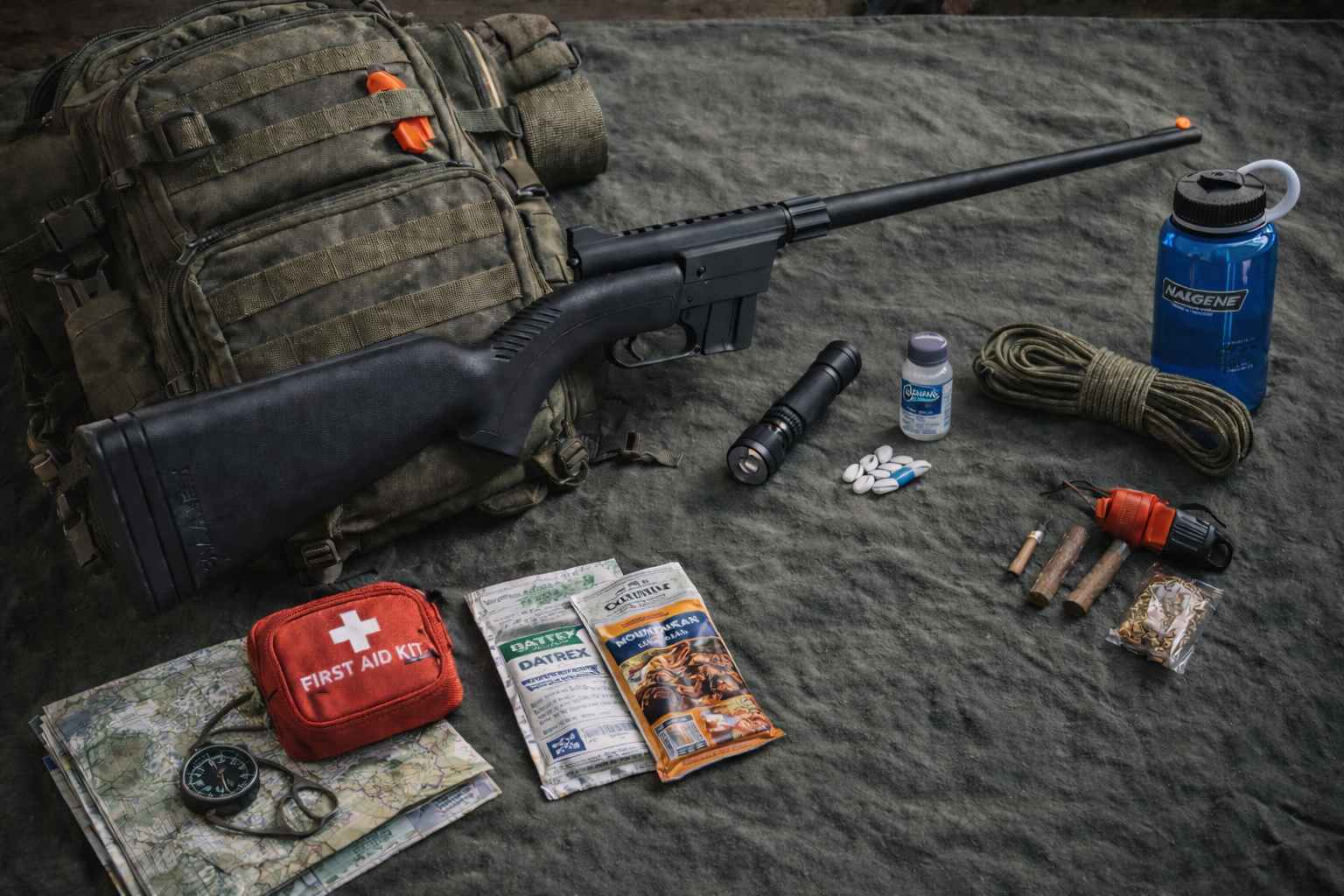
Low weight. Small footprint. Fast assembly. Simple controls. The AR-7 delivers on all of these. For small game hunting in a true survival situation, it can put food on the table at realistic distances. Some retailers offer bundled kits that pair the AR-7 with basic survival gear such as paracord, fire starters, and emergency supplies. That bundle gives buyers a solid starting point for a purpose-built emergency kit without starting from zero.
Limits in a Survival Role
Rimfire power has real limits. The .22 LR is not a defensive cartridge. Ammo sensitivity means a wrong load can cause problems at the worst possible time. The ergonomics are functional, not ideal for extended use. The AR-7 is a specialized tool, and it performs best when treated as one and not asked to do things it was never designed for.
Pros and Cons of the Henry AR-7
Pros
- Very light at 3.5 pounds
- Stores inside its own stock for easy travel
- Fast to assemble after some practice
- Low-recoil and genuinely fun to shoot
- Practical for backpacking, camping, and emergency storage
- Good enough for small game and utility use
Cons
- Stock feels thick and bulky due to internal storage design
- Performance depends heavily on ammo choice
- Not built for precision or tight groups
- Adding an optic limits the self-contained storage benefit
- Some parts feel purpose-built rather than refined
Henry AR-7 vs Other Takedown and Survival Rifles
Henry AR-7 vs Ruger 10/22 Takedown
The AR-7 wins on compact storage and carried weight. The 10/22 Takedown offers broader upgrade options and a more familiar shooting feel. Buyers who want to build out a rifle over time will find more room to grow with the 10/22 Takedown. Buyers who want the most compact self-contained package will find the AR-7 wins that comparison clearly.
Henry AR-7 vs Chiappa Little Badger
The AR-7 gives you semi-auto follow-up shots without manually reloading between each one. The Little Badger is simpler and easier to strip down, but limited to single-shot use before reloading. For repetitive field use, the AR-7 has a clear edge in rate of fire.
Henry AR-7 vs Traditional Utility Rimfires
Traditional rimfires usually offer better handling, tighter accuracy, and better sights overall. The AR-7 beats them on how easy it is to pack and transport. That trade-off is the entire point of the design. The AR-7 is strongest when compact storage and low carried weight matter more than raw shooting performance.
What to Know Before You Buy a Henry AR-7
- Test multiple ammo loads before trusting the rifle for any field use
- Practice assembly and reassembly at home until it becomes second nature
- Keep accuracy expectations grounded in field use, not benchrest shooting
- Decide if optics actually serve you here; adding one will limit the self-contained storage benefit
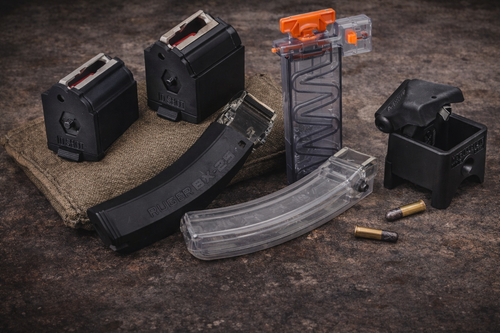
- Buy extra magazines if you plan to use the rifle regularly
- Treat it as a specialized survival tool, not a general-purpose rimfire
Final Verdict
The Henry AR-7 is dependable in its lane when given the right ammo and realistic expectations. It's not the best .22 rifle for every buyer. But it remains one of the most distinctive survival rifles on the market because it solves a genuine problem: how to carry a functional rifle in the smallest, lightest package possible.
Feed it good ammo, practice the assembly, and keep accuracy expectations around field use rather than paper targets. Do those things, and the AR-7 earns its place in a pack, a vehicle kit, or a go-bag as a practical, purpose-built tool.
The Henry AR-7 remains one of the most recognizable takedown .22 rifles on the market, but the right ammunition is what helps unlock its full potential. Before your next range trip or pack-out, check out 5 Best .22 LR Ammo Options for Target Shooting and Hunting to find loads that fit the rifle’s strengths.

Federal .22 LR 36 Grain Copper Plated - Box of 525
$50.00
at Pro Armory
Prices accurate at time of writing
Frequently Asked Questions (FAQ)
Is the Henry AR-7 reliable with all .22 LR ammo?
No. Like many rimfire rifles, it tends to run better with high-velocity loads than with weak bulk ammo. Testing your specific load before field use is strongly recommended.
Is the Henry AR-7 accurate enough for small game?
Yes, within realistic distances. It was built for practical field accuracy rather than precision competition use.
How long does it take to assemble the Henry AR-7?
With a little practice, most users get it assembled in well under a minute. A few dry runs at home makes a real difference.
Does the Henry AR-7 float?
The stock is designed to be water-resistant and buoyant under normal conditions, but it should not be relied on after prolonged submersion or if water enters the sealed compartments.
Is the Henry AR-7 good for backpacking?
Yes. Its low weight and compact stowable design are two of its biggest strengths for trail carry.
Can you mount an optic on the Henry AR-7?
Yes, using the receiver-mounted Weaver rail. Adding an optic does limit one of the rifle's main benefits, which is fully self-contained compact storage.
About the Author
This article was written by the Pro Armory writing team based on current research, based on current manufacturer information, historical references, and reputable firearms-industry sources. We also referenced trusted information from official defense publications and respected firearm authorities such as the ATF, NRA, and manufacturer manuals.
Disclaimer: The information in this article is for educational purposes only. It does not count as legal, safety, or professional advice. Laws around firearm ownership and carry vary by state and location, so always check your local rules before buying or using any firearm. Always handle firearms safely and read your owner's manual before use.

Best Ammo Deals, Training, & Accessories
Subscribe to ProArmory sales and deals email.