 Pro Armory Editorial Team
Quick Answer
A California "featureless" AR-15 is a semiauto centerfire rifle that keeps a detachable magazine but removes the listed "features" that trigger assault weapon status. The usual path is swapping the grip, keeping the stock fixed, and choosing a muzzle device that is not a flash suppressor. Because laws and definitions can shift, verify your exact setup against the current statute and California DOJ guidance before you build.
Key Takeaways
- "Featureless" keeps detachable mags by removing banned features.
- The big pitfalls are grip shape, stock adjustment, and flash suppressors.
- Muzzle brakes are common; avoid anything marketed as flash-hiding.
- Fixed-mag solutions exist, but they change reloads and handling.
- Treat this as compliance planning, and not legal advice.
The first time you try to make sense of "featureless," it feels like reading a checklist written in another language. The trick is to stop chasing opinions on forums and start walking through a simple decision path: detachable mag or fixed mag, then features or no features. Once you do that, the build becomes basic parts selection and careful verification. Not as scary as it first looks.
What "Featureless" Means in California
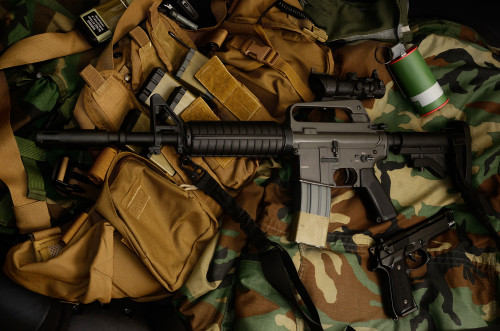
A featureless AR-15 is one that uses a detachable magazine but strips away all six prohibited "features" listed under California law. Those features are what push a rifle into the assault weapon category. Remove them all, keep the detachable mag, and your rifle stays out of that classification.
The governing concept comes from California Penal Code Section 30515(a)(1), which defines a semiautomatic centerfire rifle as an assault weapon if it has a detachable magazine and one or more listed features. Remove the features, keep the detachable mag, and you're on the right side of the line. That said, always cross-check your final build against the current statute and California DOJ guidance—not a forum post from three years ago and not this article alone.
The Compliance Fork in the Road
There are two main paths available to California AR-15 owners, and they lead to very different builds.
Path A is the featureless route. You keep the detachable magazine, swap out all prohibited parts, and your rifle stays off the assault weapon list. Most people take this route because they want normal magazine changes during training and range sessions. Path B is the fixed-magazine route. Here, you can keep the "features"—like a pistol grip and adjustable stock—but the magazine must be truly fixed. Under current California law and as defined in legal reference materials, "fixed magazine" means a device that cannot be removed without disassembling the firearm's action. That requires separating the upper and lower receivers so the action is disassembled before the magazine can be removed. Which path fits you depends on how you actually use the rifle. Featureless suits most range and training setups. Fixed mag suits people who want standard ergonomics and don't mind a slower reload process.
The "No-Go" Features List
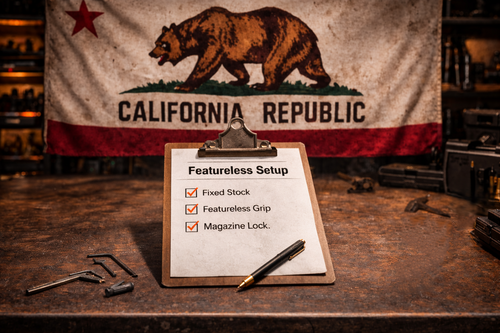
Here's what you must keep off a featureless build:
- Pistol grip—defined in California regulations as a grip that allows the web of the trigger hand to rest below the top of the exposed trigger while firing
- Thumbhole stock
- Folding or telescoping stock
- Flash suppressor
- Grenade or flare launcher
- Forward pistol grip
Why These Specific Parts Trigger Problems
California law uses these features as the classification trigger for assault weapons. A rifle with a detachable magazine and any one of these parts crosses into assault weapon territory. That's the whole point of the list. The definitions are technical, and the line between a "pistol grip" and a compliant grip design carries real legal weight. Don't rely on what something looks like or what a seller says. The California DOJ identification guide exists specifically to help owners make these calls—use it before you finalize any parts order.
Why People Choose Featureless AR-15 Rifles
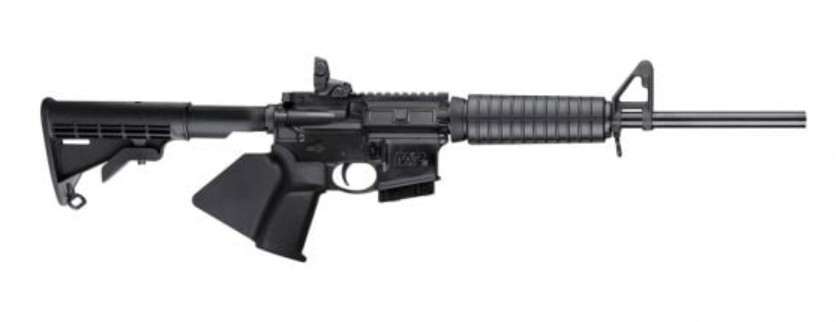
The practical draw is clear. A featureless build lets you run a standard magazine release the way it was designed. No tool, no workaround, no fumbling for a pin. You drop the mag, insert a fresh one, and keep going. For range training and general use, that kind of normal handling is a big deal.
The trade-off sits in ergonomics. Featureless grips feel different from a standard pistol grip. The thumb lands in a different place. The stock has to stay fixed, so you pick one length of pull and live with it. Some people adapt in a single session. Others take longer. The point is—it works. It's not the same as a standard AR setup, but it's a real, functional solution for a lot of California owners who want a working rifle without the headache of registration.
California Assault Weapon Rules
So why did featureless builds blow up in popularity? A simple timeline helps. Before 2017, California allowed what was called a "bullet button"—a device that required a tool to release the magazine. That counted as a "fixed" magazine under the old definition.
That changed on January 1, 2017. The definition of a fixed magazine shifted to require actual disassembly of the action—not just a tool press. Rifles built with bullet buttons before that date had until January 1, 2018 to be either registered as assault weapons or converted to featureless builds. Registration carries serious restrictions: no selling within California, no lending, no transfer to family members even after death. The rifle essentially stays with the original registrant. Going featureless became a clean way to sidestep all of that. In 2021, a federal district court ruled California’s assault weapons ban unconstitutional in Miller v. Bonta. That decision has been stayed pending appeal, and the law remains fully in effect unless and until higher courts rule otherwise. The California DOJ is the right place to check the current status before you make any build decisions.
Step-by-Step Featureless Build Plan
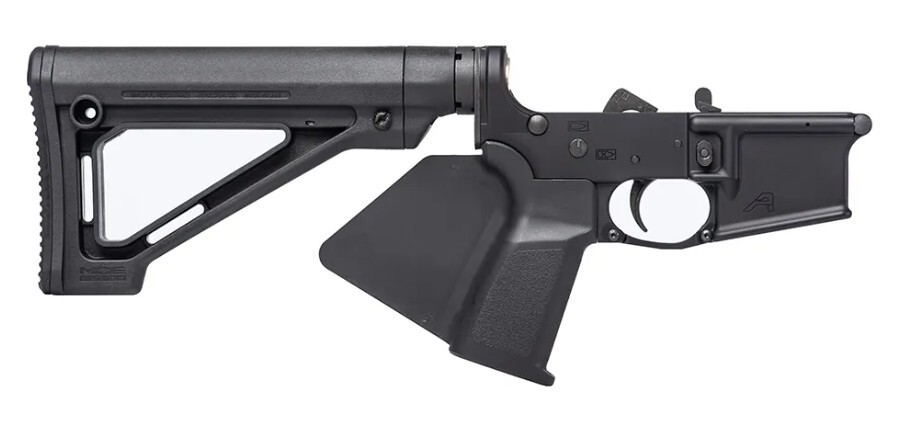
Step 1 — Start with a Clean Baseline
Confirm your platform. You're working with a semiauto centerfire rifle. Then lock in your compliance path: featureless or fixed mag. That decision shapes every part's choice that follows it.
Step 2 — Choose a Featureless Grip Setup
The grip is the most visible change in a featureless build. You need a design that prevents the web of your hand from sitting below the exposed trigger in a pistol-style hold. Common solutions include fin-style grips, shelf-supported grips, and alternative grip designs that redirect thumb placement. Some of these designs put the thumb in a position where reaching the safety lever becomes tricky. If that's the case, adding an ambidextrous safety is a practical fix. Look for hand fit, safety access, and how the grip affects your natural hold. Feedback from experienced California builders points to those two things—comfort and safety access—as the details that make or break a featureless grip choice.
Step 3 — Lock Down the Stock
No folding, no telescoping. Period. A true fixed stock is the cleanest choice—install it, and there's nothing to question. If you want to keep a collapsible stock, it needs to be pinned in place. That involves drilling through the stock and buffer tube and securing a roll pin. Some builders epoxy over the pin as an extra step. Purpose-built stock-locking products also exist; they use the existing adjustment hole to hold the stock in one position without drilling. Each approach has trade-offs in cost, effort, and how clearly "fixed" the final result appears to an outside eye.
Step 4 — Pick the Right Muzzle Device
Stay away from flash suppressors. That's the rule in full. Avoid any device designed to reduce or redirect visible muzzle flash. Even if marketed as a brake or compensator, a device intended to function as a flash suppressor would disqualify a featureless build under California law. A muzzle brake or compensator is the standard compliant choice. A thread protector works too if you don't need any muzzle device function at all. Read the marketing language carefully on anything you're considering. Conservative choices beat clever ones when compliance is on the line, according to California's current assault weapon statutes.
Step 5 — Remove the Easy Stuff
Don’t install a forward pistol grip. Skip thumbhole stocks. Leave grenade and flare launchers off entirely—not exactly common, but still listed in statute. These are the easy wins in a featureless build. Just don’t have them, and that part of the checklist is done.
Step 6 — Final Walkthrough Check
Before the rifle goes to the range, walk it through the full compliance checklist: semiauto centerfire rifle, detachable magazine, no prohibited features. Then compare it against the current California statute and the DOJ's identification guide. The DOJ guide gives visual reference for what counts as each prohibited feature. Use it as your final check, and not a starting point for guesswork.
Also confirm the rifle maintains a minimum overall length of 30 inches, as required under California law for semiautomatic centerfire rifles.
Best Mods by Category
Featureless Grip Upgrades That Don't Feel Awkward
Look for grips that give you repeatable hand placement on every draw. Thumb shelf placement affects control significantly. Safety access is a must—check if the trigger hand can reach the safety lever without shifting the grip position. Aluminum construction tends to last longer than polymer. Polymer options are lighter and easier on the budget.
Stock Options That Keep a Good Cheek Weld
Length of pull has to fit your body. A fixed stock that's too long or too short creates problems with cheek weld and sight alignment that no amount of technique can fix. Sling attachment points matter for practical use. Whatever stock you go with, make sure it genuinely cannot adjust once it's installed. That's the whole point.
Muzzle Devices That Help Recoil Without Flash-Suppressor Risk
Focus on recoil reduction and port design. A solid brake keeps the muzzle down on follow-up shots. Watch the overall length—it can affect the rifle's total measurement depending on your configuration. And make sure any device you choose can be properly timed and secured to the barrel.
Featureless vs Fixed-Mag Builds
A fixed-mag build keeps the pistol grip, adjustable stock, and other standard features. The trade-off is that the magazine only comes out when you open the action—specifically, by separating the upper and lower receivers. That adds time and steps to every reload. For training setups where mag changes happen often, featureless wins on speed and flow. For a range rifle where ergonomics matter more than reload speed, a fixed-mag build makes sense. Neither is the right answer for everyone. How you actually use the rifle is what decides it, This distinction is commonly discussed in compliance guidance for California gun owners, but final responsibility rests with verifying your configuration against current law.
Other Compliant Paths
Some manufacturers build California-compliant complete rifles from the factory. These often come with a non-removable magazine, which allows standard features like a pistol grip and adjustable stock to stay on the rifle. The reload process changes though—you open the receiver, load from the top, close up, run the charging handle, and go. It's a valid option for someone who wants standard ergonomics and doesn't need fast mag changes.
New York residents may notice some overlap with California rules, but the specifics differ enough that you'd need to check New York's statutes separately before using this guide as a direct blueprint for a NY build.
Quick Comparison Table
| Approach | Keeps a Detachable Mag? | Keeps "Features"? | Main Trade-Off |
|---|---|---|---|
| Featureless | Yes | No | Grip and stock ergonomics change |
| Fixed Magazine | No | Yes | Slower reloads; action must open |
Common Mistakes That Get Builds Into Trouble
Most compliance problems come from small oversights that feel minor until they're not. The most common ones are:
- Choosing a muzzle device based on looks, then discovering after the fact that it's marketed as flash suppression
- Assuming that all pinned-stock methods carry equal legal weight
- Adding a vertical foregrip without checking whether it qualifies as a “forward pistol grip” under California definitions. Angled foregrips are generally treated differently, but owners should verify current DOJ interpretation before installation.
- Relying on old flowcharts or outdated forum threads instead of checking current California DOJ guidance
That last one causes the most headaches. Laws change. Definitions shift. A guide from 2018 may no longer reflect what the statute actually says today. Always go back to the primary source.
Conclusion
A featureless AR-15 is a straightforward concept at its core: detachable magazine, no prohibited features. The build process is careful parts selection and a solid final check against the law. Start with your parts list. Review each component against California Penal Code Section 30515 and the California DOJ identification guide. When something feels close to the line, pick the more conservative option every time.
Check your configuration against current California DOJ guidance before you buy parts or start building. That step costs nothing and saves a lot of trouble.
A CA-compliant AR-15 can still serve as a versatile rifle for training and preparedness when paired with the right ammunition. Before stocking up, read Best 5.56 for Home Defense, Range Training, and Being Prepared to ensure your ammo matches your rifle’s intended role.

PMC X-Tac 5.56x45mm 55 Grain FMJ
$12.00
at Pro Armory
Prices accurate at time of writing
Frequently Asked Questions (FAQ)
What makes an AR-15 "featureless" in California?
A featureless AR-15 is one that uses a detachable magazine but has none of the six prohibited features listed under California Penal Code Section 30515. Those features include a pistol grip, thumbhole stock, folding or telescoping stock, flash suppressor, grenade or flare launcher, and forward pistol grip. Remove all six and you're in featureless territory.
Can I use a detachable magazine on a featureless rifle?
Yes. That's one of the main reasons people go featureless. Removing all prohibited features allows the rifle to use a standard detachable magazine and a normal magazine release, as defined under California law. That's the practical payoff of the featureless route.
Is a muzzle brake allowed, and what's the risk with flash suppressors?
Muzzle brakes and compensators are generally allowed on featureless builds. Flash suppressors are not. The key is the marketing language: if a device is described as flash-hiding or flash-reducing, treat it as a flash suppressor and avoid it. Conservative choices are always safer when compliance is involved.
Do I need to pin my stock for a featureless build?
Not necessarily if you start with a true fixed stock. If you want to keep a collapsible stock, it must be pinned so it cannot adjust. The pinning needs to be solid enough that there's no question about the stock being fixed in place.
What does "fixed magazine" mean under California rules?
Under current California law, a fixed magazine is one that cannot be removed without disassembling the action of the firearm. A tool press on a magazine release no longer qualifies. The magazine must stay in the rifle until the upper and lower receivers are separated.
Featureless vs fixed magazine: which is easier for training and reloads?
Featureless builds allow standard magazine changes, which makes them better for most training scenarios. Fixed-magazine setups require opening the action to reload, which adds time and steps. For regular range use and training drills, featureless is the more practical option for most California gun owners.
About the Author
This article was written by the ProArmory writing team based on current research, including studies from reputable sources like the *Journal of Military Science*, *Firearms News*, and the *National Shooting Sports Foundation*. We also referenced trusted information from official defense publications and respected firearm authorities such as the ATF, NRA, and manufacturer manuals.
Disclaimer: This article is for education only. Laws vary by state and city and can change. Follow safe handling at all times. Read your owner's manual. Verify local rules before you buy or train. Nothing in this article constitutes legal advice.

Best Ammo Deals, Training, & Accessories
Subscribe to ProArmory sales and deals email.