 Pro Armory Editorial Team
Quick Answer
Double-barrel shotguns offer timeless appeal for upland hunters, clay shooters, and specialty users. It ranges from budget-friendly Turkish imports to premium Italian craftsmanship. Standouts include the CZ Bobwhite G2 for value-conscious hunters, the Weatherby Orion I as a strong mid-range step-up O/U, and the innovative Benelli 828U for premium modern performance.
Key Takeaways
- Doubles keep things simple with two barrels and easy choke choices across field and sport.
- Turkish-made options can be great picks if build quality is checked and the brand is trusted.
- Over-unders balance well for clays. Side-by-sides feel traditional and quick in upland cover.
- Tactical doubles such as the Stoeger Double Defense and DP-12 serve narrow home defense roles.
- Fit, gauge, and real use matter more than engraving or flashy walnuts.
Double-barrel shotguns stay popular for clear reasons. They offer simple controls, fast second shots, and a calm, classic style. When some semi autos fail in bad weather, a good double keeps running. There is no gas system to clog and no action to short stroke.
Our selection below covers every price point and makes it easy to choose with confidence.
The Quick List
Start here if you just want the shortlist:
- CZ Bobwhite G2 – Best budget side-by-side upland gun
- Stoeger Condor Field – Best budget over-under starter double (street-price budget; MSRP is higher)
- Stevens Model 555 – Best lightweight budget O/U for long days afield
- TriStar Trinity – Best value O/U with upscale looks under mid-range pricing
- Mossberg International Silver Reserve – Best working-class O/U from a big-name brand
- CZ Redhead Premier – Best mid-tier O/U for hunters and casual clays
- Weatherby Orion I – Best "step-up" O/U for all-round field use
- Benelli 828U – Best premium, modern O/U for serious shooters
- Stoeger Double Defense – Best defensive/pest-control double-barrel
- Standard Manufacturing DP-12 – Wildcard tactical double-barrel pump for niche enthusiasts
Best Double-Barrel Shotguns Comparison Chart
| Model | Type | Gauges | Barrel Length | Weight | Best Use |
|---|---|---|---|---|---|
| CZ Bobwhite G2 | SxS | 12, 20 (3" chambers); 28 (2¾" chamber) | 28" | about 7.0–7.3 lbs in 12 ga (lighter in smaller gauges) | Upland |
| Stoeger Condor | O/U | 12, 20, 28, .410 | 20"–30" | 5.5–8.85 lbs | Starter |
| Stevens 555 | O/U | 12, 20, 16, 28, .410 | 26"–28" | 6–6.5 lbs | Upland |
| TriStar Trinity | O/U | 12, 20, 28, 16 | 26"–28" | 6.8–7.3 lbs | All-round |
| Mossberg Silver Reserve | O/U | 12, 20, 28, .410 | 26"–30" | 7–7.5 lbs | All-round |
| CZ Redhead Premier | O/U | 12, 20, 28 | 26"–28" | 7–7.5 lbs | Field / Clays |
| Weatherby Orion I | O/U | 12, 20 | 26"–28" | 7 lbs | All-round |
| Benelli 828U | O/U | 12, 20 | 26"–30" | 6.5–7.5 lbs | Serious Sport |
| Stoeger Double Defense | SxS / O/U | 12, 20 | 20" | 6.4–7.1 lbs | Tactical / Pest |
| DP-12 | Double Pump | 12 | 18.9" | 9.75 lbs | Tactical |
How We Chose the Best Double-Barrel Shotguns
Our picks come from deep research on guns that prove themselves in the field and on clay ranges. We read notes from hunters who carried these doubles through briars and marsh. We studied feedback from clay shooters who fired thousands of rounds. And we listened to people who train for defense and test gear under stress.
We also checked each gun for consistent ignition, lock-up tightness, and smooth action after long use. We also looked at safety features and current standards. A double must run clean even after hundreds or thousands of shells.
We also weighed price against build and brand support. Budget guns can run great, but they still need a company that stands behind them. Clear help and a solid warranty matter.
Best Double-Barrel Shotguns
CZ Bobwhite G2 – Best Budget Side-by-Side
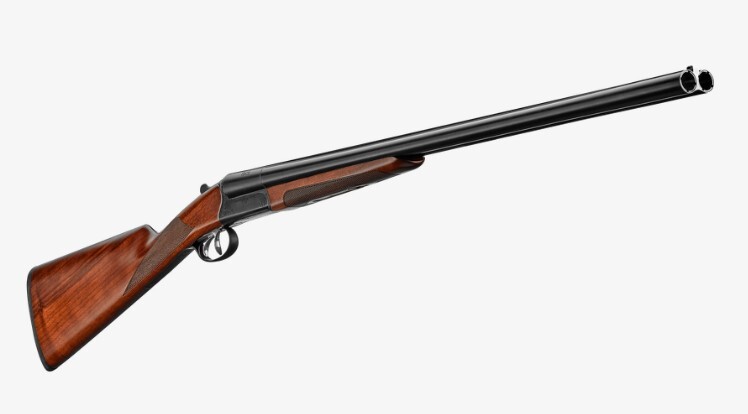
The CZ Bobwhite G2 embodies what a working side-by-side should be. This no-nonsense double brings classic styling and field-ready performance without breaking the bank. It's the kind of gun that feels at home in upland fields and won't make you cry if it picks up a scratch or two.
With its straight English-style stock and dual triggers, the Bobwhite G2 gives you that traditional hunting experience. CZ has improved this model with CNC machining of the receiver and floating firing pins. For this reason it makes it more refined than its price suggests. The hammerless design keeps a clean profile and prevents snagging in thick cover.
What sets the Bobwhite G2 apart from many budget doubles is that CZ builds true-to-gauge frames. The 28 gauge version isn't just a 20 gauge with smaller barrels—it's a completely scaled frame that feels light and lively in hand. For upland hunters who walk miles in search of birds, this attention to proper scaling makes a real difference by day's end.
Price: Around $750
Specs
- Action: Side-by-side, break-open
- Gauges: 12, 20, 28
- Chamber: 3"
- Barrel length: 28"
- Capacity: 2 rounds
- Chokes: 5 flush tubes (F, IM, M, IC, C)
- Stock: Straight English-style Turkish walnut
- Receiver: CNC-machined steel with black chrome finish
- Length of pull: 14.5"
- Weight: 7.3 lb in 12 ga (lighter in 20/28)
Features
- Traditional dual triggers for instant barrel selection
- Chrome-lined barrels with a simple bead sighting plane (no vent rib).
- Gauge-specific frames so lighter gauges feel trim, not overbuilt
- Tough black-chrome finish improves corrosion resistance in the field
Pros
- Simple and highly dependable for field use
- Light and fast-handling for upland birds
- Great value side-by-side with "classic" feel
Cons
- Slightly barrel-heavy for some users
- Finish and trim are more "working gun" than high art
Stoeger Condor Field – Best Budget Over-Under Starter
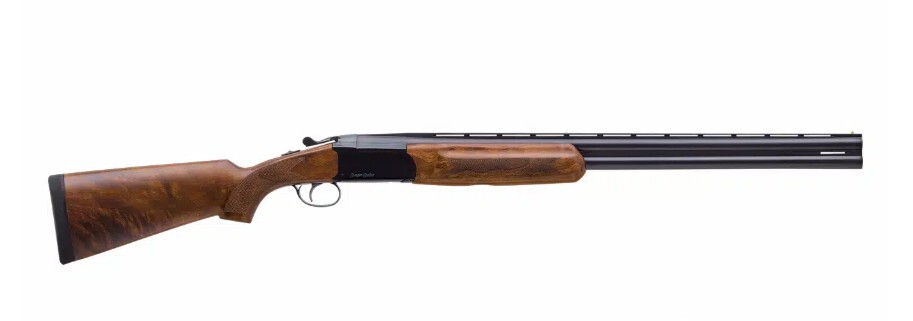
The Stoeger Condor Field represents one of the most accessible entry points into the world of over-under shotguns. For first-time double-barrel owners, this Turkish-made O/U delivers fundamental quality at a price that won't cause sticker shock. It's a great way to discover if the over-under style suits your shooting needs.
What makes the Condor Field stand out in the budget category is its classic appearance. With real A-grade walnut and a vent rib, it looks like a traditional sporting shotgun rather than a budget compromise. The gun has a substantial feel that provides stability for clay shooting but remains manageable for field use.
The Condor's simplicity is part of its charm. With basic extractors rather than ejectors, shell removal remains manual but also more foolproof. The single trigger design with barrel selector gives new shooters a familiar experience, and the boxlock action is sturdy enough to handle years of regular use. For anyone curious about doubles without wanting to make a major investment, the Condor Field offers an honest introduction.
Price: Usually around $400 street price (MSRP higher), depending on gauge and sales.
Specs
- Action: Over/under, break-open
- Gauges: 12, 20, 28, .410 bore
- Chamber: 3" (where applicable)
- Barrel length: 20"–28" depending on model and gauge
- Capacity: 2 rounds
- Stock: A-grade walnut with standard pistol grip
- Chokes: Screw-in choke tubes supplied
- Sights: Brass bead front
- Weight: Around 7–8 lb depending on configuration
Features
- Steel receiver for durability in a budget package
- Vent rib barrels for a better sight picture on clays and birds
- Single trigger with barrel selector on most current Condor Field models
- Extractors keep operation simple and easy to maintain
Pros
- Very affordable way to get into over-unders
- Multiple gauges and barrel lengths for different uses
- Classic look with real walnut and vent rib
Cons
- Trigger and overall refinement feel basic compared to mid-tier guns
- Parts and service may not be as strong as premium brands
Stevens Model 555 – Lightweight Budget All-Day Double
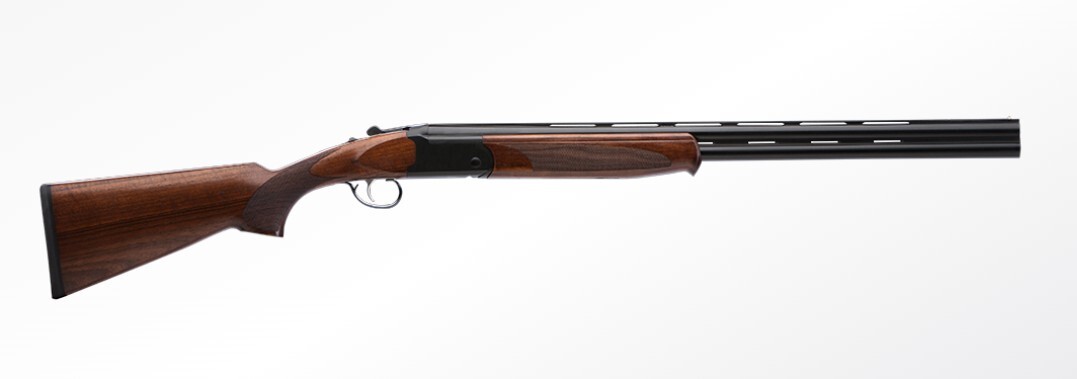
The Stevens Model 555 solves a common gripe with budget over-unders: heavy weight. This featherlight double sits a touch over 6 pounds in 12-gauge, and the smaller gauges drop even more. If you hike long miles in thick upland cover, that saved weight feels like a gift by sunset.
The secret is an aluminum alloy receiver with a steel insert at the lockup points. You get strength where it counts and fewer ounces everywhere else. The Turkish walnut stock and fore-end have clean lines and grippy checkering. It looks sharp—far above its price tag.
Even with the low weight, the 555 brings useful features. You get five choke tubes, chrome-lined barrels, and extractors that lift shells for easy pickup. The single selective trigger breaks clean. The tang safety also lets you pick the barrel. And Stevens offers five chambers: 12, 20, 16, 28, and .410. That covers almost every need.
Price: Around $750
Specs
- Action: Over/under, break-open
- Gauges: 12, 20, 16, 28, .410
- Chamber: 3" (most gauges)
- Barrel length: 26" or 28"
- Receiver: Aluminum alloy with steel reinforcement insert
- Stock: Turkish walnut
- Chokes: 5 interchangeable tubes included
- Weight: 6–6.5 lb for 12/20, lighter for sub-gauges
Features
- Very light receiver and barrel set to reduce fatigue
- Schnabel fore-end for better grip and control
- Tang safety with integrated barrel selector
- Chrome-lined barrels with removable chokes for versatility
Pros
- Excellent for long days in the field
- Multiple gauges, including 16 and .410, for different shooters
- Good feature set for the price point
Cons
- Light weight means sharper recoil with heavy loads
- Finish and fit are good but still "budget plus," not mid-luxury
TriStar Trinity – Value O/U With Upscale Looks
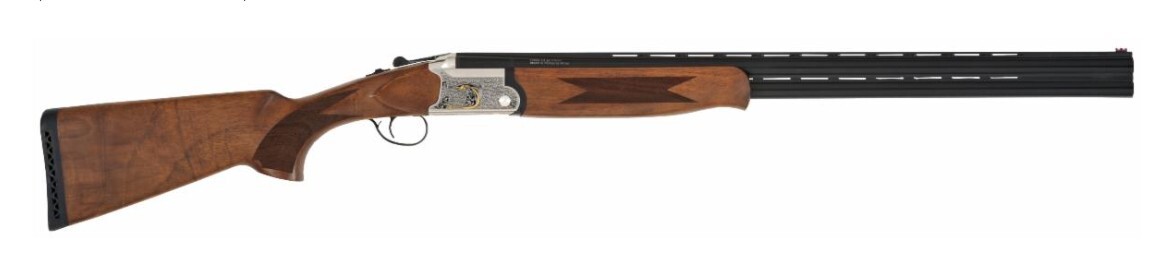
The TriStar Trinity shows that a mid-price over-under can turn heads. From across the club, this Turkish gun passes for a high-dollar piece. The polished receiver, engraving, and 24-carat gold inlay give it classic style.
But the looks come with sound build. CNC machining keeps key fits tight at the lockup, hinge pins, and firing pin channels. The oil-finished Turkish walnut stock is both easy on the eyes and steady in the hands, with checkering that holds in wet or dry. Chrome-lined barrels add long life and help fight rust.
The lineup even includes 16 gauge along with 12, 20, and 28. The vented top and mid rib help shed heat in long sessions. A fiber-optic front bead makes targets pop in mixed light. If you want a gun that shoots well and looks the part without jumping to premium prices, the Trinity hits that sweet spot.
Price: Around $700
Specs
- Action: Over/under, break-open
- Gauges: 12, 20, 28, 16 (availability varies by year)
- Chamber: 3" (2¾" in some 16 ga)
- Barrel length: 26" or 28"
- Receiver: Polished steel with engraved motifs and gold inlay
- Stock: Turkish walnut, oil-finished
- Chokes: 5 interchangeable tubes, typically Mobil-pattern (Beretta/Benelli style), but confirm per SKU.
- Weight: Around 6.8–7.3 lb depending on gauge
Features
- CNC-machined receiver and chrome-lined barrels
- 24-carat gold inlay standard on Trinity receiver
- Single selective trigger with tang safety
- Vented top and mid-rib with fiber-optic front bead
Pros
- Very classy appearance for the money
- Solid lock-up and manufacturing tolerances
- Works well as an all-around double for field and range
Cons
- Engraving and finish are production grade, not hand-engraved
- Limited stock adjustability compared to higher-end guns
Mossberg International Silver Reserve – Working-Class Over-Under
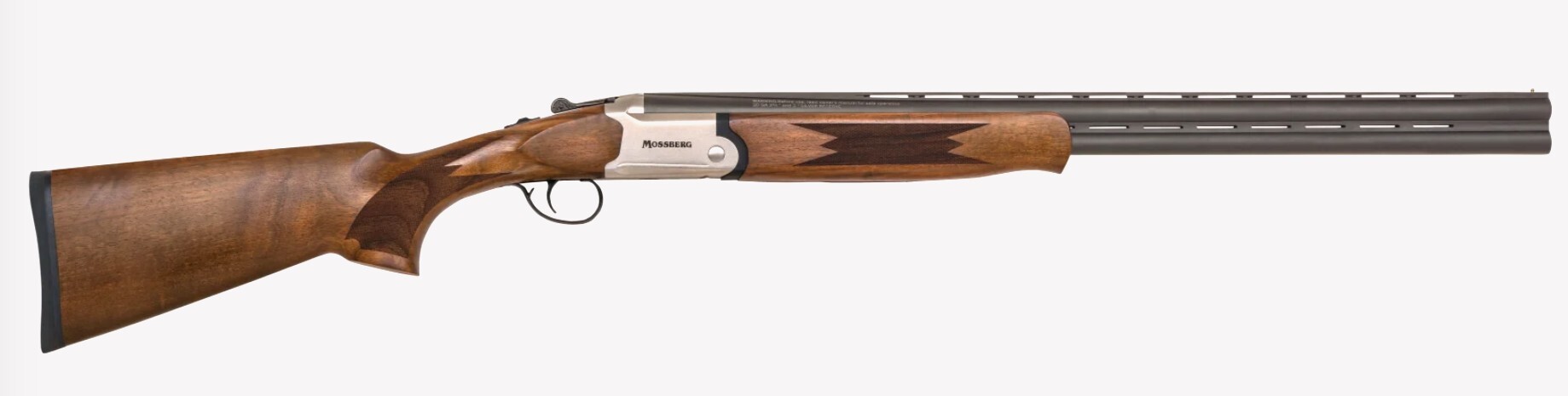
The Mossberg International Silver Reserve represents what many American shooters want in a double: honest performance, clean looks, and a name they trust backing it all up. This updated version of Mossberg's double-barrel line trades some of the decorative flourishes of previous models for a more practical, working-class aesthetic centered on the matte silver receiver.
Field functionality drives the Silver Reserve's design. The walnut stock wears a satin finish that won't glare in the sun or show every fingerprint. The boxlock action is slim enough to be quick-handling but robust enough to handle years of field use. For hunters who value performance over decoration, this gun hits the mark with features that matter.
One of the Silver Reserve's strengths is its gauge options. Available in 12, 20, 28, and .410 bore, there's a model suited for everything from geese to grouse. Barrel lengths vary appropriately by gauge and purpose, with options from 26 to 30 inches. Field models use extractors, while some sport and competition trims use ejectors—so you’ll want to double-check the exact Silver Reserve variant. The Silver Reserve II line, in particular, mixes extractor and ejector configurations. The single selective trigger provides a consistent pull for both barrels. For a mid-priced double from a major American brand, it delivers substantial value.
Price: Around $800
Specs
- Action: Over/under, break-open
- Gauges: 12, 20, 28, .410
- Chamber: 3"
- Barrel length: 26"–30" depending on model/gauge
- Receiver: Matte silver-finished boxlock
- Stock: Satin-finished walnut
- Chokes: Multi-choke system with tubes included
- Weight: Around 7–7.5 lb depending on configuration
Features
- Vented rib barrels with single selective trigger
- Extractors on most field models for simpler operation
- Multiple gauges including 28 and .410 for upland or youth use
- Backed by Mossberg's broad parts and service network
Pros
- Strong value from a major brand
- Good all-rounder for hunting and casual clays
- Simple, practical aesthetic that hides wear well
Cons
- Trigger can feel heavier compared to some competitors
- Less decorative than some earlier Mossberg double models
CZ Redhead Premier – Mid-Tier Field & Clays O/U
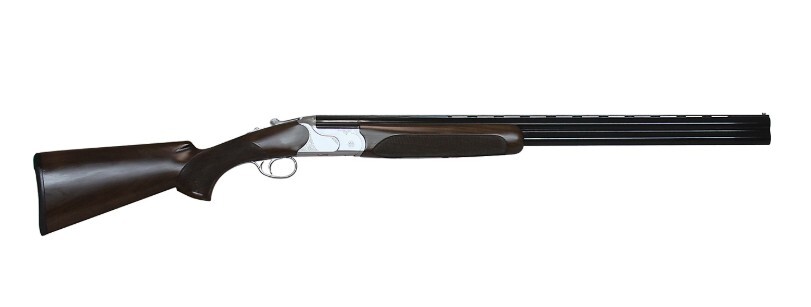
The CZ Redhead Premier occupies the sweet spot where quality and affordability meet. This mid-tier over-under delivers refinements that elevate it above entry-level guns without pushing into premium pricing territory. It's built for shooters ready to move beyond their first double but not yet prepared to invest in a high-end European masterpiece.
What sets the Redhead Premier apart is attention to performance details. The mechanical trigger system (unlike inertia triggers) ensures reliable second-shot ignition even with light loads or after a first-shot misfire. The automatic ejectors forcefully kick out spent shells for faster reloading, and the 8mm flat vent rib provides a clean sighting plane. These features matter during actual use, not just on the gun store shelf.
The Redhead Premier also looks great for the price. The receiver has clean, low-key engraving that stays tasteful. And the Turkish walnut stock with a Prince-of-Wales grip brings a classic look and a comfortable hold. You can get it in 12, 20, or 28 gauge. So it can be your main gun for the field and for sporting clays. All at a price many can handle.
Price: Around $999
Specs
- Action: Over/under, break-open
- Gauges: 12, 20, 28
- Chamber: 3"
- Barrel length: 26" or 28"
- Receiver: Silver-finished with understated engraving
- Stock: Turkish walnut with Prince-of-Wales grip
- Chokes: 5 interchangeable tubes included
- Weight: 7–7.5 lb depending on gauge and barrel length
Features
- Mechanical trigger (non-inertia) for consistent second-shot ignition
- Automatic ejectors for faster reloads
- 8 mm flat vent rib for a clean, precise sighting plane
- Solid wood-to-metal fit and finish in a mid-market price bracket
Pros
- Strong all-purpose choice for field and clays
- More refined than entry-level doubles
- Good feature set without entering premium pricing
Cons
- Heavier than ultra-light upland specialists
- Finish and engraving still production-level, not custom
Weatherby Orion I – Best All-Round Step-Up Over-Under
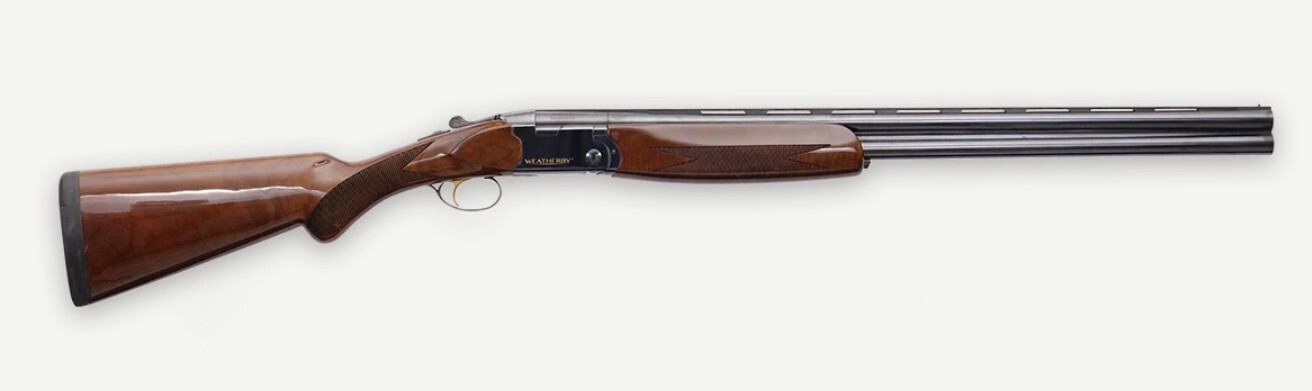
The Weatherby Orion I represents the resurrection of a beloved name in the double-barrel world. This modern iteration brings Weatherby's reputation for quality to a price point that serious shooters can justify. The Orion I serves as a natural step up from budget doubles, offering meaningful improvements in fit, finish, and feel.
Unlike some over-unders that excel either at clay games or in the field, the Orion I strikes a balance that makes it truly versatile. At around 7 pounds, it's substantial enough to swing smoothly for clay targets but not so heavy that it becomes burdensome on long upland hunts. The 26 or 28-inch barrel options further tailor the gun to your primary use, with many finding the 28-inch version the ideal compromise.
The Orion I blends classic Weatherby style with handy features. The gloss A-grade walnut stock with Prince-of-Wales grip looks timeless. The steel boxlock receiver adds strength and clean lines. Automatic ejectors pop cases fast, so reloads stay quick. Chrome-lined bores fight wear and help with easy cleanup. If you want a forever gun without paying top European prices, the Orion I hits a sweet spot for quality and cost.
Price: Around $1,100
Specs
- Action: Over/under, break-open
- Gauges: 12, 20
- Chamber: 3"
- Barrel length: 26" or 28"
- Receiver: Steel boxlock
- Stock: A-grade gloss walnut, Prince-of-Wales grip
- Chokes: Typically ships with 5 tubes (SK, IC, M, IM, F), depending on package.
- Weight: 7 lb (12 ga 28" just over 7 lb)
Features
- Automatic ejectors and tang-mounted manual safety
- Chrome-lined bores for durability and easier cleaning
- Vented, matte-topped rib to reduce glare in bright light
- Designed to balance well for upland, waterfowl, and clays
Pros
- Noticeable upgrade in feel from budget doubles
- Classic Weatherby look with usable field features
- Suitable as a "one-gun" solution for many shooters
Cons
- Currently limited to 12 and 20 gauge
- Glossy stock finish not ideal for those who want a purely utilitarian look
Benelli 828U – Best Premium Modern Over-Under
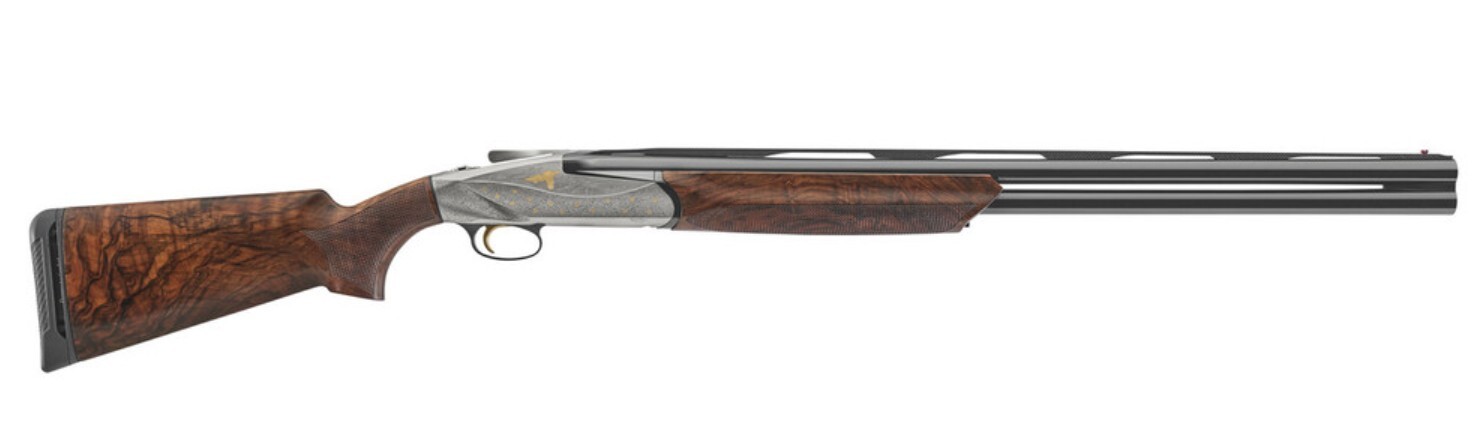
The Benelli 828U breaks dramatically from traditional over-under design. It brings innovation to a category often bound by convention. This premium Italian shotgun introduces a completely rethought lockup system, a carbon fiber rib, and industry-leading stock adjustment options. For serious shooters seeking modern engineering in a traditional format, the 828U delivers.
The 828U's most significant innovation lies in its locking system. Unlike conventional designs where stress bears directly on the receiver, Benelli places a steel locking plate in the breech that takes the firing forces. This allows for an aluminum receiver that reduces weight without compromising strength. The removable trigger group facilitates easy maintenance, and the Progressive Comfort recoil system adapts to different load intensities.
What stands out is how easy the 828U is to adjust. The stock uses a shim kit with dozens of setups. You can set drop, cast, and length of pull so it fits you right. One gun can fit different people or grow with you as your style changes. Add impulse ejectors, cryogenically treated barrels, and AA-grade walnut, and you get a fresh, modern take on a premium over-under.
Price: Around $2,999
Specs
- Action: Over/under, break-open
- Gauges: 12, 20
- Chamber: 3"
- Barrel length: 26", 28", 30" (model-dependent)
- Receiver: Aluminum with patented steel locking plate
- Stock: AA-grade satin walnut
- Chokes: Crio® flush/extended choke set
- LOP: 14.4–14.75" (shim-adjustable)
- Weight: 6.5–7.5 lb depending on model
Features
- Steel locking system keeps firing forces off the alloy receiver
- Progressive Comfort recoil-reduction system inside the stock
- Wide adjustment range for cast and drop using shim kit
- Impulse-activated ejectors and removable trigger group for maintenance
Pros
- Extremely tuneable fit for different shooters
- Recoil system helps on long clay days and heavy loads
- Modern feel and features in a premium double
Cons
- Takedown and internals are more complex than traditional O/Us
- High price makes it a serious commitment
Stoeger Double Defense – Tactical Double For Pests & Niche Defense
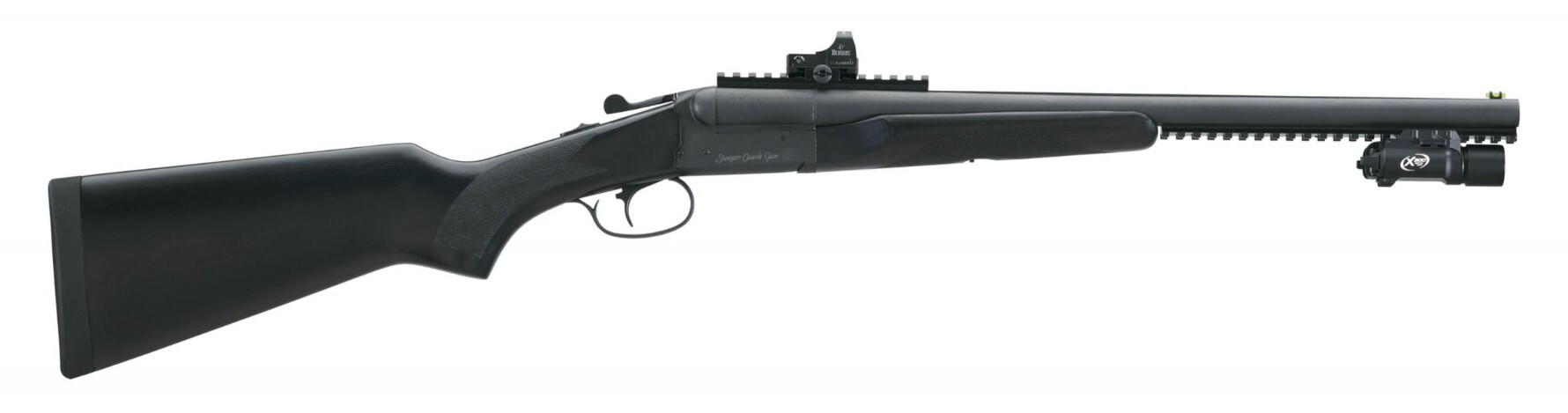
The Stoeger Double Defense takes the classic double-barrel shotgun concept in a decidedly tactical direction. Available in both side-by-side and over-under configurations, this stubby 20-inch barreled gun transforms a traditional hunting platform into something suited for close-quarters pest control, property defense, or as some users suggest, home protection.
What makes the Double Defense stand out is its full embrace of modern add-ons. Picatinny rails come standard. One sits on top for optics like red dot sights. Another sits under the fore-end for a light or other gear. The ported barrels cut muzzle rise in fast strings. So you get quicker follow-up shots when you need them.
The Double Defense comes in 12 or 20 gauge. The 20 rides are lighter at about 6.4 pounds. Both have 3-inch chambers, so you can run a wide range of loads. The synthetic stock and fore-end handle rough weather and hard use. And the matte finish fights glare and rust. If you want a simple, tough shotgun for ranch work, predator control, or other jobs, the Double Defense delivers clean function without extra frills.
Price: Around $500
Specs
- Action: Side-by-side or over/under, break-open
- Gauges: 12, 20
- Chamber: 3"
- Barrel length: 20"
- Stock: Synthetic with recoil pad
- Chokes: Fixed chokes (commonly IC/M), not true cylinder—patterns are tighter than cylinder bore.
- Weight: 6.4–7.1 lb depending on gauge/configuration
Features
- Picatinny rails for mounting red dot optic and weapon light
- Ported barrels to help reduce felt recoil and muzzle jump
- Matte, tactical-style finish and synthetic furniture for rough handling
- Compact overall length for tight indoor or brushy environments
Pros
- Very handy and fast in tight spaces
- Simple manual of arms with minimal moving parts
- Easy to equip with modern aiming and lighting tools
Cons
- Only two shots before needing to reload
- Cylinder-only choke means ammo selection is critical for pattern and range
Standard Manufacturing DP-12 – Wildcard High-Capacity Tactical Double
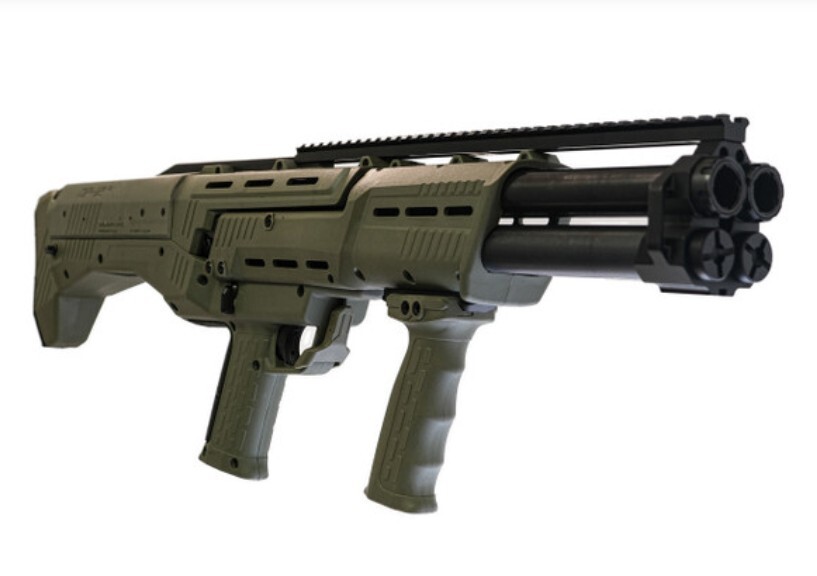
The Standard Manufacturing DP-12 is the wild card on this list. It blends a double-barrel layout with a pump-action bullpup body. You get a very uncommon shotgun that feels bold and fast. Capacity is huge at about 14+2 with 2¾″ shells. The gun fires one barrel per trigger pull; each pump stroke ejects and loads both barrels for two fast shots per cycle.
What sets the DP-12 apart is the feed system. Two magazine tubes sit under the barrels. Each tube feeds its own barrel. You fire both barrels with one press. Then a single pump tosses both shells and loads two fresh rounds. The rhythm is odd at first—then it clicks, and it’s quick.
The DP-12 is not light. It weighs close to 10 pounds with no shells. The bullpup layout keeps the length short at about 29.5 inches. The barrels measure 18.875 inches. The build uses strong aluminum and steel for hard use. If you want max firepower in a double platform—and you don’t mind the weight—this shotgun gives you a one-of-a-kind ride.
Price: Around $1,395
Specs
- Action: Dual-tube pump-action with two barrels
- Gauge: 12
- Chamber: 3"
- Barrel length: 18.875" (about 18.9")
- Capacity: 14+2 with 2¾" shells
- Weight: 9.75 lb
- Stock: Synthetic with rubber recoil pad
Features
- Two magazine tubes, one for each barrel, under the bullpup receiver
- Fires two shots (one from each barrel) before each pump stroke
- Milled aluminum and steel construction for strength and rigidity
- Designed for extreme close-range defensive use and range fun
Pros
- Enormous on-board capacity for a two-barrel concept
- Very distinctive and attention-grabbing at the range
- Real defensive potential if you can manage the size and weight
Cons
- Very heavy and bulky compared to conventional doubles
- Expensive and highly specialized; not a practical hunting gun
How to Pick the Right Double-Barrel Shotgun
Step 1 – Define Your Main Use Case
Before you spend a dollar, get clear on how you will use your double-barrel shotgun. Upland hunters need a light gun for all-day carry. People who shoot clays need more weight to keep the swing smooth. Waterfowlers need tough finishes and 3-inch chambers. Home defense needs simple controls and short barrels.
Your main job sets every choice. An ideal dove gun can feel awful on a long sporting clays day. A trap gun can feel like a boat anchor after miles of pheasant ground. Be real about your needs—not what looks nice in photos.
Step 2 – Decide on Gauge and Chamber Length
The gauge debate never ends. The 12-gauge gives the widest ammo range and the most load choices. The 20-gauge kicks less and still handles most upland birds and clay games. Sub-gauges like 28 and .410 shine on small birds and for new hands, but shells can cost more.
Most modern doubles ship with 3-inch chambers. Ask if you truly need that. For upland days and clays, 2¾-inch chambers work great and often pattern better with standard loads. Waterfowl and turkey hunters are the ones who use 3-inch loads often.
Step 3 – Over-Under vs Side-By-Side
This choice comes down to feel and use. Over-unders give one sighting plane. Many find that simple on clay targets. They often balance nicely for long sessions and many come with single selective triggers.
Side-by-sides snap to the shot on flushing birds. You get a wider view and that classic upland look. Two triggers mean instant barrel choice. Many shooters say an SxS points like a finger for quick, close work. Try both styles before you commit.
Step 4 – Check Fit: LOP, Cast, and Drop
A great gun that does not fit you will not shoot well. Length of pull (LOP) should place your trigger finger right when you mount the gun. Cast—right or left—should line the barrels with your dominant eye. Drop at comb and heel sets where your eye sits on the rib.
Mount every gun you’re serious about. Close your eyes, mount, then open—your bead should sit right under your eye. Need more range of fit? Models like the Benelli 828U offer deep stock adjustments without a gunsmith.
Step 5 – Inspect Build Quality Before You Buy
Many doubles now come from Turkish factories, so check quality with care. Look at the key points:
- Barrel convergence – barrels should meet at your intended distance
- Lock-up feel – the action should close solid, not loose or forced
- Wood-to-metal fit – gaps suggest weak craft
- Trigger pull – clean and even on both barrels
- Ejector/extractor – test with dummy rounds if you can
- Choke tubes – should thread smooth and sit flush
Brands that guard their name still run checks on budget lines. Take your time. Inspect hard before you buy.
Step 6 – New vs Used, and When a Used Double Makes Sense
The used rack can be a gold mine. Browning, Beretta, and Winchester often age well. Older doubles may bring nicer wood and more hand-fit at the same price as new mid-tier guns.
Put function first. Wear on the finish is fine. Loose lock-up, tired firing pins, or hurt barrels can get costly. Look for dents, pitting, or bulges. Close the action and feel for play. A clean used premium gun often runs better—and longer—than a brand-new bargain model.
Why Buy a Double-Barrel Shotgun in the Semi-Auto Era?
Simple and Trusty
Double-barrel shotguns have stayed in use for centuries for a clear reason—simple parts. Fewer moving bits mean fewer problems. No gas system to clog in bad weather. No action to short-stroke under stress. And no magazine spring to tire out.
That simple build shows up in the field. Doubles keep running in rain, snow, dust, and mud that can stop complex guns. They also fire light target loads that may not cycle a semi-auto. If you want a gun that just works in hard conditions, a good double brings calm and confidence.
Flexibility with Chokes and Loads
Here’s a neat edge—two barrels mean two chokes ready at once. Many upland hunters set the first barrel more open for close flushes, then the second tighter for reach. You get a quick choice without tools. That kind of setup isn’t possible with a single barrel.
Doubles also handle mixed shells with ease. Load a slug and buckshot. Or heavy and light. Even different shell lengths. No fuss about cycling. This helps when your day may throw mixed shots at you, or on the clay line when singles and doubles need different patterns.
Balance
Many shooters find that doubles simply feel better on the swing. The weight distribution typically centers between the hands and creates a natural pointing dynamic. Over-unders particularly excel here, with their vertical barrel arrangement promoting smooth tracking of flying targets.
This inherent balance makes doubles especially effective for clay games and bird hunting, where smooth, consistent swings translate directly to success. The fixed barrel design also provides consistency shot after shot—no moving action to disrupt your timing or follow-through.
Tradition and Pride of Ownership
There’s more than function here. Doubles carry a classic look—clean lines, warm wood, and steel. They feel tied to old hunts and shared stories. That bond is real, and yes, it matters.
Take care of a good double and it holds value. Many people see the buy as a long-term pick to pass down. From honest Turkish field guns to fine Italian builds, a double-barrel can feel steady and permanent in a throwaway age.
Training And Safety
Basic Safety and Handling Habits
Double-barrel shotguns demand specific safety practices. Always carry your gun "broken" (action open) when moving between stations or through the field. This visibly demonstrates safe status to others and prevents accidents. Keep your finger off the trigger until ready to fire, and always be aware of your muzzle direction.
Learn the proper loading sequence for your specific shotgun. Some doubles load the right barrel first, others left. Single-trigger models usually have barrel selectors that must be correctly set. These details matter for both safety and effective shooting.
Dry Practice and Mounting Drills
The foundation of good shotgunning is a consistent mount. Practice this at home (with an empty gun) by mounting a small target on the wall. Your eye alignment, cheek weld, and hand positioning should be identical every time. A smooth mount leads directly to better field performance.
For those with access to a SCTP (Scholastic Clay Target Program) or similar training program, invest time in proper mounting technique before focusing on breaking targets. Five minutes of daily mount practice pays enormous dividends in consistency.
Maintenance That Actually Matters
Doubles do not need much, but they need the right care. Clean the bores after each day on the range. Then add a small drop of quality gun oil to the hinge pins and locking surfaces. Check your choke tubes often so they stay snug, not over-tight. Now and then, pop off the fore-end and clear out the grit under it.
Watch the ejectors or extractors. Keep them clean and lightly oiled so they snap as they should. If lock-up feels different, the trigger feels odd, or ejection gets weak, stop and call a good gunsmith. Do not tear into the action on your own. Treat a good double well and it can run for generations.
Final Thoughts
Double-barrel shotguns still shine today for simple reasons. They balance well. They feel honest in the hands. And they carry a classic look that never fades. From wallet-friendly Turkish builds to hand-finished European art, you can find a match for your goals and your cash.
For new gun owners, the news is bright. Entry lines from CZ, Stoeger, and Stevens work well at fair prices. As your skills grow, mid-tier picks from Weatherby and TriStar add nicer parts and better fit without a huge bill. And if you want a life-long partner, high-end models from Benelli and other top makers bring top form and finish that earn their price.
No matter your budget or plan, handle a few before you buy. Fit and feel matter more than fancy wood or deep cuts on the metal. Choose well and keep up the care, and your double may become the most loved gun you own. Someday, your grandkids may smile when they open that same case.
Whether you prefer a classic side-by-side or a modern over-under, double barrels fit into a larger shotgun ecosystem with distinct roles. Our Different Types of Shotguns guide breaks down these categories and helps explain why each style shines in different settings.
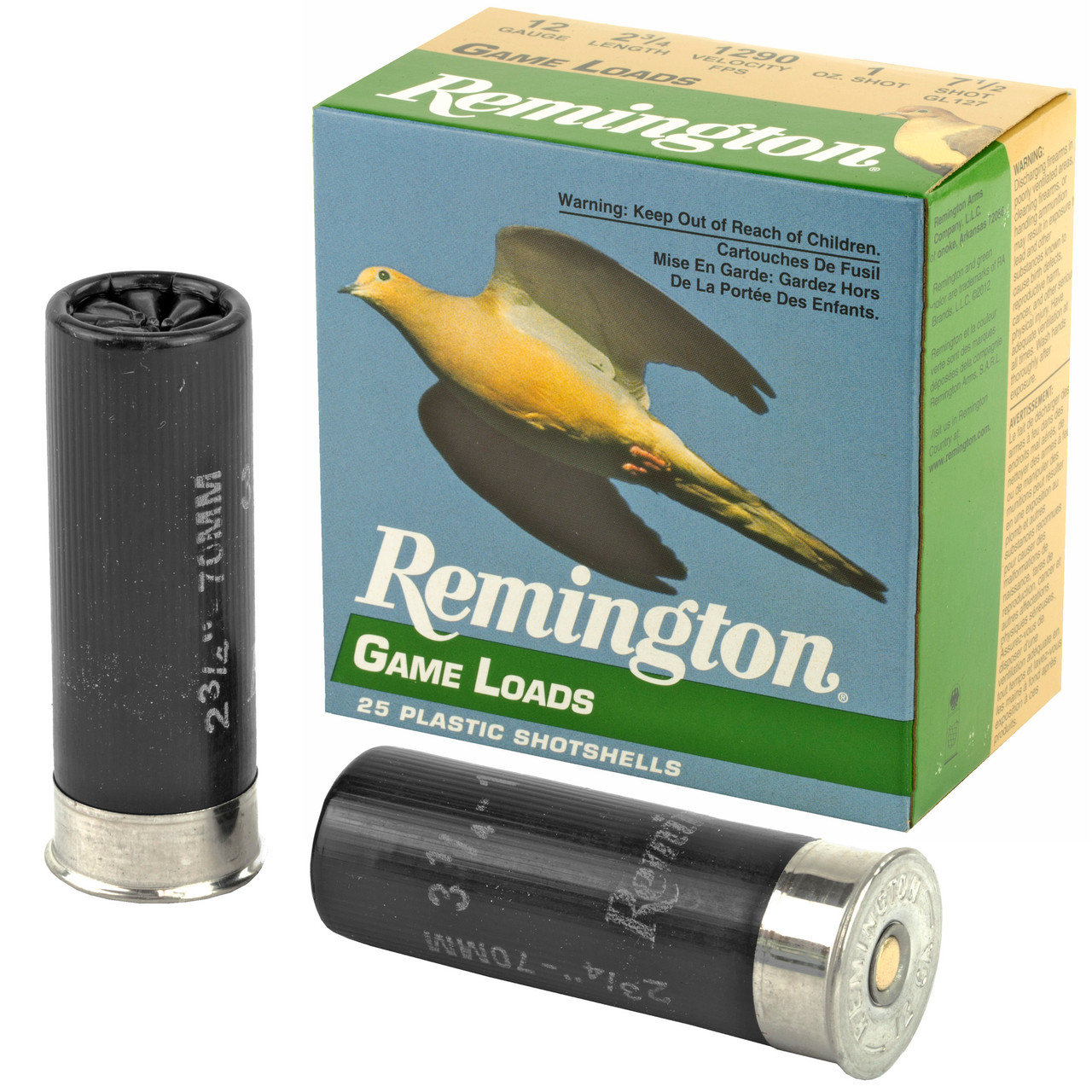
REMINGTON GAME LOAD 12GA 2 3/4" #7.5
$10.64
at Pro Armory
Prices accurate at time of writing
Frequently Asked Question (FAQ)
Are double-barrel shotguns good for beginners on a budget?
Yes. Models like the Stoeger Condor and Stevens 555 keep the controls simple and easy to learn. Many beginners do best with 20 gauge or 28 gauge to keep recoil gentle.
What's the best gauge for a first double-barrel shotgun?
For most beginners, 20 gauge hits the sweet spot. Recoil stays mild. Ammo is easy to find. It works for clays and most upland birds without the heavier kick of 12 gauge.
Are Turkish-made double-barrel shotguns reliable?
Quality can vary. Brands like CZ, Weatherby, and Mossberg use tighter checks before a gun leaves the factory. Look the gun over with care. Focus on lock-up, trigger feel, and how the barrels line together.
Can I use a double-barrel shotgun for home defense?
Yes, with tradeoffs. Short doubles like the Stoeger Double Defense handle fast and are simple to run. But you only get two shots, so many people pick other platforms for a main home role.
How much should I spend on my first double-barrel shotgun?
Plan for about $500 to $800 for a solid first buy. Below $400, makers often cut corners that hurt how the gun runs and how long it lasts. For a first buy, going past $1,000 rarely adds value you will use right away.
What is the difference between over-under and side-by-side shotguns?
Over-under barrels stack top to bottom and give one sight line that many clay shooters like. Side-by-side barrels sit left and right. They give a wider view that many upland hunters enjoy and a more old-school look.
How long will a good double-barrel shotgun last with normal use?
A well-kept double can last across generations. Many people still shoot doubles made in the early 1900s. The simple action means fewer parts to wear compared with pumps or semi-autos.
About the Author
This article was written by the ProArmory writing team using current research from trusted gun sources. We reviewed studies and reports from places like the Journal of Military Science, Firearms News, and the National Shooting Sports Foundation. We also checked official defense guides and well-known gun groups and manuals, including the ATF, the NRA, and maker documents.
Disclaimer: This review is for learning only. Laws change from place to place and over time. Follow safe handling at all times. Read your owner’s manual. Check local rules before you buy or train.

Best Ammo Deals, Training, & Accessories
Subscribe to ProArmory sales and deals email.