 Pro Armory Editorial Team
Quick Answer
For home defense, pick buckshot that patterns tight in your shotgun and meets proven penetration targets in ballistic testing. For range days, buy consistent target birdshot you can shoot in volume without beating your shoulder. In this guide, we list five defensive buckshot loads and five range-focused target shells, plus a simple way to test pattern size at your real distances and choose the right gauge and shell length for your setup.
Key Takeaways
- Buckshot is the main choice for home defense loads.
- Tight patterns matter more than brand names.
- Birdshot shines for clays, drills, and high-volume practice.
- Slugs can over-penetrate in homes.
- Pattern test at realistic distances before you commit.
Selecting the right shotgun ammunition matters more than gear. The best defense loads create tight, repeatable patterns at realistic home distances. A simple pattern-testing session can completely transform your home-defense setup and give you confidence in your ammunition choice.
How We Chose These Loads
Picking the right shotgun ammo means balancing several factors. First, we looked at what most people can actually find on store shelves. No point recommending unicorn shells you'll never see.
Next, we checked how each load works in both pump and semi-auto actions. Some cheap shells might run fine in your old pump but choke up a gas-operated semi.
Pattern consistency matters a lot. A defensive load should put all its pellets where you aim, not scatter them across the room. The FBI suggests 12-18 inches of penetration in ballistic gel - enough to reach vital organs but not necessarily exit through the back. This standard helps sort defensive loads from those that might fall short.
We paid special attention to wad designs built for pattern control and recoil behavior that lets you fire follow-up shots quickly if needed. Loads with buffered shot or special wads often pattern better than basic options.
Of course, we can't pattern test every shotgun out there - your results may differ based on your specific barrel and choke. That's why we'll show you how to test for yourself.
Shotgun Ammo Basics
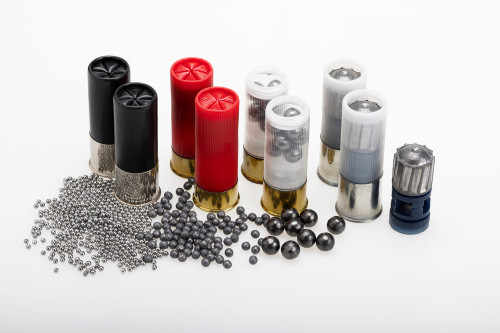
Before diving into specific products, let's cover the three main types of shotgun ammunition.
Buckshot
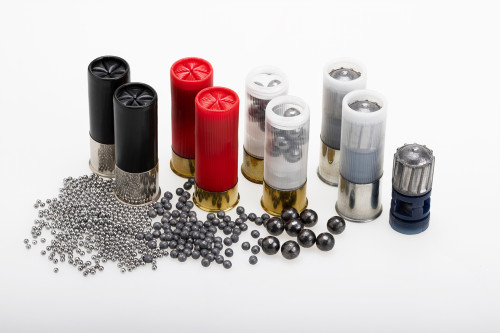
Buckshot contains larger pellets designed for defense and hunting. These hefty lead balls deliver serious stopping power but need careful pattern control.
Buckshot size runs from #4 (smaller) up to 000 ("triple-aught" - largest). Common 00 buck loads usually carry a handful of large pellets per shell (often around the 8–9 range), and pellet diameter is roughly one-third of an inch.
Many defensive shooters view #1 buck as the smallest size that often still performs well in penetration-focused testing, while smaller buck sizes can be less consistent depending on load and conditions.
Birdshot
Birdshot loads pack a lot of tiny pellets into one shell. And the numbering can trip you up at first. A smaller number means a bigger pellet. So #7.5 is larger than #8. These small pellets work great for clay targets, paper, and small game. But for defense, birdshot can act like a quick slap instead of a deep hit. Not the job you want it to do.
The spread of tiny pellets makes hitting flying targets easier. But this same quality makes birdshot less effective for defense - the small pellets lack the mass and energy to penetrate deeply.
Many new shotgun owners start with birdshot for training because it's cheaper and has milder recoil. That makes sense for practice, but switch to buckshot for home protection.
Slugs
A slug is a single, heavy projectile - basically a big chunk of lead. Slugs offer excellent accuracy at longer distances and massive stopping power.
Slugs can travel through common interior materials with significant remaining energy, so they carry higher risk in typical home layouts. This raises safety concerns in home settings with family members in other rooms. They're better suited for hunting or outdoor use where overpenetration isn't as worrisome.
What Makes a Good Home Defense Load
So what should you look for in a defensive shotgun load? Several key factors separate good options from poor choices.
Penetration that matches real defensive testing
The FBI ballistics protocol suggests 12-18 inches of penetration in calibrated ballistic gel. Less than 12 inches might not reach vital organs through clothing, muscle, and bone. More than 18 inches raises overpenetration concerns.
Many well-made 00 and #1 buckshot loads are selected for defensive use because they tend to offer deeper penetration than birdshot, but performance still varies by specific load and conditions.
Pattern control
A tight, consistent pattern keeps all your pellets on target. This isn't just about accuracy - it's about safety. Stray pellets can miss your target and hit something (or someone) else.
The tighter the pattern at your expected defensive distance, the more pellet accountability you have. Some defensive buckshot uses pattern-control wad designs that hold the payload together longer, and many shotguns will show noticeably tighter groupings with these loads than with basic buckshot.
Recoil and follow-up speed
Defensive scenarios might require more than one shot. Lower recoil means faster recovery and better accuracy for follow-up shots.
Reduced-recoil buckshot loads offer easier handling without sacrificing effectiveness. They're especially helpful for smaller shooters or those using semi-autos, which magnify felt recoil.
Pellet accountability inside a home
Interior walls typically don’t stop projectiles reliably, which is why you should plan around safe backstops and test patterns so you can keep pellets where you intend.
Even with proper aiming, knowing exactly where each pellet goes matters. This is why pattern testing with your specific gun is so important.
Best Shotgun Ammo for Home Defense
Federal Law Enforcement Tactical LE133 00 Buck (FliteControl, 8-pellet, 2¾")
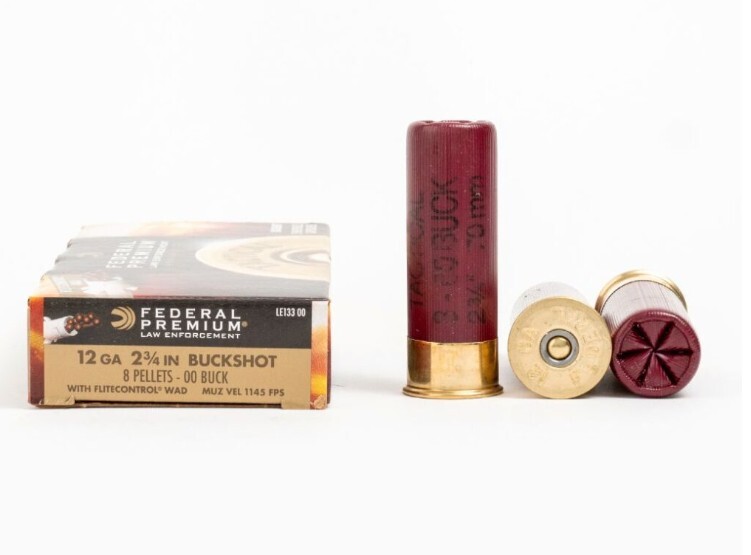
Federal's LE133 load stands as the gold standard for defensive shotgun ammunition. The magic happens through the FliteControl wad, which keeps the pellets together longer after leaving the barrel. This creates remarkably tight patterns - often just a few inches at typical room distances.
What makes this load special is the combination of tight patterning with reduced recoil. You get the stopping power of 00 buckshot without the punishing kick of full-power loads. This means faster follow-up shots if needed.
The 8-pellet design (versus 9 in many 00 buck loads) can help some shooters get more consistent patterns and reduce the chance of a pellet landing far outside the main group in certain setups. For home defense, this means better accountability of where each projectile goes - a critical safety consideration.
Price: approx $160–$220 per 250-rd case
Specs
- 12 ga, 2¾" shell
- 8-pellet 00 buck
- 1145 fps
Features
- FliteControl-style wad for tighter patterns
- Copper-plated pellets (common on LE loads)
- Made to cycle in duty-style guns
Pros
- Very tight pattern potential
- Easier recoil than full-power buck
- Strong track record in testing circles
Cons
- Can be hard to find in some months
- Costs more than basic buck
- Pattern can change with choke/barrel—needs a quick test in your shotgun
Federal Personal Defense Force X2 12 ga 00 Buck (2¾")

Federal's Force X2 brings innovation to the shotgun defense world with its unique split-pellet design. Unlike traditional round buckshot, these pellets use a defensive-focused projectile design intended to change how the payload behaves on impact. If you’re considering it, prioritize two things: reliable cycling in your shotgun and pattern results at your actual indoor distances.”
The concept addresses a common concern with shotgun defense: overpenetration. When the pellets split, they create more wound channels and simultaneously slow down. It reduces the chance they'll exit the target with enough energy to remain dangerous.
For those worried about pellets going through walls or doors, this load offers a thoughtful compromise. You still get the initial energy and mass of 00 buck, but with a built-in braking mechanism after impact.
Price: approx $18–$25 per 10-rd box
Specs
- 12 ga, 2¾" shell
- 00 buck
- 1250 fps
- 10 shells per box
Features
Force X2 pellet design
Built as a personal-defense line
Pros
- Interesting terminal-behavior concept
- Often softer recoil than 1600 fps buck
- Good "test it and see" option for your house layout
Cons
- Higher cost per shell
- Availability can swing fast
- You'll still need to pattern it—every shotgun is its own animal
Federal Premium 12 ga #1 Buck (16-pellet, 2¾")
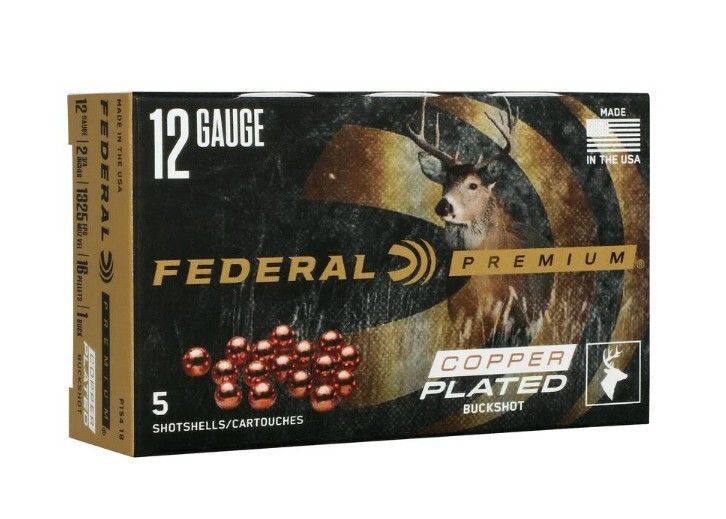
For those seeking maximum pellet count without sacrificing penetration, Federal's #1 buckshot load delivers 16 pellets - nearly twice what you get from standard 9-pellet 00 buck loads. That's a lot of lead heading downrange with each trigger press.
The #1 buck size represents an excellent middle ground. The pellets are just slightly smaller than 00 but still large enough to consistently meet penetration standards in ballistic testing. This means each pellet can still reach vital organs, but you get more chances to hit them.
For defensive use, this greater number of wound channels can increase the odds of stopping a threat quickly. It's also slightly less likely to overpenetrate through walls than 00 buck, though proper backdrop awareness remains essential.
Price: approx $10–$18 per 5-rd box
Specs
- 12 ga, 2¾" shell
- 16 pellets of #1 buck
- 1325 fps
Features
- Higher pellet count than typical 00 buck
- Many loads use plated shot for less deformation and tighter patterns
Pros
- More pellet count per shell
- Often patterns well in many guns
- Good "defense-first" payload size
Cons
- Fewer store shelves carry #1 than 00
- Price can jump during demand spikes
- Needs pattern testing like any buck load
Hornady Critical Defense 12 ga 00 Buck (Versatite wad, 8-pellet, 2¾")
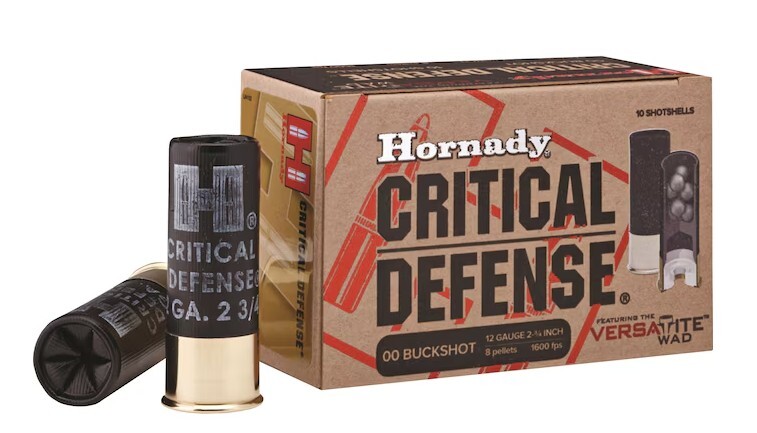
Hornady brings their defensive expertise to shotguns with their Critical Defense line. The standout feature is the Versatite wad, which functions similarly to Federal's FliteControl by keeping pellets grouped tightly as they travel downrange.
Unlike many defensive buckshot loads that reduce power for less recoil, Hornady pushes these pellets at a full 1600 fps. That's significantly faster than reduced-recoil options. This extra velocity ensures reliable cycling in semi-auto shotguns that might choke on lower-powered shells.
The trade-off for this reliable function and tight patterning is increased recoil. But for those with semi-auto shotguns known to be finicky with ammunition, this higher-powered option provides confidence that your gun will cycle properly in a defensive scenario.
Price: approx $16–$22 per 10-rd box
Specs
- 12 ga, 2¾" shell
- 8-pellet 00 buck
- 1600 fps
Features
- Versatite wad for tighter patterns
- Loaded for function in pump + semi-auto guns
Pros
- Tight patterns in many setups
- Cycles a wide range of semi-autos
- Easy to find in some big retailers
Cons
- Recoil can be sharp
- Costs more than basic buck
- Pattern still varies by choke/barrel
Fiocchi Defense Dynamics 12 ga 00 Buck (8-pellet, 2¾")
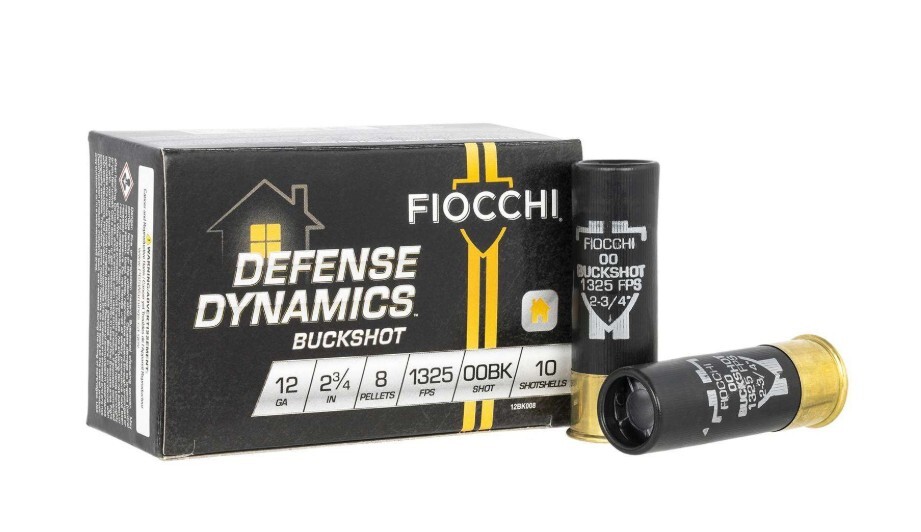
Fiocchi's Defense Dynamics line offers a budget-friendly entry into quality defensive buckshot. While it lacks the fancy wad systems of premium options, it delivers solid performance at a more accessible price point.
One interesting aspect is its use of chilled lead pellets rather than copper-plated ones. These softer pellets can deform more upon impact, potentially creating larger wound channels. This deformation can also help limit overpenetration compared to harder plated pellets.
For those looking to buy enough ammo to both protect their home and train regularly, this more affordable option makes sense. The performance difference in actual defensive use would likely be minimal compared to more expensive loads.
Price: approx $10–$14 per 10-rd box
Specs
- 12 ga, 2¾" shell
- 8-pellet 00 buck
- 1325 fps
Features
- Chilled lead 00 buck
- Built as a defense line
Pros
- Easier on the wallet
- Works well for "pattern + function" testing
- Often in stock when premium loads vanish
Cons
- Patterns can open more than premium wad systems
- Pellet deformation can change consistency
- Not every lot feels the same across different guns
Best Shotgun Ammo for the Range
Winchester AA Super-Handicap / AA Target Load (12 ga, 2¾", #7.5, 25-rd box)
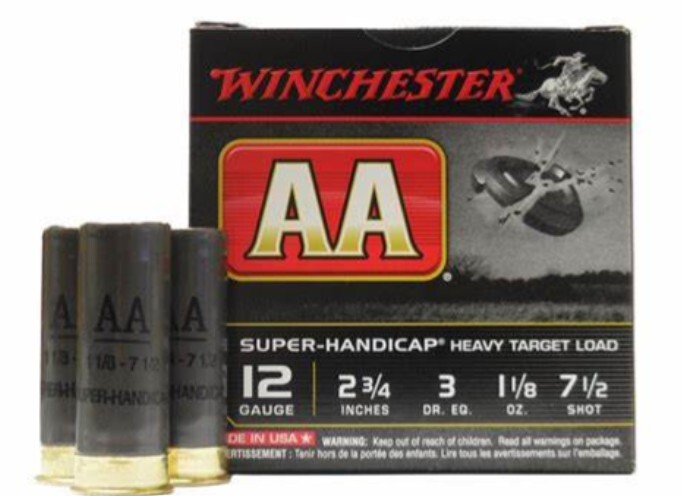
Winchester AA stands as perhaps the most respected name in clay target ammunition. These shells represent a standard that competitive clay shooters have trusted for decades, and for good reason - they're incredibly consistent from shot to shot.
The special AA wad design helps you get dense and even patterns. That means your shot stays together and breaks clay targets with authority. And it feels fair too. You can work on your aim without guessing if the shell was the problem.
These shells burn clean in most shotguns. So your gun stays less messy during long practice. The recoil also stays moderate. Your shoulder won’t feel beat up after a long day on the range. And the hulls matter too. Reloaders like them because they stay strong through more than one reload.
Price: approx $12–$16 per 25-rd box
Specs
- 12 ga, 2¾"
- #7.5 shot, 1-1/8 oz
- 1200 fps
Features
- AA hulls and components aimed at consistency
- Made for clay-target use
Pros
- Great track record in clay sports
- Widely carried
- Good patterns for many common chokes
Cons
- Costs more than budget birdshot
- Some AA variants run different speeds—match your event rules
- You may still want to test which AA load your gun likes most
Federal Top Gun Target (12 ga, 2¾", #7.5, 1-1/8 oz, 25-rd box)
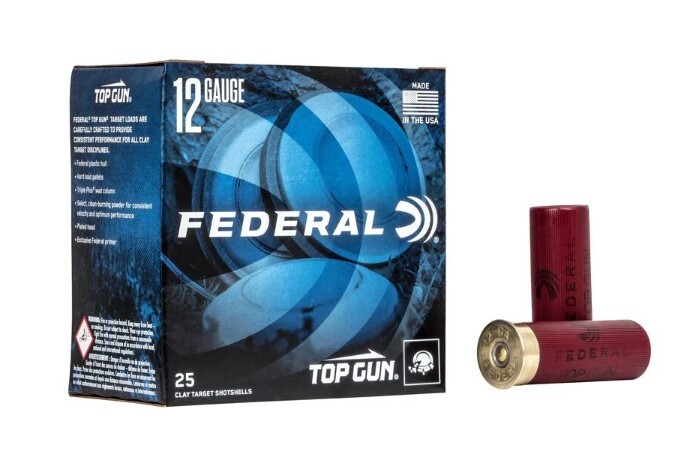
Federal's Top Gun line hits the sweet spot between performance and value for regular range sessions. These shells deliver reliable performance for clay sports without the premium price of competition-focused loads.
The consistent velocity and good patterning make Top Gun appropriate for everything from casual trap shooting to serious practice sessions. The moderate recoil keeps shooting comfortable even during high-volume range days.
Many people grab Top Gun as their go to practice load. You can find it in most stores. It also costs less than many other options. And it cycles well in a lot of shotguns. So you can show up, load up, and get your reps in without fuss. It fits a bunch of range days too.
Price: approx $9–$12 per 25-rd box
Specs
- 12 ga, 2¾"
- #7.5 shot, 1-1/8 oz
- 1200 fps
Features
- Target-focused load with common shot sizes
- Made for consistent range use
Pros
- Good value for lots of shooting
- Easy entry point for new clay shooters
- Works well in many pumps and break-actions
Cons
- Some semi-autos can be picky with lighter target shells
- Not the cleanest-burning option in every gun
- Bulk shells can vary more than premium target lines
Remington Gun Club Target Load (12 ga, 2¾", #8, 25-rd box)
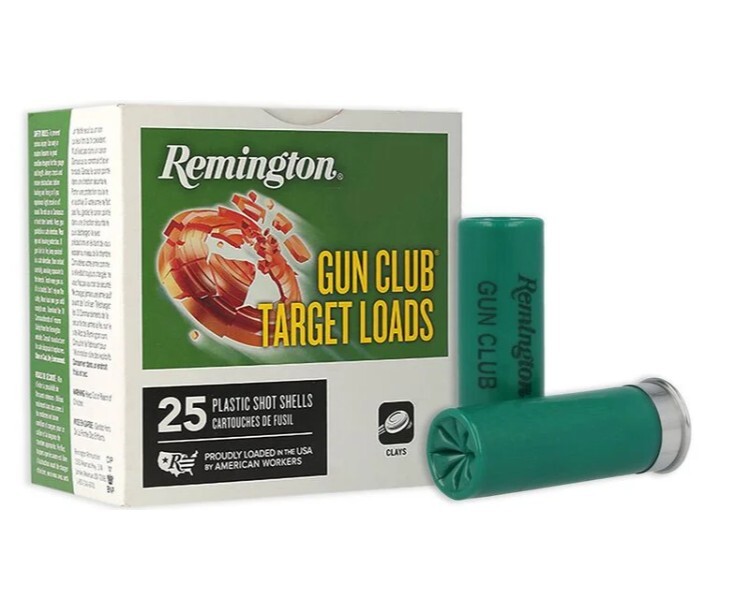
Remington Gun Club loads give you solid results for casual clay days and range practice. And the price stays easy on your wallet. The #8 shot size works great for breaking clays. You also get a few more pellets per shell than #7.5 loads, so your pattern can feel a bit more forgiving.
These shells feature moderate recoil that makes them comfortable to shoot for extended range sessions. The 1-ounce load is particularly gentle on the shoulder and also provides enough energy to break targets decisively.
For shooters who go through several boxes per range trip, Gun Club offers a nice balance of performance and economy. They're a staple at many gun clubs and shooting ranges for exactly this reason.
Price: approx $10–$13 per 25-rd box
Specs
- 12 ga, 2¾"
- #8 shot, typical target payloads
Features
- Designed as a target load line
- Often sold in bulk cases
Pros
- Good price per trigger press
- Easy shooting for long range days
- Very common in many shops
Cons
- Some semi-autos may want hotter loads
- Patterns vary by lot and choke
- Supply swings in peak season
Winchester Super Target (12 ga, 2¾", #8, 1-1/8 oz, 25-rd box)
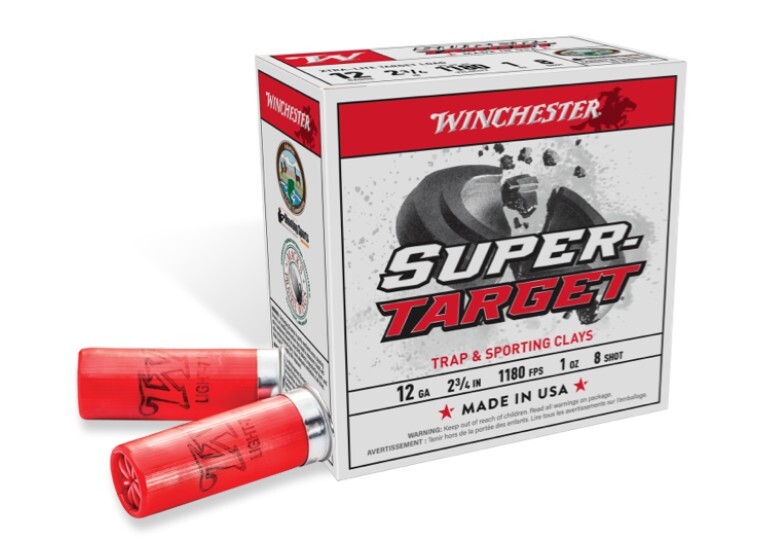
Winchester Super Target gives you steady results for casual clay days. The price makes it easy to practice often. You get clean patterns that help you track the target. And when you pull the trigger, the break feels consistent and satisfying.
The 1-1/8 oz payload delivers ample shot density for breaking targets and keeping recoil manageable. The moderate velocity helps maintain pattern integrity and still providing enough energy to cycle most semi-auto shotguns.
For shooters looking to improve their skills through regular practice, Super Target offers an accessible option that performs well enough for most recreational clay games without the premium price of competition-grade shells.
Price: approx $9–$12 per 25-rd box
Specs
- 12 ga, 2¾"
- #8 shot, 1-1/8 oz
- 1145 fps
Features
- Built as a light target load line
- Made for volume shooting
Pros
- Strong value
- Easy to find in many regions
- Great for drills and warm-ups
Cons
- Not every semi-auto cycles light loads the same
- Not as consistent as premium target lines in some guns
- Can get snatched fast when deals pop up
Fiocchi Shooting Dynamics Target Load (12 ga, 2¾", 1 oz, #7.5, 25-rd box)
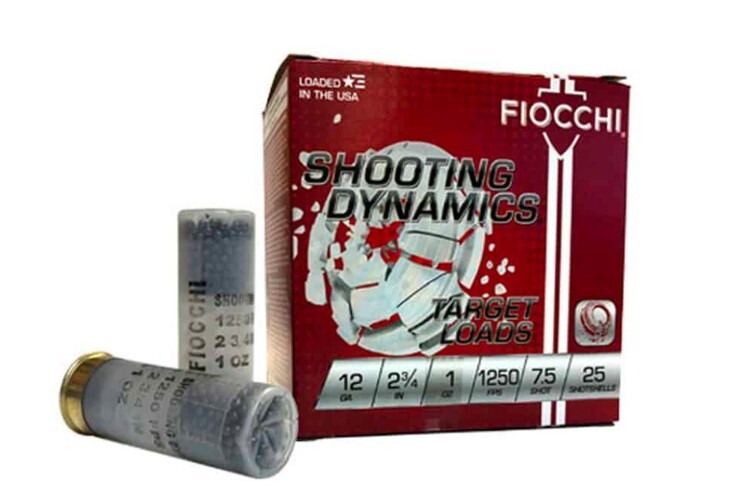
Fiocchi's Shooting Dynamics line shows you can buy low-cost ammo and still get good results. You get steady patterns. You also get smooth feeding and firing. And the price makes it easy to practice more often without feeling guilty.
The 1-oz load hits your shoulder less than heavier 1-1/8 oz shells. So long range days feel easier on your body. It also helps if recoil bugs you. Even with the lighter load, these shells still break targets at normal ranges. No drama. Just clean hits.
These shells run clean and function well in most shotguns, though some semi-autos may prefer hotter loads. For pumps and break-actions, they're an excellent economy option that doesn't sacrifice too much performance.
Price: approx $10–$14 per 25-rd box
Specs
- 12 ga, 2¾"
- 1 oz of #7.5 shot
- 1200 fps (commonly listed)
Features
- Uses Fiocchi primers and chilled lead shot (per product line pages)
- Built for "best price / solid performance" target use
Pros
- Lower cost than premium target shells
- Softer recoil than many 1-1/8 oz loads
- Easy way to train more for the same money
Cons
- Some semi-autos may need a hotter load
- Patterns can vary more than high-end target lines
- Not every shop keeps the same Fiocchi SKU in stock
12 Gauge vs 20 Gauge for Defense and Range
Many shooters debate between 12 gauge and 20 gauge for their shotguns. Both have their place, but they offer different trade-offs.
The 12 gauge dominates the market for good reason. It offers more payload capacity, greater stopping power, and the widest selection of ammunition types. From the lightest target loads to the heaviest defensive buckshot, you'll find more options on store shelves in 12 gauge.
In comparable setups, 20 gauge often feels noticeably softer than 12 gauge, which can help many shooters run faster follow-up shots and practice longer without fatigue. This makes it much more comfortable to shoot, especially for smaller-framed people. Despite the smaller size, 20 gauge still delivers about 70% of the payload of a 12 gauge - plenty for both defense and clay shooting.
For home defense, For some shooters, especially those sensitive to recoil, a 20 gauge with quality buckshot can be a smarter choice because controllability can matter more than raw payload. The reduced recoil allows faster follow-up shots and more accurate first shots, especially for those who find 12 gauge punishing.
Don't get caught up in internet debates about which gauge is "better." The best choice is the one you can shoot well and that patterns consistently in your specific shotgun. Pattern testing matters far more than gauge selection alone.
How to Pattern Test Your Shotgun Ammo
To find the best defensive load for your shotgun, you need to test how it patterns. Here's a simple process:
- Set up targets at realistic home defense distances - typically 5, 7, 10, and 15 yards.
- Use the exact choke you keep in your shotgun for defense. Changing chokes will change your results.
- Aim at the center of each target and fire one round per target. This prevents overlapping patterns that might confuse your results.
- Mark the widest pellet spread on each target with a marker. Measure this diameter - it's your pattern size at that distance.
- Try different loads using the same process. Compare the results side by side.
- Repeat the test with your preferred loads to confirm consistency. Shotguns can be quirky - what works in one gun might not work as well in another.
- Choose the load that gives you the tightest, most consistent pattern at your expected engagement distance.
Some defensive loads may show a 4-inch pattern at 7 yards, others a 10-inch pattern. That difference matters tremendously in a home with loved ones. The tightest pattern gives you the most control over where each pellet goes.
Safety note: Always follow range rules and ensure you have a proper backstop. Never pattern test at home or in unsuitable locations.
When testing home defense loads, look for one main thing: do ALL the pellets stay within your target at your expected defensive distance? If yes, you've found a winner. If not, keep testing.
Unlike a single projectile, buckshot spreads, and that spread depends on your load, barrel, choke, and even your specific shotgun. Pattern testing is how you turn uncertainty into a known result.
Common Mistakes to Avoid
When selecting shotgun ammunition, people often make these avoidable errors:
Assuming all buckshot patterns are the same. Different loads can have dramatically different spreads in the same gun. Some may group tightly at 15 yards, others might spread to dinner-plate size at the same distance.
Choosing birdshot for defense because it "spreads more." More spread isn't better for defense - it means less control over where your pellets go. Plus, birdshot lacks the penetration needed for reliable stopping power against threats.
Using slugs indoors without a safe backstop plan. Slugs penetrate deeply - through walls, doors, and potentially into neighboring rooms or homes. Unless you have a specific need and understand the risks, buckshot usually makes more sense for home defense.
Buying cases before testing in your shotgun. Shotguns can be picky eaters. What works in one may fail in another. Buy a box or two for testing before investing in bulk.
Ignoring shell length effects on capacity. Longer shells (3" vs 2¾") reduce your magazine capacity. They also might not cycle as smoothly in some guns. Stick with 2¾" for most defensive purposes.
Believing the "sound of racking a shotgun" will scare intruders away. Don’t build a plan around noise or intimidation. Build it around controllability, reliability, and a load you’ve patterned in your shotgun.
Mixing different loads in your shotgun. This can cause unpredictable patterns, recoil, and function issues. Pick one defensive load and stick with it.
Final Thoughts
Your "best" shotgun load is the one that patterns tight and runs every time in your specific gun. No internet article can tell you exactly which load will perform best in your shotgun - that requires your own testing.
Start with one defensive buckshot load and one range birdshot pick from this list. Test them thoroughly in your shotgun. Keep track of pattern size, recoil feel, and cycling reliability. Once you find what works, stick with it and practice regularly.
Remember that ammo selection is important, but skill matters more. The best defensive load in the world won't help if you can't hit your target under stress. Invest time in training with whatever ammunition you choose.
If you’re building a 12-gauge setup from scratch, ammo choice and shotgun selection should go hand in hand. Once you understand which shells fit your needs, Best Shotguns for Home Defense is a helpful next step for narrowing down dependable platforms.
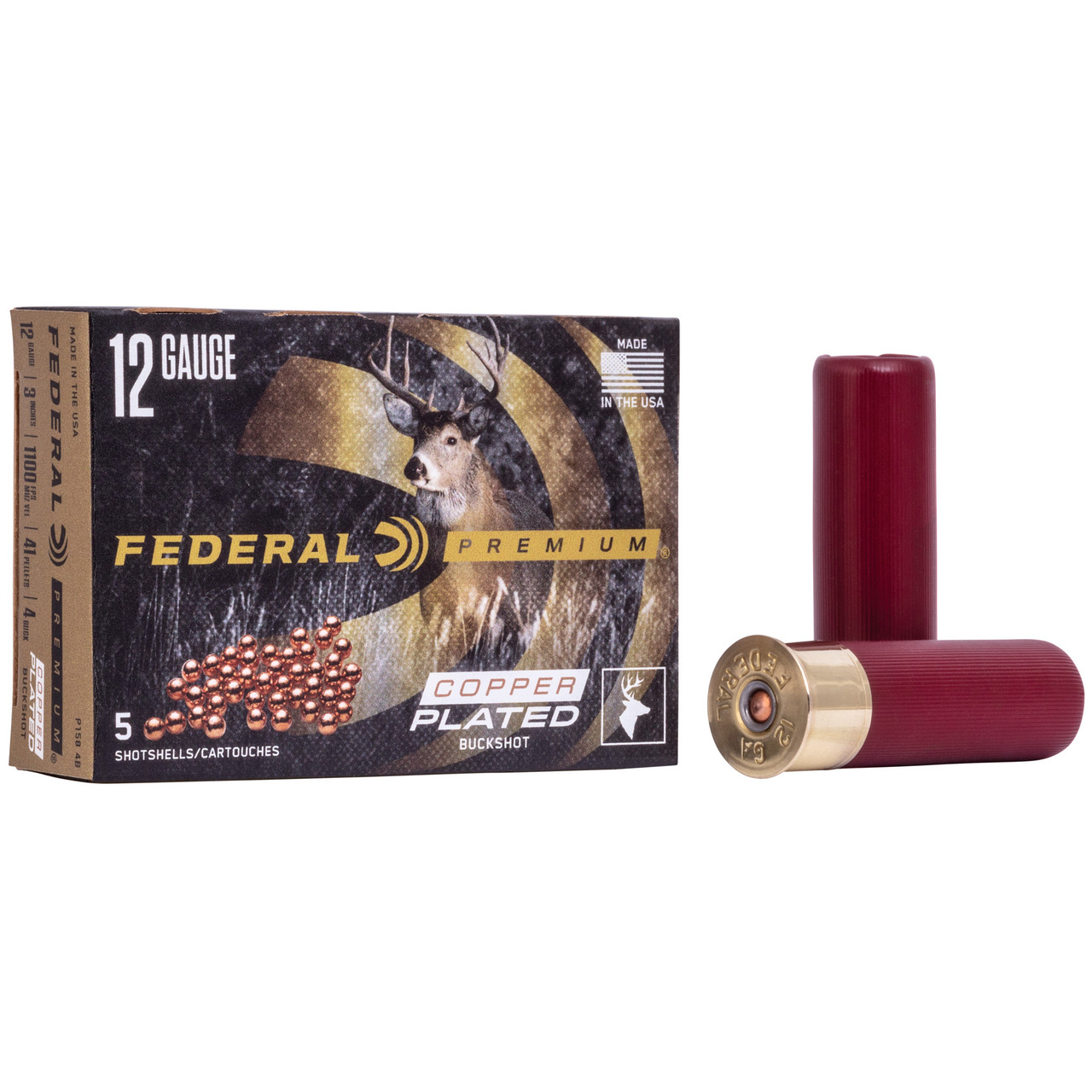
FEDERAL PREMIUM V-SHOK 12GA 3" #4 BUCK 5RD BOX
$14.30
at Pro Armory
Prices accurate at time of writing
Frequently Asked Questions (FAQs)
What is the best shotgun ammo for home defense?
Quality 00 or #1 buckshot from reputable manufacturers like Federal, Hornady, or Winchester. Look for loads designed specifically for defensive use with controlled patterns. The absolute best is what patterns tightest in your specific shotgun at home defense distances.
Is 00 buck always the right choice?
Not necessarily. While 00 buck is popular and effective, #1 buck offers more pellets with adequate penetration. Some experts prefer #1 buck for its balance of penetration and pellet count. Test both in your shotgun to see which patterns are better.
Is No. 1 buck a good option for defense?
Yes. It's the smallest buckshot that consistently meets the FBI's 12-inch minimum penetration standard. With 16 pellets vs. 8-9 in 00 buck, it offers more wound channels and also maintains adequate penetration. This makes it an excellent choice for defense.
Is birdshot ever acceptable for home defense?
Birdshot is not recommended for home defense. It lacks the penetration needed to reliably stop threats. Even at close range, it may not penetrate deeply enough to reach vital organs through clothing and muscle tissue.
Are slugs a good choice for home defense?
For most home settings, slugs present significant overpenetration risks. They can easily pass through multiple walls. Slugs make more sense for rural settings with longer potential engagement distances or against larger threats.
What distance should I pattern test for my home?
Test at the actual distances you might face in your home. For most people, this means 5, 7, 10, and 15 yards. Measure the longest possible shot in your home and include that distance in your testing.
Should I choose 12 gauge or 20 gauge for defense?
Both can be effective. The 12 gauge offers more ammunition options and greater payload. The 20 gauge offers significantly less recoil but still delivers adequate defensive capability. Choose the one you can shoot most effectively under stress.
What shell length should I use for magazine capacity?
Stick with 2¾" shells for defensive use. They offer maximum magazine capacity and better feeding reliability in most shotguns. The extra power of 3" shells rarely justifies the reduction in capacity and potential feeding issues.
About the Author
This article was written by the Pro Armory writing team using manufacturer specifications, published evaluations, and practical training guidance from established firearm and safety sources.
Disclaimer: This review is for education only. Laws vary by state and city and can change. Follow safe handling at all times. Read your owner's manual. Verify local rules before you buy or train.
Best Ammo Deals, Training, & Accessories
Subscribe to ProArmory sales and deals email.