 Pro Armory Editorial Team
Quick Answer
Looking for a solid optic for your .22LR? For most rifles, the Vortex Crossfire II Rimfire 2–7× is a great all-around pick for plinking and hunting. If you prioritize small-game hunting in low light, the Leupold VX-Freedom Rimfire 3–9× is a strong step up. For .22 pistols and fast shooting, a compact red dot like the Holosun 407K-X2 is hard to beat. These picks stand out for clarity at rimfire distances, rimfire-friendly parallax, durability, and strong owner feedback.
Key Takeaways
- 2-7× or 3-9× magnification covers most rimfire work.
- A parallax setting around 50-60 yards or an adjustable option matters more than big zoom.
- Simple reticles are easier to use than busy designs for rimfire shooting.
- Red dots are great for pistols, steel challenge stages, and quick plinking.
- Good glass separates serious optics from cheap models that lose zero and blur targets.
Many .22LR owners start with a cheap scope. At 25 yards, that may work fine. But as you shoot more (or shoot farther), problems show up: fuzzy image, parallax issues at close distance, inconsistent adjustments, and mounting hardware that won’t stay tight. A better optic doesn’t make you a better shooter overnight, but it does make it easier to aim precisely and repeat good shots.
The right rimfire scope changes how the rifle feels on the line. Groups get smaller, hits start to stack, and range days feel more relaxed and fun. And even though the .22LR does not kick hard, it can still shoot tiny groups when you give it good glass.
Good glass also helps on low cost rimfire rifles. As your shots land closer together you enjoy the rifle more, and a true rimfire scope is one of the fastest ways to pull that extra accuracy out of your .22.
What Makes a Best Rimfire Scope & Optic for .22LR?
Role of .22LR in Training, Hunting, and Competition
The .22LR is popular for training, plinking, small-game hunting, and rimfire competitions because it’s low recoil and affordable. Most rimfire shooting happens inside 25–100 yards, which means optic setup matters more than people expect. Parallax and a clean aiming point can make your rifle feel more accurate without changing the rifle at all.
At typical distances of 25-100 yards, .22LR can be amazingly accurate. But it needs the right optic to shine. .22LR is one of the most common starter/training cartridges because it’s low recoil and affordable.
Key Criteria We Used to Pick These Optics
- Glass Clarity: How sharp is the image at 25, 50, and 100 yards? Does it stay bright in low light?
- Parallax Settings: Does it match real rimfire shooting distances? A 100-yard parallax on a scope used at 25 yards creates frustrating errors.
- Tracking and Zero Retention: Even with mild .22LR recoil, cheap optics drift. Good ones don't.
- Reticle Design: Simple patterns work better for small targets than busy Christmas tree designs.
- Mount Compatibility: Does it work with your rifle or pistol's mounting system?
Our picks come from manufacturer specs, reputable reviews, and consistent feedback from rimfire shooters, hunters, and competitors. We focused on optics that match real rimfire distances instead of centerfire marketing.
Quick List
NOTE: Most shooters will find what they need in the first five picks. The remaining options serve more specialized roles.
- Vortex Crossfire II 2-7×32 Rimfire – best overall .22LR scope for mixed plinking and hunting
- Leupold VX-Freedom 3-9×40 Rimfire MOA – best for small-game hunting at dawn and dusk
- Tract 22 Fire 4-12×40 – best for serious rimfire target work with adjustable parallax
- Vortex Diamondback 4-12×40 – precision-minded scope for longer .22LR shots
- Sig Sauer ROMEO5 – robust red dot for rimfire carbines and .22 AR-style rifles
- Holosun 407K-X2 – low-profile red dot for .22LR pistols and compact builds
- Bushnell Match Pro 6-24×50 – budget-friendly NRL22 competition optic
- Zeiss LRP S3 4-25×50 – premium long-range rimfire scope with massive elevation travel
- Hawke Vantage 4×32 – lightweight fixed-power scope for simple rimfire rigs
- Barska 3-9×32 Plinker-22 – entry-level scope for casual plinking and starter rifles
How We Chose & Scored the Best Rimfire Scopes & Optics
We compared popular rimfire scopes and red dots using manufacturer specs, reputable reviewer input, and long-term owner feedback. We focused on rimfire-relevant features like close-distance parallax, a usable reticle, durability, and overall value. We kept our attention on real .22LR use at common ranges from 25 to 75 yards and ignored marketing hype that does not help you hit more targets.
We scored each optic on the things that matter most on the range. Clear glass helps you see small targets and trace bullet holes. Smart reticle design makes precise aiming easier. A forgiving eye box and solid eye relief keep the view steady and safe. Accurate turret adjustments let you dial and return to zero with confidence, and a rugged build stands up to field use.
We also paid close attention to value, because a higher price does not always give better performance, especially with rimfire gear where people have very different needs and budgets. Our picks give the strongest mix of these points for each main use.
Best Rimfire Scopes & Optics for .22LR – Detailed Reviews
Vortex Crossfire II 2-7×32 Rimfire – Best Overall .22LR Scope
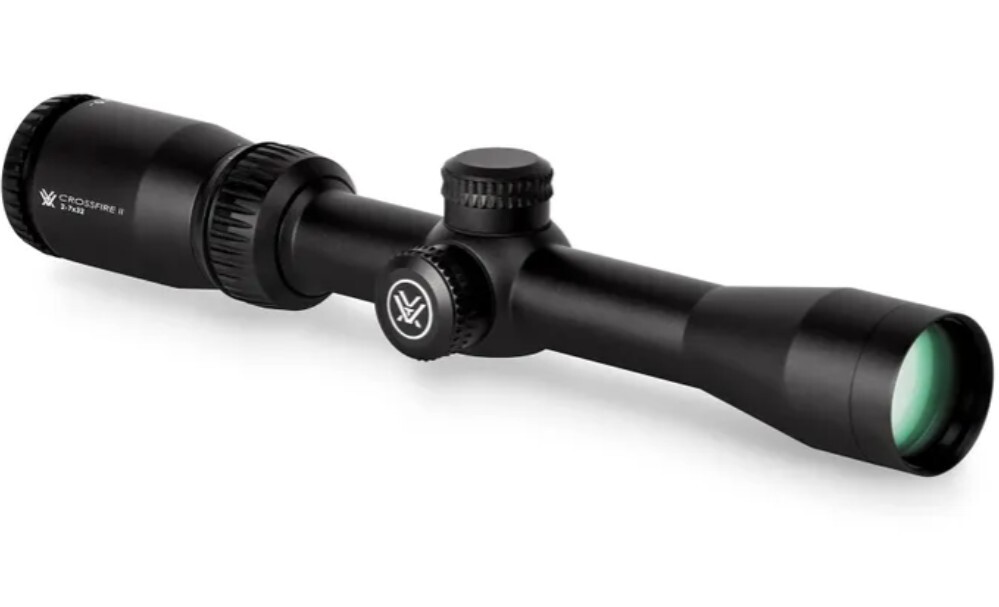
The Vortex Crossfire II 2-7×32 Rimfire hits a great balance for most .22LR owners. This scope covers almost every common rimfire job without a heavy price tag. From plinking cans at 25 yards to taking clean shots on squirrels at 75, it gives you clear glass and steady performance.
What sets this scope apart is how well it lines up with real rimfire use. The 2-7× magnification range keeps things easy to handle. You can stay at 2× for fast shots on moving targets. Then roll up to 7× for careful work at longer ranges. The 50-yard parallax setting matches where most people actually fire their .22 rifles.
The simple V-Plex reticle stays out of your way until you need a clear aiming point. It has enough line weight to pull your eye in, yet it does not hide small targets. Owners say this scope holds zero through thousands of rounds, even on harder-kicking .17 HMR rifles. For most rimfire owners, it hits a sweet mix of performance, toughness, and price.
Price: Approx. $129.99
Specs
- Magnification: 2–7×
- Objective lens: 32 mm
- Tube diameter: 1 inch
- Focal plane: SFP
- Reticle: V-Plex (MOA)
- Eye relief: 3.9 in
- Field of view: 42.0–12.6 ft @ 100 yds
- Parallax: fixed at 50 yards
- Elevation / windage: 60 MOA / 60 MOA
- Adjustment: ¼ MOA per click, 15 MOA per rotation
- Length / weight: 11.5 in, 13.9 oz
Features
- Wide field of view at 2× for close-range shots and small game
- Enough magnification at 7× for 100-yard paper and pest control
- Capped turrets to protect your zero in the field
- Fully multi-coated lenses for decent light transmission
Pros
- Great balance between cost, performance, and durability
- Forgiving eye box for offhand shooting and awkward positions
- Holds zero well on .22LR and even .17 HMR trainers
- Simple reticle that doesn't clutter the sight picture
Cons
- Power ring can feel stiff, especially when new
- No adjustable parallax for very close indoor / 25-yard work
- Low-light performance is good, but not at "premium glass" level
- Capped turrets aren't ideal if you like constant dialing
Leupold VX-Freedom 3-9×40 Rimfire MOA – Best for Small-Game Hunting
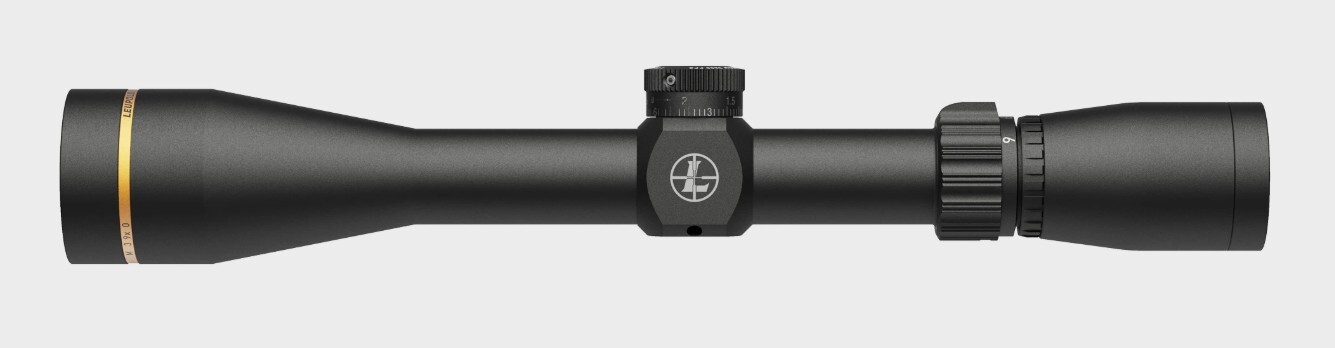
The Leupold VX-Freedom Rimfire stands out as a top pick for small-game hunting. This scope is tuned for the low light around dawn and dusk – times when squirrels and rabbits move the most. The Twilight Light Management System brings in more usable light and gives you a few extra minutes to see clearly and make safe shots.
What makes this scope stand out for hunters is the 60-yard parallax setting, right where most rimfire shots in the field happen. The MOA reticle adds light hash marks that help you hold for .22LR drop at longer ranges, yet your view of small targets stays open. At 3-9× magnification you get enough power for careful headshots and still keep a wide field of view to follow the moving game.
The scope's 12.2-ounce weight does not upset your rifle's balance on long days in the woods. The build feels solid enough to handle rain, brush, and the odd bump against a gate or tree. With Leupold's lifetime guarantee behind it, this is the scope many hunters truly reach for when a clean hit can put dinner on the table.
Price: Approx. $299.99
Specs
- Magnification: 3–9×
- Objective lens: 40 mm
- Tube diameter: 1 inch
- Focal plane: SFP
- Reticle: Rimfire MOA
- Eye relief: 3.7–4.2 in
- Field of view: 33.1–13.6 ft @ 100 yds
- Parallax: fixed at 60 yards
- Elevation / windage: 60 MOA / 60 MOA
- Adjustment value: ¼ MOA per click, 15 MOA per turn
- Weight / length: 12.2 oz, 12.3 in
- Lens coating: Twilight Light Management System
- Construction: Aircraft-grade aluminum, waterproof, fogproof
Features
- Low-light optimized glass for first and last shooting light
- Rimfire-tuned parallax at 60 yards for typical small-game shots
- MOA hash marks to handle .22LR drop at longer ranges
- Proven Leupold durability and shock testing well beyond .22 recoil
Pros
- Excellent clarity and color in challenging light
- Lightweight and doesn't ruin your rifle's balance
- Tracks accurately and returns to zero
- Lifetime support from a major optics brand
Cons
- Turrets are stiff and require effort to adjust
- Rimfire MOA reticle can feel crowded on tiny targets
- No side focus or AO for close precision work
- Fixed parallax can show some shift at very short range
Tract 22 Fire 4-12×40 – Best for Rimfire Target Shooting
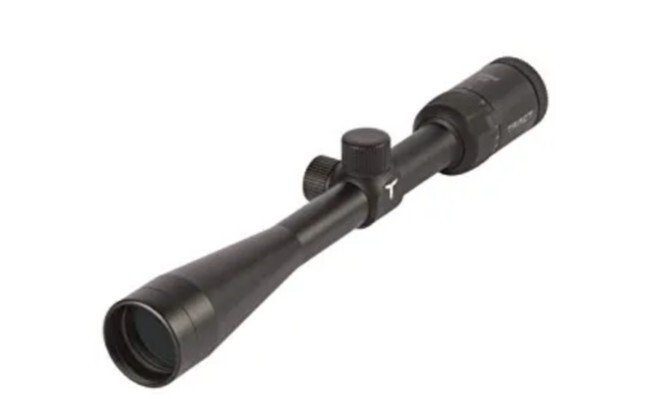
Built specifically for serious .22LR and rimfire work, the Tract 22 Fire excels as a precision tool for paper-punching and steel-ringing. What sets this scope apart is its adjustable objective that lets you eliminate parallax from as close as 10 meters out to infinity. This gives you tack-sharp focus whether you're running close-range drills or shooting groups at 100 yards.
The 4-12× magnification range provides enough power for seeing bullet holes at distance without getting too bulky. Its T-Plex Dot reticle features a precise aiming point that won't cover small targets even at range. The scope's turrets offer distinct, tactile clicks that track true—a must for serious target work where you're constantly dialing for different distances.
On the range, owners praise how this scope holds zero through hundreds of rounds and varying conditions. The reset-to-zero turret feature lets you quickly return to your baseline zero after making adjustments. This is a purpose-built rimfire optic that takes your target shooting to the next level.
Price: Approx. $274.00
Specs
- Magnification: 4–12×
- Objective lens: 40 mm
- Tube diameter: 1 inch
- Focal plane: Second focal plane (SFP)
- Reticle: T-Plex Dot (0.25" dot at 50 yards on 12×)
- Parallax / focus: Adjustable objective, 10 meters to infinity
- Click value: ¼" at 50 yards (about ¼ MOA)
- Eye relief: 3.5 in
- Weight: 16 oz (approx.)
- Construction: Argon-purged, waterproof, fogproof; fully multi-coated lenses
Features
- Extended focus range for 10 m steel to 100-yard paper
- Tool-free, hand-turn turrets with reset-to-zero
- Bright, sharp glass across the whole image
- Simple, clean reticle that stays usable at all powers
Pros
- Excellent for structured rimfire drills at multiple distances
- Turrets have loud, tactile clicks and track well
- Holds zero even as a truck gun
- Parallax control makes close-range practice much easier
Cons
- Magnification ring is stiff and needs breaking in
- AO ring feels a bit clunky to turn
- Heavier than some lightweight hunting-style scopes
- Limited reticle choices in this line
Vortex Diamondback 4-12×40 – Best Precision-Oriented Rimfire Scope
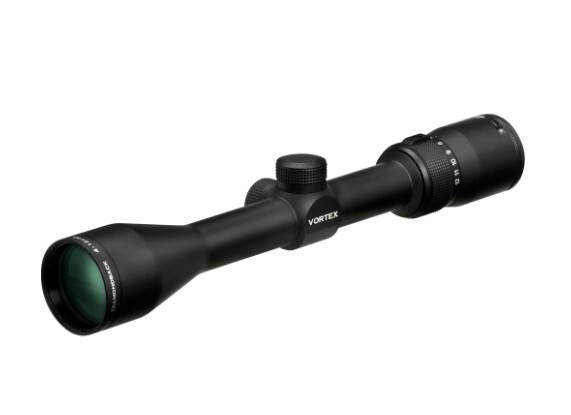
For rimfire owners who want tiny groups from a .22LR rifle, the Vortex Diamondback 4-12×40 delivers strong performance for the price. This scope feels at home on precision builds like a CZ 457 or a tuned 10/22 set up for matches. With magnification that starts at 4× and goes up to 12×, you can see bullet holes at 100 yards without leaning forward and squinting at the target.
The Dead-Hold BDC reticle helps you deal with .22LR drop at longer range. You map your ammo’s path, then use the hashmarks as simple hold points for different distances. The glass looks especially good in the 6-10× range, where most precision rimfire work happens, with crisp edges and clear color that makes targets stand out.
Owners report very good tracking when they dial adjustments and a solid return to zero after they come back. That matters a lot when you care about tight paper groups. The fixed 100-yard parallax setting supports careful shooting at longer ranges, but it does ask you to keep a steady head position at closer distances. For this price, it is tough to find a rimfire scope that gives more to someone who cares about accuracy.
Price: Approx. $249.99
Specs
- Magnification: 4–12×
- Objective lens: 40 mm
- Tube diameter: 1 inch
- Focal plane: SFP
- Reticle: Dead-Hold BDC (MOA)
- Eye relief: 3.1 in
- Field of view: 32.4–11.3 ft @ 100 yds
- Parallax: fixed at 100 yards
- Elevation / windage: 60 MOA / 60 MOA
- Adjustment: ¼ MOA per click, 15 MOA per turn
- Length / weight: 12 in, 14.6 oz
- Construction: Aircraft-grade aluminum, nitrogen-purged, waterproof / fogproof
Features
- Higher magnification for spotting bullet holes at distance
- BDC reticle calibrated for common hunting trajectories
- Capped turrets suitable for hunting and field use
- Sharp glass in the mid-magnification range where most people shoot
Pros
- Very good clarity up to about 10×
- Turrets track accurately and return to zero cleanly
- Handles .22LR and centerfire recoil without losing zero
- BDC reticle speeds up longer shots once calibrated
Cons
- Eye box gets tight at 10–12×
- Reticle appears thicker at max power and can cover small targets
- Fixed 100-yard parallax isn't ideal for very close plinking
- Capped turrets limit quick dial-based shooting
Sig Sauer ROMEO5 – Best Red Dot for Rimfire Carbines
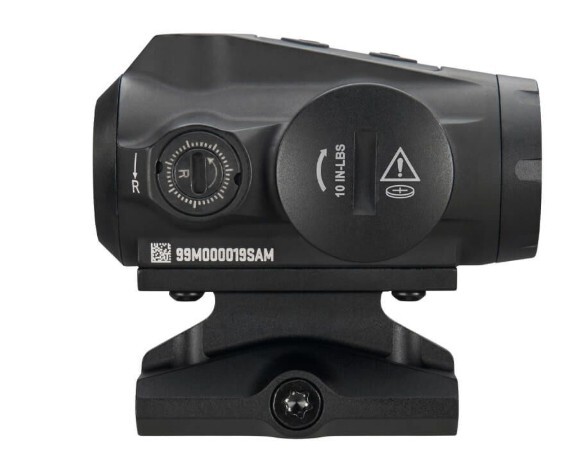
The Sig Sauer ROMEO5 has become a go-to choice for many rimfire carbine owners for good reasons. This compact red dot is light, simple, and quick to use on rifles like the Ruger 10/22, S&W M&P15-22, and other .22LR carbines. The 2 MOA dot strikes a nice balance, small enough for careful shots yet bright and easy to pick up at speed.
What makes the ROMEO5 stand out is the very long battery life and its motion-activated illumination system called MOTAC. You can leave the optic on during regular use, because it shuts down by itself when the rifle stays still and comes back the moment you move the gun. For rimfire owners who pull a rifle from the safe only now and then, this setup saves you from the surprise of a dead battery on range day.
Sig builds the ROMEO5 to handle the recoil of centerfire rifles, so it feels overbuilt on a mild .22LR. Its IPX-7 waterproof rating means it can work in rain, wet snow, and even short dips in water without drama. For steel challenge style shooting, relaxed plinking sessions, or pest control around a small property, this optic brings fast target pickup and strong build quality at a fair price.
Price: Approx. $159.99
Specs
- Magnification: 1×
- Objective lens: 20 mm
- Reticle: 2 MOA red dot
- Illumination: 10 settings (8 daylight, 2 NV)
- Battery: CR2032, up to 40,000 hours runtime
- Length / weight: 2.46 in, 5.1 oz
- Waterproof rating: IPX-7
- Mount: includes low mount / riser options depending on kit
Features
- MOTAC motion-activated ("shake-awake") on/off system
- Constant-on battery life measured in years, not weeks
- NV-compatible brightness for night-vision training setups
- Works with most standard Picatinny / rail mounts
Pros
- Very long battery life with motion sensing to save power
- Tough enough for centerfire recoil, so rimfire is easy duty
- Fast, bright dot for steel plates and close-range shots
- Simple controls with familiar Sig branding and support
Cons
- Slight blue tint to the glass
- No magnification for precision at 100+ yards
- Needs a rail, so not ideal for classic hunting rifles
- Window is smaller than some full-size dots
Holosun 407K-X2 – Best Red Dot for .22LR Pistols
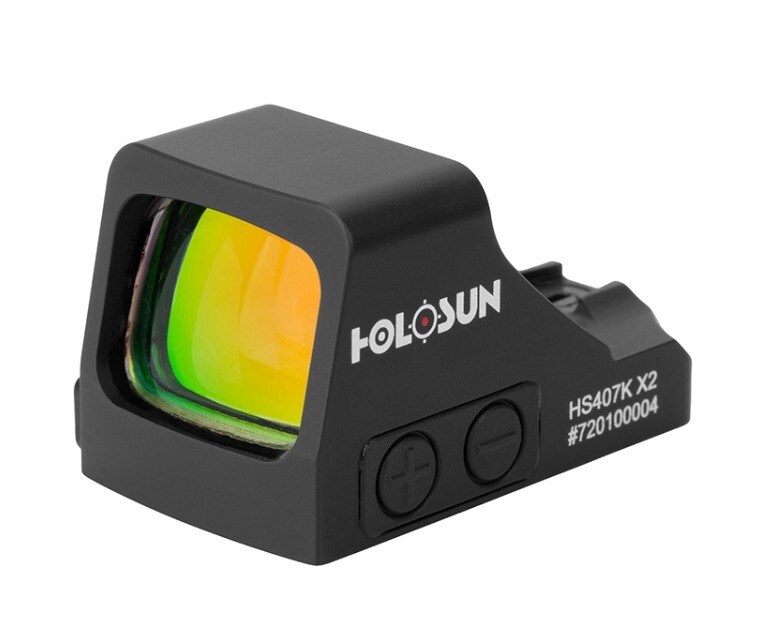
The Holosun 407K-X2 is a compact red dot that feels right at home on .22LR pistols. It fits slides cut for the Holosun K / RMSc-style footprint or works with an adapter plate, so it bolts directly to popular rimfire pistols like the Taurus TX22 Competition, Sig P322, and FN 502. The 6 MOA dot suits normal rimfire pistol ranges and makes fast target pickup feel simple and natural.
Battery life runs up to fifty thousand hours, so you are not swapping cells all the time. The shake awake feature keeps the optic asleep in the holster or gun case, then brings the dot back when the pistol moves. A side-loading battery tray lets you slide in a new battery without taking the optic off the slide, so your zero stays right where you set it.
This optic weighs about one ounce, so it adds very little weight to your .22 pistol. An aluminum housing and a sealed design keep it ready for range days and rough field use. It works well for Steel Challenge stages, casual rimfire practice, and small game walks with your favorite pistol. You can choose a red or a green dot model so your eyes and your local light conditions get a sight picture that feels easy to use.
Price: Approx. $224.99
Specs
- Magnification: 1×
- Window size: 0.58 × 0.77 in
- Reticle: 6 MOA dot
- Battery: CR1632, up to 50,000 hours runtime
- Illumination: multiple daylight and NV settings
- Footprint: Shield RMSc
- Weight: 1.0 oz (approx.)
- Construction: aluminum housing, waterproof and shock-resistant
Features
- Shake-awake tech with long battery life for carry or competition
- 6 MOA dot tuned for fast target transitions at pistol distances
- Available in both red and green versions
- Side battery tray for easy changes without re-zeroing
Pros
- Very light and compact on pistol slides
- Big dot is easy to track on steel and small plates
- Footprint matches many current rimfire pistols
- Plenty durable for high round-count .22 sessions
Cons
- 6 MOA dot can feel large for precision headshots on tiny targets
- Window is small compared with full-size pistol optics
- Some shooters struggle to pick up the dot at odd angles
- Not the best choice if you want a very fine aiming point
Bushnell Match Pro 6-24×50 – Best Budget NRL22 Competition Optic
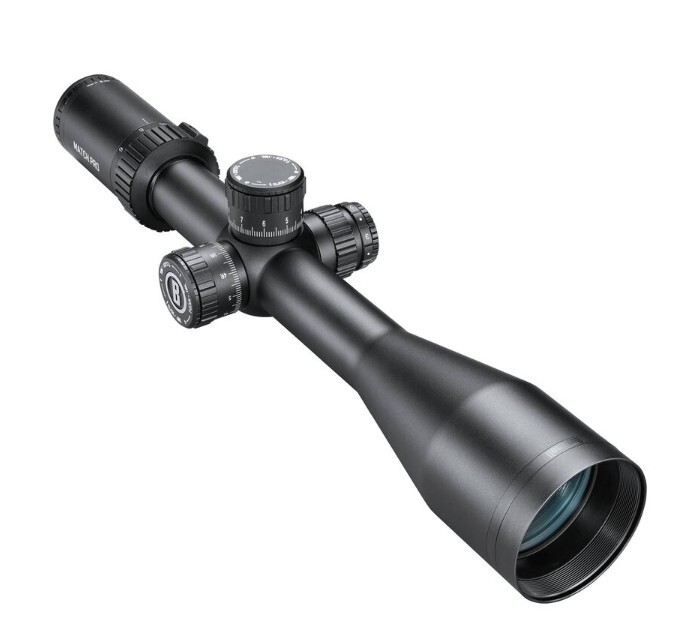
The Bushnell Match Pro 6-24×50 was purpose-built for NRL22 competition, where precision .22LR rifles engage targets from 25 to 300+ yards. This first focal plane scope gives you serious match features at a price that fits within NRL22's Base class limits. With magnification from 6× to 24×, you can identify and engage targets at any practical rimfire distance.
What really sets this scope apart is its Deploy MIL reticle in the first focal plane, which means holdovers and windage corrections remain valid at any magnification. The side parallax adjustment goes down to 10 yards—critical for those close-range NRL22 stages where other scopes struggle. Its illuminated reticle helps in shadowy conditions or against dark targets.
NRL22 shooters praise how this scope tracks through multiple adjustments during a match, then returns to zero without drama. The 30mm tube provides plenty of internal adjustment range to accommodate .22LR's rainbow trajectory at distance. Despite its match-ready features, it costs hundreds less than other competition-grade optics and so it is the smart choice for rimfire competitors on a budget.
Price: Approx. $499.99
Specs
- Magnification: 6–24×
- Objective lens: 50 mm
- Tube diameter: 30 mm
- Focal plane: First focal plane (FFP)
- Reticle: Deploy MIL
- Click value: 0.1 MIL
- Elevation / windage travel: 18 MIL / 18 MIL (model-dependent)
- Parallax: side focus, 10 yards to infinity
- Weight: 29.8 oz (approx.)
- Construction: fully multi-coated, waterproof, shock-tested
Features
- FFP layout keeps subtensions accurate at any magnification
- Side parallax that dials down to 10 yards for barricade and KYL racks
- Illumination to help see the reticle on dark targets or in bad light
- Elevation stack designed around common NRL22 course needs
Pros
- Excellent feature set for Base-class budget caps
- True competition-ready FFP reticle and turrets
- Great flexibility from 10-yard stages out to long-range rimfire
- Serious value for shooters building a match rig
Cons
- Noticeably heavy on light rimfire rifles
- More complex than most casual shooters need
- Not built as a "duty" optic for hard use on big game rifles
- Bigger footprint than classic hunting scopes
Zeiss LRP S3 4-25×50 – Best Premium Precision Optic Used on Rimfire Rifles
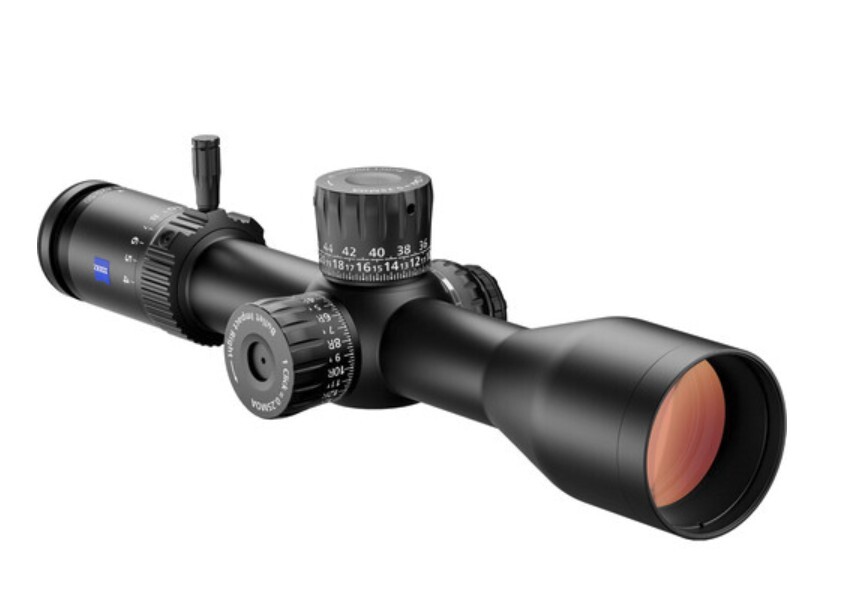
The Zeiss LRP S3 4-25×50 represents the pinnacle of rimfire optics, often found atop custom NRL22X rigs and precision .22LR trainers. This premium scope features top-tier optical clarity and so it gives you crystal-clear images from dawn to dusk. The 34mm main tube allows for an extreme elevation range—more than any competitor and enough to take a .22LR out to extreme distances.
What separates this scope from others is its competition-focused feature set. The ZF-MRi reticle was designed with input from professional competitors, offering a clean but detailed aiming system. The external locking windage turrets and ballistic stop make competition adjustments quick and precise. At 4-25×, the magnification range covers everything from close positional stages to tiny targets at 300+ yards.
Yes, this scope costs as much as some custom rifles, but it's built to extract every bit of accuracy from your precision rimfire. Many shooters use it as a dual-purpose optic, moving it between their .22LR trainer and centerfire match rifle. The optical clarity, tracking precision, and overall build quality create an experience that lesser scopes simply can't match. For shooters who demand the absolute best, this is it.
Price: Approx. $2,299.99
Specs
- Magnification: 4–25×
- Objective lens: 50 mm
- Tube diameter: 34 mm
- Focal plane: FFP
- Reticle: ZF-MRi
- Elevation travel: up to 160 MOA / ~46.5 MIL (model-dependent)
- Click value: 0.1 MIL
- Eye relief: 3.5 in (approx.)
- Light transmission: up to 90% with advanced coatings
- Construction: robust 34 mm body, premium turrets, zero-stop system
Features
- T-Star multi-layer glass and LotuTec coating for maximum clarity
- Ballistic stop and external locking windage for competition use
- Reticle developed with active PRS / NRL competitors
- Massive elevation range that easily covers .22LR at distance
Pros
- Optical performance is truly top-shelf
- FFP reticle and turret design built for serious matches
- Enough elevation to use as both rimfire and centerfire scope
- Extremely durable and made for heavy use
Cons
- Very expensive if you only shoot rimfire
- Large and heavy on small .22LR rifles
- Reticle system and features have a learning curve
- Overkill for casual plinking or basic hunting
Hawke Vantage 4×32 – Best Fixed-Power Rimfire Scope
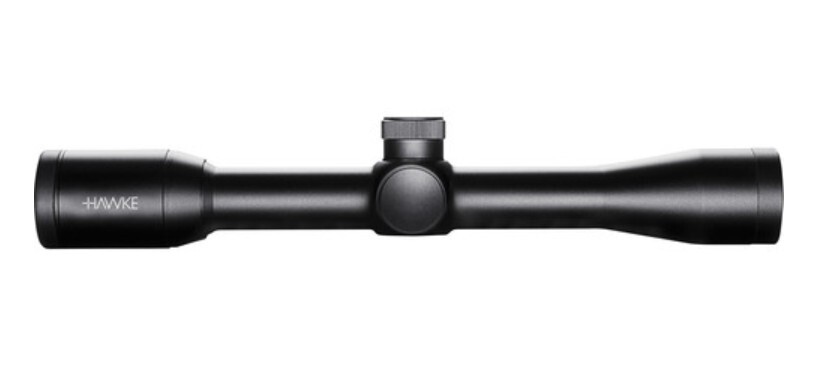
Sometimes simplicity wins. The Hawke Vantage 4×32 is a straightforward, fixed-power scope that delivers clear views and consistent performance without complicated features. At just 13.1 ounces, it keeps your rimfire rifle light and handy—perfect for walking fields or teaching new shooters without the confusion of variable power.
The fixed 4× magnification hits a sweet spot for rimfire use. It's enough power to place precise shots out to 100 yards but still offers a generous 28.5-foot field of view that helps you track moving targets. The Mil-Dot reticle gives you aiming points for holdover and windage without cluttering the view, a feature practical shooters appreciate.
This scope particularly excels on youth rifles, farm guns, and camp .22s where simplicity and ruggedness matter more than fancy features. The price makes it easy to add to any budget-friendly rimfire, yet the quality ensures it won't be the weak link in your shooting system. For shooters who just want to put rounds on target without fussing with dials, this fixed-power optic delivers.
Price: Approx. $99.99
Specs
- Magnification: 4× (fixed)
- Objective lens: 32 mm
- Tube diameter: 1 inch
- Focal plane: SFP
- Reticle: Mil-Dot
- Parallax / focus: 10 yards to infinity
- Eye relief: 3.5 in
- Field of view: 28.5 ft @ 100 yds
- Length / weight: ~11.6–11.7 in, 13.1 oz
- Optics: 11 layers of multi-coating
- Construction: nitrogen-purged, waterproof, fogproof
Features
- Fixed 4× power keeps things simple and robust
- Parallax is set closer than typical centerfire scopes, making it suitable for common rimfire distances
- Lightweight and compact to match smaller .22 rifles
- Clean reticle suitable for hunting and plinking
Pros
- Very user-friendly for new shooters and kids
- Fast to mount and shoot with no magnification dial
- Clear glass for the price, with good edge-to-edge sharpness
- Parallax setting works well across rimfire distances
Cons
- Fixed power limits flexibility for tiny groups at longer range
- Not ideal for NRL22 or formal precision competition
- Simpler feature set than variable-power scopes
- Limited eye relief compared to some premium options
Barska 3-9×32 Plinker-22 – Best Budget Starter Scope
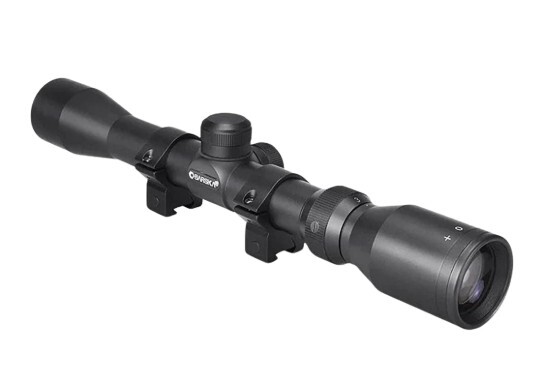
The Barska 3-9×32 Plinker-22 answers a simple question: What's the cheapest scope that actually works on a .22LR rifle? For under $60, this complete package includes the scope and rings and so it gets you from iron sights to optics with one purchase. It's the definition of a starter scope—good enough to improve accuracy and teach the basics.
The 3-9× magnification range covers all typical rimfire distances, from close plinking to 100-yard target work. The 30/30 reticle provides a clean, uncluttered sight picture that works well for both paper targets and small game. With parallax set at 50 yards, it's optimized for typical rimfire shooting distances.
Let's be honest—this isn't premium glass. But it dramatically outperforms iron sights and introduces new shooters to the benefits of magnified optics. Users report it holds zero adequately through normal use and offers clear enough images for backyard plinking. For budget-conscious shooters or for equipping that old Marlin 60 in the closet, it's hard to beat the value proposition.
Price: Approx. $52.47
Specs
- Magnification: 3–9×
- Objective lens: 32 mm
- Tube diameter: 1 inch
- Focal plane: SFP
- Reticle: 30/30
- Eye relief: around 3.5 in
- Field of view: 36–13 ft @ 100 yds
- Parallax: fixed at 50 yards
- Adjustment: ¼ MOA per click
- Construction: anodized aluminum, waterproof, fogproof
- Mounts: includes 3/8" dovetail rings in the box
Features
- Fully coated optics for decent clarity at common rimfire distances
- Lightweight and compact for general plinking rifles
- Comes with basic rings so you can mount and shoot right away
- Simple controls and reticle for new shooters
Pros
- Very budget-friendly way to scope a .22LR
- Clear enough for cans, basic paper, and small-game inside typical ranges
- Included rings make it an easy, all-in-one package
- One-piece tube is stronger than many expect at this price
Cons
- Turrets are stiff and feel mushy compared to higher-end scopes
- Eye box gets tight at 9× and demands careful head position
- Long-term durability and QC are hit-or-miss
- Not ideal for serious precision or competition work
What Magnification Range Works Best for .22LR?

For most rimfire shooting, 2-7× or 3-9× hits the sweet spot. These ranges give you enough magnification for 100-yard accuracy without getting too bulky or losing field of view at close range. Small-game hunters typically find 4-6× ideal for squirrels and rabbits at 25-75 yards.
Higher magnification (like 4-12×) works great for paper punching and precision work. Beyond 12×, you get diminishing returns on typical .22LR rifles at rimfire distances. The Bushnell and Zeiss scopes on our list are exceptions for competitive shooters pushing the limits of rimfire accuracy.
How Do Parallax Settings Affect .22LR Accuracy?
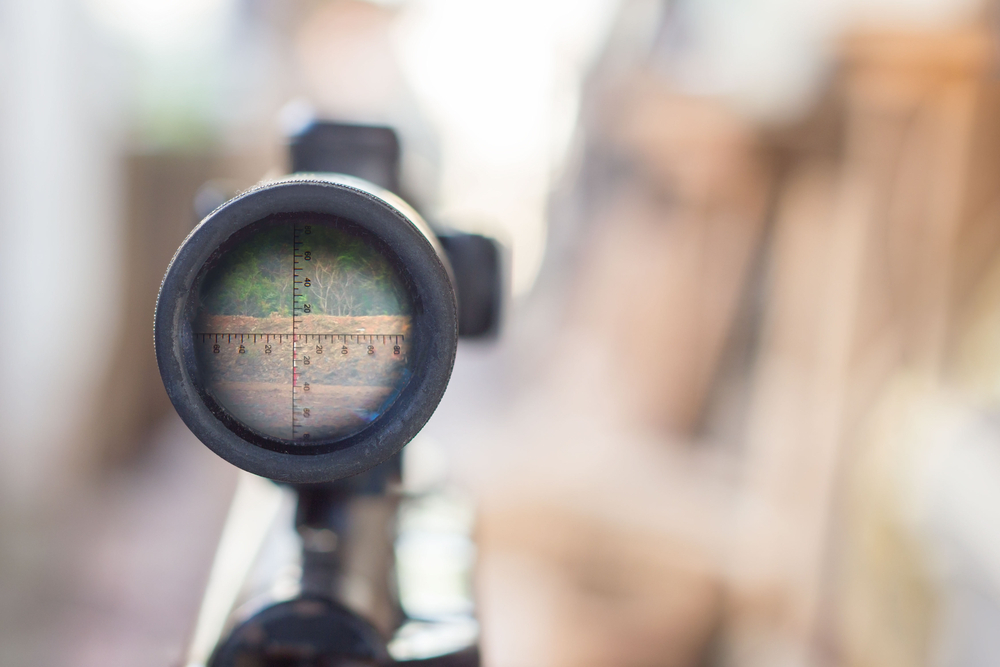
Parallax is the apparent movement of the reticle against the target when you move your head. It matters tremendously for rimfire because many .22LR shots happen at 25-50 yards—closer than the 100-yard parallax setting on most centerfire scopes.
The best rimfire scopes have parallax set at 50-60 yards or offer adjustable parallax. With fixed 100-yard parallax, shots at 25 yards can be off by 1/2 inch or more just from slight head movement. Adjustable objectives (AO) or side-focus parallax lets you dial in exact focus for any distance, crucial for serious rimfire accuracy.
Which Reticle Types Work Best on Rimfire?
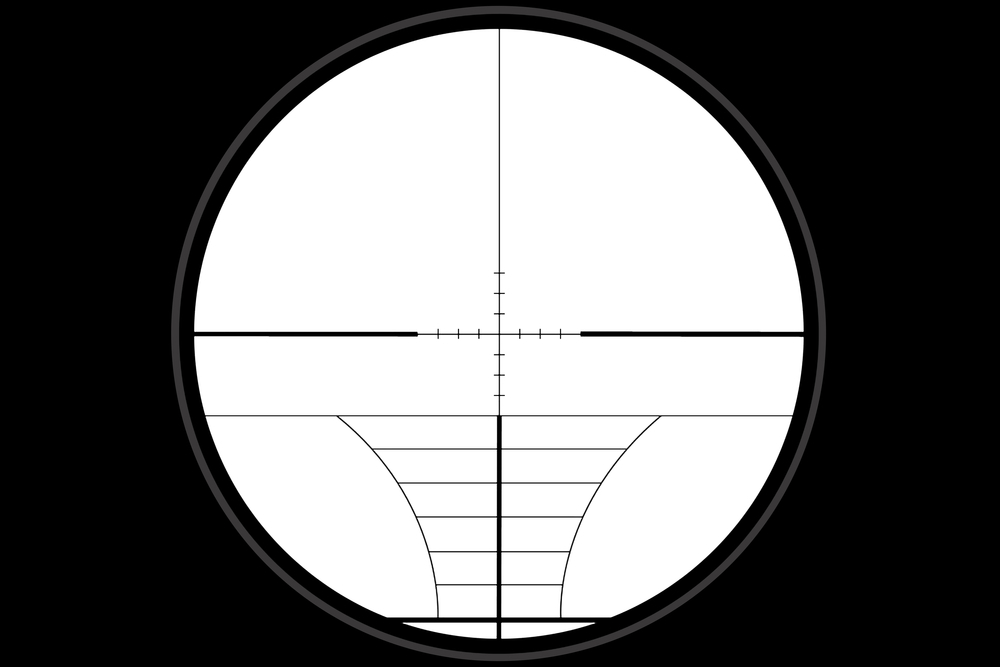
Simple works best for most rimfire shooters. A basic duplex or V-Plex reticle gives you a clean sight picture without distractions. These work great for plinking, hunting, and general use where you don't need lots of holdover points.
For longer-range .22LR shooting (75+ yards), BDC or MOA hash mark reticles help compensate for significant bullet drop. Remember that BDC reticles are calibrated for specific loads—you'll need to test yours to see where your actual impacts occur.
For competition, first focal plane (FFP) reticles with MIL or MOA marks give precision shooters exact holdover and windage references at any magnification. But for most casual shooting, these complex reticles add unnecessary clutter.
First Focal Plane vs Second Focal Plane on .22LR
Second focal plane (SFP) scopes keep the reticle the same size regardless of magnification. This works great for most rimfire uses because:
- The reticle stays visible and usable at low magnifications
- You're typically not doing complex holdovers that need scaling
- SFP scopes tend to be less expensive and lighter
First focal plane (FFP) scopes have reticles that grow and shrink with magnification. They excel in competition where you:
- Change magnification frequently based on target size and distance
- Need precise holdover values that work at any magnification
- Use complex wind calls and elevation holds
For casual plinking and hunting, SFP is often the better choice. For NRL22 and precision competitions, FFP provides advantages worth the higher cost.
Should You Put a Red Dot or a Scope on Your .22LR?
This depends entirely on how you use your rimfire:
Choose a red dot if:
- You shoot mainly inside 50 yards
- You value speed over precision
- You run Steel Challenge or similar action sports
- Your rimfire is a training analog for a centerfire with red dot
Choose a scope if:
- You shoot beyond 50 yards regularly
- You hunt small game at varying distances
- You want to see bullet holes in paper
- Precision is more important than speed
For pistols, red dots are almost always the better choice. The Holosun 407K offers speed that iron sights can't match, especially on steel targets. For rifles, both have their place—many competitors have one rifle with each type of optic.
How To Choose the Right Rimfire Scope or Optic Step-by-Step
Step 1 – Define Your Primary Use
Start by getting crystal clear about how you'll actually use your .22LR. Are you:
- Plinking cans at 25 yards?
- Hunting squirrels in dense woods?
- Running Steel Challenge matches?
- Competing in NRL22 precision events?
- Teaching new shooters the basics?
Your primary use dictates everything else about your optic choice. A scope that's perfect for NRL22 would be frustrating for close-range plinking, and vice versa.
Step 2 – Pick Your Magnification & Optic Type
Based on your primary use, choose between:
- 1× Red Dot: Best for speed shooting, steel challenge, and close plinking
- 2-7× or 3-9× Scope: Ideal for all-around use, hunting, and mixed-distance shooting
- 4-12× Scope: Great for precision work and shooting tiny groups at 50-100 yards
- 6-24× or higher: Specialized for competition and extreme precision at distance
Remember that more magnification isn't always better. Higher power means narrower field of view, more mirage issues, and typically heavier weight.
Step 3 – Match Parallax to Your Typical Distance
For shooting primarily at:
10-25 yards: Choose adjustable objective or side-focus parallax
25-75 yards: 50-yard fixed parallax or adjustable works well
75+ yards: 100-yard parallax is acceptable
If you shoot at varying distances, adjustable parallax (like on the Tract 22 Fire) gives you flexibility that fixed settings can't match.
Step 4 – Choose a Reticle That Matches Your Skill Level
Beginner: Simple duplex or crosshair without extra markings
Intermediate: Basic BDC or a few reference points for holdover
Advanced: MIL or MOA hash marks for precise holdovers and wind calls
Simpler is usually better unless you know exactly why you need more complex aiming points.
Step 5 – Check Eye Relief, Weight, and Mounting Options
Ensure at least 3-3.5" eye relief for comfortable shooting
Weigh optic+mount—keeping total weight under 16 oz is ideal for most rimfire rifles
Confirm your rifle has an appropriate mounting system (3/8" dovetail, Picatinny rail, etc.)
For pistols, verify the specific footprint (RMSc, RMR, etc.) before purchasing
Step 6 – Set a Realistic Budget and Shortlist Models
Quality rimfire optics range from $50 to $2,300+. For your budget:
- Under $100: Consider the Hawke Vantage 4×32 or Barska Plinker-22
- $100-250: Look at the Vortex Crossfire II 2-7×32 or similar quality
- $250-500: The Leupold VX-Freedom or Tract 22 Fire offer significant upgrades
- $500-1000: Bushnell Match Pro brings competition features
- $1000+: Premium options like the Zeiss for no-compromise performance
Buy the best you can reasonably afford—optics typically outlast several rifles when properly cared for.
Final Thoughts
The right rimfire optic can turn a basic .22LR into a true precision tool. You go from “good enough” hits to groups that make you smile. From the budget Barska that helps new owners get started to the match-ready Zeiss that pulls the most from match-grade ammo, this list has an option for most needs and budgets.
And for most rimfire fans, the best value sits in the middle. Scopes like the Vortex Crossfire II and Leupold VX-Freedom give strong results without draining your wallet. They cover the full range of .22LR use, from plinking to hunting to casual target days.
Remember, the humble .22LR still deserves good glass. It’s often the rifle you use to build solid habits that later carry over to centerfire rifles. Put money into a quality rimfire optic and you’ll see the payoff in tighter groups and more fun for a long time.
Your .22 LR scope or red dot deserves quality ammo to unlock its accuracy. Before your next range or hunt, check out our 5 Best .22 LR Ammo Options for Target Shooting and Hunting list to pair your optic with ammo that performs.

250 Rounds of Aguila 22LR + 5 Splatter Targets
$16.75
at Pro Armory
Prices accurate at time of writing
Frequently Asked Questions (FAQs)
What magnification is best for a .22LR hunting rifle?
For most small-game hunting with a .22LR, 3-9× magnification is a great fit. Use the low end, like 3-4×, for squirrels in thick woods. Then move up to 6-9× for longer shots across open ground. This range gives you a wide view and enough power for careful shots on small targets.
Is 4-12x overkill on a .22LR?
Not at all for target shooting or precision work. A 4-12× scope gives you a wide view at 4× for close shots. And at 12×, you can spot bullet holes at 100 yards on many targets. For hunting or plinking, you may not live at 12×, but for tight groups, that extra zoom can help.
Do I really need adjustable parallax on a rimfire scope?
Fixed 100-yard parallax can introduce noticeable error at 25–50 yards if head position shifts. Adjustable or rimfire-tuned parallax makes close shooting more forgiving.
Can I use a centerfire scope on my .22LR?
Yes, but expect tradeoffs. Many centerfire scopes have parallax set at 100 yards. That can make rimfire distances like 25-50 yards less forgiving. The turrets may also feel too coarse for fine rimfire work. A rimfire scope often fits these ranges better at a similar price.
What's the best red dot size for a .22LR pistol?
A 6 MOA dot, like the Holosun 407K, fits most .22LR pistol use. It’s big enough to pick up fast in action-style shooting. And it’s still small enough for fair precision at 25 yards. If you focus on bullseye work, a 3-4 MOA dot may feel better.
How far is a .22LR accurate with the right scope?
With good ammo and a capable rifle, .22LR can be very accurate at 50–100 yards, though wind and ammo quality matter more as distance increases.
About the Author
This article was written by the Pro Armory writing team using manufacturer specifications, reputable industry reviews, and general firearms safety guidance.
Disclaimer: This review is for education only. Laws vary by state and city and can change. Follow safe handling at all times. Read your owner's manual. Verify local rules before you buy or train.

Best Ammo Deals, Training, & Accessories
Subscribe to ProArmory sales and deals email.