 Pro Armory Editorial Team
Quick Answer
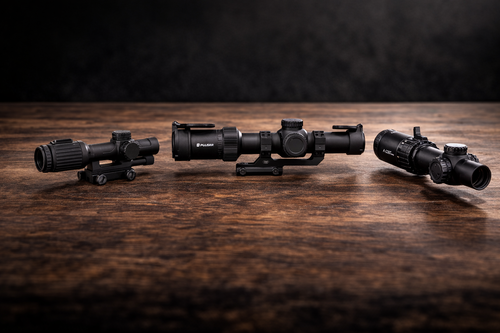
The right AK optic depends on what you’re actually trying to do with the rifle. Red dots are the simplest answer for fast work up close, and they’re forgiving on head position. Prisms give you fixed magnification and an etched reticle you can still use if illumination dies. LPVOs cover the widest range of distances, but they add noticeable bulk to an AK. On an AK, the mount can matter as much as the glass.
Key Takeaways
- If the optic sits too high or too low, your cheek weld suffers and your whole setup feels wrong.
- Most of the time, a quality side-rail setup holds zero more consistently than a dust-cover rail.
- If red dots look like a smeared comet tail to you, a prism’s etched reticle usually looks cleaner.
- LPVOs can make an AK feel top-heavy or rear-heavy, so balance is part of the decision.
- Fixed-power optics are simple and sturdy, especially if your AK has a defined job.
- Non-battery illumination means one less ‘why is my dot off?’ moment at the worst time.
The AK-47 might be the most famous rifle on the planet, but finding the right optic for it can be tricky. Unlike AR-15s, these platforms weren't originally designed with optics in mind.
Getting an AK set up with glass requires some planning about mount height, eye relief, and what you actually need the rifle to do.
From red dots for close-range speed to prism scopes for crystal-clear aiming to versatile LPVOs that do it all, this guide breaks down your best options across all price points.
Quick Comparison Table
| Optic | Type | Best Use | Weight | Power Source |
|---|---|---|---|---|
| Aimpoint T-2 | Red Dot | CQB | Light | 50,000-hour battery |
| Holosun 510C | Reflex | Fast shooting | Medium | Solar + battery |
| Holosun 512C | Enclosed Reflex | All-weather use | Medium | Solar + battery |
| Primary Arms 3× Prism | Prism | Mid-range | Medium | Illuminated + etched reticle |
| Trijicon ACOG TA02 | Prism | Battle-proven duty use | Medium-Heavy | LED battery |
| Vortex Razor 1-6× | LPVO | Versatile general-purpose | Heavy | Battery illuminated |
| Trijicon AccuPoint | LPVO | No-fail setup | Heavy | Fiber-optic / tritium |
| Vortex Viper 2-10× | LPVO | Distance shooting | Heavy | Battery illuminated |
| Trijicon RMR | Mini Reflex | Offset or backup optic | Ultra-Light | Battery |
How This List Was Chosen
What Mattered Most for AKs
The AK platform demands specific qualities from optics that differ somewhat from AR-15 requirements. We leaned toward optics that have a history of staying put on AK recoil and not losing zero. If it won’t hold zero after real shooting, it doesn’t belong here.
Eye relief forgiveness matters because AK stocks and shooter position vary a lot. Speed for close-quarters use matters since many AKs serve home defense or tactical roles. Weight and balance considerations are crucial since AKs already weigh more than many modern sporting rifles.
And none of it matters if the optic won’t mount cleanly on common AK setups. The best optic is useless if you can't properly mount it.
What Got Cut and Why
- Budget red dots under $100 – most fail to hold zero on AK's recoil cycle
- Several 1-4x LPVOs – too much overlap with better 1-6x options
- Older ACOGs with only fiber optic illumination – the TA02 LED model offers more control
- Heavy precision scopes turn an AK into something it isn’t, and the weight penalty isn’t worth it.
- Multiple similar Holosun models – kept only the most distinct options
- First-gen Primary Arms prisms – newer MicroPrism is more compact
The 9 Best Optics for AKs
1. Vortex Razor HD Gen II-E 1-6x24
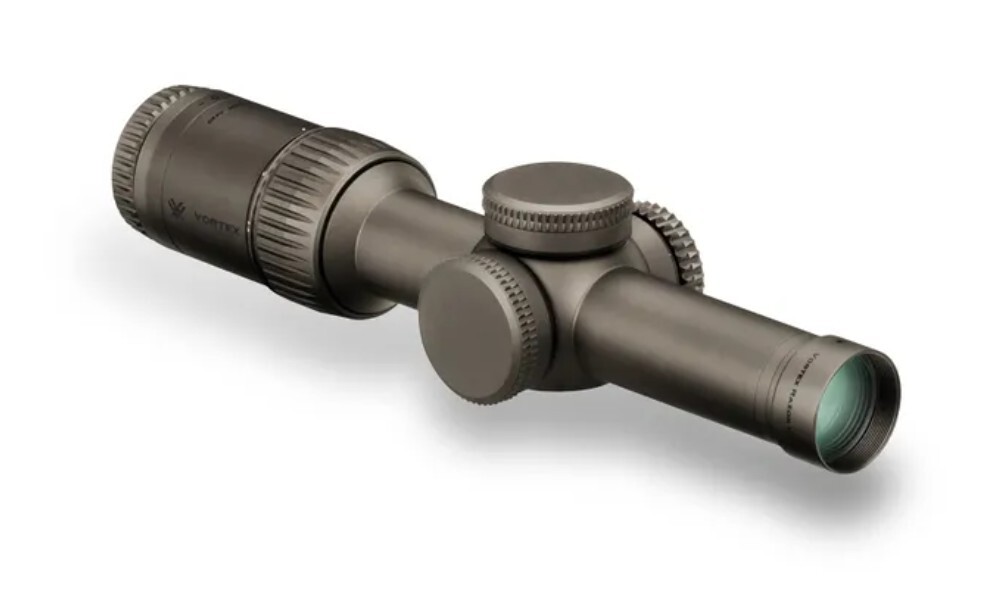
The Vortex Razor HD Gen II-E stands as the gold standard for do-it-all LPVOs on an AK platform. This refined version sheds some weight from the original Gen II. It makes it more practical for a platform that's already on the heavy side. With a solid mount, it makes the AK feel more capable past typical red-dot distances. It stops feeling like a short-range blaster. It starts feeling like a tool you can aim with care at longer range.
At 1x, the glass looks bright. The eye box gives you room to work. It runs close to a red dot, so you can shoot with both eyes open and stay quick. Roll up to 6x and you get enough magnification to push the 7.62×39 cartridge near its practical edge. The illuminated reticle stays usable in bright light, which matters if you’re running it hard outdoors. You keep the reticle in view even when glare tries to wash it out.
The Razor earns its name because it’s built tough. The 30mm tube feels stout. The whole optic handles the hard knocks that come with an AK. The glass is clear across the view. That helps you sort targets fast instead of squinting and hoping. People report it holds zero through hundreds of rounds when the mount is solid. In short, it lets you get more out of the rifle without babying the optic.
Price: approx $1,350–$1,500
Specs
- Magnification: 1–6x
- Objective: 24mm
- Tube: 30mm
- Field of view: 115.2 ft (1x) to 20.5 ft (6x) at 100 yards
- Length: 10.1 inches
- Weight: 21.5 oz
Features
- Daylight-bright illuminated reticle options (JM-1 BDC or VMR-2 MOA/MRAD)
- Second focal plane design for consistent reticle size
- Aircraft-grade aluminum construction
- Waterproof and fogproof
Pros
- Exceptional glass clarity
- True 1x for red-dot-like performance at close range
- Generous eye relief for comfortable shooting
- Rock-solid track record for maintaining zero
Cons
- Expensive compared to other options
- Heavy at 21.5 oz - changes the balance of an AK
- Magnification ring can be stiff initially
- Requires quality mount, adding to total cost
2. Trijicon AccuPoint 1-6x24 (TR25 series)
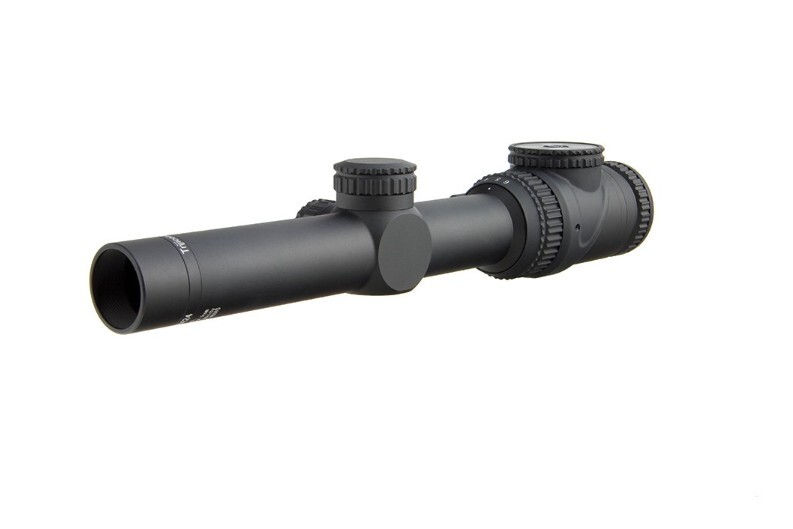
The Trijicon AccuPoint brings a simple advantage AK owners appreciate: illumination without batteries. Using a combination of fiber optics for daylight conditions and tritium for low light, this optic is always ready when you need it. For an AK that might sit in storage for extended periods and need to be ready at a moment's notice, this battery-free design eliminates one potential point of failure.
The AccuPoint provides a true 1x setting that works well for close-quarters use, with minimal distortion and a good sight picture. At 6x, the glass quality shows its pedigree. It delivers clear images out to the practical limits of the 7.62x39 cartridge. The constant 3.9-inch eye relief across all magnification settings is a major advantage on AK platforms, which often have non-standard stock dimensions compared to ARs.
Trijicon's reputation for ruggedness serves the AK platform well. The AccuPoint can withstand the violent recoil impulse of an AK without losing zero. The triangle post reticle (one of several options) matches well with the AK's typical engagement distances. When mounted on a quality side rail mount, it makes a very low-fuss setup when paired with a good side mount.
Price: approx $900–$1,200
Specs
- Magnification: 1–6x
- Objective: 24mm
- Illumination: fiber optic + tritium
- Eye Relief: 3.9 inches (constant)
- Tube Size: 30mm
- Weight: 19.2 oz
Features
- Battery-free illumination system using fiber optics and tritium
- Multiple reticle options including triangle post
- Aircraft-grade aluminum housing
- Waterproof to 10 feet
Pros
- No batteries to die at critical moments
- Constant eye relief across all magnification settings
- Proven track record for toughness
- Clear Japanese glass
Cons
- Illumination brightness cannot be adjusted electronically
- Heavier than some competing LPVOs
- Premium price point
- Limited reticle options compared to some competitors
3. Vortex Viper PST Gen II 2-10x32 (FFP)
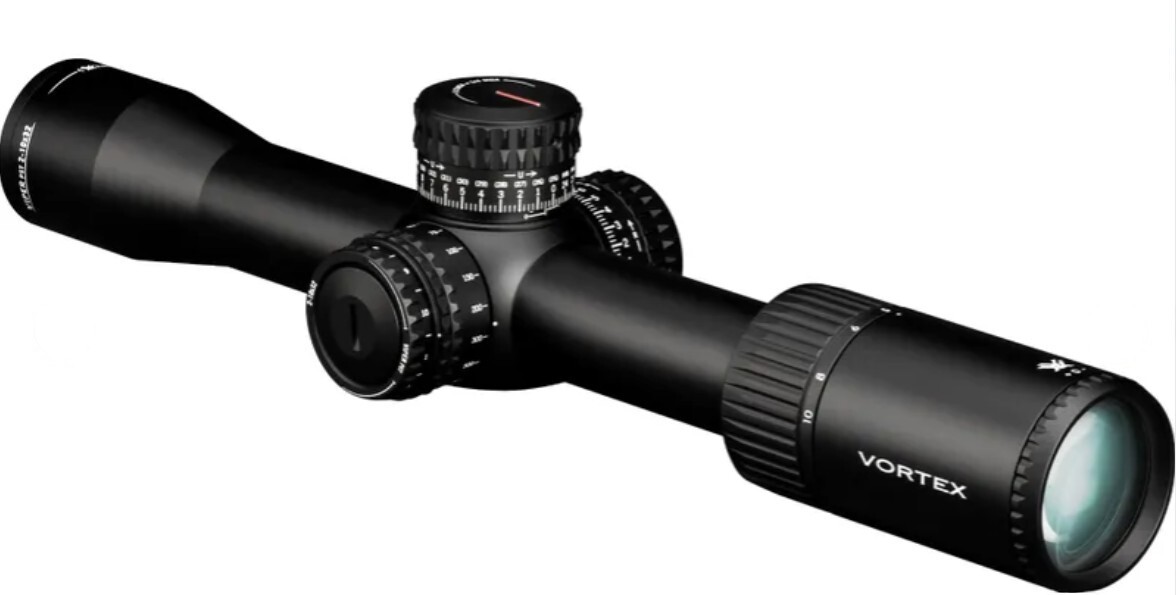
The Vortex Viper PST Gen II 2-10x32 FFP strikes an excellent balance for AK users who want to get more clarity at distance than a dot or 3x prism can give. Starting at 2x rather than 1x, this scope is meant for users who prioritize precision over ultra-close quarters speed. The first focal plane reticle means your holdovers remain proportional at any magnification setting – a significant advantage when shooting at varying distances with a cartridge that drops as much as 7.62x39.
This scope brings features typically found on higher-priced optics down to a more accessible price point. The glass quality is impressive for the price range, with good light transmission and clarity. The exposed tactical turrets with RZR zero stop allow for quick adjustments in the field, though many AK users will prefer to use the hashmark system in the reticle for holdovers rather than dialing.
The Viper PST Gen II pairs particularly well with AKs set up for hunting or designated marksman roles. At 10x, you can easily identify and engage targets farther than most AK owners bother shooting in regular range sessions. The side parallax adjustment helps ensure your sight picture stays crisp from 20 yards to infinity. It covers everything from close brush hunting to open field shots.
Price: approx $650–$900
Specs
- Magnification: 2–10x
- Objective: 32mm
- Focal plane: First Focal Plane
- Tube Diameter: 30mm
- Eye Relief: 3.2 inches
- Weight: 26.3 oz
Features
- EBR-4 reticle with MOA or MRAD options
- Illuminated reticle with 10 intensity levels
- Tactical-style exposed turrets with RZR zero stop
- Side parallax adjustment from 20 yards to infinity
Pros
- First focal plane design keeps holdovers proportional at all magnifications
- Tactical turrets for precise adjustments
- Good glass clarity for the price point
- Extended magnification range for longer shots
Cons
- Starts at 2x, not ideal for very close quarters
- Tighter eye relief (3.2 inches) requires consistent cheek weld
- Heavier than red dots or prism scopes
- May be more magnification than many AK users need
4. Aimpoint Micro T-2
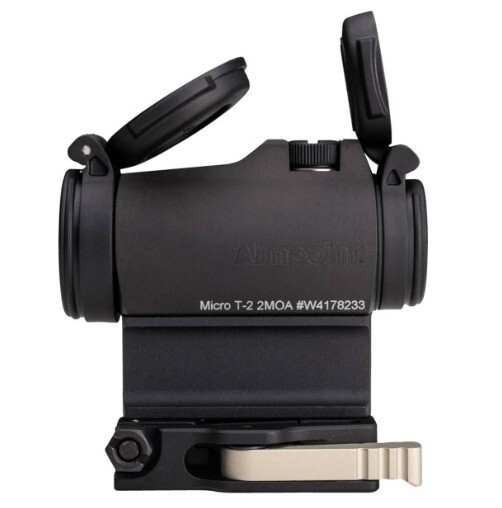
The Aimpoint Micro T-2 is a top-tier micro dot. On an AK platform, where simplicity and toughness are valued, the T-2 and it’s built for hard use. Its battery life is measured in years, not range trips from a single CR2032 means you can leave it on for years of normal use without worrying about dead batteries when you need your rifle most.
What separates the T-2 from budget options is its ability to maintain zero through thousands of rounds of punishing AK recoil. The 2 MOA dot strikes a perfect balance between precision at distance and speed up close. With proper mounting on an AK side rail, the T-2 allows for incredibly fast target acquisition with both eyes open. It transforms the AK into a lightning-quick defensive tool.
The T-2's compact size and lightweight design (just 3 ounces without mount) means it doesn't add significant bulk or throw off the balance of your AK. Multiple mounting options allow for proper height alignment with your particular AK setup. The clear glass has minimal tint, and the dot remains crisp across all 12 brightness settings, including 4 that are night-vision compatible for those running advanced setups.
Price: approx $750–$900 new retail
Specs
- Dot size: 2 MOA
- Battery life: up to 50,000 hours
- Battery: CR2032
- Weight: 3 oz (without mount)
- Objective lens: 18mm
- Waterproofing: Submersible to 80 feet
Features
- 12 brightness settings (8 daylight, 4 night vision)
- Front and rear flip-up lens covers included
- Fully sealed, fogproof housing
- Compatible with all generations of night vision devices
Pros
- Extraordinary battery life
- Extremely durable construction
- Crystal clear glass with minimal tint
- Maintains zero through thousands of rounds
Cons
- Very expensive for a non-magnified optic
- No built-in solar backup
- Requires separate mount purchase
- Limited reticle options (dot only)
5. Holosun HS510C
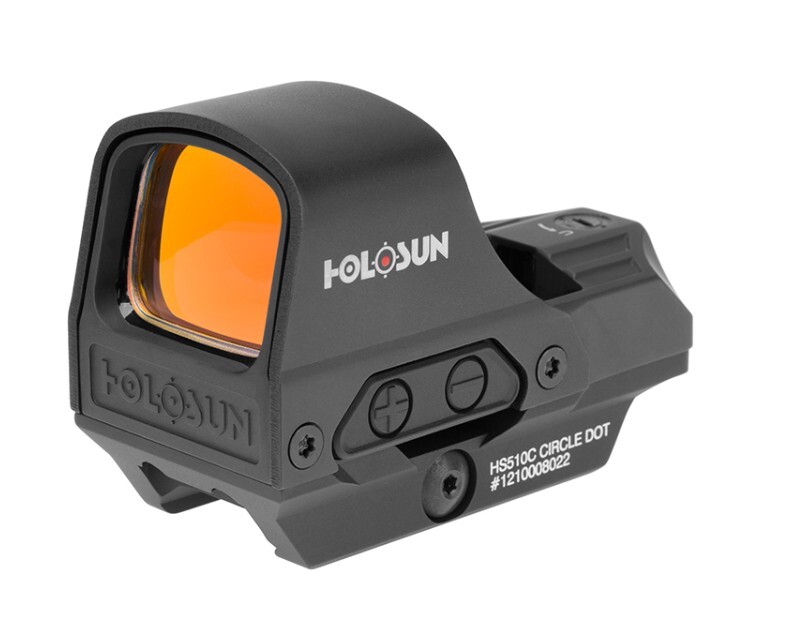
The Holosun HS510C packs a strong set of features for the price. That’s why it fits so well on many AK builds. The multi-reticle system gives you three options. A 2 MOA dot. A 65 MOA circle. Or both together. It’s like choosing the right shoes for the job. You do not wear flip flops to run. The large rectangular window also helps. It gives you a wide sight picture so you can grab targets fast.
It can run off solar assist in bright conditions and it conserves battery when the rifle sits, so you’re less likely to find it dead. It powers down when the rifle sits still. It wakes up fast when you move. That pushes the 50,000-hour battery life even further. For a home defense AK, that means fewer surprises and less fuss.
The titanium-hooded housing protects the LED emitter while keeping weight down. It strikes a balance between durability and heft. When mounted on an RS Regulate or similar quality AK mount, the HS510C With a good mount, it typically stays put through normal AK use. The quick-detach mount allows for easy removal and replacement while returning to zero, a handy feature for transport or storage of your AK.
Price: approx $290–$340 new retail (commonly $309.99)
Specs
- Reticle: 2 MOA dot + 65 MOA circle (selectable)
- Battery life: up to 50,000 hours
- Battery type: CR2032
- Housing material: Aluminum with titanium hood
- Weight: 7.6 oz
- Window size: 0.91" x 1.26"
Features
- Multiple reticle options selectable with a button press
- Solar Failsafe backup power system
- Shake Awake motion sensor technology
- QD mount for easy attachment/detachment
- IP67 waterproof rating
Pros
- Excellent battery life with solar backup
- Multiple reticle options for different situations
- Large, clear sight window
- Good value for the feature set
Cons
- Open emitter design can collect debris in harsh environments
- Slightly larger and heavier than micro dots
- Some users report a slight blue tint to the glass
- Button presses can be heard in silent environments
6. Holosun HS512C
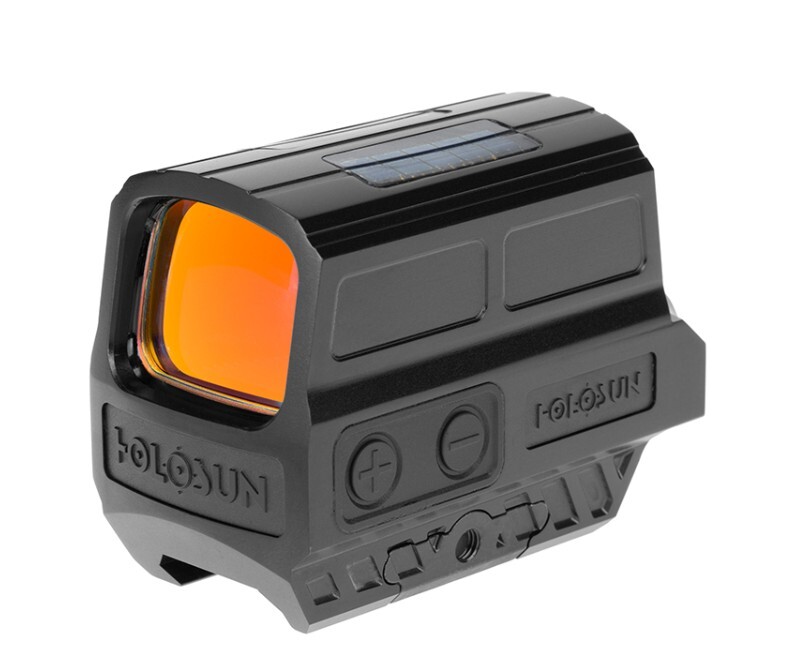
The Holosun HS512C takes the 510C idea and keeps the emitter protected, which is helpful if you shoot in rain, snow, or dusty conditions. It encloses the emitter in a housing. That helps keep dust and rain from messing with the dot. Snow and debris also have a harder time getting in the way. That matters if you shoot outside in bad weather. It keeps the same multi-reticle system as the 510C. You can run a 2 MOA dot. You can run a 65 MOA circle. Or you can run both.
Solar Failsafe technology also shows up here. It uses ambient light when it can. That saves battery power. Shake Awake also stays on the menu. It shuts the optic down after idle time. Then it turns back on when it senses movement. Put together, you get that 50,000-hour battery life. That’s a big plus for an AK that needs to be ready without warning.
The 512C uses a squared-off tube design and a 23mm objective lens. That gives you a good mix of field of view and compact size. With a proper AK side rail mount, the sight picture feels clean and roomy. Users report it holds zero through hundreds of rounds of 7.62×39. The recoil does not throw it off. The quick-detach mount also makes removal simple. You can pop it off and put it back on with less worry about losing zero.
Price: approx $280–$340 new retail (commonly $299.99)
Specs
- Reticle: 2 MOA dot + 65 MOA circle (selectable)
- Battery life: up to 50,000 hours
- Battery type: CR2032
- Housing style: enclosed
- Weight: 8.1 oz
- Objective lens: 23.11mm
Features
- Enclosed emitter design for all-weather reliability
- Multiple reticle options (dot, circle, or both)
- Solar Failsafe backup power
- Shake Awake motion activation
- 12 brightness settings (10 daylight, 2 NV)
Pros
- Protected emitter design for harsh environments
- Excellent battery life with solar backup
- Multiple reticle options for versatility
- Solid construction with good waterproofing
Cons
- Heavier than micro red dots
- Slightly bulkier than open reflex designs
- AR-height mount may require adjustment for some AK setups
- Not compatible with magnifiers designed for tube-style red dots
7. Trijicon RMR Type 2 (example: RM06 3.25 MOA)
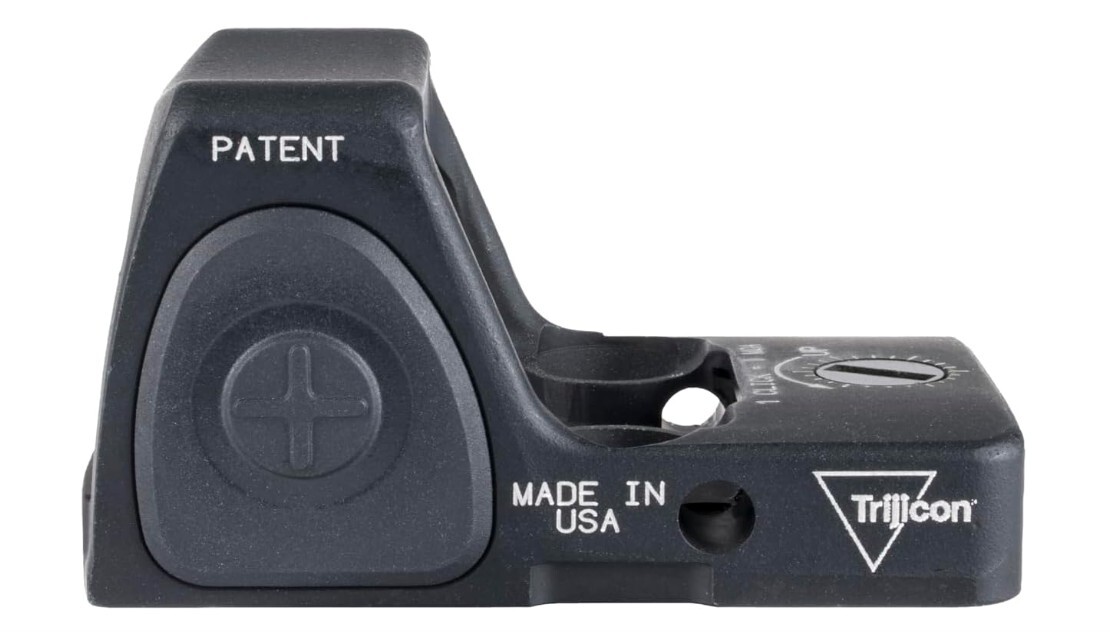
The Trijicon RMR (Ruggedized Miniature Reflex) Type 2 is a top pick for a compact and tough red dot sight. On an AK, you can run it as your main optic on a light setup. Or you can use it as an offset backup next to a magnified optic. Its forged aluminum housing is famous for taking hard recoil and rough handling. It keeps going.
And the Type 2 models fix the battery contact problems seen in older versions. That means your dot stays on when you need it. The RM06 uses a 3.25 MOA dot. It feels fast up close. It also stays tight enough for careful shots farther out. The dot looks sharp in daylight. You also get brightness settings so you can match the light around you. If your AK has a defensive role, the RMR’s small size and tough build fit that job well.
Also, the RMR can sit very low to the bore on the right mount. That matters on an AK. You can co-witness with iron sights. Or you can set it at a height that feels natural and quick. The footprint stays small. So your rifle stays light and handy. Battery life is not the longest in this class. But it still lasts years at medium brightness.
Price: approx $430–$550
Specs
- Dot size (common model): 3.25 MOA
- Battery: CR2032
- Battery life: 4 years at setting 4 of 8
- Weight: 1.2 oz
- Dimensions: 1.8" x 1.1" x 1"
- Window size: 22mm x 16mm
Features
- Forged aluminum housing
- LED illuminated reticle with adjustable brightness
- Waterproof to 66 feet
- Auto-brightness mode or manual adjustment
- Compatible with night vision at lower settings
Pros
- Incredibly durable construction
- Very compact and lightweight
- Can be mounted extremely low
- Proven track record with military and law enforcement
Cons
- Smaller window than larger red dots
- Higher price for its size
- Battery must be changed from the bottom (requires unmounting)
- Not compatible with all mounting systems without adapters
8. Trijicon ACOG TA02 4x32 (LED)
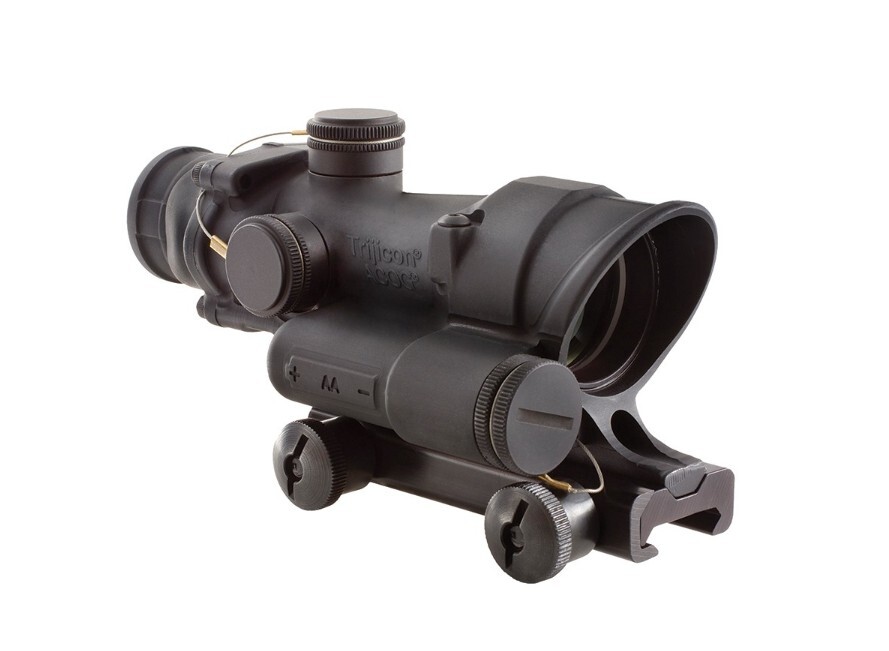
The Trijicon ACOG (Advanced Combat Optical Gunsight) TA02 is a newer take on a design that has been a long-running design that’s still relevant today. The big change is the light source. The TA02 uses battery powered LED illumination. So you control reticle brightness. That makes the setup simple when light changes fast. This optic is fixed 4x. That level of zoom fits an AK well. You get help from a distance. You still keep enough awareness to track what is going on around you.
The ACOG is known for being tough. That matches the AK’s rough and ready style. The forged aluminum housing can take abuse. The fixed power design also helps. Fewer moving parts means less that can go wrong. The glass looks clear and bright. You get a sharp sight picture. The BDC (Bullet Drop Compensator) reticle is set for 7.62x39. So you can use holdovers at different ranges without doing math in your head.
One practical advantage is the wide field of view for a fixed 4x optic – significantly wider than many competitors at similar magnification. This gives AK users excellent situational awareness despite the fixed magnification. The primary trade-off is the relatively short 1.5-inch eye relief, which requires consistent cheek weld and proper mounting height. When properly set up, the TA02 transforms an AK into a highly capable medium-range rifle.
Price: approx $1,250–$1,600 new retail
Specs
- Magnification: 4x
- Objective: 32mm
- Battery: AA
- Eye relief: 1.5 inches
- Field of view: 36.8 feet at 100 yards
- Weight: 18.1 oz with mount
Features
- LED illuminated reticle with adjustable brightness
- BDC reticle calibrated for 7.62x39
- Includes TA51 mount
- Forged 7075-T6 aluminum housing
- Waterproof to 66 feet
Pros
- Exceptional durability
- Battery-powered LED provides brightness control
- Excellent glass clarity
- Wide field of view for a fixed 4x scope
Cons
- Short eye relief requires consistent cheek weld
- Fixed magnification limits versatility
- Heavy compared to red dots
- Expensive
9. Primary Arms SLx 3x MicroPrism
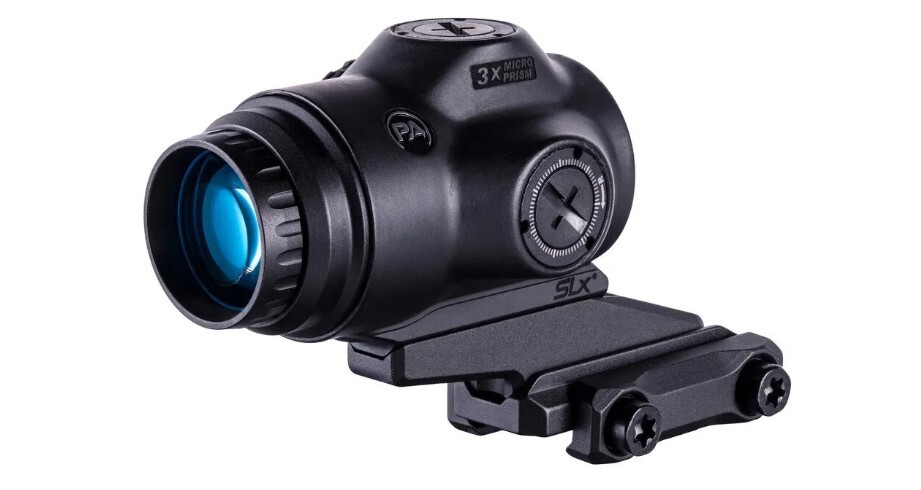
The Primary Arms SLx 3x MicroPrism sits nicely between a red dot and an LPVO At just 8 ounces, it's significantly lighter than traditional prism scopes or LPVOs. It makes it a practical option for AK platforms where weight matters. The fixed 3x magnification provides enough zoom to identify and engage targets at medium ranges without sacrificing too much situational awareness.
What truly sets the MicroPrism apart is its etched reticle. Unlike projected red dots that can appear blurry to users with astigmatism, the etched reticle remains crisp regardless of eye issues. The ACSS reticle system provides bullet drop compensation, range estimation, and wind holds in an intuitive format calibrated for 7.62x39. Even if the illumination fails, the black etched reticle remains visible against most backgrounds.
The MicroPrism features a generous 3-inch eye relief. For this reason it makes it more forgiving than many fixed-power prism scopes. This is particularly valuable on AK platforms, which often have non-standard stock dimensions. The included mount provides multiple height options to achieve proper alignment with various AK setups. Users report that the optic holds zero well through hundreds of rounds of 7.62x39. It also handles the AK's recoil without any issue.
Price: approx $250–$350
Specs
- Magnification: 3x
- Objective diameter: 17mm
- Eye relief: 3 inches
- Field of view: 31 feet at 100 yards
- Weight: 8 oz with mount
- Length: 2.9 inches
Features
- Etched ACSS reticle (multiple options available)
- Red or green illumination with 12 brightness settings
- Multiple mount height options included
- Compact footprint compared to traditional prism scopes
- Nitrogen purged for fogproof performance
Pros
- Etched reticle works without batteries and helps with astigmatism
- Lighter and more compact than many prism scopes
- Good eye relief for a prism optic
- Excellent value for the feature set
Cons
- Fixed magnification limits versatility
- Not as fast as a true 1x red dot at close range
- Battery life shorter than dedicated red dots
- Some users report tight eye box
Optic Type Guide
Red Dot vs Prism vs LPVO vs Mid-Range Scope
Red Dots give you unlimited eye relief. You keep both eyes open. You also get fast target pickup.These are the easiest choice for a defensive AK or a ‘keep it simple’ range setup. They shine inside 100 yards when speed matters most.
Prism Scopes give fixed magnification, often from 1x to 5x. They use etched reticles. So the reticle still works without a battery. These can help if you have astigmatism. Many people see a starburst with projected dots. An etched reticle often looks cleaner.
LPVOs (Low Power Variable Optics) give you ranges like 1-4x, 1-6x, or 1-8x. You can stay quick up close. You can also zoom in for longer shots. It’s the ‘one optic, many distances’ option, as long as you accept the weight.
Mid-Range Scopes start around 2x or 2.5x. They can reach 10x or more. Choose these when your AK is more of a hunting rifle or a designated marksman rifle.
Reticles and Dot Sizes, In Plain Terms
Red dot size changes how the optic feels. A smaller dot, like 1-2 MOA, helps with careful shots far away. But it can be harder to pick up fast. A larger dot, like 4-6 MOA, pops into view quicker. It also covers more of the target at distance.
Prism scopes use etched reticles. The reticle sits on the glass. So it stays there even with no battery. It can also look sharper for people with astigmatism.
LPVO reticles come in two types. First Focal Plane (FFP) reticles change size as you zoom. That keeps holdovers true across magnification. Second Focal Plane (SFP) reticles stay the same size. That makes them easier to see at low power. But holdovers may need adjustment at different zoom levels.
AK-Specific Setup Guide
Mounting Basics That Change the Whole Experience
Side rail mounts offer the most solid attachment point for optics on AKs. RS Regulate and Midwest Industries make quality options that return to zero reliably. Dust-cover rails can look slick, but many setups don’t stay as consistent once you start shooting a lot.
Height matters. Too high and you’re floating your head. Too low and you’re fighting the sight picture. Most AKs work best with lower 1/3 co-witness height for red dots or appropriate height rings for magnified optics.
Eye relief planning is critical for prisms and LPVOs. AK stocks often position your eye differently than AR platforms, so optics with generous eye relief (3+ inches) work better. Always test mounting position before permanent installation.
The fewer stacked parts you add (risers on risers on risers), the fewer problems you chase later.
Balance and Weight Notes
AKs already weigh 7-8 pounds unloaded. Adding a heavy optic like the 21.5-ounce Vortex Razor significantly impacts handling. Front-heavy setups tire you more quickly during extended shooting sessions.
Red dots and compact prisms add minimal weight and maintain the rifle's natural balance. LPVOs shift weight toward the rear, potentially improving balance on front-heavy AKs. Consider a lighter stock if adding a heavy optic.
The mounting system itself adds weight too - factor in both optic and mount when planning. Quality mounts are worth their weight, as cheap mounts lead to zero shifts regardless of optic quality.
Zeroing Notes
Zero your optic at the distance you most commonly shoot. For defensive AKs, 50-100 yards makes sense. For hunting setups, consider 100-200 yards depending on your typical engagement distance.
Confirm your zero at multiple distances to understand your holds. The 7.62x39 drops significantly beyond 200 yards, so knowing your trajectory matters if you shoot at varying distances.
Always re-verify zero after changing ammunition types. The ballistic difference between cheap steel case and quality brass ammunition can change your point of impact.
Common Mistakes to Avoid
- Too High a Mount creates a poor cheek weld and slower target acquisition. Proper height aligns your eye naturally with the optic without craning your neck.
- Chasing Maximum Magnification often adds unnecessary weight and complexity. The 7.62x39 cartridge is most effective inside 300 yards - a 1-6x or 3x fixed optic covers this range perfectly.
- Ignoring Eye Relief leads to frustration and inconsistent shooting. Magnified optics need proper positioning relative to your eye to work correctly.
- Buying Overlap Instead of Roles wastes money. Don't buy three different 1-6x scopes; instead, get optics that serve different purposes (like a red dot and an LPVO).
- Cheap mounts create expensive problems. Even great optics look bad when the mount shifts. A $1,000 scope on a $30 mount will never hold zero on an AK's recoil cycle.
Conclusion
The best optic for your AK depends on how you use it. For home defense or matches, the Aimpoint T-2 or Holosun 510C give you speed and a simple setup. For one optic that can cover many jobs, the Vortex Razor HD Gen II-E or Trijicon AccuPoint 1-6x is hard to beat.
If you have astigmatism, look at the Primary Arms MicroPrism or Trijicon ACOG. Etched reticles can look cleaner. If you want to stretch your AK farther out, the Vortex Viper PST 2-10x makes that easier.
Also, your mount matters as much as the optic on an AK. A weak mount can ruin a good setup fast. Use a solid mount. Set your eye relief right. Pick the optic that matches what you do at the range. Not what a comment section says.
Choosing the right optic helps unlock the full potential of the AK platform — but the rifle you mount it on matters just as much. If you’re ready to take the next step and expand your AK lineup, read Best AK-47 Rifles Review and Buying Guide to see which models deserve a spot in your collection.

HORNADY BLACK 7.62X39 123GR SST
$29.31
at Pro Armory
Prices accurate at time of writing
Frequently Asked Questions (FAQs)
What optic type works best for AK home defense?
Red dots like the Aimpoint T-2 or Holosun 510C offer the fastest target acquisition with both eyes open - ideal for defensive use inside typical home distances.
Are prism scopes good if red dots look blurry to me?
Yes. Prism optics use etched reticles, which often appear cleaner if dots look distorted to you.
Is an LPVO worth the weight on an AK?
If you regularly shoot beyond 100 yards but still need close-range capability, yes. For pure close-quarters use, a red dot provides similar performance with less weight.
When does an offset dot make sense on an AK?
When your primary optic is a higher-magnification scope (like the 2-10x Viper PST) and you need a fast option for close targets without changing magnification.
What magnification is enough for most AK shooting?
Most AK range time is inside typical carbine distances, where modest magnification is enough. Higher magnification adds weight without significant practical benefit for 7.62x39 ballistics.
How do I keep my AK optics setup lightweight?
Choose a red dot or compact prism scope instead of an LPVO, use aluminum mounts instead of steel when possible, and avoid unnecessary accessories like magnifiers unless truly needed.
About the Author
This article was written by the ProArmory writing team based on current research. It also includes studies from reputable sources like the Journal of Military Science, Firearms News, and the National Shooting Sports Foundation. We also referenced trusted information from official defense publications and respected firearm authorities such as the ATF, NRA, and manufacturer manuals.
Disclaimer: This review is for education only. Laws vary by state and city and can change. Follow safe handling at all times. Read your owner's manual. Verify local rules before you buy or train.

Best Ammo Deals, Training, & Accessories
Subscribe to ProArmory sales and deals email.