 Pro Armory Editorial Team
Quick Answer
The best MRE brands and kits balance taste, calories, shelf life, and prep effort. For bug-out bags, pick lighter meals that need only hot water. For home emergencies, pick higher-calorie kits with longer storage life. For cold weather or no-stove plans, pick options with heaters or meals that still taste fine at room temperature. Always check date codes, storage history, and seller quality before you buy.
Key Takeaways
- Taste matters more when stress hits
- Calories per pack decide how long food lasts
- Heaters help when you lack a stove
- Storage heat ruins shelf life fast
- Kids eat familiar flavors, not surprises
- Buy from sellers with clear dates
A power cut, a storm, or a road closure can turn dinner into a problem. In those moments, fast food that stores well feels like a small win. The hard part is choosing MREs you will actually eat. You do not want to buy them, stash them, and regret them later. This guide ranks ten well known options and explains who they fit best. You will see classic military style packs and lighter backpacking meals. And you will get clear picks for emergency storage.
What counts as an MRE
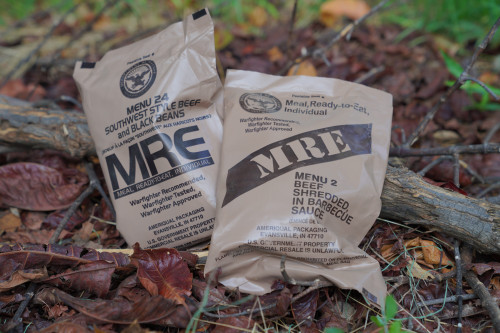
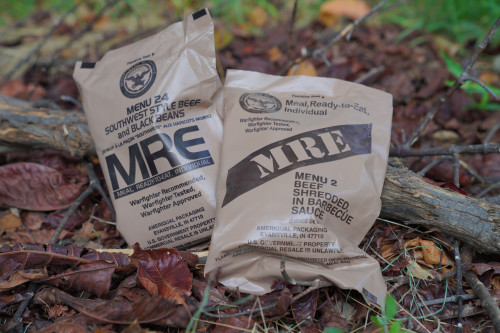
An MRE (Meal Ready-to-Eat) is a self contained and shelf stable meal made for field use when normal cooking is not possible. These meals started in the military. Now they are also common with preppers, campers, and outdoor fans.
The term “MRE” now covers several formats in the civilian market. Traditional military style MREs include an entree plus sides and dessert. Some also include a flameless heater in a waterproof package. Entree only packs give you the main dish. That saves space and money. Humanitarian Daily Rations (HDRs) come as one pack meant to cover a full day of food. Backpacking style meals need hot water. They pack down smaller and fit well in hiking packs and bug out bags.
Who this guide is for
This guide helps different people find the right emergency food. Families who store supplies at home need meals with good taste and decent nutrition. Shelf life matters too. Storms and outages do not send a scheduled invite.
Campers and hikers often want lighter meals that still taste good. Pack space matters. Bug out bags and car kit planners need food that holds up through heat and cold swings. They also need packs that do not take over the bag. Some people need meals that work with no cooking gear. Others can use hot water if it cuts weight. In the end, you want food you will eat when stress runs high.
How we tested and rated these MRE brands and kits
The scoring system
To rank MREs, we looked past bright labels and focused on use. Taste and texture came first. Food that sits untouched helps nobody. We also tracked calories and protein per pack. You need fuel for long and active days.
Health and ingredient quality mattered too. We checked labels for simple ingredients and extra additives. We also noted diet needs when possible. For convenience, we looked at prep time and needed gear. We also noted the mess and cleanup. For value, we compared cost per usable calorie. Sticker price alone can mislead.
Kid-friendliness and menu variety help prevent food fatigue during extended use. Finally, storage clarity – including visible date codes, packaging quality, and shelf-life claims – separates the good from the questionable.
What we did not assume
We avoided common MRE myths in our research. "Military" doesn't automatically mean fresher – many surplus military MREs have unknown storage histories. Claims of "25-year shelf life" rarely apply to actual taste quality, just technical edibility. And one kit doesn't fit every scenario – what works great for home storage might be terrible for a mobile kit.
Quick comparison table
| Product | Best For | Heat Needed | Heater Included | Strength | Watch Out For |
|---|---|---|---|---|---|
| Mountain House Adventure Meals 3-Day | Bug-out bags, camping | Yes (hot water) | No | Great taste and lightweight packaging | Requires water and heat source |
| ReadyWise Favorites Kit | Variety for home storage | Yes (hot water) | No | Wide menu selection | Some meals taste mild |
| Augason Farms 72-Hour Kit | Short-term emergencies | Usually yes | No | High calorie count | Requires cookware |
| Legacy Premium Kits | Family storage | Often yes | No | Pantry-style meals | Menu fatigue over time |
| Good To-Go Meals | Backpacking | Yes (hot water) | No | Cleaner ingredient labels | Longer cook times |
| Ameriqual A-Pack Case | Classic MRE experience | No (optional heating) | Varies by case | Complete meal format | Bulky for compact bags |
| SOPAKCO Sure-Pak Reduced Sodium | Lower sodium preference | No (optional heating) | Often yes | Controlled sodium content | Taste varies by menu |
| XMRE BlueLine | Civilian hot-meal MRE kit | No (heater uses small amount of water) | Varies by case (confirm FRH included) | Common civilian MRE format | Heater and menu vary by listing |
| Military Surplus MREs | Authentic military format | No (optional heating) | Yes | Complete kits | Unknown storage history |
| Captain Dave's MRE Entrees | Entree-only bulk stock | No (optional heating) | No | Simple bulk entrees | Lower calories per pouch |
The 10 best MRE brands and kits
1. Ameriqual APack MRE Case
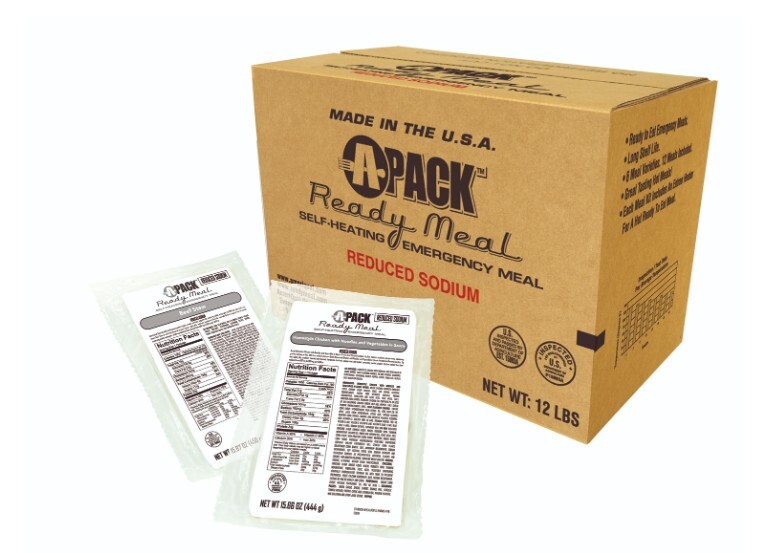
These are full military style meals. Each pack gives you an entree plus sides and extra items. They work well for emergencies because you can eat them cold. You do not need any prep. You can heat them if you want, but you do not have to. That helps when you cannot cook. Ameriqual makes these meals and it is one of the largest military MRE providers.
They fit well for storms and power cuts. They also work for short term food storage. Each case often comes with around six entree flavors. That gives you variety without constant repeats. The menu mix is usually random. So you get variety, but you do not control each meal choice. Many people say the taste ranges from fine to very good. It depends on the menu item.
Price: $90–$140 per case of 12, depending on menu year, whether FRHs are included, and retailer
Features
- Case of 12 complete meals
- Calories vary by menu, but complete MRE-style meals are commonly around 1,200–1,300 calories (check the menu panel for the exact case).
- Shelf-stable, no refrigeration needed
- Heater inclusion depends on the exact case listing
Pros
- No stove needed
- Simple for planning, one pack equals one meal
- Good all-in-one format for emergency bins
Cons
- Bulkier than entree-only packs
- Menu randomness can be annoying
- Sodium can be high depending on the menu
2. Mountain House 3-Day Emergency Food Supply
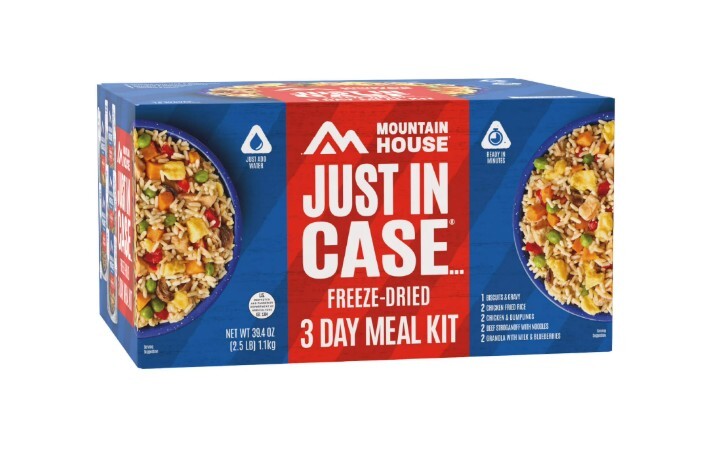
These freeze dried meals are not classic military MREs. But they still work well for emergency use. Each pouch needs hot water. Once you add it, the meal comes out good and filling. These work best for camping and storage when you can boil water. Mountain House meals also earn steady praise for flavor and texture.
This kit weighs less than full MRE cases. That makes it easier for backpacking and bug out plans. Taste is one reason people pick this brand. A warm meal can lift your mood on a hard day. Many freeze-dried kits in this category are marketed for decades of shelf life when stored properly; always verify the specific SKU’s shelf-life claim and storage requirements. That makes this a strong long term buy. Many people say these taste much better than classic military style MREs, especially after proper rehydration.
Price: $70 to $105 per kit
Features
- 3-day kit typically planned around 1,800 calories/day (confirm the exact SKU).
- Freeze-dried pouches: add hot water, wait, eat.
- Compact stackable kit format.
- Shelf-life claims are long when stored cool and dry (verify on the product label/SKU).
Pros
- Lighter than most full MRE cases
- Easy to store and rotate
- Strong option for camping meals
Cons
- Needs water and a heat plan
- Not "open and eat" food
- Calories per pouch can feel low for high-output days unless you add snacks
3. XMRE BlueLine
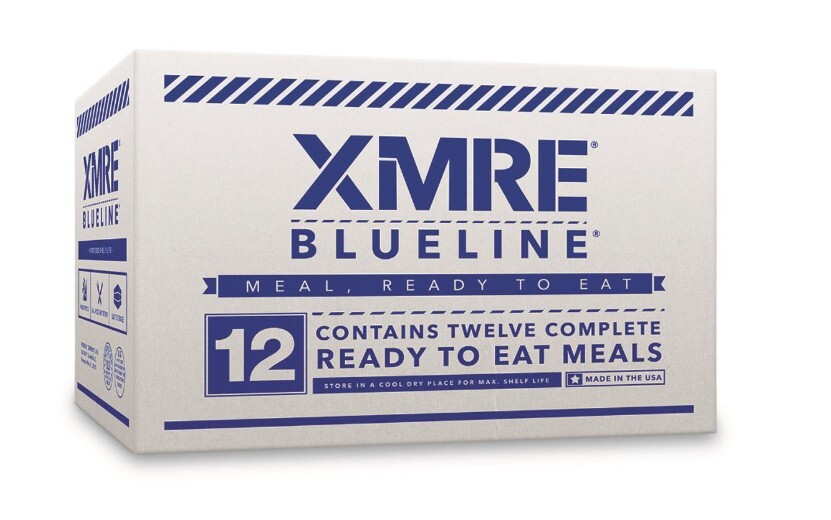
Military-style meals with flameless heaters designed for fast, warm eating without cooking equipment. XMRE meals have earned a reputation for consistent heater performance - they actually get hot and stay hot, unlike some competitor brands with hit-or-miss heating elements. XMRE BlueLine is best treated as a civilian “complete meal” MRE option where FRH heater inclusion depends on the case listing. Confirm the listing if you specifically want heaters included.
They can be useful for bug-out bags and cold-weather kits when you want a sealed, all-in-one meal format and optional hot-food capability.
Menu mix depends on the case build, but XMRE typically includes popular options like chicken, beef, and pasta dishes. The heater bags provide visible steam during the heating process. It gives clear evidence they're working properly. They heat food consistently and quickly compared to some other brands.
Price: About $110–$180 per case depending on case count, inclusion of FRHs, and retailer.
Features
- Flameless ration heater included in FRH case listings
- Shelf-stable, sealed meal components
- Reduced sodium version available
- Case format is easy to count and store
- Calories vary by menu; many complete meals fall around ~1,100–1,300 calories.
Pros
- Heater makes warm meals possible with only a little water
- Easy to plan by case count
- Good grab-and-go emergency format
Cons
- Stock can sell out, so availability can swing
- Heavier than dehydrated camping meals
- Menu variety depends on what is packed
4. Good To-Go Meals
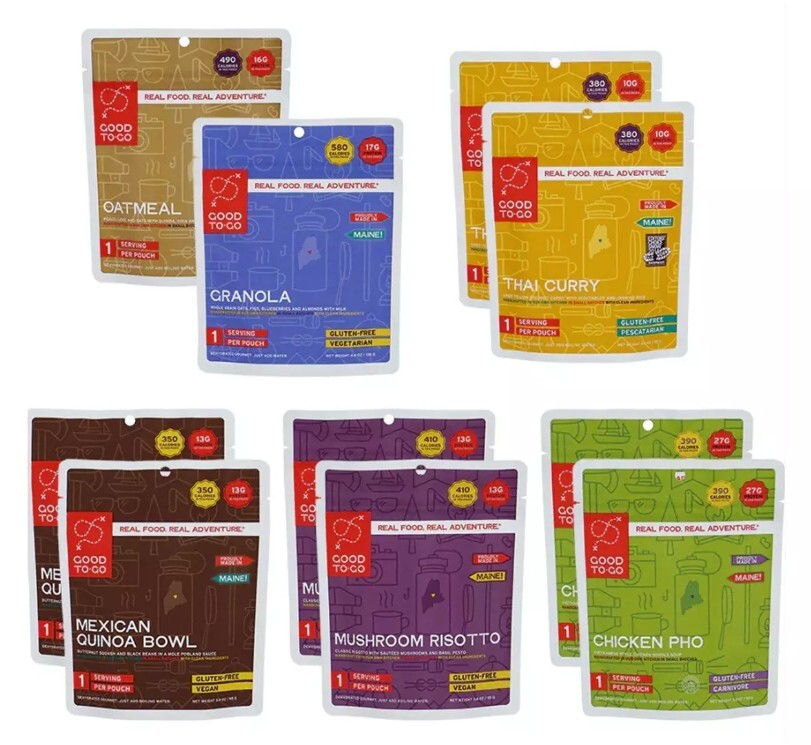
These are backpacking style dehydrated meals. They are not traditional military MREs. The brand puts more focus on ingredient quality and new flavors. You often get options you do not see in standard emergency food. These meals fit camping and hiking well. Weight matters in those cases. They also appeal to people who care about ingredients and dietary needs.
These meals can work in a bug out plan. But you need water and a heat setup. So they fit best as part of a kit, not your only food source. The brand has meals like Thai Curry, Chicken Pho, Mushroom Risotto, and Mexican Quinoa Bowl. Many of the ingredients are all natural. They also avoid artificial additives, which some planners prefer.
Price: $9 to $12 per pouch
Features
- Lightweight pouches
- Needs hot water for proper prep
- Many flavors, easy to mix and match
- Small footprint for packs
Pros
- Very packable
- Easy to store a lot in a small space
- Good camping comfort food when you can boil water
Cons
- Needs water and heat
- Can be lower calorie per pouch than a full MRE meal
- Cook time varies by meal
5. Military Surplus MREs
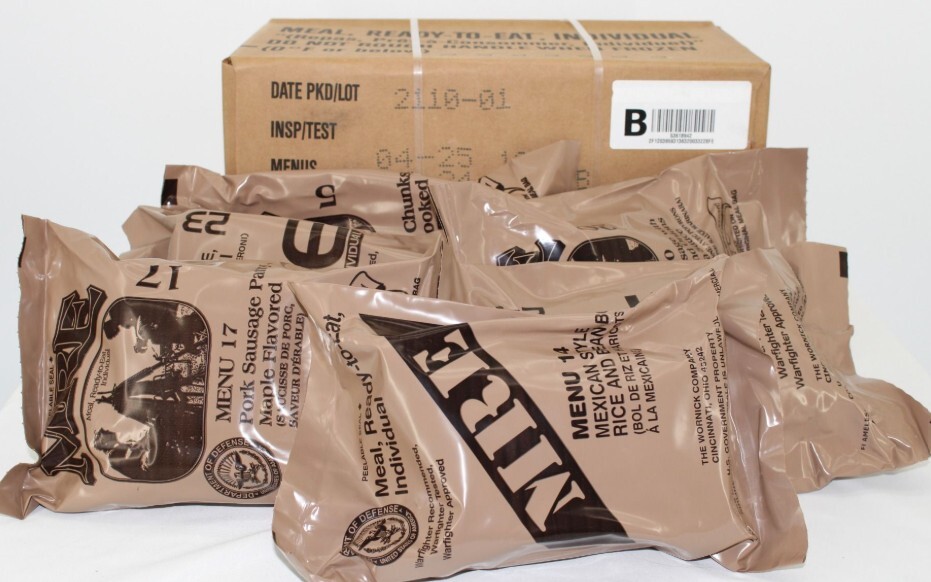
This isn't a single brand but rather surplus inventory sold by various resellers. Military surplus MREs are great for "open and eat" emergency use where heat is optional but not required. They provide the authentic military MRE experience, though quality varies widely based on storage history. The storage conditions of surplus MREs can be unknown, which affects quality and remaining shelf life.
These are best for training exercises and short-term use when you want the classic format without modifications. The classic MRE format includes an entree plus sides and extras like crackers, spreads, and sometimes desserts. Military surplus MREs typically include popular entrees such as chili with beans, beef stew, and pasta dishes, though exact menus depend on what's available from resellers.
Price: $50 to $120 per case of 12, based on year, condition, and seller
Features
- Classic MRE format, entree plus sides and extras
- Heater is common, but not guaranteed unless the listing states it
- Shelf-stable, no refrigeration needed
- Menu mix depends on the case
Pros
- No stove needed
- One pack equals one meal
- Very practical for no-cook situations
Cons
- Not "in production" as surplus, supply is inconsistent
- Storage conditions can be unknown
- Dates can be confusing, inspection date is not the same as a true expiry date
6. Legacy Premium Emergency Food Kits
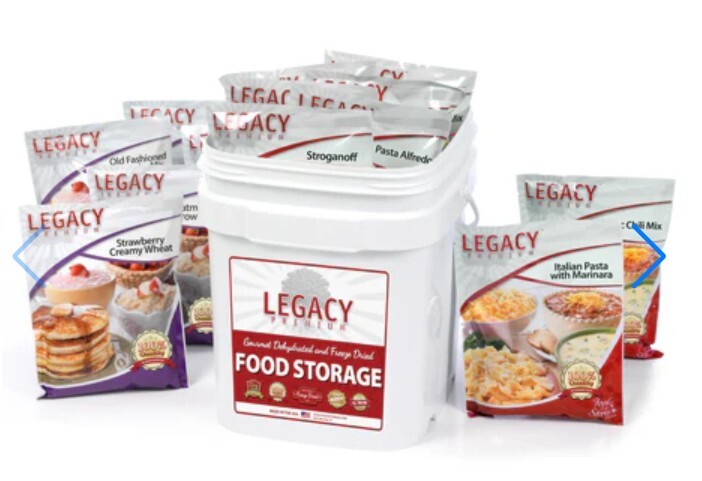
This freeze-dried emergency food kit isn't a military MRE but offers excellent nutrition and shelf life for emergency planning. Legacy Premium focuses on high-quality, healthy ingredients with shorter, more recognizable ingredient lists than many competitors. Their meals are better suited for home storage than a small bug-out bag due to preparation requirements.
The serving-count format helps planning for families since you can easily calculate how long the food will last based on your household size. Their meals require hot water and some prep time, but the taste and nutritional quality are frequently praised. Legacy Premium products are particularly popular with health-conscious preppers who worry about the ingredients in standard MREs.
Price: Varies by kit size and retailer (Legacy kits frequently run in the $100–$200+ range depending on serving count and packaging)
Features
- 32 servings in a 72-hour kit format
- Freeze-dried meal pouches
- Shelf-stable storage focus
- Built for pantry and emergency bins
Pros
- Clear serving counts for planning
- Good for family-style emergency setups
- Easy to stack and store
Cons
- Needs water and heat
- Not ideal for eat-on-the-move use
- Stock status can change by kit
7. Augason Farms 72-Hour Emergency Food Supply Kit
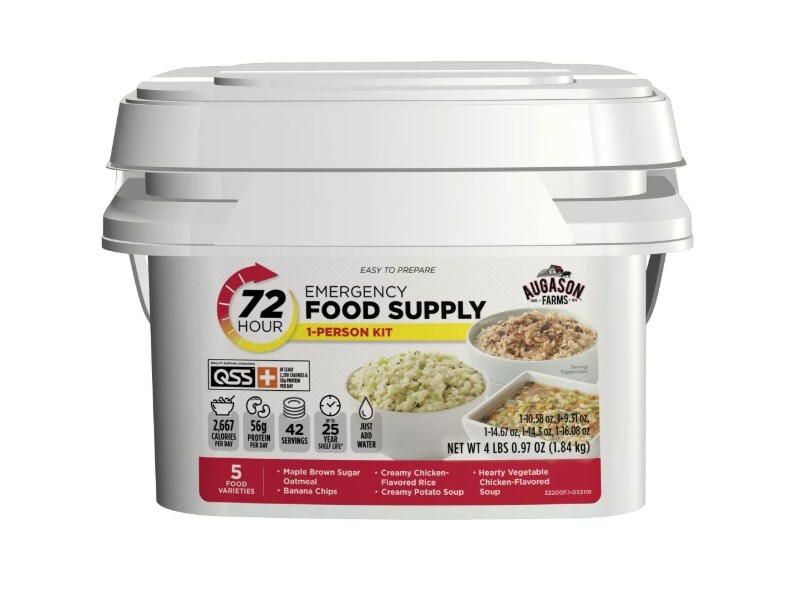
This emergency food kit fits short events where you can still do basic cooking. Augason Farms often delivers good calories-per-dollar, but most individual pouches are not 1,000+ calories. Treat it as a budget 72-hour starter option where you may still want to add snacks/fats (nut butter, trail mix) to hit higher daily calorie targets. Because it requires water and prep, it fits shelter-in-place plans better than ultralight hiking packs.
Augason Farms works best when you can heat water and use simple cookware. It is a strong starter kit for a tight budget. You can build a base supply without a major spend. Taste is often solid across the line. Many testers enjoyed meals like creamy potato soup and creamy chicken flavored rice.
Price: $20–$40 per kit, depending on retailer and promos.
Features
- 72-hour, one-person kit concept
- Shelf-stable meal components
- Easy to store and rotate
- Prep usually needs heat and water
Pros
- Budget-friendly entry point
- Simple to store
- Good for short emergencies
Cons
- Not a classic "open and eat" meal
- Needs water and prep time
- Less suited to ultralight bags
8. SOPAKCO Sure-Pak Reduced Sodium MRE
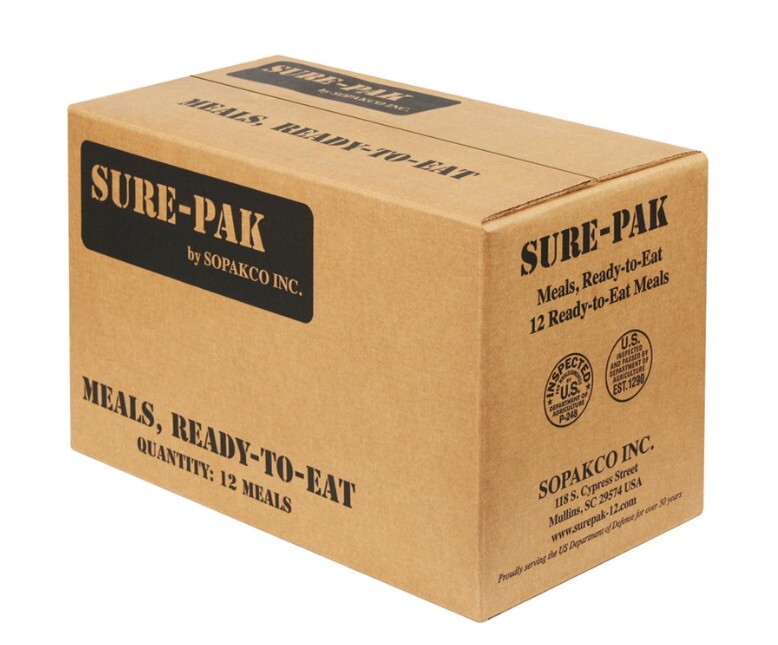
SOPAKCO offers MRE-style meals with a reduced sodium approach for those concerned about salt intake. These meals follow the traditional military MRE format but with formulations designed to lower salt content. They're a good fit for people who want the classic format but prefer less salt for health reasons or personal taste.
These MREs are best for emergency storage and quick-access kits where preparation should be minimal. Heater inclusion depends on the exact case listing - FRH (Flameless Ration Heater) versions include heating elements, others don't. SOPAKCO has been in the MRE business for years, though taste reviews are somewhat mixed, with some menus receiving much better feedback than others.
Price: $100 to $120 per case, based on case size and configuration
Features
- Reduced sodium positioning
- MRE-style meal components
- Shelf-stable, no refrigeration needed
- Case format for storage and rotation
Pros
- Better fit for lower sodium needs
- Easy to store by case
- Works for no-stove situations if heaters are included
Cons
- Do not claim heaters unless the SKU says FRH included
- Taste can vary by menu
- Heavier than dehydrated camping meals
9. ReadyWise Adventure Meals Favorites Kit
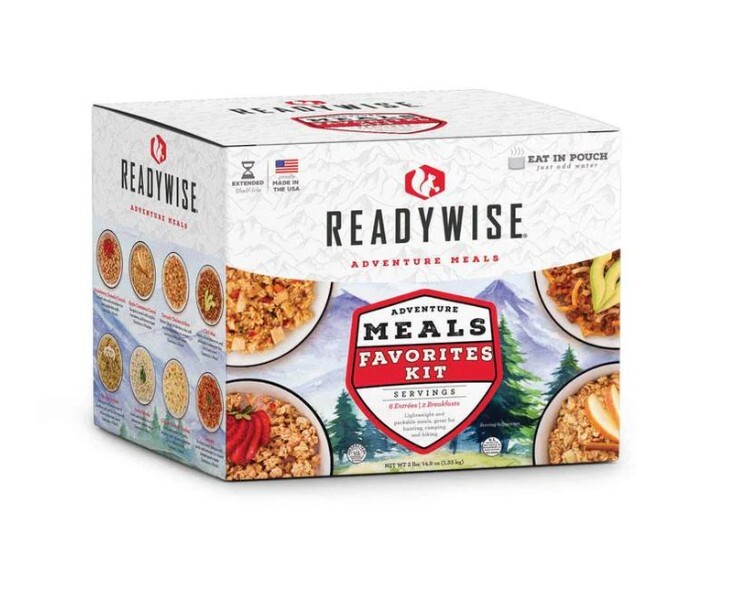
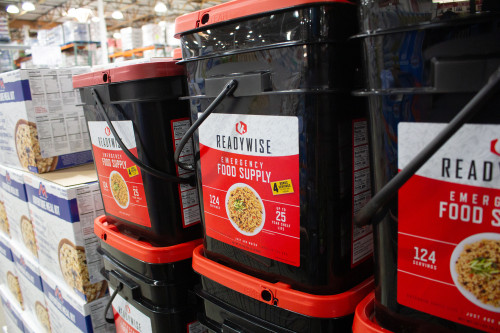
ReadyWise has built a strong reputation in the emergency and camping food market. Their kits focus on meal variety to prevent menu fatigue during extended use. The Favorites Kit is good for home storage and quick camping food when you want options beyond basic survival fare. ReadyWise products have become increasingly popular as interest in emergency preparedness has grown.
These meals work best with a hot water plan, as they're designed to be rehydrated rather than eaten cold. The ReadyWise Favorites Kit is a solid pick if picky eaters need choices - something especially important for families with children. Many ReadyWise emergency kits are marketed with up to a 25-year shelf life when stored properly, but date codes and shelf-life terms vary by SKU and production lot, so verify before buying.
Price: Varies heavily by the exact ReadyWise “Favorites” SKU (bucket vs pouch kit vs multi-day box). Use cost per calorie and confirm serving counts on the product page before you buy.
Features
- Multi-meal variety kit format
- Shelf-stable storage focus
- Prep is usually add hot water
- Meal list depends on the exact kit version
Pros
- Variety helps reduce menu fatigue
- Easy to portion across days
- Simple storage for emergency bins
Cons
- Needs hot water for best prep
- Some meals can taste mild, seasoning helps
- Exact contents vary by SKU, so match the outline to the product page you cite
10. Captain Dave's MRE Entrees
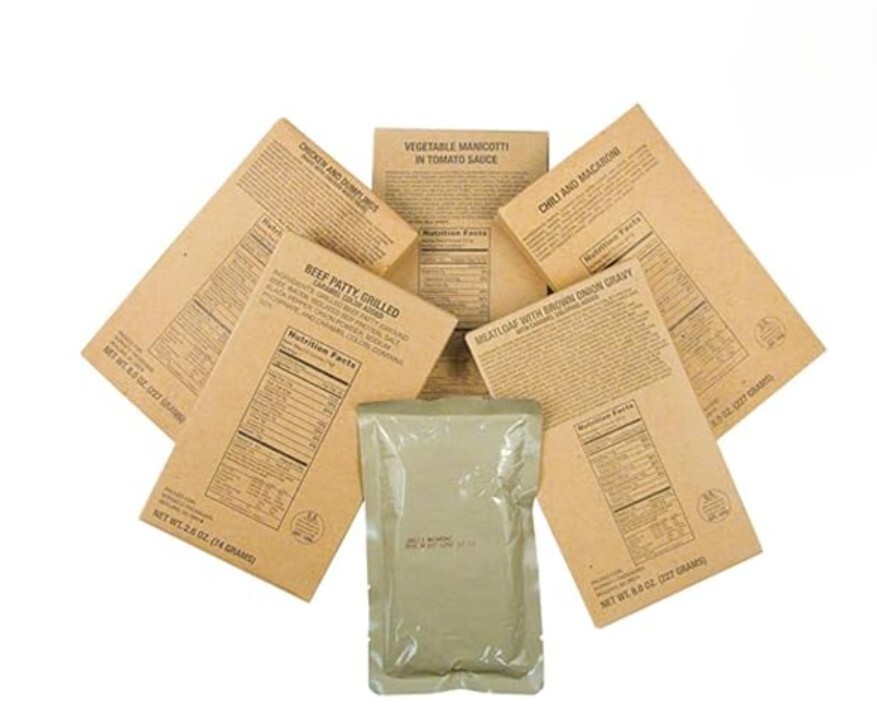
Captain Dave's sells entree only packs instead of full MRE meals with sides. This setup helps you build a custom kit. You can add the snacks and drink mixes you already like. These entree packs also save space. They take up less room than full MRE cases, which helps in backpacks and home bins.
But watch the calories per pouch. They run lower than a full meal, so you need a plan if this is your main food. Research also notes these entrees match the meals found in Sopakco MREs. You just do not get the extra sides and small add ons. That can save money. It also cuts waste if you never use those extras.
Price: Varies widely by seller and lot. Expect roughly $3–$7 per entree pouch depending on menu, date codes, and stock.
Features
- Entrees only
- Shelf-stable and ready to eat
- Menu mix varies by bundle
- No heater unless the listing explicitly includes one
Pros
- Less wasted extras than full MREs
- Easier to pack in bags and bins
- Simple way to stock main dishes in bulk
Cons
- Not a complete meal by itself
- You must add sides to hit daily calories
- Availability depends on the seller and bundle type
Military-style vs civilian MREs
What matters for emergencies
When planning for emergencies, several factors outweigh the military versus civilian label on your food. Storage history is more important than branding - a properly stored civilian MRE will outperform a military MRE that sat in a hot warehouse. Bulk matters significantly in a bag or kit. Military-style MREs include sides and accessories that take up space, which affects how many meals you can carry.
Heater access changes your options dramatically. Military MREs often include flameless heaters, but civilian versions may require separate purchase. If you need hot food without cooking equipment, this factor alone might drive your decision. Research published by the military indicates that MREs have a limited recommended continuous use period of approximately 21 days before users may experience digestive issues and reduced appetite.
Best choice by scenario
For a bug-out bag, lighter meals plus a water plan typically work best. Mountain House and Good To-Go options save weight but need water and heat. A shelter-in-place scenario calls for higher calories, bigger kits, and more variety since you'll be eating the same foods for longer. Legacy Premium and Augason Farms excel here with their family-sized options.
Car kits present special challenges. You need heat-resistant items that can survive temperature swings. Rotate these supplies often, as vehicle interiors can reach temperatures that dramatically reduce shelf life. Studies have found that MRE palatability decreases after exposure to high temperatures, with some components becoming unappealing or inedible.
Shelf life, date codes, and storage rules you should follow
Shelf life basics
Heat shortens MRE quality life dramatically. Shelf-life charts commonly show that at around 120°F, quality can drop in roughly weeks to ~1 month, while cool storage around 60°F can preserve quality for years.Treat vehicle storage as “accelerated aging” and rotate often. Most military-style MREs show inspection dates rather than true expiration dates, which can confuse consumers.
The inspection date is when the military would check the product, not when it becomes unsafe. This date is typically 3-5 years after manufacturing. According to military research, MREs stored at room temperature (around 70°F) generally maintain quality for about 3 years, though they remain safe to eat longer. The freeze-dried civilian alternatives often boast longer shelf lives under proper storage conditions.
How to avoid bad buys
To protect your investment, avoid packs with no clear production information. If you can't find a date code or lot number, the seller may be hiding something. Similarly, avoid sellers with unclear storage history. Reputable dealers will explain where their products came from and how they were stored.
Prefer sealed cases and reputable dealers with consistent stock and clear policies. Random eBay sellers may offer "military surplus" without any verification of storage conditions. The best approach is buying from established emergency food companies or authorized distributors of military MRE manufacturers like Ameriqual or Sopakco.
How to build a 72-hour plan with these kits
Calorie planning
Start by choosing a daily calorie goal that fits your needs. Many active adults need 2,000 calories or more per day. Cold weather and hard work can push needs higher. Next, map meals per person per day. Most military MREs sit near 1,200 calories each. Two per day can make sense for many adults.
Add simple extras like nut butter and energy bars to cover gaps. These foods carry a lot of calories in a small space. They also need little prep. Emergency preparedness experts often suggest planning for at least 72 hours of self sufficiency. Food supports that plan along with water and shelter.
Water planning for hot-water meals
If you pick meals that need hot water, estimate water needs per serving. Many freeze dried meals need 8 to 16 ounces of water. So your water plan and heat plan must match. Keep a compact stove or another safe heat method. Options include a portable butane stove, alcohol burner, or heat tabs made for emergency use.
Also keep a backup option that needs no cooking. That protects you if your stove fails or fuel runs out. Energy bars and ready to eat MRE entrees work well here. Other shelf stable foods can work too. Government emergency management agencies also suggest storing at least one gallon of water per person per day for drinking and food prep.
Final Verdict
For bug out bags, weight and space are key. Mountain House Adventure Meals offer a strong mix of taste and low weight. Prep stays simple. Add hot water and wait. For families at home, Legacy Premium or Augason Farms offer better value and more variety across several days.
If you need no stove options, Ameriqual APack or XMRE BlueLine provide complete meals with no cooking gear. If you have a tight budget, Captain Dave's entree only packs let you build a basic stockpile at lower cost. Add your own sides and grow from there.
Rotate your stock and store it in cool and dry places. Heat can ruin food faster than people expect. Attics and garages can be rough. Car trunks can be worse in summer. With solid storage and clear goals, these meals can serve as good backup in short term emergencies.
A reliable survival food kit gives you a strong foundation, but long-term preparedness requires more than just stored meals. Before finalizing your emergency setup, read 17 Best Survival Gear Essentials to Prepare for Any Situation to ensure you’re fully equipped.

Rothco MOLLE Tactical First Aid Kit (IFAK)
$67.00
at Pro Armory
Prices accurate at time of writing
Frequently Asked Questions (FAQs)
What are the best MRE brands and kits for emergencies?
For bug out bags, Mountain House Adventure Meals offer strong taste and low weight. For home storage, Legacy Premium or Augason Farms can deliver better value and family friendly meals. For no cook use, Ameriqual APack or XMRE BlueLine offer strong heat and eat meals.
Can you live on MREs long term?
MREs are built for short term needs. They are not built for long term balance. Military guidance often limits steady MRE use to 21 days. Studies also point to stomach issues and nutrient gaps with longer use. Some people also lose weight. For long events, mix MREs with other foods.
Are military surplus MREs safe?
Military surplus MREs can be safe if stored in good conditions. But you need to inspect them before you buy and before you eat. Look for solid seals and clear date codes. Stick with reputable sellers. Avoid packs that bulge or show damage. Avoid odd smells or strange textures too. If anything feels off, do not eat it.
Do you need heaters to use MREs?
No, MREs are cooked and safe to eat cold. Heaters help with comfort and taste. That matters more in cold weather. Many service members eat MREs cold because it saves time. Safety does not change. Comfort does.
What is the difference between an MRE and a backpacking meal?
MREs are ready to eat. You open and eat. Backpacking meals need hot water and time. MREs weigh more but they work with no cooking. Backpacking meals weigh less but they need water and heat.
What should I buy if I have kids?
With kids, choose familiar meals. Pasta and breakfast items often work well. Mountain House and ReadyWise often have options kids accept. Add comfort snacks like crackers or fruit snacks to boost acceptance. Test foods ahead of time. It helps you avoid stress surprises later.
About the Author
This article was written by the ProArmory writing team based on current research. We used studies from sources such as the *Journal of Military Science*, *Firearms News*, and the *National Shooting Sports Foundation*. We also used information from defense publications and firearm sources such as the ATF, NRA, and manufacturer manuals.
Disclaimer: This review is for educational purposes only. We do not guarantee shelf life, taste, or nutrition for any product listed. Storage conditions can change quality and safety. Always inspect emergency food before eating it. This matters even more after long storage.
Best Ammo Deals, Training, & Accessories
Subscribe to ProArmory sales and deals email.