 Pro Armory Editorial Team
Quick Answer
If you want milsurp rifles you can still buy and actually shoot, start with the SKS, Lee-Enfield, Mosin-Nagant, and Swiss K31 for real-world availability and range fun. Add the M1 Garand for iconic US history, plus the 1903 Springfield and K98 Mauser for classic bolt-gun heritage that still works for hunting and collecting. Expect prices to vary by condition, matching parts, and originality.
Key Takeaways
- Start with SKS or Mosin-Nagant for the easiest entry into milsurp.
- K31 and Lee-Enfield are top picks for accuracy and shootability.
- M1 Garand is iconic, but costs more and needs the right ammo setup.
- 1903 and K98 shine as hunting-capable classics, especially in sporterized form.
- Condition and originality matter more than the country stamp on the receiver.
- Buy from reputable sellers and check headspace and bore before serious shooting.
A lot of people fall into the same cycle. They price out a new rifle build, add optics, add accessories, then realize the so-called "budget plan" has doubled in cost before the first round is ever fired.
Milsurp rifles hit differently. They're history you can shoulder—real guns that served in real conflicts, now sitting in racks at gun shops waiting for a new home. They're also one of the few ways to add something genuinely interesting to a safe without draining your wallet in one swipe. Not always the cheapest option anymore, but still one of the most rewarding corners of the firearm market. So let's get into what's worth buying right now.
What Counts as a "Military Surplus Rifle"
In plain terms, a military surplus rifle is a firearm that was made for—or issued to—a military force and has since been sold off to the civilian market. The "surplus" label means the military no longer needs it. That's where the opportunity comes in for civilian buyers.
But here's the reality: supply is not infinite. These guns were made in fixed quantities, and the pool gets smaller every year. Batches come and go. A crate of Mosins shows up at an importer, and then the next batch tells a different story. Timing matters more than most buyers expect going in.
There's also a clear split between buying as a collector and buying as a shooter. Matching serial numbers, original configuration, and bore condition all push prices up fast. A rifle with mismatched parts is usually fine to shoot but loses collector appeal quickly. Know which lane you're in before you open your wallet. And no matter where you buy from—always inspect first. Check headspace, bore condition, firing pin, recoil spring, and overall lockup. A small gunsmith visit before your first range trip is money very well spent.
How We Picked These 7 Rifles
This list is built on what actually shows up on the market with regularity and is still shootable for a wide range of buyers. We balanced semi-auto options with bolt guns and factored in rifles that can serve double duty—range use and practical hunting—rather than just wall hangers. Ultra-rare picks got left off entirely. If you'd need three years of searching to find one, it doesn't belong on a "buy right now" list. These seven are worth your time and money today.
Quick Comparison Table
| Rifle | Why It's in the Top 7 | Best For | Main Trade-Off |
|---|---|---|---|
| SKS | Affordable semi-auto with solid historical reputation | Range use, utility shooting, first milsurp rifle | Fixed magazine and battle-rifle level accuracy |
| M1 Garand | Iconic U.S. service rifle with major collector appeal | Collecting and historic shooting | Higher price, ammo considerations, and en-bloc clip system |
| Swiss K31 | Renowned Swiss machining and exceptional accuracy | Precision range shooting and unique straight-pull action | Ammo cost and availability can be limiting |
| Lee-Enfield No.1 / No.4 | Fast bolt-action design with generous 10-round capacity | Practical range shooting and military history | .303 British ammo cost and rifle condition can vary |
| Mosin-Nagant | Common surplus rifle with rugged reliability and deep history | Budget entry into milsurp bolt-action rifles | Stiff bolt operation and rough external finish |
| K98 Mauser | Legendary Mauser action with huge historical significance | Collecting and sporter-style hunting builds | Original wartime rifles can be expensive |
| 1903 Springfield | Classic American bolt rifle with strong hunting legacy | Hunting and heirloom-style ownership | Authentic examples often command premium prices |
Best Military Surplus Rifles You Can Buy Right Now
Swiss K31 (Schmidt-Rubin Karabiner 31)
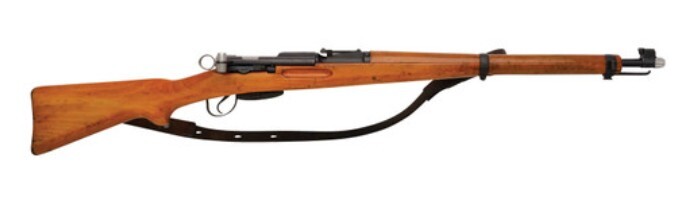
The K31 is the kind of rifle that makes people stop and ask questions at the range. It came out of Switzerland—a country known for doing things right—and the machining quality shows in every part of this gun. The straight-pull bolt action is unlike anything most people have handled on a surplus rifle before. It doesn't feel like a war-worn battle tool. It feels like something built by people who genuinely cared about the finished product, and that attention to detail carries through to how it shoots.
Accuracy is the headline with the K31. It fires the 7.5x55 Swiss round through a long, quality barrel, and the results speak for themselves. Collectors and range regulars consistently put this rifle near the top of the accuracy conversation among all surplus bolt guns. It also holds six rounds in a detachable magazine—more than most surplus bolt rifles from its era. The straight-pull design allows fast cycling without lifting the bolt handle upward, which many shooters find smoother and quicker than traditional turn-bolt designs once practiced.
The trade-off is ammo cost and availability. The 7.5x55 Swiss cartridge runs higher in price and takes more effort to source than common surplus calibers. If you shoot a lot, that cost adds up fast. The rifle also feels a bit hefty through the receiver compared to slimmer bolt designs. But for buyers who want accuracy and a unique shooting experience in one package, the K31 is genuinely hard to beat at any milsurp price point.
Typical retail price (condition-dependent): $550–$900
Specs
- Caliber: 7.5×55 Swiss
- Action: Straight-pull bolt
- Capacity: 6-round detachable magazine
- Barrel length: 25.7 in
- Overall length: 43.5 in
Features
- Excellent factory barrels and iron sights
- Fast straight-pull cycling
- Strong collector appeal
Pros
- Top-tier accuracy for a milsurp rifle
- Unique action that stands apart from standard bolt guns
- Great balance between collector and shooter value
Cons
- Ammo costs more than common calibers
- Parts and mags run pricier than Mosin or SKS options
- Receiver area can feel bulky for some
SKS (Type 56 / Yugoslav M59/66 Variants)
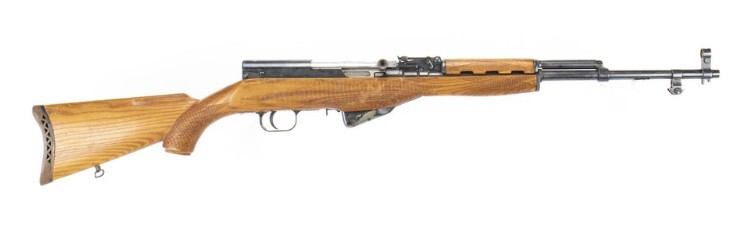
The SKS has been around long enough that nearly every gun person has a story about one. It's a semi-auto surplus rifle that runs on 7.62x39—one of the most common rifle cartridges on the planet. It feeds from a fixed 10-round magazine loaded with stripper clips, and the manual of arms stays simple and clean. No detachable magazine to lose track of. No complicated disassembly to figure out on a hot range day. It's a straightforward gun in the best possible way.
The SKS uses a short-stroke gas piston system, a different implementation than the AK’s long-stroke design, but both share a reputation for durability and reliability under rough conditions. It cycles in dirty conditions, runs a wide range of ammo, and keeps going when other guns start complaining. Many variants also came with an attached bayonet—a fun piece of history that ships standard on a lot of examples. Chinese, Yugoslav, and Russian variants each carry their own character. Yugoslav examples are often the most common at mid-range prices, and Russian models are harder to track down and generally more expensive when found.
Triggers on these can run on the mushy side, and the fixed magazine is slower to work with than a detachable setup. But as an entry point into semi-auto milsurp, the SKS remains one of the best starting points available today. One important thing to watch for: heavily modified "tactical" builds often aren't worth the premium price tags and can come loaded with function problems that weren't present on the original configuration.
Typical retail price (variant-dependent): $600–$950
Specs
- Caliber: 7.62×39
- Action: Gas-operated, tilting bolt
- Capacity: 10-round fixed magazine (stripper clip fed)
- Barrel length: 20.5 in
- Overall length: 40.2 in
Features
- Fixed magazine with stripper clip loading
- Gas-piston operation consistent across major variants
- Rich variant history across multiple countries
Pros
- Affordable semi-auto entry into milsurp
- Common ammo caliber that's easy to find
- Simple to operate and maintain
Cons
- Trigger quality varies widely between examples
- Fixed magazine is slower to reload than detachable designs
- Modified versions can introduce cycling problems
Mosin-Nagant (91/30, M38, M44 Variants)
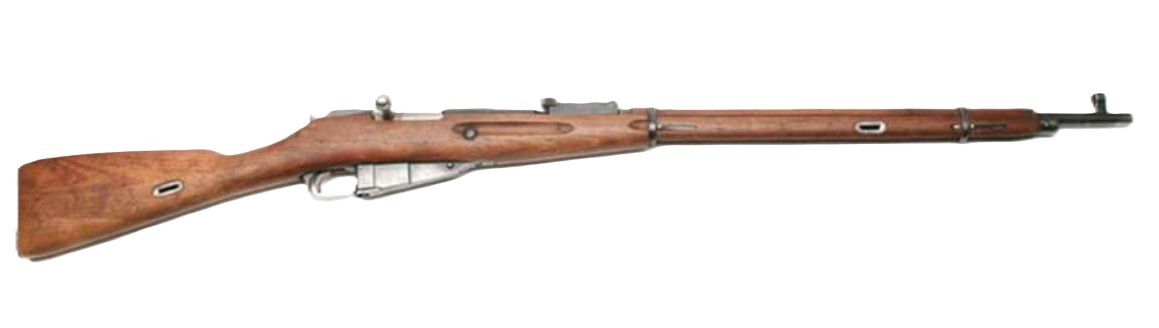
The Mosin-Nagant has been called a lot of things over the years—some of them printable. But this rifle has been in service since 1891 and has seen action in nearly 50 major wars and conflicts. That kind of track record earns real respect, even if the bolt feels like you're working a barn door latch on a cold morning. It's rugged, historically significant, and fires a hard-hitting rimmed cartridge that punches well above its price class.
The 91/30 is the full-length variant most worth seeking out. It's better balanced than the carbine versions and far more pleasant to shoot for extended sessions. The M44 and M38 carbines are easier to find and fun in a different way—but they kick hard and produce a fireball that turns every head on the range for better or worse. Ammo in 7.62x54R is still widely available and relatively affordable compared to most other milsurp calibers on this list.
The downsides are real and worth knowing up front. Actions can feel stiff and gritty, especially on examples that haven't seen a proper cleaning in years. Fit and finish often reflects the rushed wartime production they came from. Finnish-rebuilt Mosins are often regarded as better finished and more refined than many wartime Soviet examples, and they typically command higher prices.. For buyers where budget is the primary concern and a bolt-action piece of history is the goal, the Mosin still delivers exactly what it promises.
Typical retail price (variant/condition-dependent): $350–$750
Specs
- Caliber: 7.62×54mmR
- Action: Bolt-action
- Capacity: 5-round internal magazine (stripper clip loaded)
- Barrel length: 28.7 in (91/30)
- Overall length: 48.5 in (91/30)
Features
- Simple, rugged bolt design
- Wide range of variants and production dates
- Carbine models add fireball personality at the range
Pros
- Easier to source than many other milsurp rifles
- Strong history value per dollar spent
- Ammo still widely available
Cons
- Action can be stiff and rough out of the box
- Fit and finish reflects wartime production priorities
- Carbine variants recoil harder and produce more blast
Lee-Enfield No.4 Mk I / SMLE No.1 Mk III
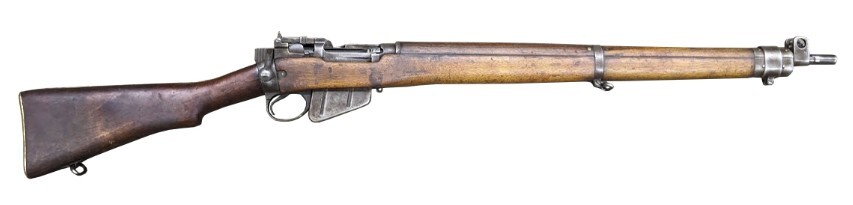
The Lee-Enfield doesn't always get the credit it deserves, and that's a genuine shame. It is widely regarded as one of the fastest bolt-action service rifles ever fielded by a major military power, and its 10-round magazine capacity set it apart from nearly every other service rifle of its era. The famous "mad minute" drill—where trained soldiers demonstrated rapid fire capability at 300 yards, often placing well over a dozen aimed shots on target within one minute.—was built entirely around what this rifle could do in trained hands. That kind of output from a surplus bolt gun is still impressive today.
The No.4 Mk I and the SMLE No.1 Mk III are the two variants most worth pursuing. Both feature a smooth cock-on-close bolt action that feels noticeably different from the typical Mauser-style setup. The 10-round magazine loads using two 5-round stripper clips. It gives it double the capacity of most bolt guns from the same period. That extra round count combined with the fast bolt cycle is what made the Enfield such a capable service arm. Iron sights on well-maintained examples are clear and practical for serious range use.
The main challenge is the .303 British cartridge. It's not cheap, and it's not always easy to source at smaller local shops. Rifle condition also varies significantly between examples—some have been stored with care for decades, while others show hard use with little attention. Stocks can also feel short to taller buyers due to the shorter length-of-pull dimensions typical of these rifles. Even with those trade-offs, the Lee-Enfield earns its place near the top of any practical milsurp list.
Typical retail price (condition-dependent): $600–$1,100+
Specs
- Caliber: .303 British
- Action: Bolt-action
- Capacity: 10-round detachable magazine
- Barrel length: 25.2 in (No.4 Mk I)
- Overall length: 44.5 in (No.4 Mk I)
Features
- Fast cock-on-close bolt action
- High-capacity magazine for a surplus bolt gun
- Deep collector and parts ecosystem
Pros
- Fastest-cycling surplus bolt gun on this list
- 10-round capacity is a real advantage
- Very satisfying and practical at the range
Cons
- .303 ammo runs more expensive than common calibers
- Condition varies widely between examples
- Stocks can feel short for taller buyers
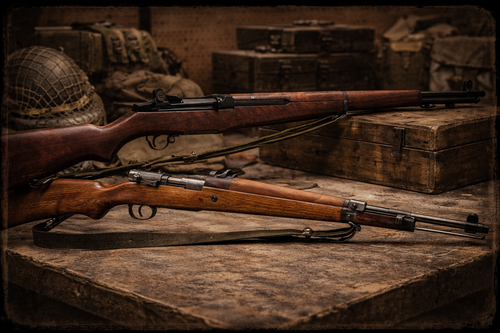
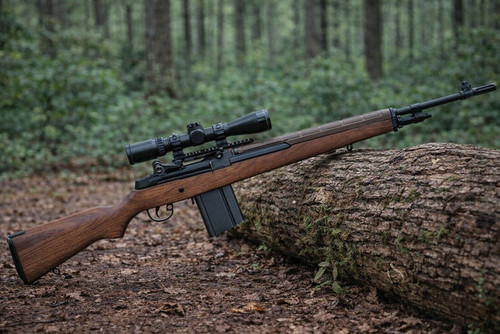
M1 Garand
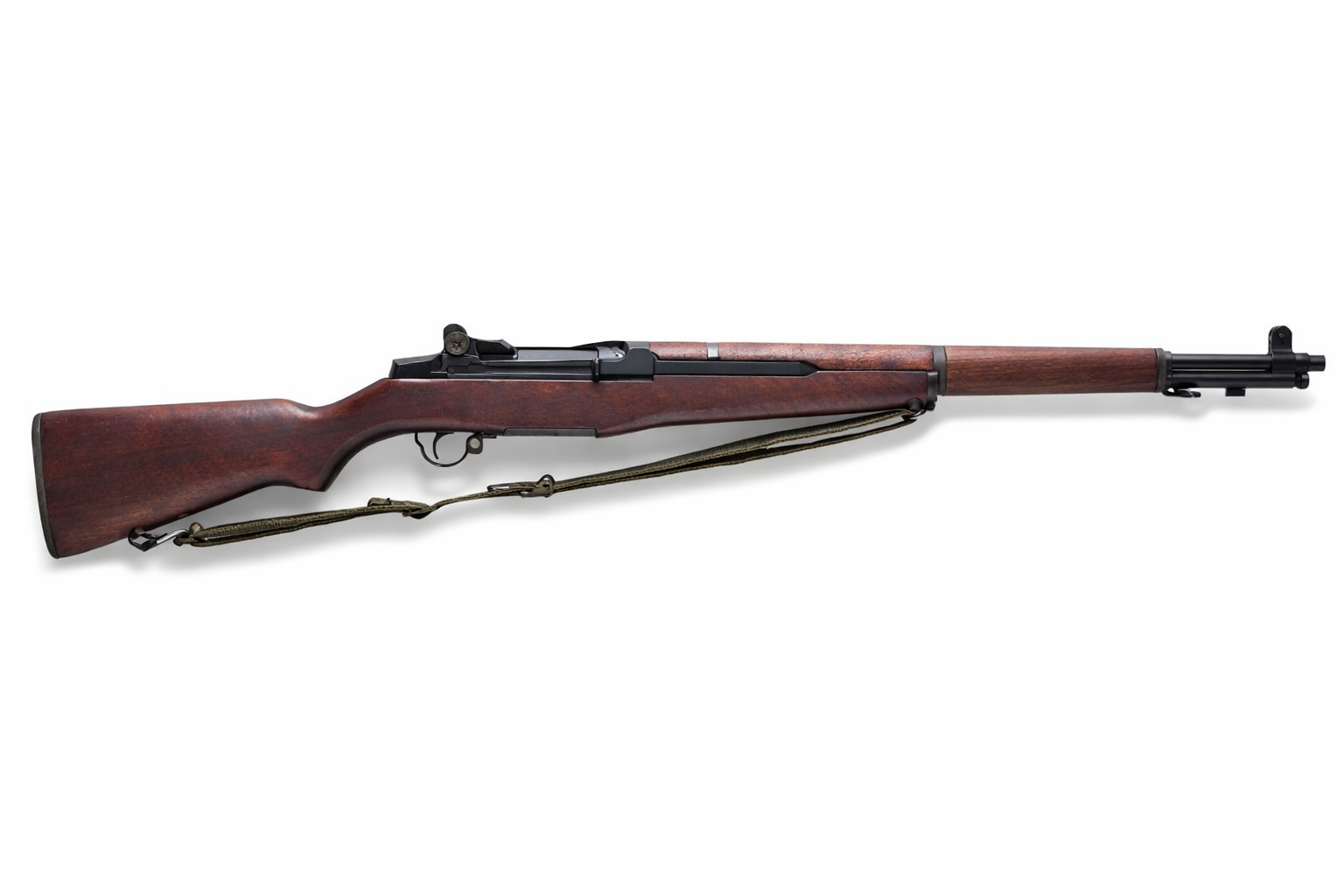
The M1 Garand is the rifle that defined American infantry firepower in World War II. It's semi-automatic, feeds from a unique 8-round en-bloc clip, and produces a very distinct metallic sound when the last round ejects and the clip flies clear. If you've spent any time around milsurp circles, you already know that sound. The Garand was the first standard-issue semi-auto service rifle adopted by a major military power, and that history runs through every example available on the market today.
It's also not cheap anymore. Prices have climbed steadily as supply thins and demand from collectors and history buffs stays strong. The Civilian Marksmanship Program—a federally chartered organization—sells inspected U.S. surplus M1 Garand examples, and getting one through that pipeline is generally the best path to a fair price. Be cautious of resellers flipping CMP rifles at marked-up prices. The markup can be significant, and going directly through CMP is a much better deal for most buyers.
Ammo selection matters with the Garand because its gas system was designed around M2 Ball-type .30-06 pressure/port pressure behavior. Many modern hunting loads use heavier bullets and slower powders that can increase stress on the operating system. The simple solution is to run Garand-safe factory loads (often labeled for M1 Garand), choose ammo in the M2 Ball neighborhood, or install an adjustable gas plug if you want broader flexibility. Either way, validate function and ejection before you commit to a “go-to” load. That's not a dealbreaker by any stretch—it's just something every Garand owner needs to know before the first live fire session.
Typical retail price (grade-dependent): $1,100–$2,500+
Specs
- Caliber: .30-06 Springfield (some in 7.62 NATO)
- Action: Gas-operated, rotating bolt
- Capacity: 8-round en-bloc clip
- Barrel length: 24 in
- Overall length: 43.5 in
Features
- CMP pipeline for inspected surplus examples
- Strong parts support and match shooting culture
- Unique clip-fed system with real historical character
Pros
- One of the best overall milsurp shooting experiences available
- Strong collector demand and long-term value retention
- Still very practical and usable for range use today
Cons
- More expensive than most milsurp options on this list
- Ammo selection requires care to protect the gas system
- Weight becomes noticeable during longer range sessions
Mauser Kar98k (K98k)
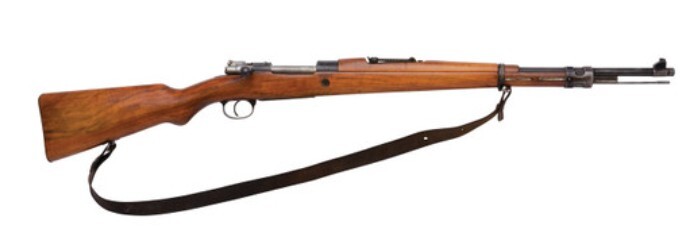
The K98k shows up everywhere in milsurp conversations—and for good reason. It is one of the most influential and widely copied bolt-action rifle designs in modern firearms history. The controlled round feed system and claw extractor give it a strong mechanical reputation that has held up across generations of use. The Mauser action has influenced rifle designs across the globe for well over a century. Buying a K98 means buying into a lineage that runs through hunting rifles, custom builds, and competition guns across the firearm market.
The collector side of things can be confusing, especially for new buyers entering the milsurp space. Matching serial numbers and original parts command serious premiums on the open market. Mismatched or refinished examples are far more common and still shoot well—but they're worth considerably less to serious collectors. New buyers frequently overpay for "pretty" rifles that have been refinished or assembled from mixed parts. Learning to read proof marks and date codes before handing over money will save real cash and prevent a lot of headaches.
In sporterized form—which many K98s have been converted to over the decades—the action becomes a practical and capable hunting build. A quality barrel chambered in a common caliber, a solid scope mount, and a hunting-weight stock turn this receiver into a capable field rifle. The Mauser bolt design is so well regarded that it still appears in modern production hunting rifles today, which says everything about how sound the original engineering really was.
Typical retail price: $900–$1,600+ (collector-grade examples go much higher)
Specs
- Caliber: 7.92×57mm (8mm Mauser)
- Action: Bolt-action
- Capacity: 5-round internal magazine (stripper clip fed)
- Barrel length: 23.6 in
- Overall length: 43.7 in
Features
- Legendary controlled round feed system
- Huge collector reference and documentation ecosystem
- Strong base for sporter hunting builds
Pros
- One of the most influential rifle designs ever made
- Strong resale interest in the collector market
- Core milsurp rifle every serious collector should know
Cons
- Many examples are mismatched or refinished
- Pricing can be confusing for buyers new to the milsurp market
- Ammo cost and local availability vary by region
M1903 Springfield
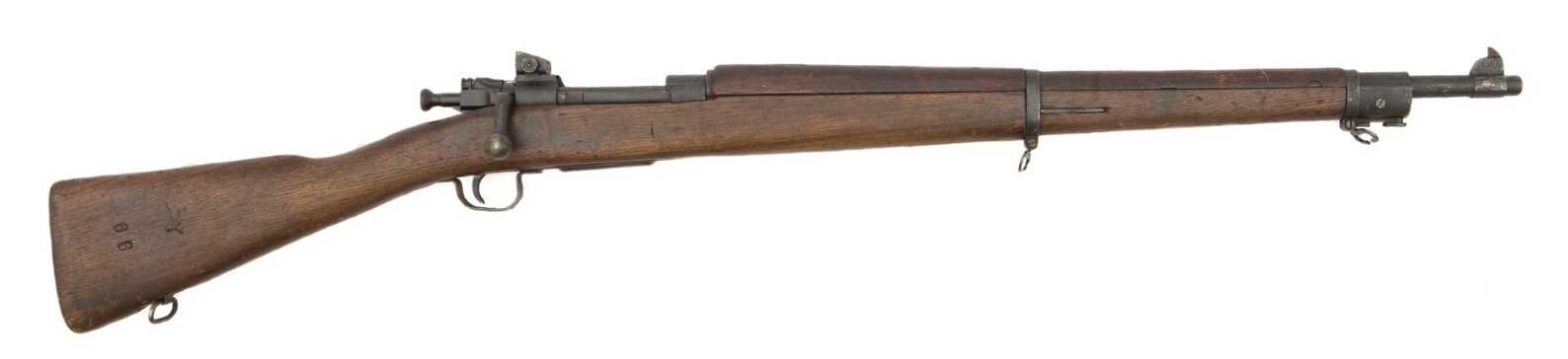
The 1903 Springfield carries a deep American history, a strong accuracy reputation, and a hunting legacy that stretches across multiple generations of sportsmen. It served through two world wars and ended up in the hands of hunters across the country in the decades that followed. Many examples were sporterized—stripped of military furniture and rebuilt as hunting rifles, with iron sights replaced by scopes and stocks shaped to fit individual users. That process produced some genuinely capable field rifles out of solid surplus actions.
In original military configuration, the 1903 is a serious collector piece. The .30-06 cartridge it fires is still one of the most common and effective hunting rounds in production today. Standard military M1903 rifles typically used a 24-inch barrel with a 1:10 twist rate, while many sporterized versions vary in barrel length and configuration, and handles a wide range of .30-06 loads without issue. Long-time owners report tight groups even with older factory ammo—a testament to how well the Springfield action was built and how much life these rifles still carry after all these years.
Prices on original, unmolested examples have climbed over the years and continue to rise. Sporterized versions typically sell for less, but the quality of that work varies significantly between examples. Some were done by skilled gunsmiths with proper machine work and careful fitting. Others were modified by people with more enthusiasm than skill. Inspect carefully and shoot before you buy whenever possible.
Typical retail price: $800–$3,000+ (original/matching drives the top end; sporters usually lower)
Specs
- Caliber: .30-06 Springfield
- Action: Bolt-action
- Capacity: 5-round internal magazine (stripper clip fed)
- Barrel length: 22–24 in
- Overall length: 43.2 in
Features
- Long hunting and sporting legacy
- Many configurations across multiple production eras
- Practical when properly set up with scope mounts and sporter work
Pros
- Strong accuracy reputation backed by decades of field use
- Great US history tie-in for collectors and buyers
- Works well as a "working classic" bolt rifle
Cons
- Original examples now cost significantly more than sporterized versions
- Sporter work quality varies a lot between individual rifles
- Collector value drops considerably with modifications
What Should You Buy First If You're New to Milsurp?
Start with what fits your specific goals. If you want a semi-auto with simple ownership and common ammo, the SKS is the right first call. It's still findable, it runs well, and it doesn't demand a lot of upkeep to enjoy at the range.
If you want the most affordable entry into classic bolt guns, the Mosin-Nagant is still the go-to option. It's not glamorous, but it carries more history than most modern rifles will ever accumulate. Want accuracy without going modern? The Swiss K31 is worth the extra investment. Want a classic bolt that cycles fast and gives you 10 rounds? Find a Lee-Enfield.
Where to Find Military Surplus Rifles Today
Local gun shops and small-town stores are still good places to look. Smaller shops often carry older inventory that hasn't been repriced to reflect current market trends. Gun shows let you compare multiple examples side by side before you commit any money. Online marketplaces and auction sites offer the widest selection but require more homework on seller reputation and return policies. Always prioritize sellers who describe conditions honestly and stand behind what they sell.
Pre-Purchase Inspection Checklist
Before you hand over any money, run through these points:
- Confirm headspace and safe lockup
- Inspect bore condition and crown for wear
- Look for cracks in the stock near recoil points
- Verify the magazine or clip system feeds and functions properly
- Check for signs of unsafe home gunsmithing work
- Budget for a sling, clips or magazines, and basic maintenance parts
Ammo and Cost Reality Check
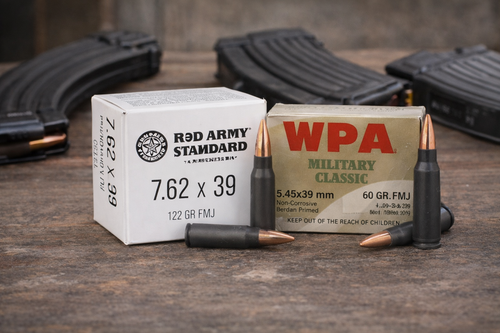
The rifle purchase is just the starting point. Some calibers—like 7.62x39 for the SKS or 7.62x54R for the Mosin—are still relatively affordable and easy to track down. Others, like 7.5x55 Swiss for the K31 or .303 British for the Lee-Enfield, cost more and take more effort to source locally. If you plan to shoot often, ammo availability matters as much as the rifle itself. A great rifle chambered in a hard-to-find caliber can turn into a wall hanger fast. Factor in cost per round before you commit to any purchase.
One Simple Upgrade Rule
Keep it safe and reversible. Don't start drilling and cutting until you know exactly what you have and what it's worth in the original configuration. Clean it properly first. Replace worn springs. Use the right lubricant for your climate and storage setup. A clean, properly lubed rifle in original configuration will almost always outperform a hastily modified one.
Conclusion
Military surplus rifles are one of the last corners of the firearm market where history and value still come together in a meaningful way. The SKS gives you a capable semi-auto at a reasonable price. The Mosin gives you rugged bolt-gun basics with a massive history behind it. The K31 and Lee-Enfield show what real surplus accuracy looks like. The Garand, K98, and 1903 bring American and European military history into your safe in the most tangible way possible.
Prices are rising and supply is shrinking—that's just the reality of this market now. But the guns worth owning are still out there. Buy carefully, inspect before you shoot, and enjoy the process.
Military surplus rifles offer a unique connection to history, and the M1 Garand remains one of the most iconic examples. If you’re considering a Garand as your first surplus rifle, read What Is the Effective Range of .30-06? to better understand the cartridge that made it legendary.
Frequently Asked Questions (FAQs)
Are military surplus rifles legal for civilians to own?
In most parts of the US, yes—military surplus rifles are legal for civilian ownership. Laws vary by state and local jurisdiction, and certain features or configurations may be restricted in some areas. Always verify local rules before purchasing.
Which milsurp rifle is best for a first-time buyer?
The SKS is the top pick for a first semi-auto milsurp purchase. For bolt guns, the Mosin-Nagant is the most accessible entry point. If accuracy is the priority from day one, the Swiss K31 is worth the extra cost.
Which milsurp rifle is best for hunting?
The 1903 Springfield has the longest hunting track record on this list, especially in sporterized form. The K98 Mauser in a proper sporter build is another strong option for the field. The SKS can work for medium-sized game at closer ranges with the right soft-point ammo.
What should I check before shooting a surplus rifle?
Check headspace, bore condition, crown wear, bolt function, and overall lockup. A basic inspection from a gunsmith before the first range trip is a smart call on any rifle with an unknown history.
Are matching-number rifles worth paying extra for?
For collectors, yes—matching serial numbers add significant value. For buyers who just want a shooter, mismatched examples often perform just as well at a lower price point.
Why are milsurp prices rising?
Supply is finite and shrinks every year. A new generation of buyers has discovered the milsurp market, and import restrictions on certain rifles have cut off fresh supply. All of that pushes prices up, and the trend shows no signs of reversing.
About the Author
This article was written by the ProArmory writing team based on current research, including studies from reputable sources like the Journal of Military Science, Firearms News, and the National Shooting Sports Foundation. We also referenced trusted information from official defense publications and respected firearm authorities such as the ATF, NRA, and manufacturer manuals.
Disclaimer: This review is for education only. Laws vary by state and city and can change. Follow safe handling at all times. Read your owner's manual. Verify local rules before you buy or train.

Best Ammo Deals, Training, & Accessories
Subscribe to ProArmory sales and deals email.