 Pro Armory Editorial Team
Quick Answer
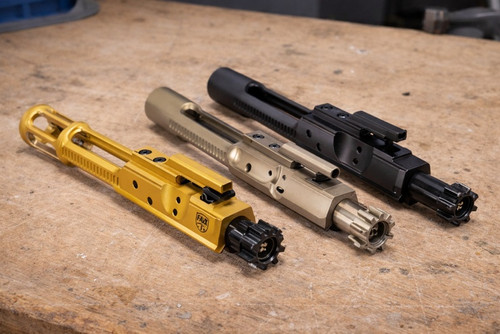
Lightweight bolt carrier groups reduce reciprocating mass in your AR-15. In a tuned rifle, that can mean less sight movement and faster return-to-target, which may improve split times. The tradeoff is a narrower reliability window if the system is over-gassed or under-gassed. Most low-mass setups run best with an adjustable gas solution, matched buffer/spring weight, and consistent lubrication and ammo. Below are 10 standout lightweight BCG options in aluminum, titanium, and lightened steel, plus a simple tuning path.
Key Takeaways
- Lower carrier mass can reduce muzzle movement and speed up follow-up shots.
- Tuning gas and buffer weight matters more than the BCG brand.
- Aluminum is usually the lightest, but it’s typically best suited for competition-focused rifles and may show wear sooner than steel or titanium.
- Titanium balances weight savings with better long-term durability than aluminum.
- Lightened steel is the safest "starter" path into low-mass builds.
- As mass drops, expect less margin for “dry” operation and more sensitivity to ammo power and gas settings.
If you want faster split times, start with reciprocating mass. It’s one of the most direct changes you can make. A standard AR-15 bolt carrier group is roughly in the 11–12 oz range, and it cycles hard with every shot. That back-and-forth movement can nudge your sight picture off line. Then you spend extra time pulling the sight back to the target.
Lightweight can cut that moving weight by 30-50%. That’s like swapping a heavy backpack for a light one. You move quicker and you waste less energy. With the right gas and buffer setup, the rifle tracks smoother. Your red dot or scope stays steadier through the firing sequence. That small edge can be the gap between “good run” and “top run.”
Why a Lightweight BCG Can Help Split Times
The bolt carrier group is that chunk of metal moving back and forth inside your AR-15 every time you fire. It's part of what gun folks call "reciprocating mass." When it moves, it affects how your rifle feels and behaves.
A standard full-auto bolt carrier group tips the scales around 11.6 ounces. That's a hefty piece of metal slamming around. Each shot sends this mass flying backward before it returns forward again. This movement can create two distinct impulses that disrupt your sight picture.
First, you feel the carrier hit the back of the buffer tube. Then comes a second pulse when it slams forward into the battery. Both jolts can bounce your sights off target.
By dropping that moving mass, you reduce how hard those impacts jolt the rifle. Less jolt means less shake. And less shake helps your sights settle faster after each shot. That faster reset can lead to quicker and more accurate follow-up shots.
But don’t treat it like a cheat code. A lightweight BCG is only one piece of the setup. Swapping parts alone won’t suddenly make your split times tiny. Pair it with proper gas tuning and the right buffer setup and the rifle can shoot flatter. That makes staying on target easier.
Direct Impingement Cycling (Fast, Clear Breakdown)
To understand why lightweight BCGs matter, let's look at how your AR-15 cycles:
When you fire, the bullet travels down the barrel and passes a small gas port. Hot gas rushes through this port, into the gas block, and back through the gas tube. This gas then pushes into the carrier key on top of your bolt carrier group.
This gas pressure drives the carrier rearward. As it moves back, it rotates the bolt, pulls the spent casing from the chamber, and ejects it. The buffer spring compresses and stores energy. When the spring pushes back, the carrier returns forward, strips a new round from the magazine, and chambers it.
The timing of this dance matters. Too much gas with a lightweight carrier can make the gun cycle too violently. Too little gas might cause failures to feed or eject.
A lightweight BCG changes this timing window. It needs less force to move, so it can operate with less gas. This is why most folks who run lightweight carriers also tune their gas system—they go hand in hand for best results.
How Manufacturers Make BCGs "Lightweight"
Lightening Cuts in Steel
The simplest approach is cutting away metal from standard steel carriers. Manufacturers remove material from non-critical areas and create skeletonized or Swiss-cheesed patterns.
Many designs reduce mass from the rear of the carrier where it's less structurally important. The front section near the bolt usually keeps more material since it handles the most stress.
One trade-off: some lightweight carriers omit forward assist serrations to save weight. For most sport shooters, this isn't a big deal—when was the last time you actually used your forward assist?
Exotic Materials
When steel cutting reaches its limits, manufacturers turn to lighter metals:
Titanium offers about a 45% weight reduction compared to steel with comparable yield strength. This makes it an excellent middle-ground option. Many titanium BCGs land in a middle weight class, offering meaningful savings without going as extreme as aluminum.
Aluminum takes weight reduction to the extreme, with some competition carriers dropping to roughly half the weight of a standard steel carrier.That's half the weight of a standard carrier! The drawback? Aluminum is significantly softer than steel or titanium.
Both materials face a challenge: steel parts like the bolt and firing pin still need to ride inside these softer carriers. To combat wear, manufacturers apply special finishes and surface treatments to harden the bearing surfaces.
The Real Tradeoffs (Before You Buy Anything)
Reliability Window Gets Narrower
Standard AR-15s with full-weight BCGs are built to run under almost any condition. They handle hot military ammo, weak commercial loads, dirt, cold, and heat without complaint.
Lightweight BCGs shrink this margin of error. Your gas system needs more precise tuning. Ammo that's too weak might not cycle. Ammo that's too hot might cause excessive wear or harsh recoil.
Cold weather can also affect performance. A rifle tuned to the edge in warm weather can short-stroke when temperatures drop, lube thickens, or carbon builds up.
Lubrication Becomes Non-Negotiable
The phrase "run it wet" takes on new meaning with lightweight carriers. Traditional steel BCGs can sometimes run relatively dry and still function. Not so with lightweight versions.
Aluminum carriers especially need constant, generous lubrication. Many competition-focused aluminum carriers are intended to be run very well-lubricated. If you choose aluminum, plan on generous lubrication and more frequent wipe-downs.
Titanium carriers also benefit from extra lube due to their different friction characteristics against steel parts. The bearing surfaces need that slick buffer to prevent premature wear.
Forward Assist and Feature Loss
Many lightweight BCGs skip the forward assist serrations to save weight. For most sport and competition shooters, this isn't an issue—forward assists rarely see use outside military applications.
But if you're the type who likes to tap that assist to ensure full battery, be aware that many lightweight options won't give you that capability.
Wear Expectations by Material
Different materials bring different lifespans:
Aluminum carriers are race parts, pure and simple. They offer the lightest weight but wear the fastest. Expect to replace them after a few thousand rounds. Some manufacturers only recommend them for competition guns.
Titanium strikes a middle ground. With proper surface treatment and lubrication, they can last many thousands of rounds before showing significant wear.
Lightened steel carriers maintain much of the longevity of standard BCGs while still offering weight reduction. They're the most practical option for most shooters wanting to experiment with lighter reciprocating mass.
What We Look For in a Lightweight BCG
When evaluating lightweight bolt carrier groups, several factors come into play:
- Weight is the obvious starting point. We want to know both the complete BCG weight and the carrier-only weight where relevant. The baseline for comparison is a standard full-auto BCG at around 11.6 ounces.
- Carrier material matters tremendously. Most steel carriers use 8620 alloy, though some like JP use 416 stainless steel. Titanium carriers typically use 6AL-4V titanium alloy. Aluminum options almost exclusively use 7075-T6 aircraft-grade aluminum.
- Bolt steel quality remains crucial regardless of carrier material. The bolt faces incredible pressure and stress. C158 Carpenter steel and 9310 alloy are the most common choices, both with their advocates. Either can work well when properly heat-treated.
- Testing protocols like Magnetic Particle Inspection (MPI) and High Pressure Testing (HPT) indicate quality control. MPI checks for cracks and defects after stress, while HPT proof-fires the bolt under higher-than-normal pressure before inspection. Not every manufacturer does both, so verify the listing for the exact model you’re buying.
- Gas key staking quality is non-negotiable. Those screws must stay put, especially in a lightweight setup where tuning matters more.
- Coatings and finishes affect both wear resistance and friction. Options range from nitride, nickel boron, and various PVD/CVD coatings to proprietary treatments. These become especially important with aluminum and titanium carriers.
- Bearing surface design varies between manufacturers. Some increase surface area to distribute wear, while others focus on reducing friction. The ideal is a balance that maintains smooth cycling while minimizing wear.
- Forward assist compatibility is worth noting if that feature matters to you. Many lightweight carriers omit these serrations.
Quick Comparison Table
| Model | Type | Material | Finish | Forward Assist | Best Fit |
|---|---|---|---|---|---|
| JP Enterprises Ultra LMOS | Complete BCG | Aluminum | Anodized | Often No | Competition |
| Whiskey Arms LBC | Carrier-only | Aluminum | Anodized | No | Competition |
| RCA Titanium | Complete BCG | Titanium | Treated / Nitride (varies) | Varies | Competition / Range |
| Cryptic Coatings Ti | Complete BCG | Titanium | Proprietary coating | Varies | Competition / Range |
| JP LMOS | Complete BCG | Lightened steel | QPQ / Polished (varies) | Often No | Tuned build |
| RCA Low Mass Steel | Complete BCG | Lightened steel | Nitride (varies) | Varies | General range |
| Faxon Lightweight | Complete BCG | Lightened steel | Nitride (varies) | Varies | Tuned build |
| Brownells Lightweight | Complete BCG | Lightened steel | Varies | Varies | General range |
| Spike’s “Lightweight” | Complete BCG | Lightened steel | NiB | Varies | General range |
| JP LMOS Carrier Only | Carrier-only | Lightened steel | QPQ / Polished (varies) | No | Tuned build |
10 Best Lightweight Bolt Carrier Groups (BCG)
1. Faxon Firearms Gunner Lightweight BCG
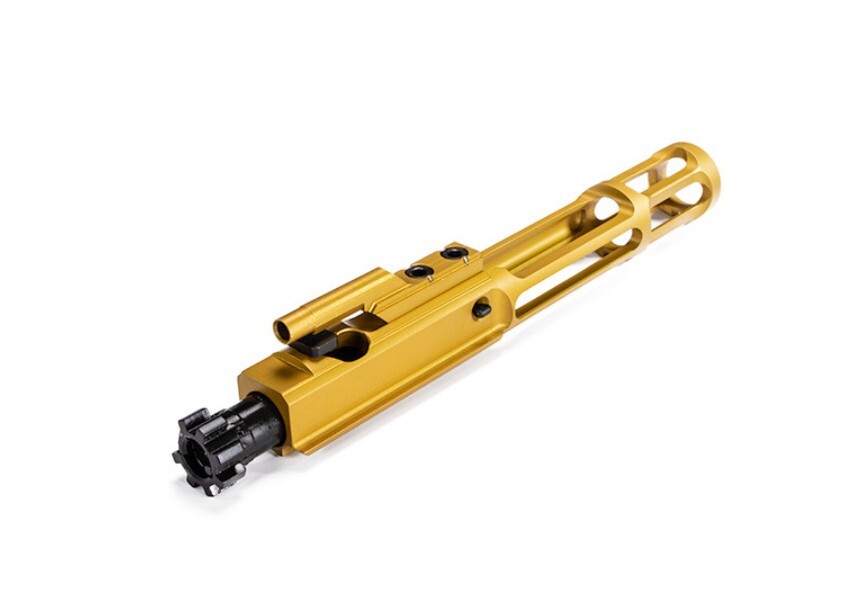
If you want a low-mass steel BCG that still feels like a "normal" duty-style part, this one lands in a sweet spot. Faxon keeps the weight down with lightening cuts, then leans on their slick "superfinish" so the carrier cycles smoothly once it's tuned.
The Faxon BCG hits a nice middle ground - not as radical as aluminum options, but noticeably lighter than standard carriers. It’s noticeably lighter than a standard full-mass carrier, and many shooters choose it as a “first step” into low-mass tuning.
What sets this option apart is the combination of weight reduction with Faxon's attention to surface finishing. The carrier gets a "superfinish" treatment after the salt bath nitride coating and creates an exceptionally slick cycling feel.
Price: $220–$270
Features
- Steel carrier with low-mass cuts
- Salt bath nitride finish
- "Superfinish" style polishing for lower friction
- Commonly paired with adjustable gas for best results
Pros
- Good balance of weight savings and long-term wear
- Smooth cycling feel once tuned
- Usually easier to live with than ultra-light aluminum carriers
Cons
- Still needs tuning with gas and buffer to shine
- Availability swings in and out
- Not the absolute lightest option
2. JP Enterprises Ultra LMOS Carrier Group (ULMOS) with EnhancedBolt
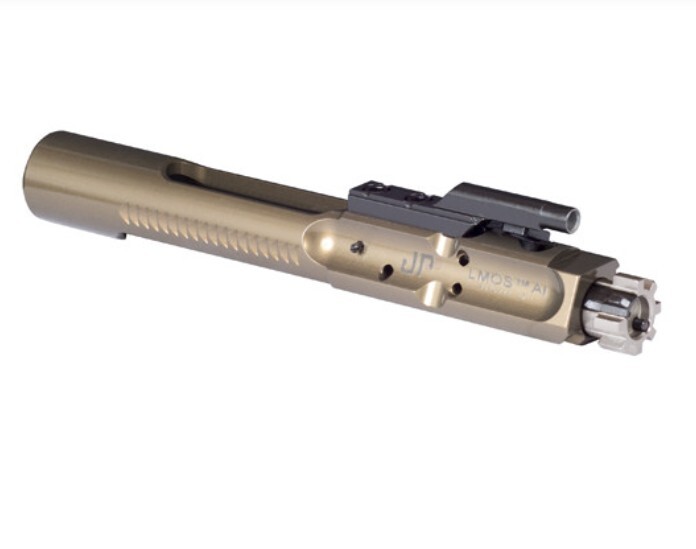
This is the "race-weight" pick when you're chasing flatter recoil and quicker sight return. It's ultra-light, so it tends to feel snappy if you don't also dial back gas and balance the buffer system. JP sells it as a full carrier group option, which makes it a clean drop-in path for a dedicated competition build.
At just 5.74 ounces, this aluminum carrier is the lightest complete BCG on our list. That's nearly 6 ounces lighter than a standard carrier - a dramatic difference you can feel in how the rifle cycles.
JP doesn't just make the carrier lighter - they redesign it with larger bearing surfaces to better distribute wear and pressure. This helps extend the service life of what remains a competition-focused part.
Price: Approx $485
Features
- 7075-T6 aluminum carrier, hard anodized
- Very low overall reciprocating mass
- Larger bearing surfaces than standard designs
- Often bundled/paired with JP EnhancedBolt options
Pros
- Big recoil impulse reduction when the rifle is tuned right
- Helps keep your dot flatter for faster split times
- Built for dedicated match setups
Cons
- Not a "set it and forget it" part
- Shorter service life expectations versus steel/titanium carriers
- Poor fit for general-purpose or defensive rifles
3. Brownells Lightweight M16 5.56 Bolt Carrier Group
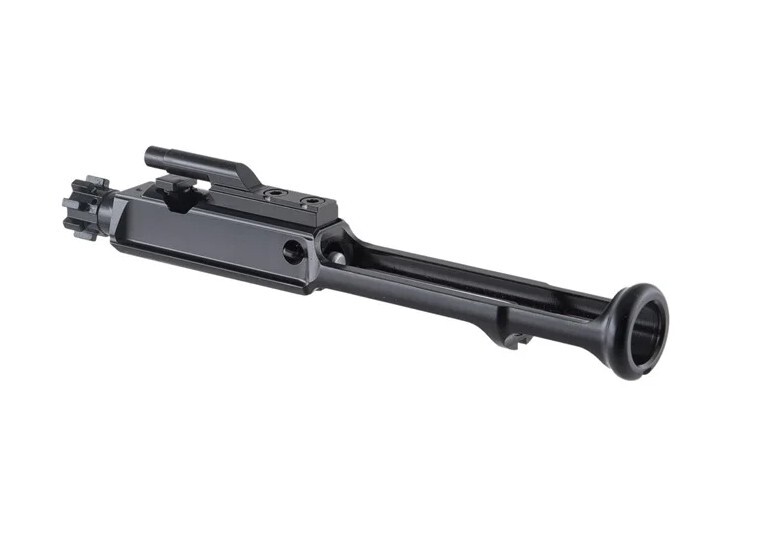
This is the budget-friendly on-ramp into the lightweight BCG lane. It keeps the carrier in steel, then trims weight through a skeletonized profile so you can tune for speed without jumping straight to exotic materials.
At around 8.2 ounces, the Brownells lightweight BCG offers meaningful weight reduction without breaking the bank. It's a popular choice for first-time lightweight BCG users who want to test the concept.
Brownells offers this BCG in several finish options, including nitride, nickel boron, and titanium nitride (gold). The different coatings affect both appearance and cleaning characteristics, but all maintain the same weight-reduced design.
Price: Approx $140
Features
- Lightweight steel carrier profile
- Built around the standard M16-style format
- Commonly offered in popular coating options (varies by listing)
Pros
- Lower entry cost than most "match" options
- Simple path to experiment with tuning
- Steel carrier base tends to hold up well over time
Cons
- Not as light as aluminum carrier setups
- You still need gas/buffer tuning to get the real benefit
- Coating options and exact specs vary by SKU
4. Rubber City Armory Titanium Complete BCG (optional adjustable gas key)
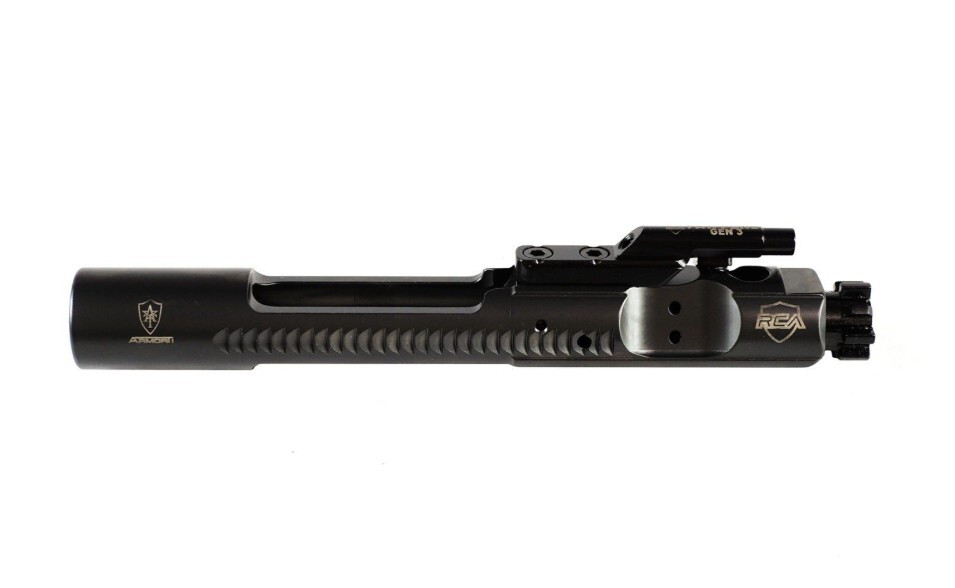
Titanium hits that middle ground—lighter than steel, tougher than aluminum under hard use. RCA's titanium carrier is popular for competition rifles because it can cut reciprocating weight without feeling like a fragile "race-only" part, and the adjustable gas key option can help when the upper doesn't have an adjustable gas block.
At 7.75-7.8 ounces, this titanium BCG slashes about 33% of the weight from a standard carrier. That's significant enough to change recoil characteristics without going to the extreme of aluminum.
RCA's titanium gets a proprietary surface treatment developed by their sister company, H&M Metal Processing. This thermal chemical diffusion process is designed specifically to address titanium's tendency to gall and wear against steel parts.
Price: $360–$380
Features
- 6AL-4V titanium carrier
- Surface-treated for wear resistance
- Available with standard or adjustable gas key options
- Built for tuning-focused builds
Pros
- Big weight savings without going full aluminum
- Great "fast but still durable" feel for match use
- Adjustable gas key option adds flexibility
Cons
- Costs more than most steel lightweight carriers
- Still benefits from running wetter and tuned correctly
- Not necessary for a basic general-purpose rifle
5. Whiskey Arms LBC (Aluminum Lightweight Bolt Carrier — carrier only)
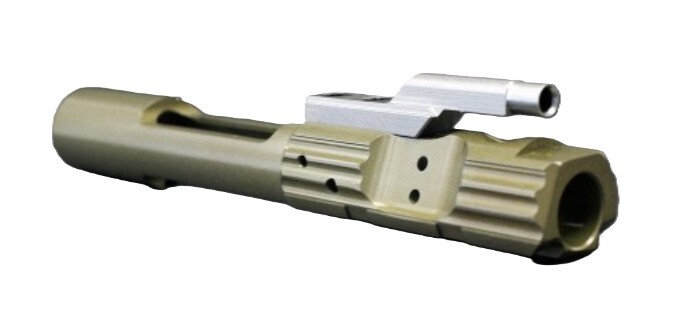
This is a carrier-only swap meant for people who already have a bolt they trust and want to drop carrier weight fast. It's aimed at competition builds, and it trades "margin for abuse" for pure speed and low reciprocating mass.
The Whiskey Arms aluminum carrier weighs just 3.89 ounces without a bolt, and makes it one of the lightest carrier-only options available. This dramatic weight reduction is perfect for competition rigs.
The design includes enlarged bearing surfaces to help distribute wear across the aluminum, with relief cuts to further reduce mass. Like other aluminum carriers, it's intended for competition use with regular maintenance and lubrication.
Price: Approx $235
Features
- Carrier-only design (reuse your bolt)
- 7075-T6 aluminum carrier, anodized
- Enlarged bearing surfaces with relief cuts
- Typically loses forward assist capability
Pros
- Strong weight drop without buying a whole BCG
- Good fit for a dedicated "tuned-only" setup
- Lets you keep a proven bolt assembly
Cons
- Carrier-only means you must source/verify the rest
- Aluminum carrier = competition lane, not duty lane
- Requires tuning to avoid harsh cycling
6. Cryptic Coatings Mystic Black Titanium BCG
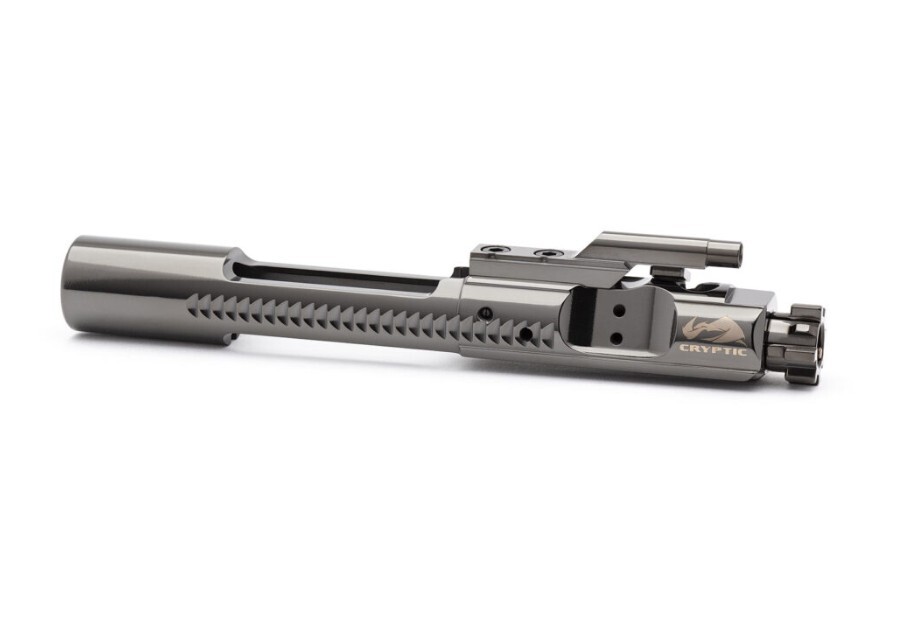
If you want titanium weight savings with premium finish and full BCG packaging, this one is a heavy hitter. Cryptic calls out a titanium carrier, Carpenter 158 bolt, and batch HPT/MPI—so it's built like a serious part, just on a lighter diet.
At 7.78 ounces, this titanium BCG cuts significant weight while keeping the same form factor and function as a standard carrier. It retains forward assist capability, unlike some lightweight options.
The standout feature is Cryptic's famous "Mystic Black" finish - a proprietary coating that creates an extremely slick, low-friction surface. This coating helps address titanium's natural tendency to gall against steel components.
Price: $405–$450
Features
- 6AL-4V titanium carrier
- Carpenter 158 bolt
- HPT and MPI testing noted
- Listed BCG weight around 7.78 oz
Pros
- Major weight savings with a "full spec" component list
- Premium finish and corrosion resistance angle
- Solid option for fast, tuned rifles that still see lots of rounds
Cons
- Price is up there
- Titanium carriers still like proper lube and tuning
- Overkill for casual range rifles
7. JP Enterprises LMOS Bolt Carrier Group with EnhancedBolt
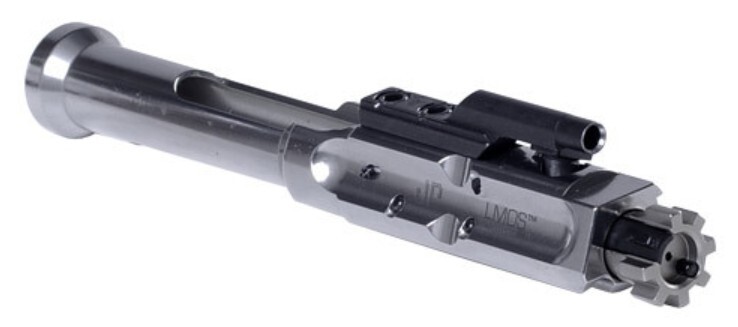
JP's LMOS is the "grown-up" lightweight option—still aimed at performance, but not chasing the absolute bottom of the scale. The design focus is a smoother, flatter feel when paired with the right gas and buffer setup, and it's offered across multiple configurations for common AR platforms.
At 8.77 ounces, the LMOS sheds weight while maintaining good durability. JP takes a more holistic approach to weight reduction rather than just cutting away metal.
The LMOS system is available in both polished and QPQ nitrided finishes, with JP's EnhancedBolt option for those who want the complete package. JP's approach to bearing surfaces and overall design has been refined through years of competition experience.
Price: Approx $353
Features
- Low-mass system approach rather than just deep cuts
- Commonly offered in polished or nitrided-style finishes (by config)
- Built around match-style tuning philosophy
Pros
- Proven lightweight option with a long track record
- Easier to keep consistent over long match days
- Great "pair it with tuning parts" ecosystem
Cons
- Still not cheap
- Needs tuning to show the full benefit
- Not the lightest option on the list
8. Rubber City Armory Low Mass Complete BCG (Steel) with optional adjustable gas key
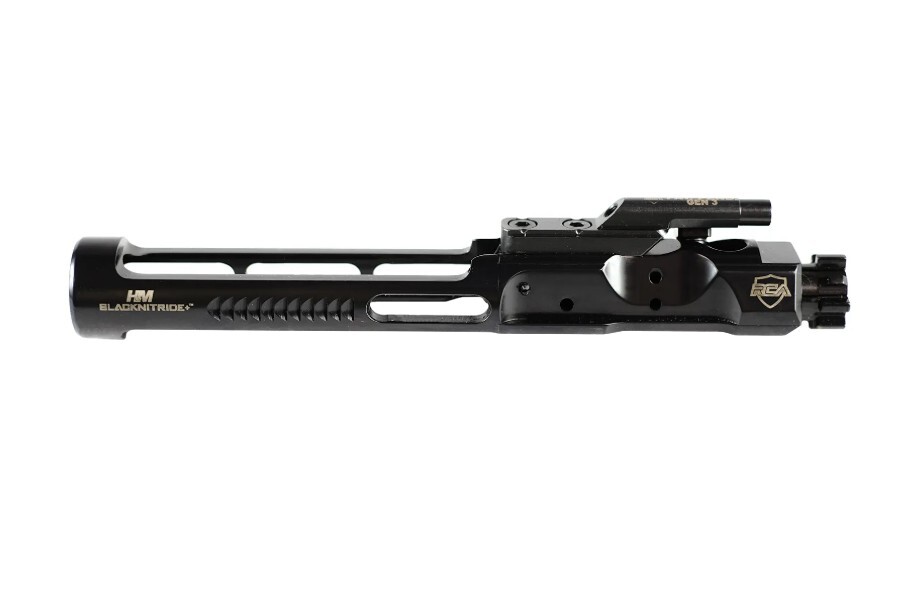
This is a steel low-mass pick for people who want reliability headroom but still want less reciprocating weight than a mil-spec carrier. It's also one of the more practical choices if you like the idea of metering gas at the carrier via an adjustable key.
At 9.04 ounces, this BCG provides modest weight reduction compared to the 11.6-ounce standard. It's a balance of performance gains and durability for those who don't want to go all-in on exotic materials.
The standout feature is RCA's optional adjustable gas key. This allows fine-tuning gas flow without replacing the gas block - particularly useful for uppers with pinned front sight bases or other fixed gas blocks.
Price: Approx $269
Features
- 8620 steel carrier
- Low-mass profile
- Optional adjustable gas key option
- 9310 bolt with MPI noted in the spec listing
Pros
- Steel wear characteristics with lighter cycling feel
- Adjustable gas key option can simplify tuning
- Usually a safer long-term bet than ultra-light aluminum carriers
Cons
- Not as light as titanium/aluminum carriers
- Still needs system-level tuning to avoid harsh cycling
- Adjustable key is helpful, but it adds another tuning variable
9. Spike's Tactical Lightweight Nickel Boron BCG
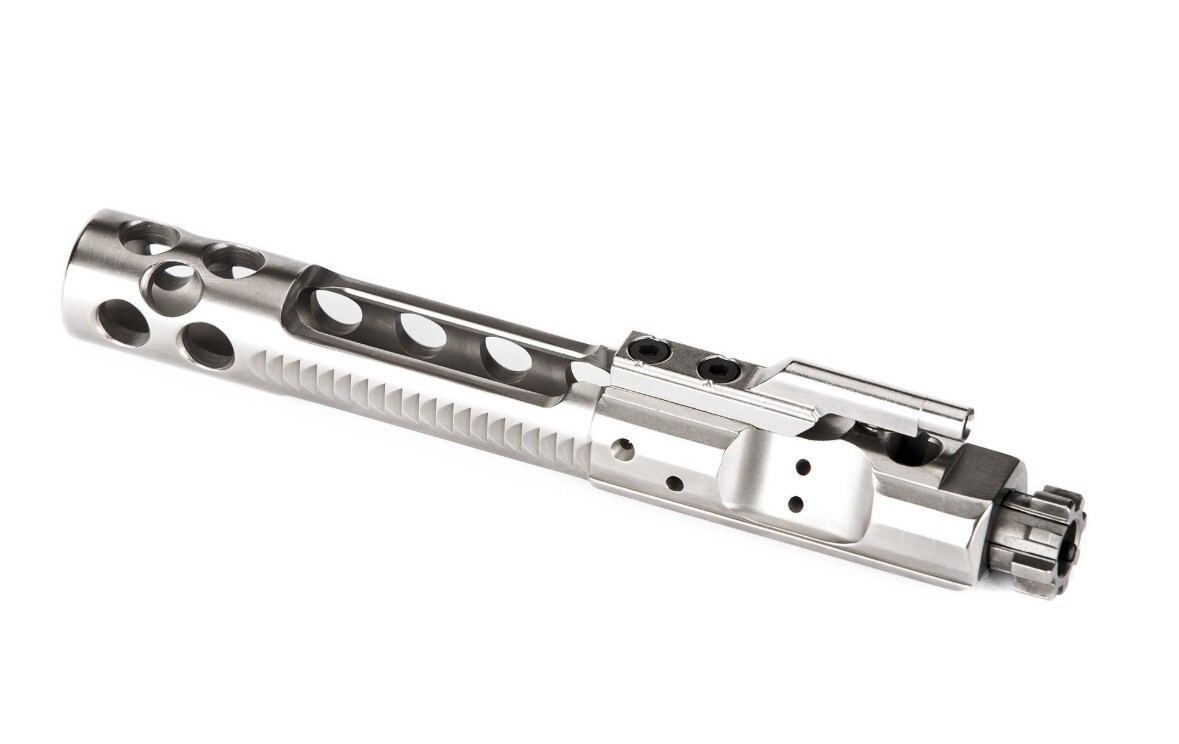
This one stays closer to the familiar "mil-spec style" idea, just trimmed down. It's not featherweight compared to aluminum options, but it's an approachable step that still plays nicely with common buffers and gas setups once tuned.
At 10.5 ounces, the Spike's Tactical lightweight BCG offers modest weight reduction - only about an ounce less than standard carriers. It's more about improved cosmetics and coating than radical weight cutting.
The nickel boron coating provides a slick, easy-to-clean surface that many shooters prefer for its maintenance benefits. The lightening cuts show a distinctive oval pattern that gives the BCG its unique look.
Price: Approx $250
Features
- Lightweight steel carrier approach
- Nickel boron coating
- Often sold with HPT/MPI bolt testing listed (by model)
Pros
- Easy transition from a standard BCG
- Coating can make cleaning less annoying
- Good option if you want "lighter" without going extreme
Cons
- Heavier than most other "lightweight" picks here
- Still needs tuning to really speed up split times
- Coating isn't a substitute for proper lube
10. JP Enterprises LMOS Steel Carrier (carrier only)
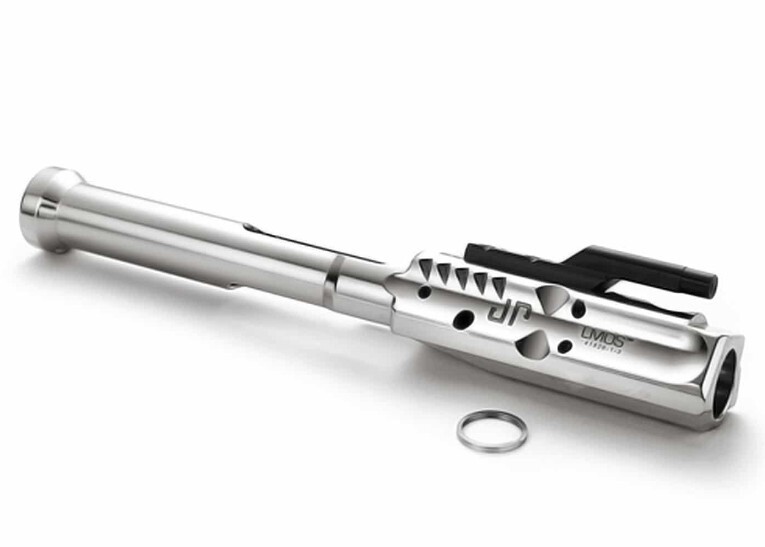
This is a carrier-only route for builders who already have a bolt assembly they want to keep. It's a nice way to shave weight and keep the LMOS concept, without paying for a full BCG package.
The carrier alone weighs 6.68 ounces and allows you to create a complete BCG around 8.8 ounces when paired with your choice of bolt. This modular approach lets you customize to your needs.
JP uses 416 stainless steel for their carrier rather than the more common 8620, then offers either a polished finish or QPQ nitriding. The design features larger bearing surfaces than standard carriers for improved function.
Price: Approx $215
Features
- Carrier-only format (reuse your bolt)
- Low-mass steel carrier approach
- Intended for tuning-focused setups
Pros
- Cheaper than a full premium lightweight BCG
- Lets you keep a bolt you already trust
- Good stepping stone before going titanium/aluminum
Cons
- Carrier-only means more parts-matching on you
- You still need to tune gas and buffer for best results
- Not as dramatic a weight drop as ultra-light options
How to Tune a Lightweight BCG Setup
Step-by-Step Tuning Path
Going lightweight is a system approach, not just a part swap. Here's how to make it work:
- Start with known-good mags and consistent ammo. This eliminates variables.
- Install an adjustable gas block if possible. An adjustable gas block is the most common way to tune a lightweight carrier setup. Many shooters prefer designs that allow fine adjustments and repeatable settings.
- Begin with the gas nearly closed, then open slowly until the rifle cycles. Fire one round at a time, gradually increasing gas until ejection is consistent.
- Confirm lock-back on empty with your weakest expected ammo. If it locks back reliably with weak ammo, you've found your minimum gas setting.
- Adjust buffer and spring so ejection is consistent and recoil feels flat. Lighter carriers often work best with lighter buffers and springs.
- Re-check function when the gun is dirty and warm. A system that works clean might struggle as carbon builds up.
- Add lube, then add more if cycling looks dry or sluggish. Remember that lightweight BCGs, especially aluminum and titanium, need more lubrication than standard steel carriers.
Supporting Parts That Often Matter More Than People Expect
An adjustable gas block or adjustable gas key is almost mandatory with a lightweight BCG. Without the ability to tune gas, you risk over-gassing the system, which negates many benefits of going lightweight.
Buffer weight and action spring selection become critical with a lightweight carrier. Buffer weight and spring choice become more noticeable with lightweight carriers. Depending on your gas system and ammo, you may end up lighter than a typical “duty” buffer, but the correct setup varies by rifle.
Captured spring systems like the JP Silent Captured Spring can be game-changers for lightweight setups. They eliminate the "sproing" of standard buffer springs and allow fine-tuning of return speed.
Muzzle devices and gas system length also affect how your lightweight BCG behaves. Longer gas systems (mid-length or rifle-length) generally work better with lightweight carriers because they provide smoother, lower-pressure gas delivery.
Common Problems and Fixes
- Failure to lock back on empty magazines usually indicates under-gassing or too much buffer/spring resistance. Try opening the gas block slightly or switching to a lighter buffer/spring.
- Harsh recoil despite the lightweight BCG often means you're over-gassed. The carrier is moving too fast and slamming into the buffer too hard. Reduce gas or increase buffer weight slightly.
- Bolt bounce and inconsistent feeding happen when the bolt carrier rebounds off the buffer too energetically. Try tuning the gas down and checking your buffer/spring setup.
- Premature wear signs on aluminum carriers usually indicate either improper use case (using a competition part for high-volume shooting) or insufficient lubrication. Remember, these parts need to run wet!
- Short-stroking with weak ammo means your tuning window is too narrow. Either widen your gas adjustment or consider moving to a slightly heavier BCG that provides more operating margin.
Safety, Legal, and Use-Case Notes
Lightweight BCGs are most commonly used in competition settings where controlled conditions and regular maintenance are expected. For defensive or duty use, the reduced reliability margin may not be worth the performance gains.
“Full-auto profile” describes the carrier’s geometry, not the fire-control capability of the rifle. In most places, owning a full-auto profile carrier is legal, but always follow your local laws and platform rules. The trigger group, not the BCG, determines whether a firearm is capable of automatic fire.
Maintenance expectations increase with lightweight BCGs. Plan for more frequent cleaning and lubrication, especially with aluminum carriers. Many competition shooters clean and lube their lightweight BCGs after every match to ensure optimal performance.
Conclusion
Lightweight BCGs offer real benefits for the right user in the right setup. They're not magic parts that instantly transform your rifle, but they're powerful tools when properly implemented.
For most shooters curious about lightweight BCGs, here's the path to consider:
Aluminum is for dedicated competition rifles where every split-second counts and regular maintenance is expected. It offers the most dramatic weight reduction but requires the most care.
Titanium hits the sweet spot of significant weight savings with better durability. It's ideal for serious competitors who want performance without constant part replacement.
Lightened steel provides modest benefits with the fewest compromises. It's the gateway option for most shooters wanting to experiment with lower reciprocating mass.
Remember that the BCG is just one part of the equation. The real secret to success is a holistic approach: lightweight BCG + adjustable gas + matched buffer system + proper lubrication. When these all work together, you'll experience the smooth and flat-shooting performance that makes lightweight carriers worthwhile.
A lightweight BCG can dramatically change how your AR feels and shoots, but it’s not the right solution for every rifle. Before settling on a carrier, read Top AR-15 Bolt Carrier Groups (BCG) Reviewed to compare lightweight, standard, and enhanced options side by side.

PMC X-TAC 556 NATO 55GR FMJBT 20RD
$9.69
at Pro Armory
Prices accurate at time of writing
Frequently Asked Questions (FAQ)
Are lightweight BCGs worth it for most shooters?
For casual range use, probably not. The benefits shine in competition or high-volume training where split-time improvements matter. If you're not trying to shave tenths off your splits, a standard BCG is simpler.
Do you need an adjustable gas block for a low-mass carrier?
Yes, in most cases. Without the ability to tune gas, you'll likely either over-gas (causing harsh recoil) or under-gas (causing function issues) with a lightweight carrier.
Steel vs titanium vs aluminum: which is smartest to start with?
Start with lightened steel. It offers modest weight savings with the least maintenance headaches. If you like the concept, then consider titanium. Save aluminum for dedicated competition builds.
Will a lightweight BCG reduce recoil, or just change how it feels?
Both. It reduces the physical mass moving in the gun, which can reduce felt recoil. But it also changes the recoil impulse character - often making it feel sharper but shorter.
Can a lightweight BCG harm parts if the rifle is over-gassed?
Yes. An over-gassed lightweight BCG moves too fast and can cause premature wear on the buffer, receiver extension, and carrier itself. Always tune the gas system when going lightweight.
What bolt material and testing should you look for?
C158 and 9310 are both good bolt steels when properly made. MPI (Magnetic Particle Inspection) is essential to detect micro-cracks. HPT is a strong quality signal when paired with MPI, especially for bolts intended for hard use. If you’re building a match-only rifle, you may prioritize other factors, but verify testing for any serious-use build.
Do coatings like nitride or nickel boron change performance or just cleanup?
Primarily cleanup, but they can slightly reduce friction. The biggest benefits are corrosion resistance and easier maintenance. Performance differences between good coatings are minimal.
Why do some low-mass carriers skip forward assist serrations?
Removing the serrations saves weight and simplifies machining. Since most competitive shooters rarely use the forward assist, it's an easy feature to sacrifice for weight reduction.
About the Author
This article was written by the Pro Armory writing team based on current research, including studies from reputable sources like the Journal of Military Science, Firearms News, and the National Shooting Sports Foundation. We also referenced trusted information from official defense publications and respected firearm authorities such as the ATF, NRA, and manufacturer manuals.
Disclaimer
This review is for education only. Laws vary by state and city and can change. Follow safe handling at all times. Read your owner's manual. Verify local rules before you buy or train.

Best Ammo Deals, Training, & Accessories
Subscribe to ProArmory sales and deals email.