 Pro Armory Editorial Team
Quick Answer
For home and vehicle, larger kits like the MyMedic MyFAK Large Pro make sense. For a compact trauma-focused range/pack option, the Mountain Man Medical Yellowstone is a strong pick (available in multiple variants with optional tourniquet upgrades). On a duty belt, the RTS Tactical Rapid Deploy IFAK and RTS Tactical Belt-Mount IFAK keep trauma gear close and fast to grab. For low-key carry and special needs, Dark Angel's Ankle Kit works for EDC, Adventure Medical's Me and My Dog Kit covers you and your pet, and the slim BFG Micro Trauma Kit NOW! Pouch makes a clean base for a custom setup.
Key Takeaways
- IFAKs focus on trauma care for serious injuries, not just small cuts and scrapes.
- Bleeding and breathing come first in any good kit.
- You can choose pre-built kits for speed, or build your own for a custom layout.
- Carry style matters: belt, ankle, pack, or vehicle mount all change how fast you reach gear.
- Training with your kit is just as important as buying the right gear.
Why Every Shooter and Prepared Citizen Needs an IFAK
Imagine you're at the range when someone nearby has an accident. Or you're first on the scene at a car crash. Or your hiking buddy takes a nasty fall on a trail miles from help. What do you do in those critical minutes before professional help arrives?
That’s where an IFAK steps in. IFAK stands for Individual First Aid Kit, and it’s far more than a small tin with bandages. These kits live for the big, scary problems that can take a life before an ambulance crew even hears the call. Big bleeding. Bad chest wounds. Blocked airways.
IFAKs grow out of the idea of preventable deaths. Trauma doctors point out that many people die from things a basic kit and a trained hand could control. Stop massive bleeding. Keep the air moving. Seal chest holes that let air into the wrong place. Those simple moves change outcomes.
An IFAK buys time — sometimes only minutes, sometimes longer — bridging the gap until EMS arrives.
IFAK vs First Aid Kit: What's the Real Difference?
The Role of a Trauma-Focused Kit
Your grandmother’s little tin probably held band-aids, plain gauze, and some cream for cuts. Great for paper cuts and scraped knees. Not great for a gunshot, bad crash, or deep blade cut. An IFAK walks a different path and stays locked on the big threats.
These trauma kits center on three main jobs. Stop heavy bleeding. Treat deep chest wounds. Keep an airway open. That’s why you see tourniquets, hemostatic gauze, chest seals, and pressure dressings in a real IFAK. Every item has a clear job on a bad day, not just a comfort role.
Standard first aid kits aim at comfort and small injuries. Headaches, blisters, small burns, and light cuts. Those things hurt but rarely kill. IFAKs bring tools that can turn a “he may not make it” moment into “he made it to the hospital.” Same idea of care, very different level of urgency.
Common Preventable Causes of Death in Trauma
Trauma teams study what kills fast and what you can still fix. These problems unfold quickly: a torn artery can drain life in minutes; air can trap in the chest (tension pneumothorax); blood, teeth, or swelling can block the airway.
Trauma literature commonly identifies massive hemorrhage, airway obstruction, and tension pneumothorax as leading preventable causes of death in the minutes after injury. That is why modern IFAKs keep “bleeding and breathing” at the front of the line. Each good IFAK part aims at one of these jobs. You use those tools to hold the line until medics or doctors reach the scene.
What an IFAK Can – and Can’t – Do
Let’s be clear. An IFAK is not magic gear. It will not turn you into a combat medic or an emergency room doctor. It gives you solid tools so you can calm a scene, control the main threats, and keep someone alive long enough to hand them over.
You can see an IFAK as a small bridge between the moment of injury and the hospital door. In a farm town with long drive times, or in a packed city with busy roads, EMS may need ten, fifteen, even thirty minutes or more to reach you. In that gap, your kit and your training matter a lot.
Should You Build or Buy? Complete Kits vs DIY IFAKs
When a Pre-Built IFAK Makes Sense
Pre-built kits give you comfort and save time. Someone else has done the homework for you. They pick solid components and pack them in a clear, simple layout. If you are new to emergency gear, a ready kit takes away most of the doubt.
These grab-and-go kits work well for home, car, or office use. You get broad coverage without spending hours comparing tourniquets or chest seals. Many good pre-built kits come with tidy pouches. That layout helps you grab what you need fast when stress runs high.
You also get extras you might skip on your own. Glow sticks can guide you in low light. Triage cards can help when more than one person is hurt. These small add-ons seem minor at first, but they can matter a lot when things go bad.
When a DIY Build Is the Better Option
For people with specific training or gear habits, a custom kit often feels better. Maybe you have trained hard with one tourniquet model. Maybe your EMT course pushed you toward certain chest seals. And maybe you know your likely emergencies better than anyone else.
DIY builds also let you match the kit to how you carry it. A belt-mounted IFAK needs a slim, flat load. A backpack kit can carry more gear without getting in the way. An ankle kit needs very tight space control. When you build your own, you can tune the contents to the pouch and to your body.
Cost control is another big gain with the DIY path. You buy each part on its own. You can pour more of your budget into the most critical gear like tourniquets and hemostatic gauze. Your money goes where it helps the most.
Hybrid Approach
Many experienced IFAK owners take a middle path. They start with a solid pre-built kit and then shape it to fit their needs. This might mean adding an extra tourniquet, swapping the hemostatic agent for a brand you trust more, or tossing in simple first-aid gear for small cuts and scrapes.
This mixed approach gives you the ease of a pro-built layout with the freedom of DIY. You get a strong base and then tune the kit so it matches your life. For most people, this brings a good balance between saved time and a kit that truly fits them.
At-a-Glance: The 7 Best IFAKs for Duty, EDC, and the Range
| Kit / Pouch Name | Best For | Carry Style | Trauma Focus | Notes |
|---|---|---|---|---|
| MyMedic MyFAK Large Pro | Home / Car / Office | Bag / Storage | Medium-High | 200+ items; modular organization |
| RTS Tactical Rapid Deploy IFAK | Range / Tactical | MOLLE / Vest | Very High | One-hand deployment; bleeding-focused layout |
| RTS Tactical Belt-Mount IFAK | Duty / Professional | Belt | Very High | Horizontal carry; quick access |
| Mountain Man Medical Yellowstone | Range | Bag / Pack Pouch | High | Compact but complete trauma kit |
| Dark Angel Medical Ankle Kit | Everyday / Concealed | Ankle | High | Discreet under pants; minimal footprint |
| Adventure Medical Me and My Dog | Outdoors / Pets | Bag | Low / first-aid oriented | Not a trauma IFAK; includes human and pet supplies |
| BFG Micro Trauma Kit NOW! | Custom Builds | Belt / MOLLE | Customizable | Slim profile; DIY contents |
The Best IFAKs for Different Roles and Carry Styles
1. Mountain Man Medical Yellowstone Trauma Kit
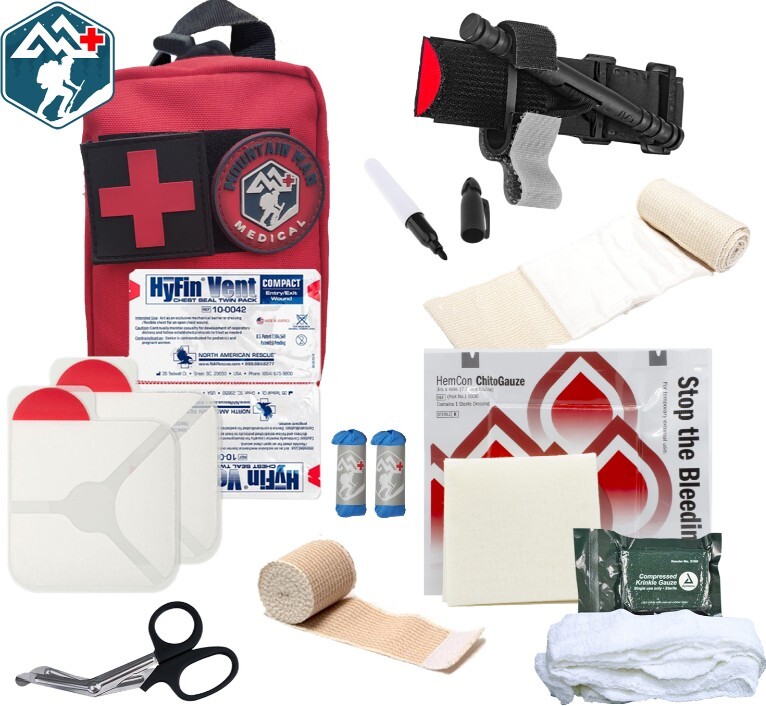
The Mountain Man Medical Yellowstone Trauma Kit hits a nice sweet spot between size and gear. It is small enough for a range bag or daypack. But inside, you get real trauma tools for life-threatening injuries. The focus stays on the big three of trauma care: massive bleeding, chest injuries, and airway problems.
The strong point here is the choice of parts. You do not get a pile of small bandages and wipes you never touch. Mountain Man Medical loads this kit with tools that matter in the first few minutes after a bad injury. The Falcon pouch opens wide and lays everything out so you can see and grab each item fast.
The Yellowstone is sold in several variants; some include no tourniquet, some include a SWAT-T, and many buyers upgrade to a CAT based on training preference. Past the tourniquet, you get QuikClot hemostatic gauze for packing deep wounds, Hyfin chest seals for chest hits, and a mini emergency trauma bandage to hold pressure.
For small cuts and scrapes, you still get basic gauze rolls and an elastic wrap bandage. So you can handle both big and small problems from one pouch. Trauma shears, nitrile gloves, and a small marker for tourniquet time round out the core layout. The whole kit stays compact enough for a glove box or crowded range bag without losing key tools.
Pricing usually falls in the $120–$140 range, so it is not a budget kit.. But it brings strong value for the price. Many cheaper options use fake tourniquets or weak chest seals. Those are the parts that can decide if a patient makes it or not, so cutting corners there is a bad trade.
Price: Typically $120–$140 depending on tourniquet option.
Features
- Compact "Falcon" trauma pouch with internal organization for gauze, gloves, shears, and marker.
- Tourniquet options: none/SWAT-T base; CAT upgrade available depending on preference.
- QuikClot hemostatic gauze, compact twin chest seals, mini trauma bandage, gauze rolls, elastic wrap, nitrile gloves, trauma shears, and mini marker.
Pros
- Strong trauma focus straight out of the box.
- Compact footprint that drops easily into range bags and daypacks.
- Easy to upgrade specific components to match your training.
Cons
- Very light on everyday first-aid items like band-aids and ointments.
- More expensive than many generic pre-packed kits.
- Requires basic medical training to use everything correctly.
2. RTS Tactical Rapid Deploy Complete Belt-Mount IFAK
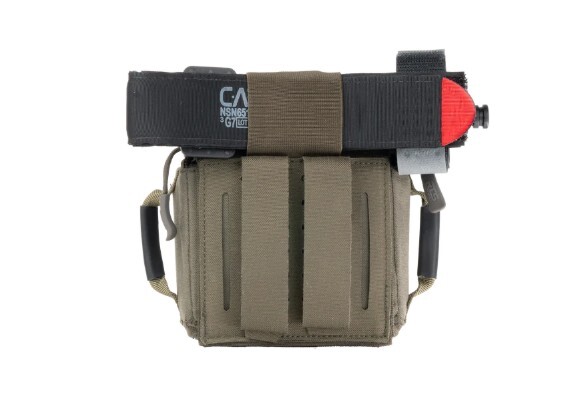
The RTS Tactical Rapid Deploy Complete Belt-Mount IFAK targets a clear need for duty carry. It rides flat on your belt in a horizontal position, so the kit hugs your body instead of hanging and swinging. That low profile helps a lot when you wear the kit all day.
The smart part is the quick pull design. In a rush, you grab the trauma insert and pull it straight out of the elastic belt sleeve. You do not have to unclip or remove the pouch from your belt. You can even hand the insert to a partner so they can work on a patient right away.
Contents mirror the Rapid Deploy trauma-focused layout, but exact items vary by configuration (tourniquet model and some component swaps). The focus is on fast control of bleeding, chest wounds, and airway support. Options typically include a CAT, SOF-T, or SWAT-T tourniquet, and common components may include an Israeli trauma bandage, QuikClot hemostatic gauze or Z-packed gauze, Hyfin chest seals, plus gloves, trauma shears, and a CPR mask.
For law enforcement, security, and other duty roles, the belt mount setup solves the “where do I put this” problem. The horizontal carry keeps the pouch tight to your body and cuts down on snags through doors, around seats, and in tight rooms. Many armed citizens also like it for the same reason. It looks cleaner than a big tactical pouch hanging off the side.
At about one hundred seventy dollars, it costs more than many standard IFAKs. But you are paying for a purpose-built belt system and solid name-brand parts. For people who carry every day, that comfort and access can make the price worth it.
Price: Roughly $170
Features
- Elastic horizontal sleeve that secures the IFAK insert until you deliberately pull it free.
- Choice of name-brand tourniquet depending on configuration.
- Includes trauma bandage, hemostatic gauze, Z-fold gauze, vented chest seals, tape, gloves, trauma shears, CPR mask, triage marker, and nasal airway with lubricant.
Pros
- Belt-mounted design is well-suited for law-enforcement and professional carry.
- Easy to pull the insert and pass it to someone else.
- Strong trauma loadout tuned for massive bleeding and airway issues.
Cons
- Minimal to no minor first-aid content.
- Sits at the higher end of the price range.
- Overkill for casual shooters who just want a glovebox kit.
3. MyMedic MyFAK Large Pro
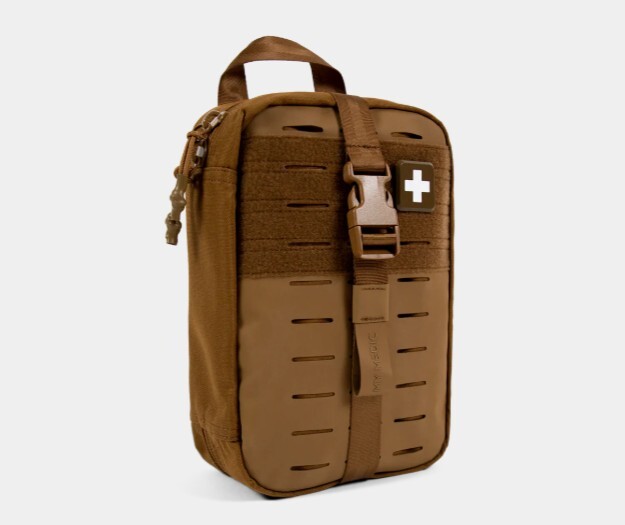
The MyMedic MyFAK Large Pro is the big one in this list. It holds over two hundred pieces, from trauma tools to simple bandages and basic meds. This is not a kit for your belt or ankle. It is more like a small medical station in a bag for home, vehicles, camp, or a range master’s table.
The Mod system is what really helps this bag shine. MyMedic groups related items into small packs called Mods. You get clear groups for burns, wound care, meds, hydration, and more. In a tense moment, you grab the Mod you need instead of digging through a pile. Each one has a clear label so even someone with little medical training can find the right group fast.
Trauma gear is well covered. You get chest seals, a tourniquet (MyMedic’s Rapid Tourniquet or equivalent depending on current pack-out), hemostatic gauze, a compression bandage, and NPAs (nasopharyngeal airways). Some users prefer to swap in a CAT or SOFTT-W if that matches their training. On top of that, the kit adds a wide spread of everyday items. There are cold packs, bandages in many sizes, blister care, burn care, pain meds, allergy meds, stomach meds, and hydration packets. Tools like a penlight, thermometer, and EMT shears fill out the layout.
If you want one main kit for a house, cabin, or RV, this bag makes a strong case. The broad range of gear means you can handle a lot of problems from the same place. The Mod system also makes restocking simple. You can pull a Mod, check dates, and swap used pieces without unpacking the whole bag.
The Professional version runs around four hundred dollars, so it sits in the high end. But you are paying for a large count of quality items and a smart layout, not just a big bag of random gear. If you want the same setup in a smaller shell, MyMedic also sells a Mini version with fewer supplies but the same Mod style.
Price: Around $400+ for the Pro configuration.
Features
- Large outer bag with labeled Mods for burns, hydration, meds, wound care, tools, and more.
- Includes chest seals, tourniquet, compressed gauze, pressure bandage, hemostatic products, and wound-closure options.
- Stocks multiple medications, ointments, sunscreen, sting relief, lip balm, cold packs, space blankets, CPR shields, gloves, and a basic guide.
- Tools such as EMT shears, penlight, tweezers, thermometer, and tape are included.
Pros
- Extremely comprehensive; covers both trauma and everyday injuries.
- Modular layout makes it much easier for non-medical people to navigate.
- Excellent as a "main hub" kit for home, office, or vehicle.
Cons
- Bulky and heavy compared to typical IFAKs.
- Significantly more expensive than minimalist trauma kits.
- Still benefits from a smaller on-body kit for range or duty use.
4. BFG Micro Trauma Kit NOW! Pouch
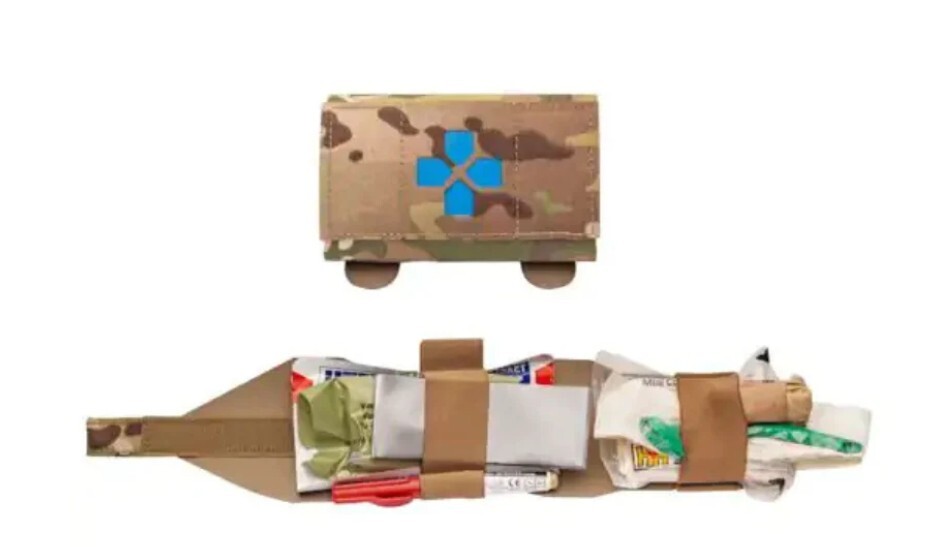
The Blue Force Gear Micro Trauma Kit NOW! Pouch is a modern carrier for people who want to build their own kit. You do not get medical gear inside by default. Instead, you get a very slim pouch that lets you carry the items you choose in a smart and flat way.
The key feature is the two-part layout. There is an outer carrier that mounts on belts or MOLLE. Inside that sits a pull-pack that holds your gear. In an emergency, you grab the red handle and the inner pack slides out in one move. Your trauma tools are laid out in front of you, so you are not digging through a deep pouch for a single item.
The Micro name fits. This pouch hugs tight to your body and keeps the bulk low. But with good packing, it can still hold the basics. You can load a modern tourniquet, hemostatic gauze, compact chest seals, a small pressure bandage, gloves, and a couple of small extras like a marker or tiny light. The small size forces you to carry what truly saves lives, not random extras.
For range belts, duty rigs, or everyday setups where space and weight matter, the Micro TKN brings real gains. It shines on battle belts and plate carriers with limited room. Many competition shooters like it because it does not get in the way of movement. The clean look also works better for low-key carry than a big boxy medical pouch.
The empty pouch usually costs around ninety five to one hundred dollars. That is not cheap for just a carrier. But the build quality and very fast access are hard to beat if you are serious about your own custom trauma loadout.
Price: Around $95–$100
Features
- Compatible with both MOLLE and direct belt attachments.
- Internal organizer insert size for a tourniquet, hemostatic gauze, compact chest seals, pressure bandage, gloves, and a small light or marker.
- Available in various colors and patterns to match duty gear.
- Many versions are sold as an empty pouch for DIY builds, though pre-filled kits also exist.
Pros
- Very low profile compared to many legacy IFAK pouches.
- Pull-out insert design makes access intuitive under stress.
- Ideal for building a custom loadout that matches your training and protocols.
Cons
- Base price covers the pouch only; you must add all medical supplies.
- Limited space for extra comfort items or meds.
- Less suitable if you want a big combined trauma + first-aid kit in one place.
5. Dark Angel Medical Ankle Kit
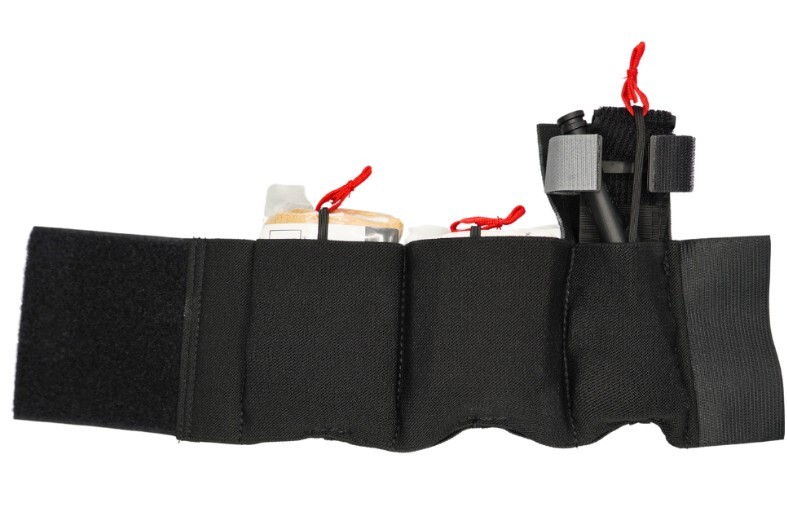
The Dark Angel Medical Ankle Kit helps answer a common problem. How do you carry life-saving gear when you cannot wear a big pouch on your belt. This ankle rig lets you hide core trauma tools under your pant leg so you still have them when you need them.
The setup uses an adjustable wrap with hook-and-loop closure. It rides just above the ankle bone, where it rubs less and moves less. Inside, you carry only the key items. Depending on configuration, ankle kits usually include a proven tourniquet (often CAT/SOFTT-W), hemostatic gauze, a compact pressure bandage, and vented chest seals. That lean loadout keeps bulk low but still covers the main trauma needs.
The ankle spot brings real perks beyond hiding gear. Pockets fight for space with keys, phones, and wallets. Belts may already be full with holsters and mag carriers. The ankle area is often open and easy to reach even in tight seats or crowded rooms. For concealed carriers who do not have room for both gun and medical gear on the belt, this gives a simple second option.
Dark Angel paid close attention to how this rides on the leg. Gear is placed so the tourniquet and other time-critical items come out first. The wrap holds snug during walking and running but is still comfortable for long days. It pairs best with straight-leg or boot-cut pants that cover the rig without gripping the calf.
At about one hundred sixty five dollars, this kit is a niche tool, not a bargain-bin buy. But for people who need low-profile medical carry, such as off-duty pros, concealed carriers, or anyone in formal dress, the ankle rig can be worth the extra cost. You get real trauma gear in a place where it would otherwise be missing.
Price: Around $160–$170
Features
- Ankle wrap with hook-and-loop closure and pockets sized for trauma gear.
- Supports a CAT or SOFTT-W tourniquet, hemostatic gauze, mini compression bandage, and compact vented chest seals.
- Includes nitrile gloves and small accessory slots for marker or similar items.
Pros
- Very discreet carry method; blends into most everyday clothing.
- Keeps real trauma gear on you even when you're not wearing a belt or pack.
- Uses high-quality components instead of off-brand clones.
Cons
- Limited capacity; only the essentials fit.
- Not ideal under skinny or very tapered pants.
- Works best as a supplement to a larger home or vehicle kit.
6. Adventure Medical Kits Me and My Dog
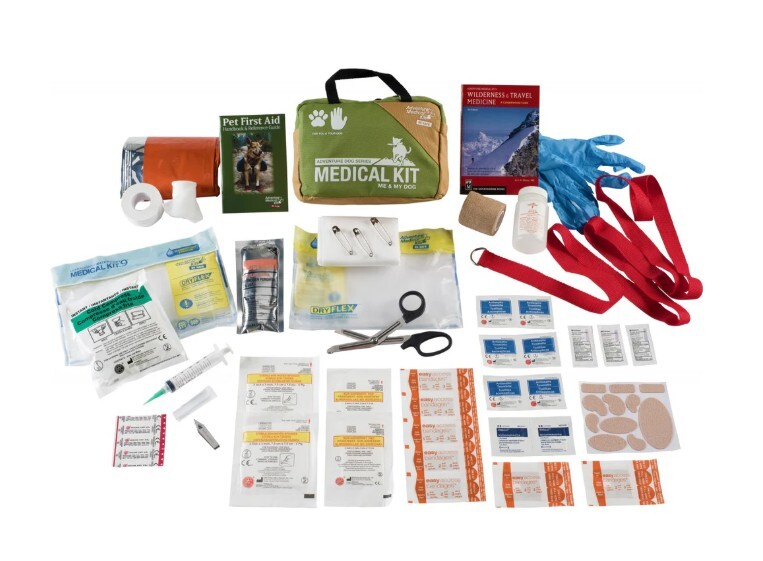
The Adventure Medical Kits Me and My Dog Medical Kit fills a gap many gear lists miss. It covers first aid for both people and their dogs in one pouch. It is built for hiking, camping, and day trips, with more focus on everyday injuries than on heavy trauma. So it works best beside a full trauma kit, not in place of one. This is a first-aid + pet kit, not a trauma-focused IFAK.
The dual focus is what makes it stand out. Along with standard human first aid items, you get dog-specific pieces. There is a spare leash, a pet first aid guide, a tick tool, and bandage gear that you can turn into a quick muzzle if needed. You do not need a separate pet kit, which saves weight and space in your pack.
Most of the gear helps with common outdoor problems. You will see bandages, gauze, antiseptic wipes, moleskin for hot spots and blisters, and basic meds. There is also an emergency blanket, hydrogen peroxide for dogs that eat something toxic on trail, and an irrigation syringe to rinse wounds. Some kits include pet-specific adjuncts for ingestion emergencies, but guidance varies — follow the included dog first-aid guide or your veterinarian’s advice. That mix gives you a lot of options for small to mid-level issues.
Trauma gear is where this kit steps back from a classic IFAK. There is no tourniquet, no hemostatic gauze, and no chest seals. It is built more for scrapes, bites, small cuts, and simple pain, not for major bleeding. For people who hike or camp with dogs, that focus makes sense for daily use. You can always pair it with a separate trauma kit in your bag.
At around fifty five to sixty dollars, the Me and My Dog kit offers solid value. You get human and pet supplies in one tidy pouch. For many outdoor pet owners, it becomes the main “boo-boo kit” that lives in the daypack, next to a more serious trauma kit for higher risk trips.
Price: Around $55–$60.
Features
- Assortment of bandages, gauze, elastic wrap, tape, antiseptic wipes, ointments, and basic meds.
- Tick and splinter remover, irrigation syringe, instant cold compress, safety pins, triangular bandage, and emergency blanket.
- Spare leash and a bandage that can be used as a makeshift muzzle for a dog.
- Includes pocket-sized booklets for dog and wilderness first aid.
Pros
- Covers both you and your dog with one convenient kit.
- Good spread of small-injury supplies for outdoor activities.
- Helpful written instructions for non-medical users.
Cons
- Not a trauma kit; lacks tourniquet, hemostatic gauze, and chest seals.
- A bit bulky compared to ultra-minimalist pocket kits.
- Works best when paired with a separate trauma-oriented IFAK.
7. RTS Tactical Rapid Deploy IFAK
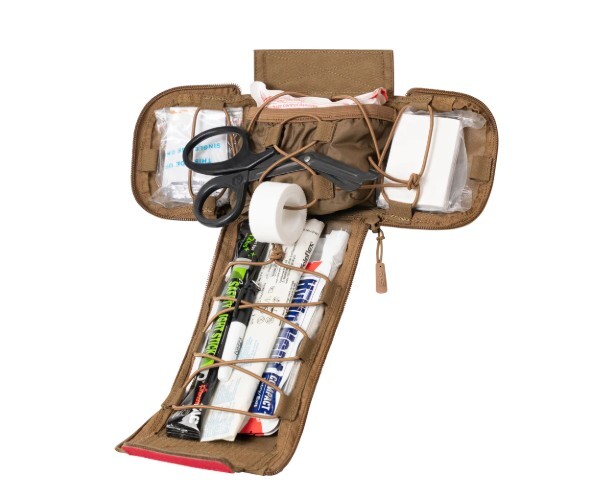
The RTS Tactical Rapid Deploy IFAK lives up to its name with a fast-open layout. You can get to the gear without taking the pouch off your platform. The flap design and clear layout put the most important tools right where your hand lands first, so you waste less time on fumbling.
At roughly 3.5″ × 4.5″ × 8″ (varies slightly by model), the kit stays fairly compact. Inside, the focus is on the big three preventable killers in trauma: heavy bleeding, airway trouble, and chest issues like tension pneumothorax. You can choose a CAT, SOF-T, or SWAT-T tourniquet, and it sits in a spot you can grab with one hand.
Beyond the tourniquet, the kit carries core items for bleeding and breathing. You get an Israeli trauma bandage, QuikClot hemostatic gauze, Z-packed gauze, Hyfin mini chest seals, and a nasal airway with lube. Support items include medical tape, a CPR mask, nitrile gloves, trauma shears, and a marker for tourniquet time. These contents align with RTS’s published loadout options. It leaves out comfort items to keep space for what keeps people alive.
The mounting layout is also worth a close look. Laser-cut MOLLE panels let you mount the pouch on plate carriers, chest rigs, belts, or pack straps. That range of options, along with the one-hand deployment, makes it well suited to tactical and high-stress settings. You can reach your gear in cramped spots or odd body positions.
With a price near one hundred seventy dollars, this IFAK sits in the premium bracket. You do pay more than for a simple first aid pouch. But you get real name-brand trauma parts, a smart layout, and very fast access. This kit is aimed at people who want a dedicated tool for life-threatening injuries, not a general boo-boo bag.
Price: $160
Features
- Rip-open design with a layout focused on visibility and speed.
- Choice of modern tourniquet, plus trauma bandage, QuikClot or similar hemostatic gauze, Z-fold gauze, and vented chest seals.
- Also includes a nasal airway with lubricant, medical tape, nitrile gloves, trauma shears, CPR mask, glow stick, and marker.
Pros
- Strong trauma capability in a relatively small footprint.
- Simple to mount directly to armor, chest rigs, or belts.
- Uses widely trusted components for bleeding and chest-injury control.
Cons
- Lacks the everyday "small cut and headache" items many people want.
- More expensive than generic trauma kits with lower-grade contents.
- Best value if you actually train with and use plate carriers or full range belts.
Essential IFAK Contents: What Every Kit Should Include
Tourniquets
- Modern tourniquets stop catastrophic limb bleeding in seconds
- Look for CAT, SOFTT-W, or similar proven designs from reputable makers
- Avoid Amazon specials or ultra-cheap clones that can fail when needed
- Practice one-handed application – you might need to treat yourself
Hemostatic Gauze and Wound-Packing Supplies
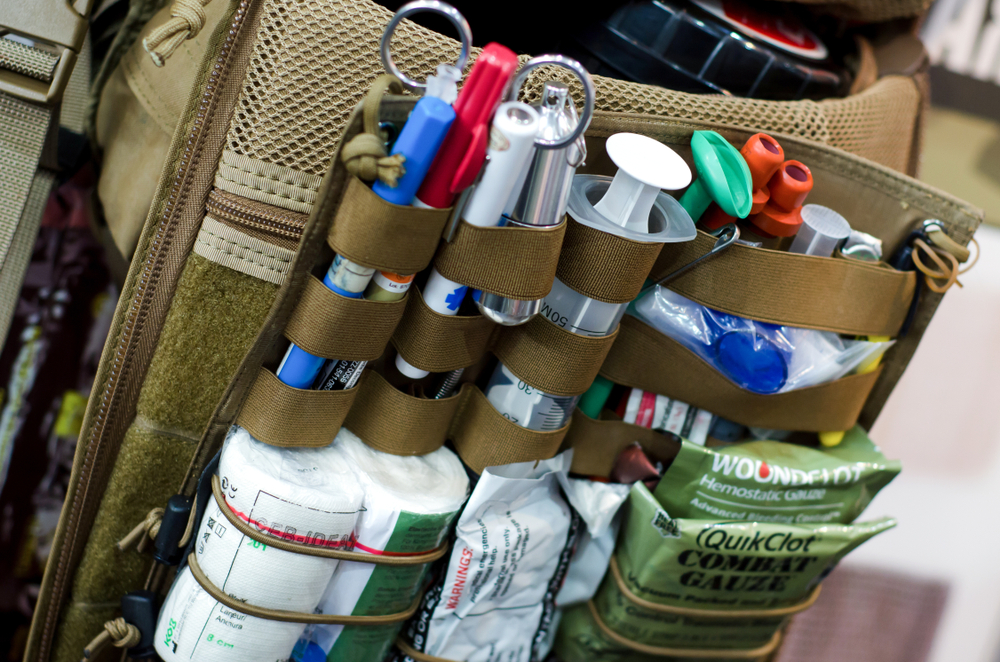
- QuikClot Combat Gauze or similar products help blood clot faster
- Modern gauze works better than old powdered agents
- Used for wounds where tourniquets won't work (neck, shoulder, groin, etc.)
- Always pair with a pressure bandage to maintain compression
Pressure Bandages and Trauma Dressings
- Israeli-style bandages combine gauze pad, elastic wrap, and pressure bar
- Built-in clips or Velcro make one-handed application possible
- Look for 4" or 6" width for versatility
- Helps secure wound packing and maintain direct pressure
Chest Seals for Penetrating Chest Injuries
- Addresses "sucking chest wounds" that can collapse lungs
- Vented designs allow air to escape but not enter the chest
- Most come in pairs – one for entrance wound, one for exit
- Look for strong adhesive that sticks to wet, hairy, or dirty skin
Gloves, Shears, and Small Tools
- Nitrile gloves protect both you and the patient
- Trauma shears cut through clothing quickly and safely
- Marker to note tourniquet time on the tourniquet or patient skin where visible
- Penlight helps assess pupils and see in low light
Small First Aid and Meds
- Band-aids, antibiotic ointment, alcohol wipes for minor cuts
- OTC meds: ibuprofen, acetaminophen, diphenhydramine, aspirin
- Cold packs for sprains and bumps
- Moleskin or blister pads for foot care
Optional add-ons for range/outdoors kits
- Hands-free headlamp frees both hands for treatment
- Tweezers remove splinters, ticks, and debris
- Small flashlight works as backup if headlamp fails
- Red mode preserves night vision during darkness
How to Choose the Best IFAK for Your Needs
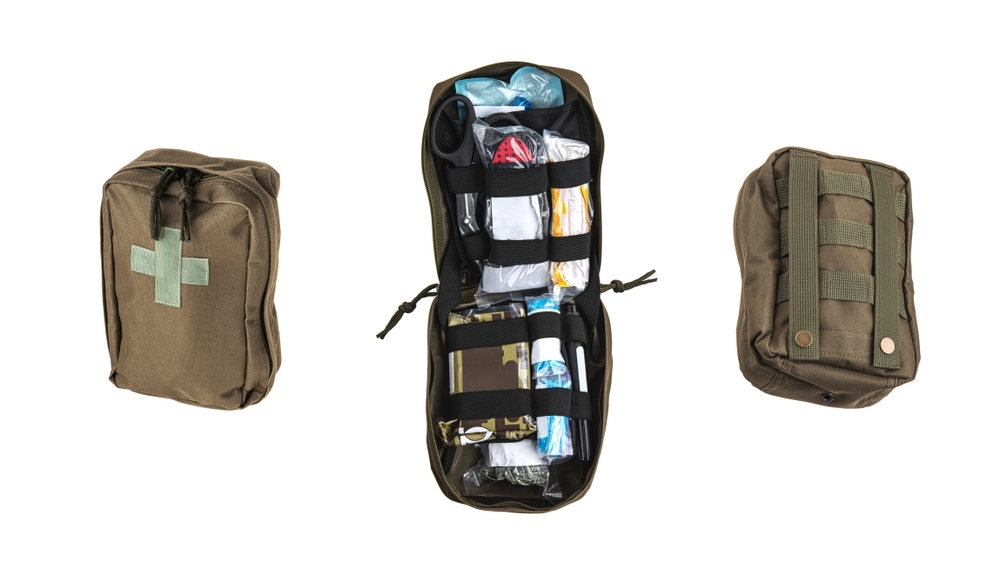
Match the Kit to Your Environment
If you mostly use your kit at the range, keep it simple and small. You need strong bleeding control and basic first aid that fits in a range bag or on a belt. Focus on a real tourniquet, gauze, and a pressure bandage, plus a few small items for minor cuts.
If you carry it every day, size matters most. You want a tiny kit that stays hidden and does not change your profile. An ankle kit or a small belt pouch works well, packed with only the core pieces like a tourniquet and hemostatic gauze.
If you work patrol or duty, your kit has to ride on the belt. It should sit flat and not get in the way of other gear. A horizontal mount helps with this. Fast tear-off panels and one-handed pulls also help when you are in a bad spot.
For hikers, travelers, and pet owners, you need a kit that can handle many small problems. Go for a wider mix of trauma gear and comfort gear. This pays off when you are far from helping or caring for both people and animals.
Where and How You'll Carry It
Belt-mounted kits give you fast access. They do add bulk at your waist, so they shine on duty days or range days when looks do not matter much.
An ankle kit hides very well but holds less gear. It fits daily carry when your clothes will not hide a belt kit or a pocket kit.
A backpack or bag kit lets you carry a larger layout. You get more gear, though it always takes longer to reach. This works well for hiking, travel, or as a backup to a small kit on your body.
A vehicle kit can be big and very complete. Just remember it only helps you when you are close to the car during the emergency.
Training Level and Confidence
Be honest about your skills. A kit built for a paramedic is dead weight if you do not know how to use the gear inside.
Start with tools that match what you know right now. Basic bleeding control needs only simple training and can still save a life. That means a tourniquet, good gauze, and a pressure bandage.
As your skills grow through courses like Stop the Bleed and formal first aid classes, you can grow your kit as well.
Under stress, your hands do not work as well. Choose gear that feels simple and clear to use. Avoid tools that need many tiny steps when your heart is racing.
Budget, Quality, and Upgrades
Do not cut corners on life-saving gear. Fake tourniquets and cheap chest seals can fail at the worst time.
If money is tight, buy fewer items and keep the quality high. One real tourniquet beats three weak copies.
You can build your kit step by step. Start with strong hemorrhage control using a tourniquet, hemostatic gauze, and a pressure bandage. Later you can add chest seals and simple airway tools when you have room in the budget.
Plan to check your kit on a set schedule. Look at date labels on medicine and hemostatic products. Also look over tourniquets for wear, fading, or broken parts and replace them when needed.
Training, Safety, and Legal Notes
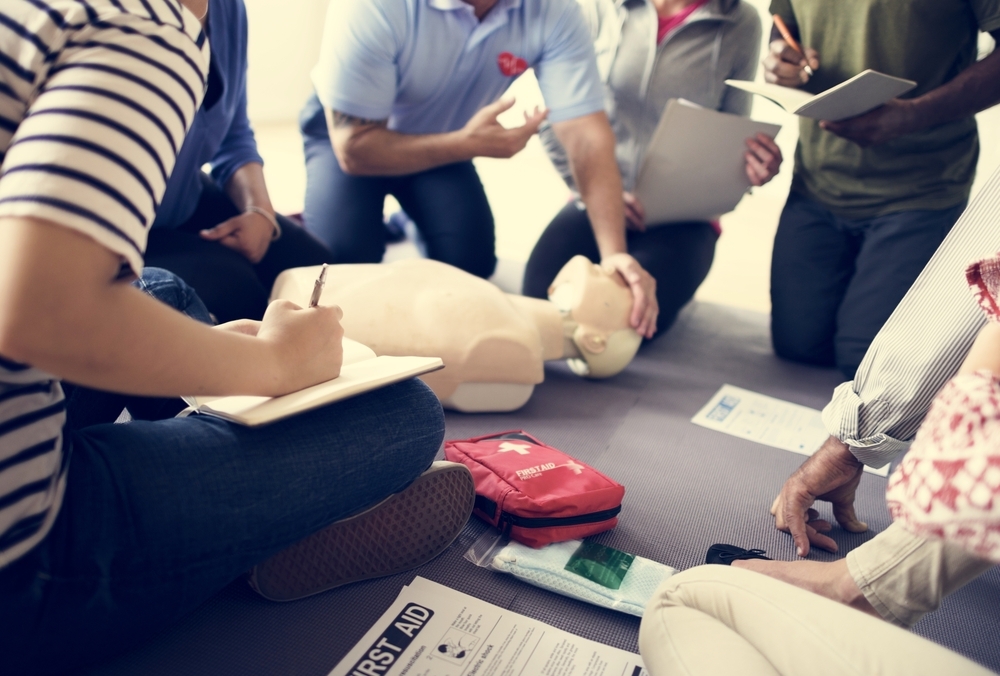
Good medical gear only helps if you know how to use it. So get hands-on training. A Stop the Bleed course teaches basic hemorrhage control, tourniquet use, wound packing, and pressure bandages. These are the core skills that keep someone alive until higher care takes over.
CPR and basic first aid give you extra tools beyond trauma care. Groups like the American Red Cross, the American Heart Association, and many community colleges offer simple, budget-friendly classes. Many of these now mix bleeding control in with classic CPR and choking response, so you get more value from one course.
You also need to know the rules where you live. Most states have Good Samaritan laws that protect people who help in good faith, but the details change from place to place. Core items like tourniquets, gauze, pressure bandages, and chest seals are generally legal for civilians. More advanced tools (like decompression needles) and medications can be regulated — check local rules and training requirements.
An IFAK buys time. It does not replace an ambulance or an ER team. Call nine one one or local emergency services first, then use your kit to keep the person stable until help shows up. Even if the person looks better, they still need a proper medical check.
Practice with your kit on a regular basis. Open it, move gear around, and rehearse grabbing items fast. When you know where everything lives, you save seconds that matter under stress. If you can find a class that covers IFAK use, take it and bring your kit along.
Final Thoughts
Having the right IFAK is only half the job. You also need to know how to use it. If you freeze or use tools in the wrong way, the kit just sits there. So invest in training along with your gear.
Start simple if you are new to emergency care. A solid tourniquet, some hemostatic gauze, and a pressure bandage can handle many bad bleeding events. Add basic training, and you already cover a huge part of real-world trauma. You can grow the kit as your skills grow.
Keep your IFAK close and easy to grab. A big trauma bag in the basement will not help at the range or on the road. Small kits in smart places work better: in your vehicle, in your range bag, at home, at work, and on your belt or plate carrier.
Check your kit on a regular schedule. Look for expired drugs, torn or loose packaging, and chest seals that feel dry or stiff. Test zippers and straps. Swap batteries in lights and any electronic gear at least once a year.
Practice getting to your kit and using it in rough conditions. Try to reach it with your non-dominant hand. Try it in low light. Try it with gloves. Short, simple drills build muscle memory, and that calm, sharp feeling in a real emergency.
Remember, an IFAK bridges the gap to professional care. It does not replace EMS. Your main goal is to keep someone alive and stable until the ambulance crew takes over. Call emergency services first, then grab your kit and work while help is on the way.

Rothco MOLLE Tactical First Aid Kit (IFAK)
$47.00
at Pro Armory
Prices accurate at time of writing
Frequently Asked Questions (FAQs)
What is the difference between an IFAK and a regular first aid kit?
An IFAK, or Individual First Aid Kit, focuses on life-threatening injuries. It targets massive bleeding, chest wounds, and airway problems. A regular first aid kit usually covers small cuts, headaches, and comfort items. An IFAK carries tools like tourniquets, hemostatic gauze, and chest seals, and you rarely see those in a basic house kit.
Where should I carry my IFAK for range days or EDC?
For range days, a belt-mounted IFAK or one in your range bag works well. For EDC, ankle rigs and small belt pouches stay more low-key. The main rule is simple. You need to reach the kit fast with either hand, even when your stress is through the roof.
Do I really need a tourniquet in every IFAK?
Yes. A modern tourniquet is the main tool for limb bleeding that can kill in minutes. Medical data from both combat and street use shows that a properly applied tourniquet saves lives in major arterial bleeds. So every IFAK should have at least one good one.
Can civilians legally buy and carry trauma kits?
In most areas, yes. Parts like tourniquets, gauze, bandages, and chest seals are legal for normal buyers in many places. Some airway tools or drugs may face tighter rules in certain regions. If you are unsure, check local laws or ask a medical pro in your area.
How often should I inspect or replace items in my IFAK?
Look over your kit at least four times a year. Pull out anything expired, crushed, dirty, or torn. Make sure chest seals still feel soft and sticky. Many hemostatic dressings last about three to five years with good storage. Replace gear as soon as it looks worn down or weak.
Is one IFAK enough for home, vehicle, and range use?
In short, no. More than one kit gives you better coverage. Aim for a strong kit at home, a compact trauma kit in your vehicle, and a belt or bag setup for the range. The kit that saves a life is the one that is already with you.
Do I need medical training to use an IFAK effectively?
Basic training helps a lot. Classes like Stop the Bleed can give you key trauma skills in a short time. Some actions, like pressing hard on a wound, are simple. Others, like packing a deep wound or placing a tourniquet in the right spot, work much better after hands-on practice.
About the Author
This article comes from the Pro Armory writing team and draws on current research and field use. We reviewed studies from trusted sources such as the Journal of Military Science, Firearms News, and the National Shooting Sports Foundation. We also pulled details from official defense publications, ATF and NRA guidance, and factory manuals from major firearm makers.
Disclaimer: This article is for education only. Laws change from state to state and city to city. Follow safe gun handling at all times. Read your owner’s manual. Check your local rules before you buy gear, train with it, or carry it.
Best Ammo Deals, Training, & Accessories
Subscribe to ProArmory sales and deals email.