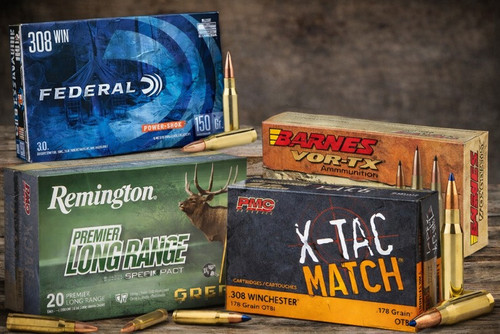
 Pro Armory Editorial Team
Quick Answer
Go Federal Gold Medal Match 168gr for tight groups. Pick Federal Trophy Bonded 165gr for hunting. Grab PMC Bronze for value range time..308 Win and 7.62×51 NATO are close—but not the same. You can use 7.62 NATO in most .308 chambers. Don’t run .308 Win in a 7.62-only rifle unless the maker says it’s safe. These nine loads were picked for accuracy, real-world results, and broad availability. They cover your .308 and 7.62 needs from bench to field.
Key Takeaways
- .308 Win and 7.62×51 NATO are similar but not fully interchangeable in every rifle.
- Match loads like Gold Medal and ELD Match shine past 600 yards.
- Classic hunting loads still dominate for whitetail, hogs, and medium game.
- Budget FMJ loads keep AR-10 and SCAR 17 range time affordable.
- Always follow your rifle manufacturer's chamber markings and guidance.
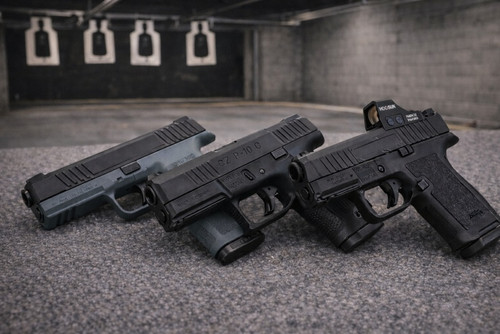
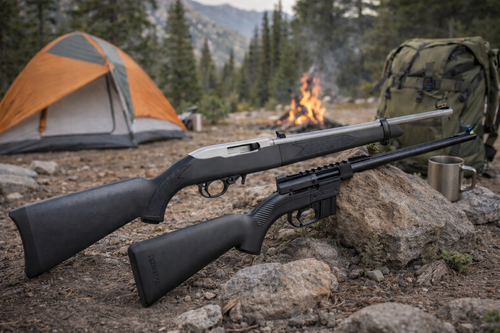
Range day with a lineup of popular rifles always teaches more than any manual. When you see the same AR-10, bolt-action Remington, and SCAR-pattern rifle shoot three different ammo types side by side, the differences become crystal clear.
Good instructors always bring this up. Ammo matters more than brand names or marketing claims. It's common to see groups shrink by half when switching from basic FMJ to match-grade rounds, or to watch bonded hunting bullets perform dramatically better in gel than standard soft points.
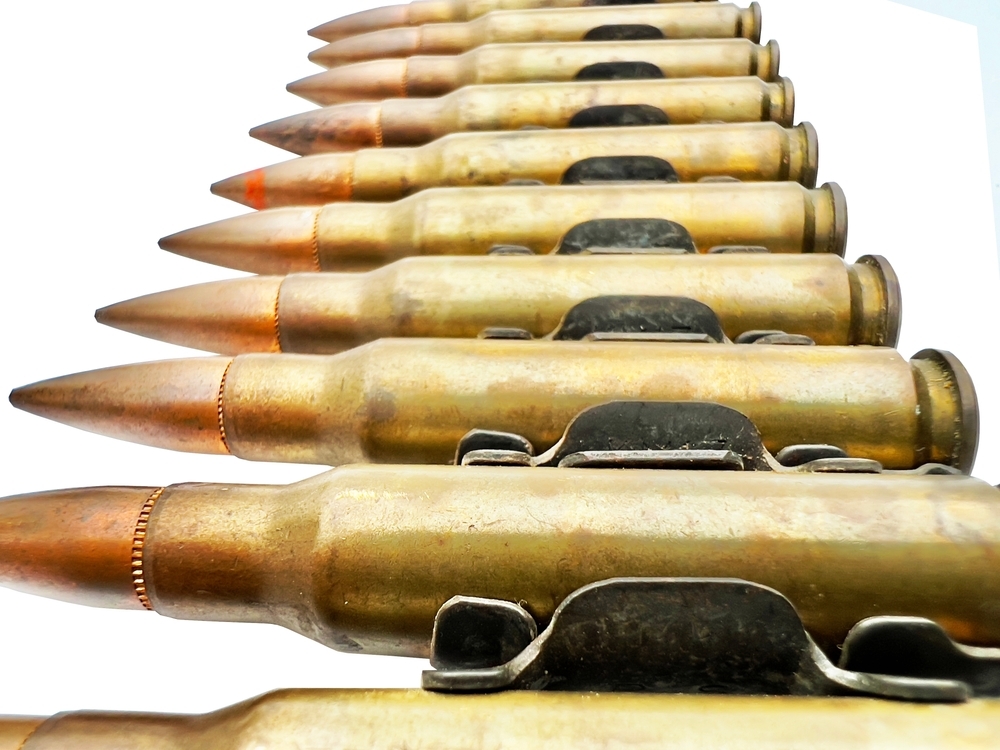
.308 Winchester vs. 7.62×51 NATO – What's the Difference?
Shared History and Why Both Still Matter
The story starts in the post-WWII era. Military planners wanted a round with similar ballistics to the proven .30-06 Springfield but in a shorter, more manageable package for the new generation of battle rifles. This experimental cartridge development eventually led to two very similar but distinct rounds.
Winchester saw the commercial potential and launched the .308 Winchester for hunters in 1952 – a full two years before NATO officially adopted the similar 7.62×51mm cartridge. Hunters loved this new round because it delivered excellent ballistics from shorter, lighter rifles than the .30-06 required. According to historical documents, the .308 Winchester has since become possibly the most popular short-action big-game hunting cartridge in the world.
| Aspect | .308 Winchester | 7.62×51 NATO |
|---|---|---|
| Max pressure | SAAMI maximum of 62,000 PSI | Approximately 60,000 PSI, measured using a different NATO test method |
| Case & chamber | Case dimensions and headspace differ slightly from 7.62×51 | Often paired with looser headspace chambers to ensure reliability in harsh conditions |
| Load variety | Wide commercial selection, typically 125–210 gr bullets | Commonly 147-gr ball and 175-gr match-style loads such as M118LR |
| Typical use | Short-action big-game hunting and precision shooting | Military service, training, and designated marksman / sniper roles |
| Safe interchange | Usually safe to fire 7.62×51 NATO in .308 rifles (always confirm with the manufacturer) | .308 may be unsafe in some older surplus 7.62 rifles; verify with the maker before use |
Case Specs, Pressure Ratings, and Headspace
These cartridges look close at first. But there are clear technical gaps you should know.
SAAMI lists .308 Winchester at a maximum average pressure of 62,000 psi, while NATO lists 7.62×51 at about 60,000 psi. They use different test methods, though, so the numbers aren’t perfectly comparable. In general, many commercial .308 loads are a bit warmer than surplus 7.62×51, but it depends on the specific ammo.
The physical gaps come from small changes in case wall thickness, case size, and headspace. Many 7.62×51mm military chambers use looser headspace. That helps guns run with mixed ammo and in rough conditions.
Safe Interchange Rules You Can Use
So can you swap them around? Use this simple guide:
- Usually OK: 7.62×51 in a modern .308 rifle.
- Be careful: .308 in older 7.62×51 surplus rifles.
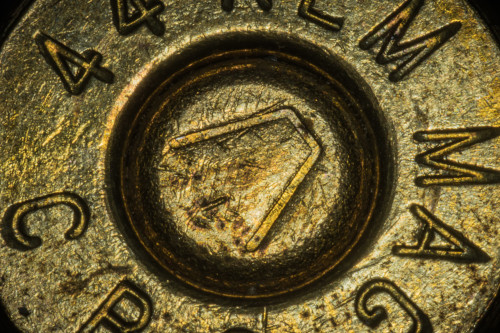
Always read your barrel markings and the owner’s manual first. This advice comes from the pressure gap and the headspace differences between the two.
Firing .308 Winchester in rifles marked 7.62×51 can be a problem in older surplus rifles that have looser chambers. Many modern 7.62×51 rifles are built to handle .308 safely, but you should confirm with the manufacturer or a good gunsmith before you assume that.
Ballistics and Load Variety
When you match bullet weights, both rounds fly about the same. But the big gap shows up in load choice:
The commercial .308 Winchester comes in a huge range of loads. You get light 125-grain varmint bullets, all the way up to heavy 210-grain options for long-range work.
By contrast, 7.62×51mm NATO is mostly sold in two common loads. You see 147-grain ball rounds and 175-grain match loads like the M118LR, with far fewer choices in between.
Experts note both rounds grew from the T65 test line in the 1940s. Their specs split a bit before each one was set as a standard.
Velocity varies significantly between rifles. A short semi-auto may run 100–200 fps slower than a long-barreled bolt gun, which affects drop and terminal performance.
How We Tested the Best .308 & 7.62×51 Ammo
Rifles and Platforms Considered During Research
To give you helpful picks, we looked at how these loads are known to run in common rifles:
- AR-10 pattern rifles such as the Aero M5
- SCAR 17-style systems
- HK roller-delayed models like G3, PTR, and CETME
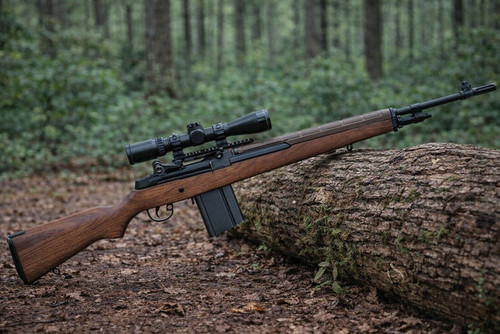
- Well-known bolt guns like the Remington 700
And here’s the goal. Match each load to the job and the action type. That way your ammo choice fits your use case.
Sources and Analysis Methods
Our selections are based on extensive review of manufacturer specifications, ballistic data, verified user feedback, professional industry discussions, and our team’s background drawn from time in military, competitive shooting, and gun-shop environments.
We focus on what real shooters consistently report in varied environments, from short-range training to extended-distance precision roles.
What We Assessed
Evaluation criteria included:
- Expected reliability (feeding characteristics, primer and case quality)
- Accuracy potential based on verified group data and ballistic design
- Velocity and ballistic consistency from published chronograph results
- Terminal performance information from credible sources for hunting loads
- Cost-to-performance balance and real-world availability
- Suitability for long-term use on steel and paper targets
Quick List – Best .308 & 7.62×51 Ammo at a Glance
- Federal .308 Win 165gr Vital-Shok Trophy Bonded Tip – Best all-around hunting load
- Remington .308 Win 150gr Core-Lokt PSP – Best budget hunting
- Barnes VOR-TX .308 130gr TTSX Boat Tail – Best varmint and light-medium game
- Federal .308 Win 168gr Gold Medal Match – Editor's choice for precision
- Hornady Match .308 Win 168gr ELD Match – Best long-range match alternative
- M118LR 7.62×51 175gr BTHP – Proven DMR/sniper load
- PPU Match .308 Win 168gr HPBT – Best budget match
- PMC Bronze .308 Win 147gr FMJ-BT – Best general plinking
- AAC .308 Win 150gr FMJ-BT – Most affordable range ammo (PSA exclusive)
How To Choose the Right .308 & 7.62×51 Ammo
Key Factors That Matter More Than Brand Name
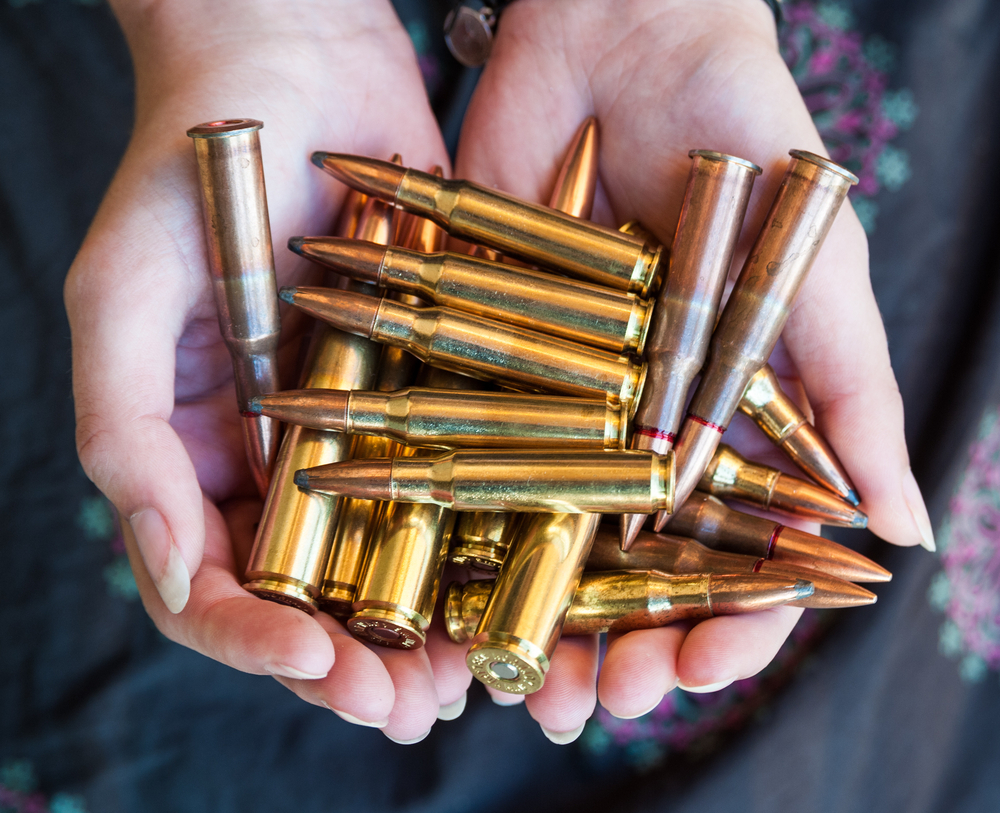
Start with bullet construction:
- Bonded bullets keep the core and jacket together on tough game
- Soft points give controlled expansion for hunting
- All-copper bullets keep their weight for deep penetration
- Match BTHP bullets focus on accuracy
- FMJ rounds are cheap and ideal for practice
Bullet weight matters too:
- Lighter (130–150gr): flatter trajectory, more wind drift
- The 165–168gr range balances recoil, wind resistance, and expansion windows for most .308 rifles, which is why it’s the most common recommendation for general-purpose hunting and precision.
- Heavy (175–180gr+): better in wind, hit harder at distance
Barrel length and twist rate also shape performance. Most modern .308/7.62 barrels use a 1:10" twist that stabilizes common bullet weights. But always check your rifle’s specs.
Hunting vs. Target vs. Plinking
Hunting ammo needs strong terminal performance. You want proper expansion, enough penetration, and good energy transfer for clean, quick drops. Bullet design matters here, big time.
Match and target loads focus on consistency and precision. They use carefully selected components and aerodynamic bullets to keep groups tight at long range.
Plinking ammo is about low cost and dependable function. It should feed, fire, and hit close to the point of aim without costing too much.
Rifle Type and Role
Different rifles like different ammo:
- Semi-autos (AR-10s, SCAR 17s) need loads that run the action clean. Ammo that’s too hot or too mild can cause jams.
- Bolt-actions forgive more, but each rifle still has a favorite for tight groups.
Gas systems and recoil feel change from gun to gun. A load that shines in a bolt gun can beat up a semi-auto. A mild load can also short-stroke it.
Most .308/7.62×51 loads work with a properly rated suppressor. But hot, high-pressure ammo can speed up wear on the can and on rifle parts.
Best .308 & 7.62×51 Ammo
Federal .308 Win 168gr Gold Medal Match (Best Precision / Editor's Pick)
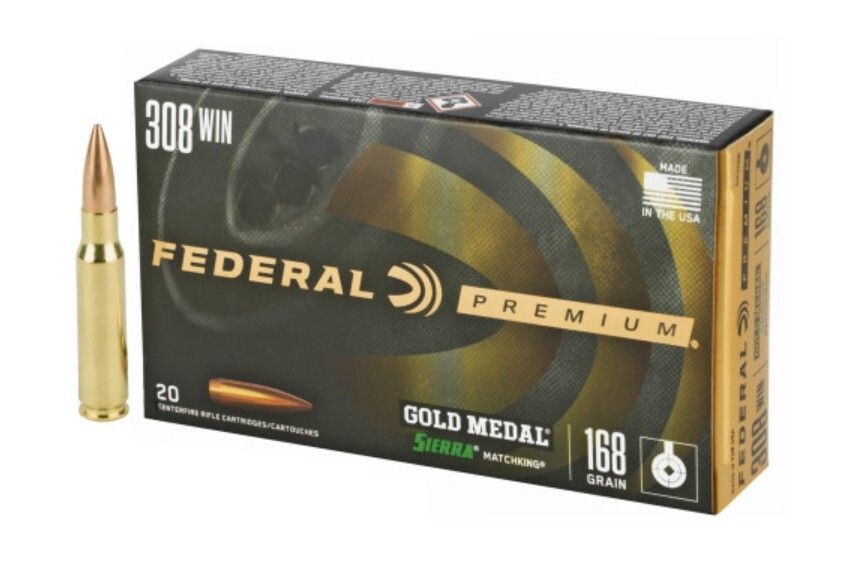
Federal Gold Medal Match has earned its reputation as the benchmark .308 match load. Built around the Sierra MatchKing HPBT bullet, it delivers exceptional accuracy from nearly any rifle capable of precision work.
Many rifle manufacturers use this specific load as their accuracy testing standard. If a manufacturer claims their rifle shoots "sub-MOA," they've likely tested it with a Gold Medal Match or something very similar.
This ammunition has been a staple in competition, law enforcement, and precision shooting circles for decades. It's the standard against which other match ammunition is often judged.
Price: Around $33 for a 20-round box
Features
- Caliber: .308 Winchester
- Bullet: 168gr Sierra MatchKing HPBT (BTHP)
- Factory-loaded to tight tolerances for match accuracy
- Brass-cased, boxer-primed, reloadable
Pros
- Excellent accuracy; often sub-MOA in quality rifles
- Long-standing reputation in precision and duty roles
- Very consistent performance lot to lot
Cons
- More expensive than basic FMJ or plinking loads
- Overkill for short-range, casual shooting
Remington .308 Win 150gr Core-Lokt PSP (Best Budget Hunting Load)
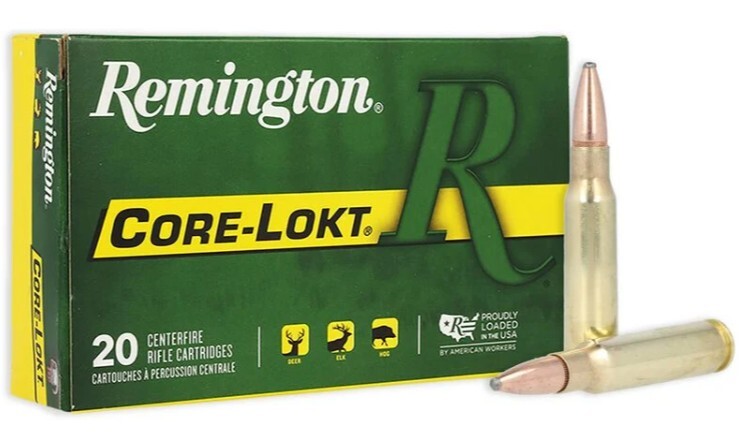
Remington’s Core-Lokt has fed families for ages. This classic deer round has likely dropped more whitetail than any other load in much of the East and South.
The 150-grain soft point balances speed, punch, and clean results. It opens up fast on deer-size game at normal woods ranges. And you don’t pay the premium of bonded or tipped bullets.
If you want proven results without a big bill, grab Core-Lokt. It’s plain gear that works. Hunt, drag, dinner.
Price: Around $25 for a 20-round box
Features
- Caliber: .308 Winchester
- Bullet: 150gr Core-Lokt Pointed Soft Point (PSP)
- Designed for controlled expansion on medium game
- Brass case, suitable for most hunting rifles
Pros
- Proven whitetail load with a long track record
- More affordable than many premium hunting rounds
- Widely available during hunting season
Cons
- Less aerodynamic than tipped bullets at longer ranges
- Not as consistent as top-tier match ammo for precision work
M118LR 7.62×51mm 175gr BTHP (DMR / Sniper-Derived Load)
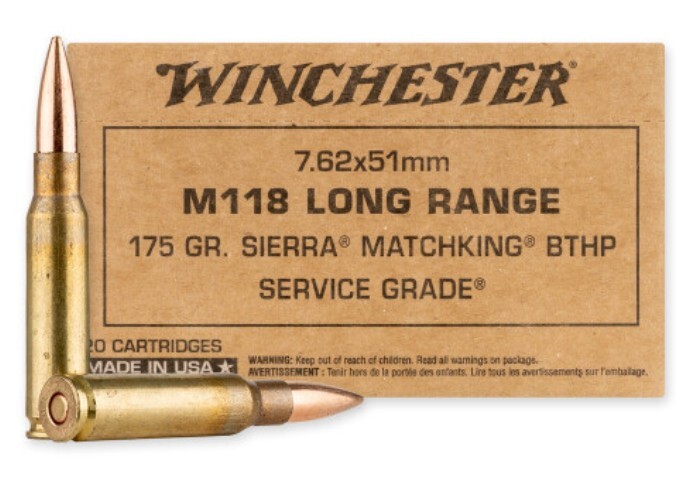
Civilian “M118LR-style” loads use similar 175-grain match bullets and performance specs, but exact components and velocities vary depending on the manufacturer.
The boat-tail hollow point holds speed better and fights wind more. Past 500 yards, that edge shows.
Many semi-auto .308/7.62 rifles shoot this round with tight groups. It has a long record on the line and in the field. Aim small, hit small.
Price: Around $32 for a 20-round box
Features
- Caliber: 7.62×51mm NATO
- Bullet: 175gr HPBT (Sierra MatchKing style)
- Designed for long-range accuracy and stability
- Typically loaded to NATO spec pressure
Pros
- Excellent performance beyond typical 600-yard distances
- Heavier bullet handles wind better than 147–150gr loads
- Proven track record in professional roles
Cons
- Recoil feels slightly stronger than with 147–150gr loads because of the heavier bullet and typical powder charges.
- Often pricier and less available than standard ball ammo
Barnes VOR-TX .308 Win 130gr TTSX Boat Tail (Best Varmint / Light-Medium Game)
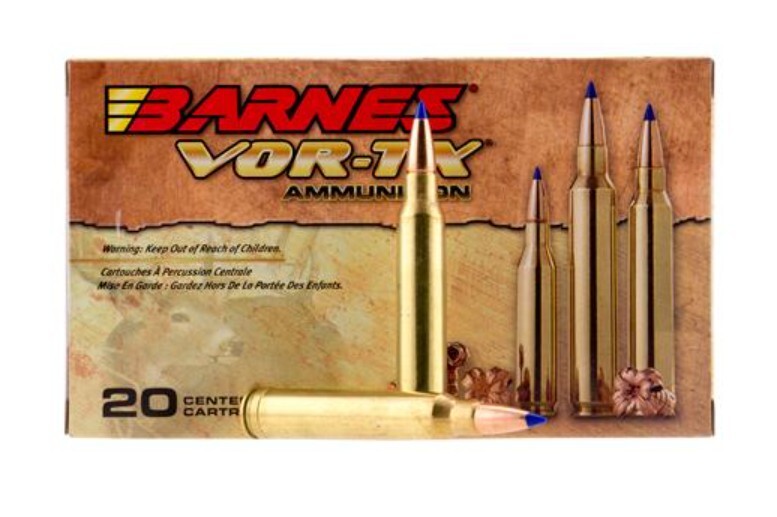
Barnes VOR-TX with the 130-grain TTSX hits fast and opens quick. It shines on varmints and lighter big game.
The all-copper bullet keeps almost all its weight. The tip starts rapid expansion on impact. You get strong energy transfer without blow-through.
If you need a clean, lead-free choice for coyotes, antelope, or deer, this light, fast load fits the job. It’s tidy, humane, and field-ready.
As with most monolithic bullets, keep impact velocity in mind. Very long-range shots may reduce expansion performance.
Price: Around $44 for a 20-round box
Features
- Caliber: .308 Winchester
- Bullet: 130gr Tipped Triple-Shock X (TTSX) Boat Tail, all-copper
- Heat-resistant polymer tip for better BC and expansion
- Lead-free design for regions that prefer or require it
Pros
- Outstanding terminal performance on varmints and light-medium game
- Excellent expansion and weight retention
- Lighter recoil than many 165–180gr hunting loads
Cons
- Can be too light for very large or heavily built game
- More expensive than basic soft-point hunting loads
PMC Bronze .308 Win 147gr FMJ-BT (Best General Plinking Ammo)
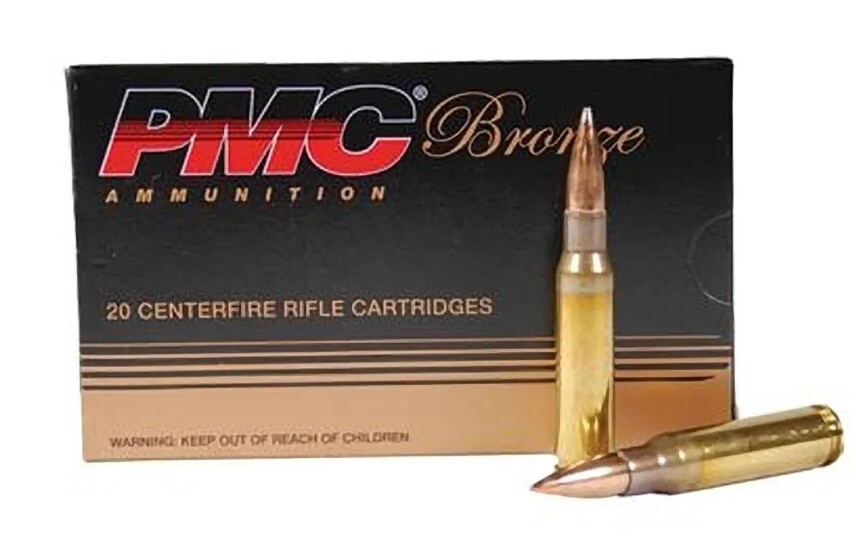
PMC Bronze gives you fair price and steady range results. This 147-grain FMJ load is a go-to for simple practice and plinking. You get rounds you can shoot a lot—without burning your wallet.
The brass-cased, boxer-primed ammo runs clean and smooth in many rifles. AR-10s, SCAR 17s, and more. Feed, fire, eject—no drama.
Use it to zero optics, drill basics, or just have fun. Accuracy is solid for practice. The price lets you stay on the trigger longer.
Price: Around $21 for a 20-round box
Features
- Caliber: .308 Winchester
- Bullet: 147gr FMJ-BT (Full Metal Jacket Boat Tail)
- Brass-cased, boxer-primed, reloadable
- Designed for reliable cycling in semi-autos
Pros
- Widely available and well-known as a training load
- Reasonable accuracy for most practice scenarios
- Good choice for zeroing and general plinking
Cons
- Not designed for hunting or duty use
- Groups will be looser than true match ammunition
Federal .308 Win 165gr Vital-Shok Trophy Bonded Tip (Best All-Around Hunting Load)
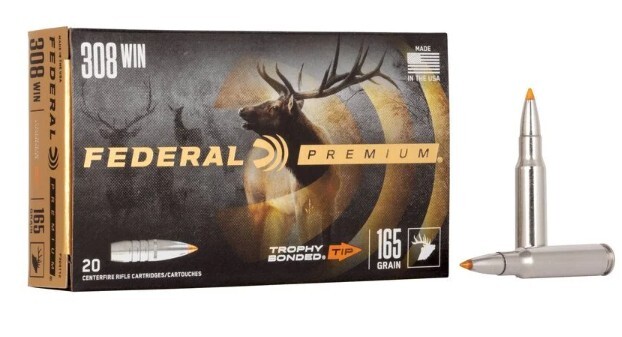
Federal’s Vital-Shok Trophy Bonded Tip sets a high bar for hunts. This 165-grain load uses a bonded core that stays together through bone and tough tissue. You hit hard. The bullet holds on.
The polymer tip boosts ballistic coefficient for a flatter path. It also kicks off controlled expansion on impact. Result: deep penetration and strong terminal work on target.
Chasing deer, hogs, black bear, or similar game? You’ll get steady performance and neat accuracy from this round. Pick a good shot. The ammo will do its job.
Price: Around $39 for a 20-round box
Features
- Caliber: .308 Winchester
- Bullet: 165gr Trophy Bonded Tip, bonded core, polymer tip
- Nickel-plated brass case for smooth feeding and corrosion resistance
- Designed for reliable performance at common hunting distances
Pros
- Excellent on medium game, including tougher shots
- Very accurate for a hunting-focused round
- Strong penetration with controlled expansion
Cons
- More expensive than basic soft-point loads
- Overkill for simple range plinking or casual zeroing
PPU Match .308 Win 168gr HPBT (Best Budget Match Option)
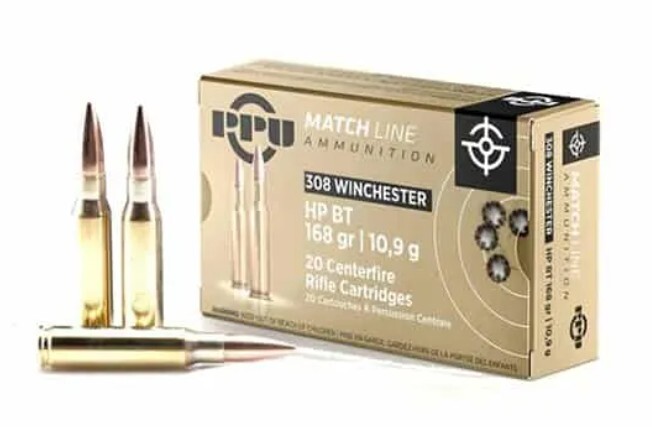
Prvi Partizan (PPU) Match ammo sits between basic range rounds and top match loads. The 168-grain HPBT gives solid accuracy at a price that doesn’t sting.
Many people see groups close to the spendy brands. So it’s great for practice days when you want tight shots but need to save cash.
And it’s earned a loyal crowd in practical precision circles. Good performance. Friendly price. Simple choice.
Price: Around $22 for a 20-round box
Features
- Caliber: .308 Winchester
- Bullet: 168gr HPBT match projectile
- Brass-cased, boxer-primed, reloadable
- Tuned for better consistency than standard ball ammo
Pros
- Very solid accuracy for the cost
- Ideal for training days where precision still matters
- Heavier bullet stays stable well past 300 yards
Cons
- Not as refined as the very best match loads
- Sometimes harder to find in stock compared to big-brand options
AAC .308 Win 150gr FMJ-BT (Most Affordable Range / Plinking Ammo)
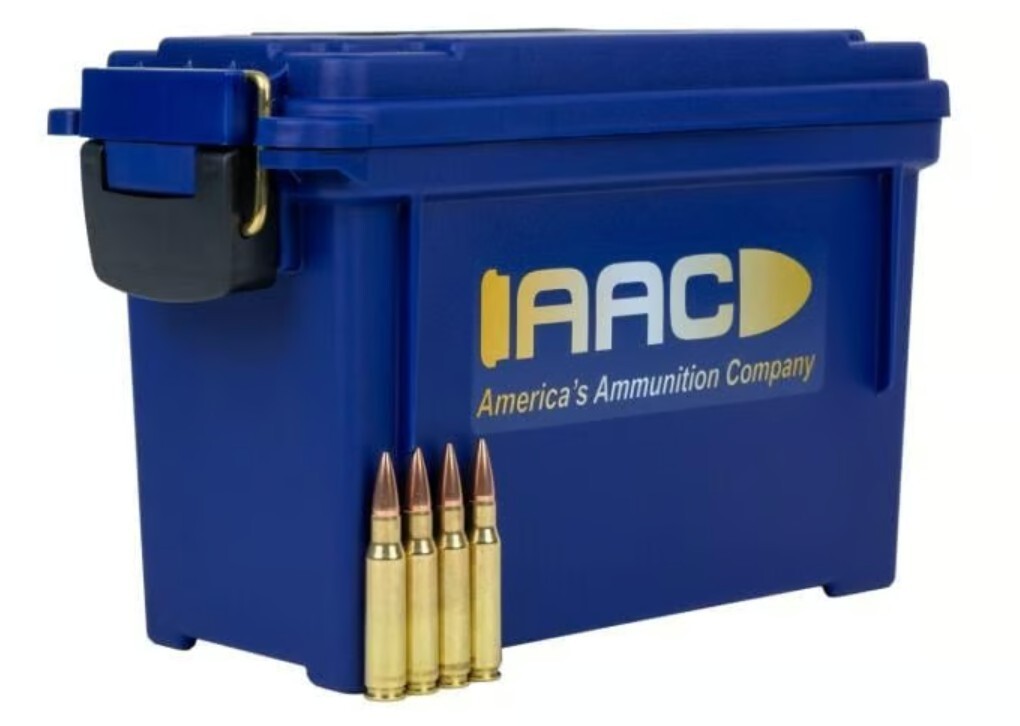
AAC ammo from Palmetto State Armory gives .308 owners one of the cheapest brass-cased options today. It’s easy to buy in bulk and keep your range days going.
This 150-grain FMJ runs well for high-volume practice, function checks, and casual plinking. You don’t chase tiny groups here. You just shoot a lot.
And when your .308 is hungry, this load feeds it without draining your wallet. Adequate accuracy. Clean fun.
Price: Around $15 for a 20-round box
Features
- Caliber: .308 Winchester
- Bullet: 150gr FMJ-BT
- Brass case, reloadable
- Part of AAC's dedicated range/training ammo line
Pros
- Very cost-effective for .308 practice
- Adequate accuracy for most drills and zero checks
- Helps keep AR-10 and other .308 platforms on the range more often
Cons
- Often only available via PSA, not every retailer
- Not suitable for hunting or serious precision work
Hornady Match .308 Win 168gr ELD Match (High-BC Match Alternative)
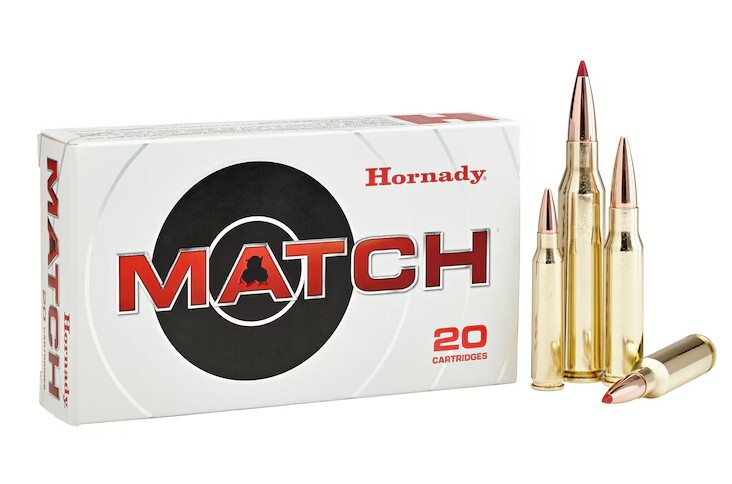
Hornady’s 168-grain ELD Match brings a newer style to precision ammo. The ELD bullet uses a heat-tough polymer tip that holds its shape in flight.
That shape boosts ballistic coefficient. You keep speed longer, fight wind better, and see a flatter path at distance.
And if you want strong long-range results, this load shines past 600 yards. It gives a clear edge over many classic HPBT designs when the range gets long.
Price: Around $37 for a 20-round box
Features
- Caliber: .308 Winchester
- Bullet: 168gr ELD Match with Heat Shield tip
- High ballistic coefficient for reduced drop and drift
- Brass-cased, boxer-primed, reloadable
Pros
- Outstanding accuracy potential in quality rifles
- Excellent long-range performance thanks to high BC
- Great complement or alternative to Gold Medal Match in testing
Cons
- Premium price; not ideal for bulk plinking
- May require updated dope if you swap from other 168gr designs
Matching Ammo to Popular .308 / 7.62×51 Rifles
AR-10 Pattern Rifles
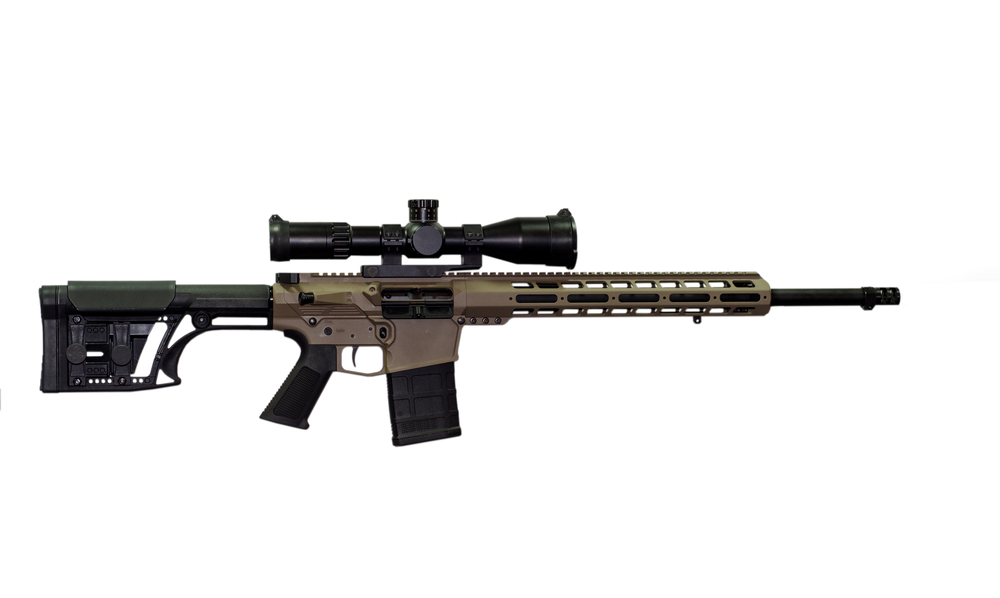
AR-10 pattern rifles shine in many roles—from DMR duty to hunting and matches. You can set one up light or heavy. And it still runs strong.
For duty or DMR-style use, reach for Federal Gold Medal Match 168gr, Hornady ELD Match 168gr, or M118LR-type 175gr loads. These loads give tight groups and repeatable hits for precision work.
For general range days and practice, PMC Bronze 147gr or AAC 150gr FMJ make life easy. They feed well and keep costs under control, so you stay on the trigger more.
For hunting with an AR-10, go with Federal Vital-Shok Trophy Bonded 165gr or Barnes VOR-TX 130gr TTSX. You get clean feeding and strong terminal results on game.
SCAR 17 and Other Modern Battle Rifles
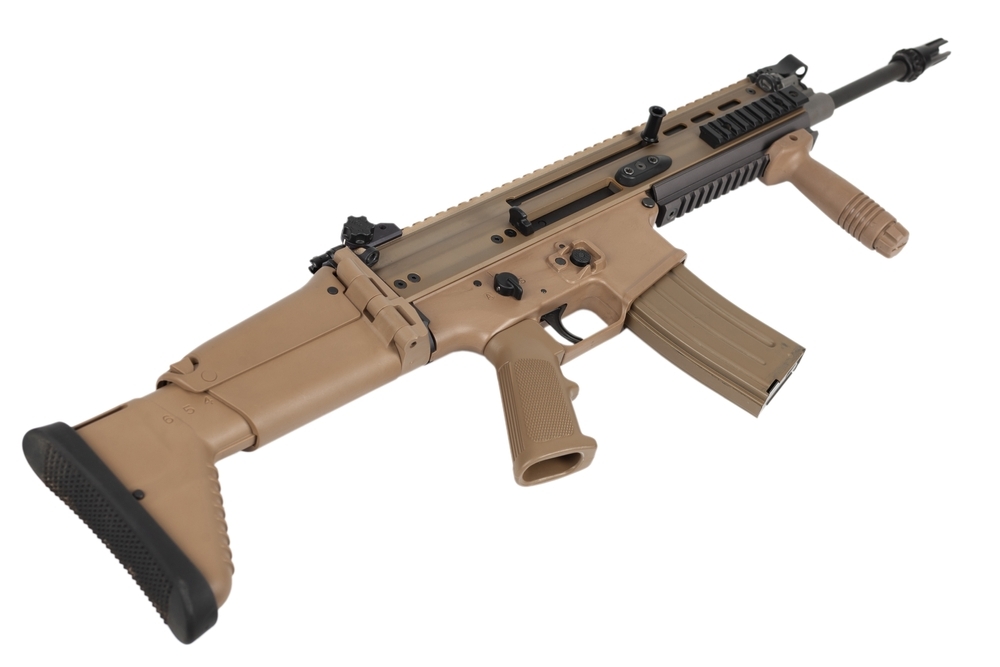
The SCAR 17 and similar rifles run a different system than AR guns. The piston setup changes how they handle gas and ammo. So ammo choice matters a bit more.
These rifles like NATO-spec loads such as M118LR 175gr or standard 147gr ball. PMC Bronze 147gr FMJ pairs well here and cycles smoothly.
For precision work, Federal Gold Medal Match and Hornady ELD Match do great once the rifle is tuned. Dial in your setup and watch the groups settle.
If your rifle has an adjustable gas block, use it. A small tweak can smooth operation across ammo types and cut felt recoil for faster follow-up shots.
HK G3 / PTR / CETME Roller-Delayed Rifles
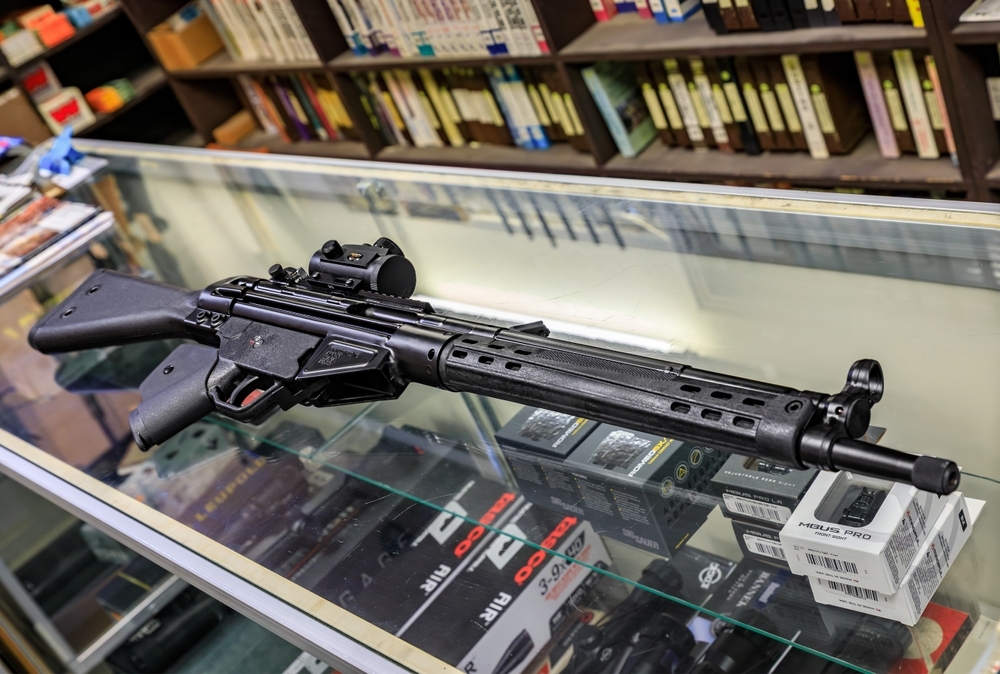
Roller-delayed rifles like the HK G3, PTR, and CETME have their own rhythm. The action is fast and firm. Ammo choice keeps that rhythm stable.
Roller-delayed rifles like the G3/PTR/CETME run best with standard-pressure .308 or true 7.62×51. Hot hunting loads and high-pressure match loads can increase wear and extraction stress.
For practice and plinking, PMC Bronze 147gr or similar loads offer good reliability. Higher-pressure .308 Winchester loads can accelerate wear on extractors and fluted chambers in these designs.
When pursuing accuracy, PPU Match 168gr HPBT offers a good balance of performance and pressure level appropriate for these platforms.
Remington 700 and Other Bolt-Action .308s
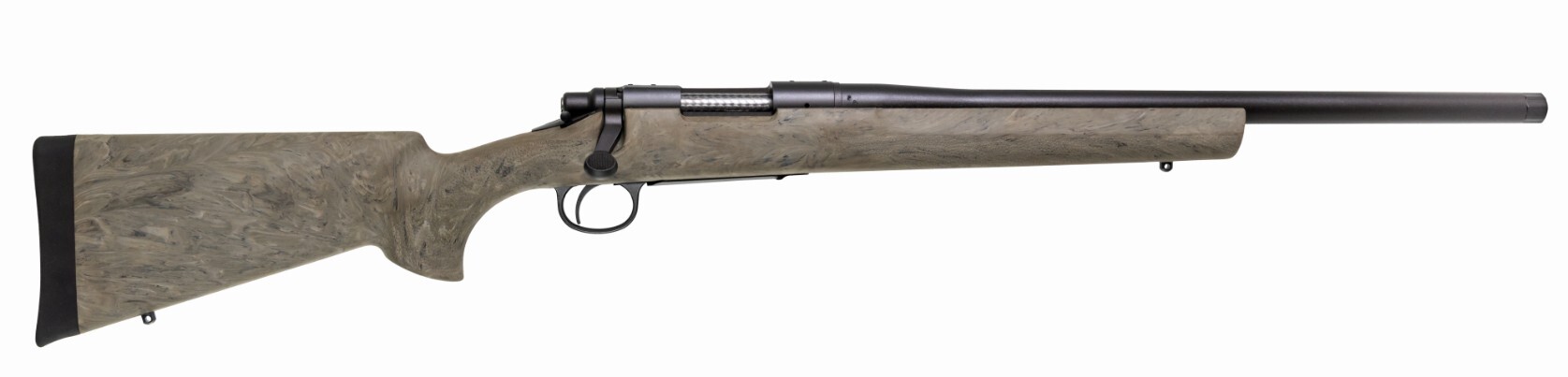
The Remington 700 and similar bolt guns set the classic bar for hunting and precision work. Simple. Strong. Easy to trust in the field.
For hunting, these rifles pair well with Remington Core-Lokt 150gr, Federal Vital-Shok Trophy Bonded 165gr, or Barnes VOR-TX 130gr TTSX. Pick based on game size and the range you plan to shoot.
In precision roles, Federal Gold Medal Match 168gr and Hornady ELD Match 168gr often shine. Many bolt rifles hold sub-MOA with these loads again and again, which makes practice feel easy and results clear.
For long steel days, the M118LR 175gr load stays steady past 600 yards. It fights wind well and tracks straight, so your calls feel simple.
Final Thoughts
These nine ammo choices cover almost every real use for .308 Winchester and 7.62×51mm NATO. You get low-cost plinking rounds, premium hunting options, and match loads for tight groups. There’s a good pick here for your rifle and your plan.
Always check your rifle’s chamber stamp and the maker’s guidance before mixing .308 Winchester and 7.62×51mm NATO. What runs fine in one rifle may not be safe or ideal in another.
Test a few loads in your own rifle and watch the groups. Every barrel has a taste, and finding the load your gun loves can jump your results fast.
Ammo stock and prices change often. Check current listings before you buy.
Best ammo for plinking, match, or hunting isn’t just about bullet brand or bullet weight — it starts with knowing what your rifle is built to handle. Before finalizing your ammo choices, be sure to read our .308 vs 7.62×51 NATO breakdown so you get ammo that’s right for your chamber and your goals.

Federal Gold Medal 308 Win 168gr Boat Tail Hollow Point
$39.73
at Pro Armory
Prices accurate at time of writing
Frequently Asked Questions (FAQ)
Is .308 Winchester the Same as 7.62×51 NATO?
No. They’re close, but not the same. The .308 Winchester runs slightly higher pressure ratings, 62,000 PSI vs. 60,191 PSI for 7.62×51mm. Case size and headspace differ a bit, and SAAMI calls for different chambers.
Can I Safely Shoot 7.62×51 Ammo in a .308 Rifle?
Yes, in most modern rifles. 7.62×51mm NATO is usually loaded to lower pressure than .308 Winchester, so it’s generally fine in a .308 chamber. Always confirm with your rifle maker first.
Can I Shoot .308 Winchester in a 7.62×51-Chambered Rifle?
It depends on the rifle. Many newer commercial rifles marked 7.62×51 handle .308 Winchester. Older surplus rifles with wide headspace may not. Ask the maker, or have a gunsmith check headspace before you try it.
What Bullet Weight Is Best for Deer in .308 or 7.62×51?
For deer, 150 to 165 grains hits the sweet spot. You get speed, energy, and clean performance. The Remington Core-Lokt 150gr and Federal Trophy Bonded 165gr have taken whitetail and similar game for decades.
What's the Best .308 or 7.62×51 Ammo for an AR-10 or SCAR 17?
For practice, PMC Bronze 147gr FMJ runs well in most semi-auto .308 rifles. For precision or duty, the Federal Gold Medal 168gr is a top pick. For hunting, Federal Vital-Shok 165gr Trophy Bonded feeds well and hits hard on game.
Does Ammo Choice Matter for Suppressor Use?
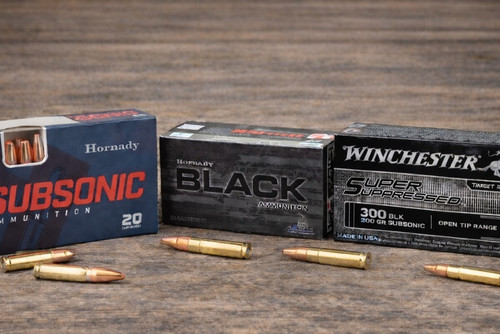
Yes. Most .308 and 7.62×51 loads play nice with rated suppressors. Subsonic or slower loads are quieter downrange because they don’t break the sound barrier. In .308, that usually means heavier bullets loaded to lower velocity specifically as “subsonic” or “suppressor” ammo.
About the Author
This article was written by the Pro Armory writing team based on current research, including studies from reputable sources like the Journal of Military Science, Firearms News, and the National Shooting Sports Foundation. We also referenced trusted information from official defense publications and respected firearm authorities such as the ATF, NRA, and manufacturer manuals.
Disclaimer: This review is for education only. Laws vary by state and city and can change. Follow safe handling at all times. Read your owner's manual. Verify local rules before you buy or train.
Best Ammo Deals, Training, & Accessories
Subscribe to ProArmory sales and deals email.