 Pro Armory Editorial Team
Quick Answer
A stripped AR-15 upper receiver is the base of your build. Pick forged for classic mil-spec fit, billet for extra features, and reinforced designs for hard-use rifles. This guide reviews nine strong options, explains what matters in specs and fit, and shows the parts, tools, and checks you need before you torque a barrel nut.
Key Takeaways
- Forged uppers are the safe, proven default.
- Tighter barrel fits can help consistency.
- Billet adds features, not magic accuracy.
- Forward assist delete saves weight and simplifies.
- Match upper choices to your use, not hype.
The upper receiver is the core of your AR-15 build. Every major part—the barrel, the bolt carrier group, the handguard—connects to it. Get the upper right, and the rest of the build flows cleanly. Get it wrong, and you'll spend time chasing fit issues, alignment problems, and parts that don't sit the way they should.
Not all uppers are built the same. Some are forged for strength. Some are billet for looks and added features. Some prioritize tight tolerances. Others keep it simple and mil-spec. The right choice depends on what you're building and what you need it to do.
What Is a Stripped Upper Receiver?
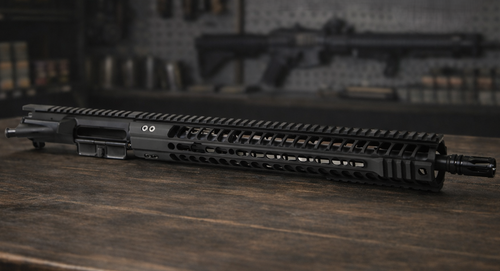
A stripped upper receiver is the bare aluminum body that holds the entire AR-15 upper assembly together. It's where the barrel seats, where the bolt carrier group runs, and where your handguard mounts. The quality of this part shapes everything bolted to it.
A stripped upper includes the receiver body, Picatinny rail, barrel seat, ejection port cutout, forward assist housing on models that include it, and dust cover mounting points. It does not include the dust cover, forward assist assembly, barrel, bolt carrier group, handguard, gas system, or charging handle.
Stripped vs Assembled vs Complete Upper
A stripped upper is bare—you add every part yourself. An assembled upper saves time because the small parts like the dust cover, forward assist, and ejection port cover are already in place. A complete upper has the barrel, handguard, bolt carrier group, and charging handle ready to go. Stripped builds suit people who want total control. Assembled uppers cut down on small-part frustration. Complete uppers skip the build process entirely.
What to Look For Before You Buy
Forged vs Billet
Forged uppers are pressed under heat and pressure. That process tightens the grain structure and creates a strong, light part. Forged uppers are the mil-spec standard and the safe default for most builds. Billet uppers are cut from a solid aluminum block on a CNC machine. This allows more complex shapes and added features at a higher cost. Billet doesn't shoot better than forged—it just looks different, often in a good way.
Forward Assist and Dust Cover Choices
Standard uppers include a forward assist port and dust cover mounting points—the classic mil-spec layout. Slick side uppers drop the forward assist entirely. Fewer parts to install, cleaner look, small weight savings. Great for lightweight or competition setups. Captured dust cover pins—found on some billet uppers—hold the dust cover in place without an e-clip, which removes one tiny part from the equation.
Fit and Tolerances
A tight-tolerance upper feels snug against the lower with zero wobble. The trade-off is that a tight barrel seat can add friction during barrel install, and a heat gun sometimes becomes necessary to seat the barrel properly. Mil-spec uppers use standard tolerances that work with any mil-spec lower. A small amount of play between upper and lower is completely normal and doesn't hurt accuracy. If the play bothers you, matched upper/lower sets from the same brand fix it cleanly.
Weight and Stiffness
Lightweight uppers trim ounces with thinner walls or smart material choices. Good for pistol builds and carry setups. Reinforced uppers go the other way—thicker walls for added stiffness. Best for hard-use and duty-style builds where rigidity matters more than every ounce saved.
Rail Alignment and T-Marks
The flat-top Picatinny rail needs to be correctly sized and aligned. Poorly machined or out-of-spec rails can cause optic mounting issues, though this is rare among reputable manufacturers.. T-marks on the rail help with indexing and repeatability. Laser-etched T-marks last longer and stay cleaner than roll marks—a detail worth checking before you buy.
Quick List
| Upper Receiver | Best For | Main Trade-Off |
|---|---|---|
| Geissele Super Duty | Hard-use duty builds | Higher price |
| Centurion Arms CM4 | Tight-fit precision builds | Snug barrel installation |
| Aero Precision M4E1 | General-purpose builds | Mild price swings |
| VLTOR MUR-1A | Rigid hard-use rifles | Adds weight |
| BCM M4 Upper | Mil-spec value builds | Not feature-heavy |
| Battle Arms BAD556-LW | Lightweight builds | Higher cost |
| Icon Defense Forged | Tight-feel custom builds | Mixed-brand fit friction |
| Aero M4E1 No FA | Clean slick-side builds | No forward assist |
| Bootleg Inc Enhanced | Modern lightweight builds | Limited stock availability |
Best AR-15 Stripped Upper Receivers Reviewed
Geissele Super Duty Upper Receiver
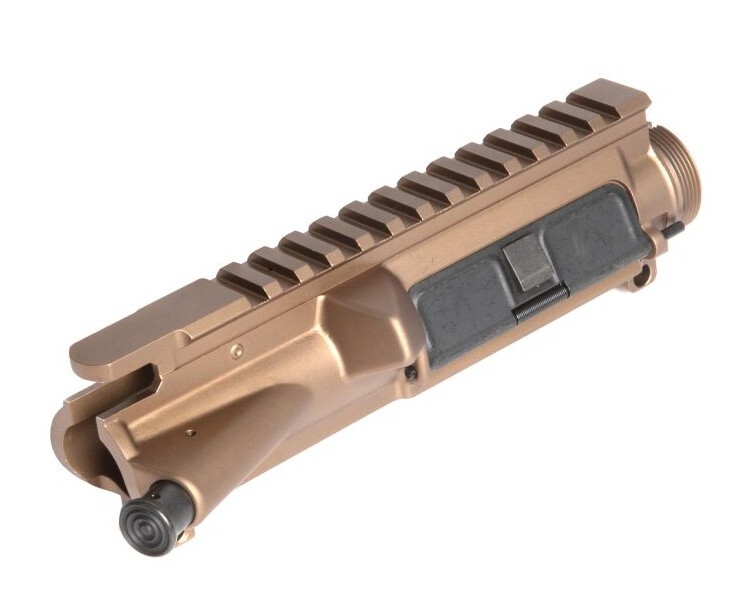
The Geissele Super Duty upper is a premium piece built for serious duty-style AR builds. It's sold as a standalone upper receiver, so you pick every other part. Builders who run this one tend to match it with equally serious barrels, rails, and bolt carrier groups—it's part of the broader Super Duty parts system and fits that ecosystem naturally.
Feedback from the build community points to strong fit and finish across the board. The machining is clean, the finish is consistent, and it pairs well with premium components. This isn't the upper for a casual range build—it's for rifles that need to run hard.
Price: $180–$230 depending on finish and availability.
Specs
- 7075-T6 aluminum
- Type III hardcoat anodize
- Milled T-marks
Features
- Standalone upper receiver option
- High-end finishing
- Part of the Super Duty parts ecosystem
Pros
- Great base for premium builds
- Strong match with high-end rails and barrels
- Solid duty-style option
Cons
- Higher price than most forged uppers
- Not needed for simple range builds
- Some finishes go out of stock fast
Centurion Arms CM4 5.56 Forged Upper Receiver
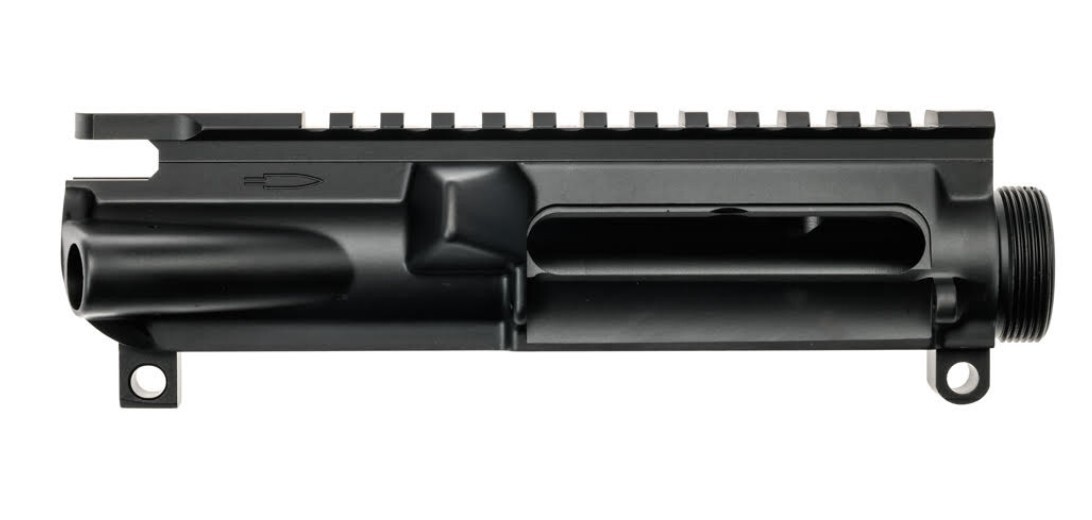
The Centurion Arms CM4 is a forged upper with a tight barrel fit focus. Builders who care about consistent barrel extension seating tend to reach for this one. The MIL-A-8625F Type III anodize is top tier, and the price sits at a fair point for what you get.
Community feedback highlights this as a smart pick for consistency-focused builds. The barrel extension fit may be snug compared to looser mil-spec receivers, and some builders use thermal fit techniques during installation. Clean look. Solid construction. No frills, no drama.
Price: $110–$140 depending on availability.
Specs
- 7075-T6 forged aluminum
- MIL-A-8625F Type III Class 2 hardcoat anodize
- 6.8 oz
Features
- Forged CM4 upper format
- Tight barrel fit design
- Mil-spec layout
Pros
- Good value at retail
- Fit-focused build approach
- Clean, classic look
Cons
- Tight fit can add work during barrel install
- Stock varies by finish
- Not a style-first pick
Aero Precision M4E1 Threaded Stripped Upper Receiver
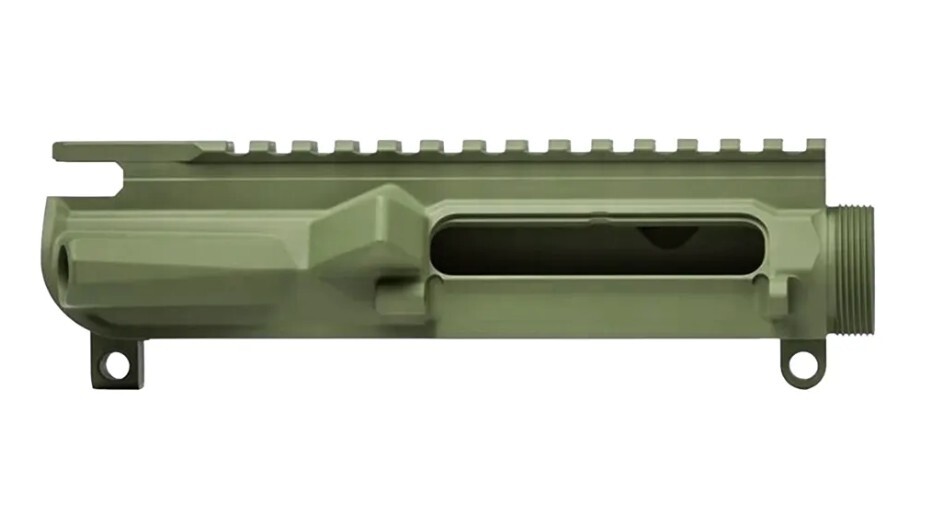
The Aero M4E1 is one of the most commonly used stripped uppers in the build community. It gives you a billet-style exterior look without billet pricing. The forged construction keeps it strong, and the M4E1 threaded design works with standard AR-15 barrel nuts without any compatibility headaches.
Builders who want a clean, modern look on a proven forged base keep coming back to this one. It's stocked widely, priced fairly, and works with a broad range of build goals—from home defense setups to lightweight carbines.
Price: $130–$170 depending on finish and retailer.
Specs
- 7075-T6 forged aluminum
- Threaded for standard AR-15 barrel nuts
- Mil-spec parts compatible
Features
- Enhanced M4E1 exterior shape
- Standard barrel nut compatibility
- Clean, modern look
Pros
- Great value at retail
- Easy to build around
- Widely stocked by major retailers
Cons
- Price varies across shops
- Not a tight-fit specialty upper
- Some builders prefer plain mil-spec styling
VLTOR MUR-1A Modular Upper Receiver
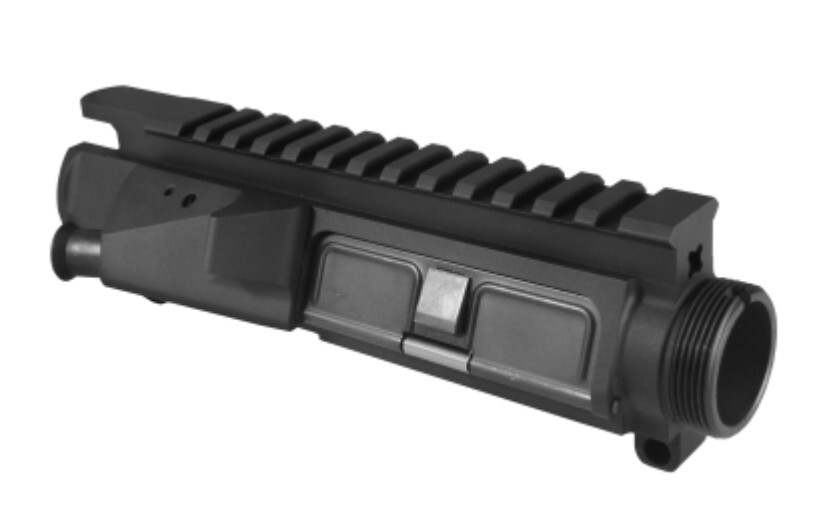
The VLTOR MUR-1A is the reinforced option on this list. Thicker receiver walls create a stiffer shooting platform, and that added rigidity is exactly what hard-use builders are paying for. It also has a distinct look—different enough to turn heads at the range.
Builders who have run this upper consistently mention the solid, planted feel it brings to the overall rifle. It's not a lightweight pick—it adds weight by design—but for duty rifles and high-round-count training setups, that trade-off is worth it.
Price: $250–$300 depending on configuration.
Specs
- Flat-top upper pattern
- Reinforced receiver body design
- Standalone upper receiver part
Features
- Rigid receiver design
- Built for hard-use setups
- Recognizable profile and finish
Pros
- Great pick for hard-use builds
- Rigid feel most duty builders want
- Good base for training rifles
Cons
- Costs more than basic forged uppers
- Adds weight over minimalist options
- Overkill for range-only builds
BCM M4 Upper Receiver
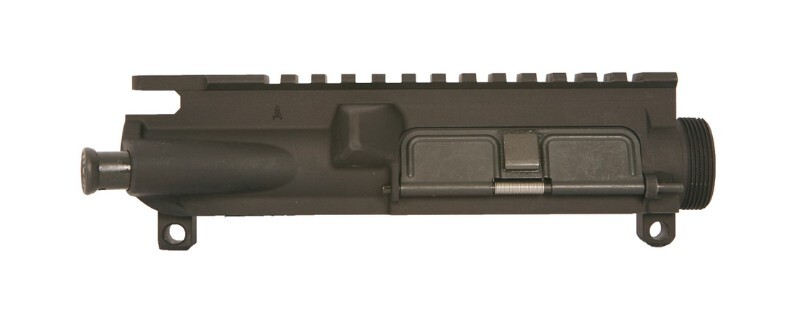
The BCM M4 upper is a go-to mil-spec option with a long track record. T-marks are laser etched for longevity, rails are correctly sized, and everything fits standard parts without surprises. It's the kind of upper that simply works.
One thing worth knowing: BCM uppers are known for consistent barrel extension fit, and some builders report a snug installation compared to looser receivers. That creates a tighter barrel seat—a heat gun helps if the barrel doesn't slide in easily. The result is a snug, consistent fit. BCM also offers blem versions at steep discounts, and buyer feedback consistently says the blemishes are almost impossible to spot.
Price: $110–$140 new / $50–$70 blem depending on condition and availability.
Specs
- 7075-T6 forged aluminum
- Flat-top M4 pattern
- Standard parts compatible
Features
- Mil-spec layout and dimensions
- Laser-etched T-marks
- Blem/demo options available
Pros
- Great default choice for most builds
- Strong value at retail
- Blem deals are hard to beat
Cons
- Demo and blem stock vanishes fast
- Not feature-heavy
- Not a tight-fit specialty upper
Battle Arms Development BAD556-LW Lightweight Upper Receiver
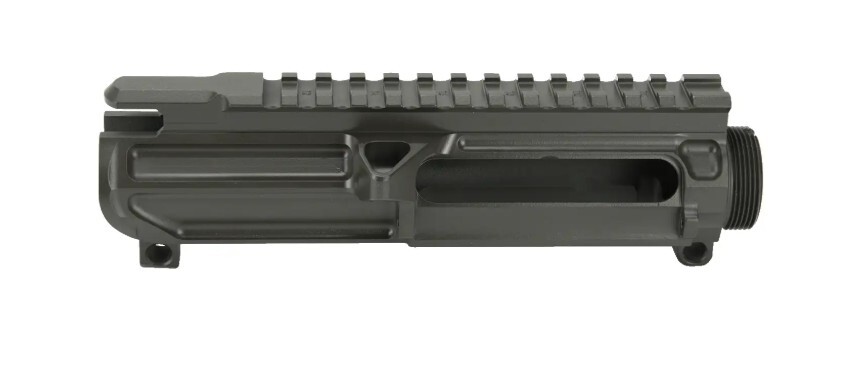
The BAD556-LW is for builders who want to cut real weight. At around 6.3 ounces stripped, it is noticeably lighter than many traditional forged uppers, which typically weigh in the 6.8–7.5 ounce range depending on manufacturer. That's a meaningful difference for carry-all-day or fast-handling builds.
The design has a distinct, angular look that stands out from standard uppers. It's billet-machined from 7075-T6 aluminum with a Type III hardcoat finish. Builders in the lightweight community report that it works well with standard AR parts and holds up without issues under regular use.
Price: $230–$280 depending on finish.
Specs
- 7075-T6 billet aluminum
- 6.31 oz
- Type III hardcoat anodize
Features
- Lightweight design approach
- Clear rail markings
- Standard AR parts compatible
Pros
- Very light for a full upper receiver
- Strong material choice
- Great for carry builds and light setups
Cons
- Costs more than basic forged uppers
- Not needed for standard builds
- Stock varies by finish
Icon Defense Forged Stripped Upper Receiver
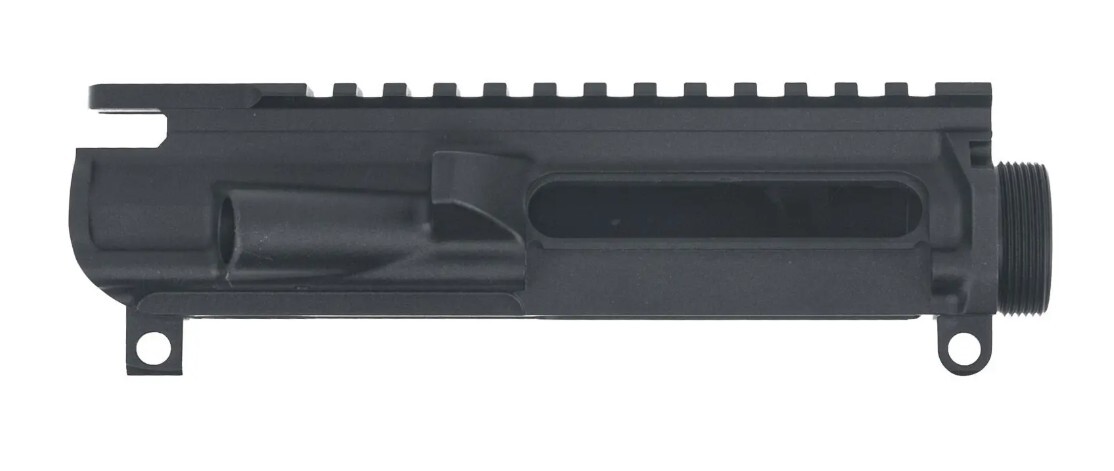
The Icon Defense upper comes from a team with deep machining experience across multiple known firearms brands. It's forged from 7075-T6 aluminum with Type III hardcoat anodize. The standout feature is fit—Icon Defense markets tight receiver-to-lower fit tolerances, aiming for minimal play when paired with compatible lowers.
At around 6.94 ounces, it's not the lightest option but it's not heavy either. Builders who have assembled Icon Defense receiver sets consistently report zero play and a snug, solid feel right out of the box. For the price, it's strong value for a tight-feel forged upper.
Price: $110–$140 depending on retailer.
Specs
- 7075-T6 aluminum
- Type III hardcoat anodize
- 6.94 oz
Features
- Forged stripped upper
- Tight tolerance focus
- Standard parts compatible
Pros
- Fit-focused build option
- Fair price for the category
- Strong finish details
Cons
- Tight fit can create friction with mixed-brand parts
- Not the lightest option
- Availability depends on retailer
Aero Precision M4E1 No Forward Assist Stripped Upper Receiver
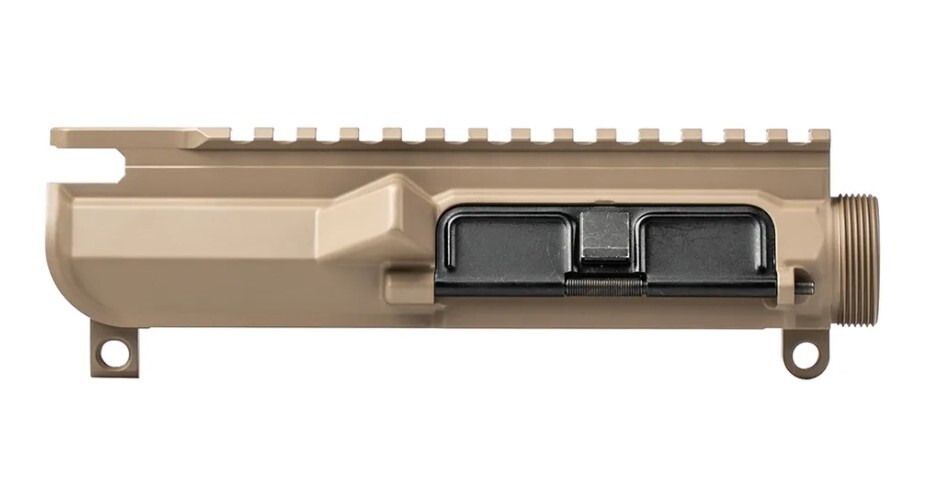
This is the slick-side version of the M4E1. It drops the forward assist port entirely, which means fewer small parts to install and a cleaner look on the right side of the receiver. For builds that don't need a forward assist, this simplifies the whole process.
Builders who lean toward lightweight, competition, or suppressed setups tend to pick this one. You still get the M4E1 exterior styling and full mil-spec compatibility. The price sits close to the standard M4E1 version, so the choice comes down to one simple question: do you want the forward assist or not?
Price: $100–$160 depending on finish and retailer.
Specs
- 7075-T6 aluminum
- No forward assist configuration
- Mil-spec parts compatible
Features
- Slick-side look
- Less small-part install work
- Clean, modern styling
Pros
- Clean build aesthetic
- Fewer parts to install
- Easy choice for competition and suppressed builds
Cons
- No forward assist for duty-style builds
- Slick-side look is not for everyone
- Stock varies by shop
Bootleg Inc Enhanced Lightweight Upper Receiver
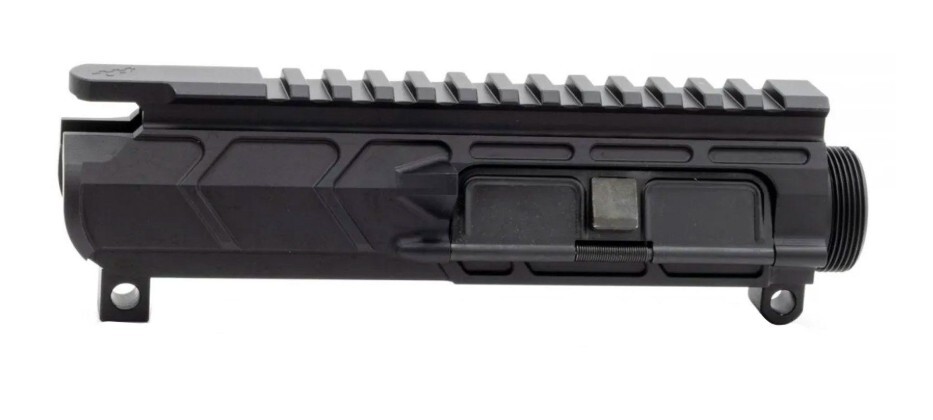
The Bootleg Inc upper brings a clean, modern profile to lightweight builds. At about 6.2 ounces stripped, it sits near the top of the lightweight category. It skips the forward assist, uses a captured dust cover pin with no e-clip needed, and pairs naturally with modern handguard setups.
Availability can be an issue with this one—stock comes and goes. Builders who have run it report solid fit with standard AR parts and a clean look that works well with current rail and handguard designs. If you spot it in stock at a fair price, it's worth grabbing for a modern lightweight build.
Price: $160–$200 depending on availability.
Specs
- 7075-T6 aluminum construction
- 6.2 oz stripped
- Mil-spec hard anodize
Features
- Lightweight receiver design
- Captured dust cover pin
- No forward assist
Pros
- Very light weight class
- Clean modern look
- Good option for different build directions
Cons
- Can be hard to find in stock
- Costs more than basic forged options
- No forward assist option
Best Upper Receiver Parts to Finish the Build
Upper Receiver Parts Kit
Once you have the stripped upper, you still need the small parts. An upper parts kit includes the dust cover, forward assist plunger and spring, roll pin, and e-clip. These are the parts that roll across the floor and disappear during your first build—keep a small magnetic tray nearby and plan for at least one trip to the floor.
Core Upper Parts List
- Barrel and barrel nut
- Handguard
- Gas block and gas tube
- Bolt carrier group
- Charging handle
- Muzzle device
- Sights or optic
Tools You Actually Need
Don't skip the right tools. They make the difference between a clean build and a frustrating afternoon.
- Upper receiver vise block
- Torque wrench and armorer's wrench
- Roll pin punches and hammer
- Gas tube alignment rod (optional but helpful for verifying gas system alignment)
- Anti-seize grease for barrel nut threads
- Headspace gauges for any non-standard chambering
Forge Marks Explained
What Forge Marks Mean
The forge mark is stamped just above the forward assist area on most forged uppers. It identifies which metal forging company created the raw aluminum blank. The company that actually machines the upper into its final form is a separate operation—and that's where quality really comes from. The machining matters far more than the mark itself.
Where to Find Them
Look just above the forward assist housing on the side of the receiver. The mark is small but easy to spot once you know what you're looking for.
Fit Checks Before the First Range Trip
Barrel Extension Fit
Slide the barrel extension into the upper and check the fit. Snug is good. Too tight—where you can't seat it with reasonable hand pressure—means you need to address it before torquing. Never force a barrel into an upper.
Rail and Gas System Alignment
After torquing the barrel nut, check that the gas tube aligns cleanly with the gas key on the bolt carrier group. A gas tube alignment tool helps here. Misalignment causes cycling issues that can be tricky to trace back to their source.
Upper to Lower Fit
A small amount of play between upper and lower is normal and doesn't affect accuracy in any meaningful way. If the wobble bothers you, an accu-wedge or a matched upper/lower set from the same brand cleans it up.
Final Thoughts
Pick the upper that matches your real build goals—not the one with the most buzz behind it. Spend your money on the barrel and bolt carrier group first, because those two parts have the biggest effect on how your rifle actually runs. Then choose the upper that fits the weight, features, and look you want. Keep the install clean and measured, and the build will come together without drama.
A quality stripped upper receiver sets the stage for a reliable AR-15 build, but pairing it with the right lower completes the platform. Before finalizing your build, take a look at Top AR-15 Stripped Lower Receivers: From Budget-Friendly to High-End to find the right foundation for your rifle.
PMC X-Tac 5.56x45mm 55 Grain FMJ
$12.00
at Pro Armory
Prices accurate at time of writing
Frequently Asked Questions (FAQs)
What is a stripped upper receiver?
A stripped upper is the bare aluminum housing of the AR-15 upper. It has no parts installed—no barrel, no bolt, no dust cover.
What is the difference between stripped and complete upper?
A stripped upper is bare. A complete upper comes with the barrel, bolt, handguard, and charging handle already assembled.
Will any AR-15 upper fit any mil-spec lower?
Most will. Mil-spec uppers and lowers are designed to work together across brands. Tolerances vary, so some fits run tighter than others. Matched sets from the same brand remove that variable.
Do I need a forward assist?
Not always. The forward assist sees rare use in real-world scenarios. Slick-side builds without one are common and work well for most setups.
Do billet uppers increase accuracy?
No. Billet uppers can look different and offer unique features. Accuracy comes from barrel quality and consistent ammunition—not the upper receiver material.
What parts do I need to finish a stripped upper?
Barrel, barrel nut, handguard, gas block, gas tube, bolt carrier group, charging handle, muzzle device, and an upper parts kit.
What tools do I need for assembly?
Upper vise block, torque wrench, armorer's wrench, roll pin punches, hammer, gas tube alignment tool, anti-seize, and headspace gauges.
Do forge marks matter?
Not much. The forging company shapes the raw blank. The machining company finishes it. Machining quality is what you should focus on.
Should I buy a matched upper and lower set?
If fit consistency matters to your build, yes. Matched sets from the same brand give you the most predictable fit and remove guesswork.
About the Author
This article was written by the ProArmory writing team based on current research, including studies from reputable sources like the Journal of Military Science, Firearms News, and the National Shooting Sports Foundation. We also referenced trusted information from official defense publications and respected firearm authorities such as the ATF, NRA, and manufacturer manuals.
Disclaimer: This review is for education only. Laws vary by state and city and can change. Follow safe handling at all times. Read your owner's manual. Verify local rules before you buy or train.

Best Ammo Deals, Training, & Accessories
Subscribe to ProArmory sales and deals email.