 Pro Armory Editorial Team
Quick Answer
If you want one .45 ACP setup that covers most needs, pick a proven 230-grain JHP for home defense and a 230-grain FMJ for practice. For defense, look for a load that expands reliably and penetrates 12–18 inches in calibrated ballistic testing (a common FBI benchmark). For range days, choose brass-cased FMJ that feeds clean in your pistol. Function-test your chosen load in your exact pistol and carry magazines before trusting it for defense.
Key Takeaways
- Defense ammo should expand and still reach 12–18 inches in ballistic testing.
- 230-grain loads are the most common .45 ACP baseline.
- Some 1911s, especially older or GI-style guns, can be picky with some hollow points, so testing matters.
- FMJ is fine for training. It is not a defense pick.
- Short barrels can lower velocity and change results.
- Always test your chosen load in your own pistol.
You buy a .45 ACP because you want confidence. Then you stand at the ammo shelf and it hits you. Too many boxes. Too many claims. This guide breaks it down the same way trainers do. Choose one load for protection. Choose one load for practice. Then prove it runs in your gun.
The "Best" .45 ACP Ammo Depends on the Job
Home defense goals
The .45 ACP earned its reputation through decades of stopping power. But not all loads are created equal. For home defense, you need ammo that can:
- Stop the threat fast
- Limit over-penetration risk
- Feed smoothly every single time
The classic "flying ashtray" .45 ACP round hits hard, but modern hollow points make it even better by controlling penetration and maximizing energy transfer.
Target practice goals
Range time costs money. But skimp on practice ammo and you'll regret it. Good practice ammo should:
- Cycle cleanly through your gun
- Deliver consistent accuracy
- Come at a price that won't break the bank
If you got a 1911, you need to be extra picky. Some older designs can be finicky with certain loads. No matter what you shoot, finding ammo that runs without hiccups is key.
A simple rule most shooters follow
Here's the approach most experienced .45 ACP owners take:
- JHP for defense - Expands on impact, transfers more energy
- FMJ for training - Costs less, feeds more consistently
This two-ammo system gives you affordable practice with the reliability you need when it matters.
What Good .45 ACP Ballistics Look Like
Penetration and expansion
The FBI established the gold standard for defensive ammo testing years ago. Their protocol looks for:
- 12-18 inches of penetration in ballistic gel
- Consistent expansion
- Performance through barriers like clothing
Why these numbers? Less than 12 inches might not reach vital organs in a larger attacker. More than 18 inches risks over-penetration and potential harm to others beyond your target. Research on defensive ammunition testing shows that achieving this balance is critical for effective self-defense rounds.
Professional ballistic testing often follows protocols similar to FBI standards. Many tests include a heavy clothing barrier (often four layers of fabric) before gel to see if hollow points still expand. This approach helps identify rounds that will perform in real-world conditions, not just in perfect lab settings.
Barrel length changes outcomes
If you got a compact .45 then pay attention.
Shorter barrels drop velocity, which can affect how hollow points perform. A load that expands beautifully from a 5-inch 1911 might underperform from your 3.5-inch carry gun.
Short barrels are common in carry guns, so it helps to look at test data from compact barrels (roughly 3.5–4 inches) when possible. This provides more realistic results for defensive situations where compact pistols are common.
Quick List
- Best Overall Balance: Speer 230 gr Gold Dot (JHP)
- Best Home Defense Pick: Federal 230 gr HST (JHP)
- Best +P Option: Federal +P 230 gr Tactical Bonded LE (JHP)
- Best Medium Weight Defense: Hornady Critical Defense 185 gr FTX (JHP)
- Best Short-Barrel Defense Option: Sellier & Bellot XRG Defense 165 gr SCHP
- Best Everyday Range Choice: PMC Bronze 230 gr (FMJ)
- Best Budget Brass Range Ammo: Blazer Brass 230 gr (FMJ)
- Best "Feeds In Many Guns" Range Ammo: American Eagle 230 gr (FMJ)
- Best Bulk Practice Pick: Sellier & Bellot 230 gr (FMJ)
9 Picks at a Glance
| Ammo | Bullet Type | Best Use | Notes |
|---|---|---|---|
| Federal 230 gr HST | JHP | Home Defense | ~14.0" penetration, ~0.85" expansion, ~822 fps (compact test barrel) |
| Speer 230 gr Gold Dot | JHP | Overall Defense | ~12.9" penetration, ~0.71" expansion, ~752 fps (compact test barrel) |
| Federal +P 230 gr Tactical Bonded LE | JHP | Maximum Defense | ~14.6" penetration, ~0.86" expansion, ~887 fps (compact test barrel) |
| Hornady Critical Defense 185 gr FTX | JHP | Medium-Weight Defense | Polymer-tipped bullet designed for reliable expansion |
| Sellier & Bellot XRG 165 gr SCHP | SCHP | Short Barrel Defense | Solid copper projectile with higher velocity |
| PMC Bronze 230 gr | FMJ | Everyday Range | Clean-feeding load with quality brass cases |
| Blazer Brass 230 gr | FMJ | Budget Range | Often the most affordable brass-cased option |
| American Eagle 230 gr | FMJ | Reliable Range | Feeds well in most pistols |
| Sellier & Bellot 230 gr | FMJ | Bulk Practice | Best value when purchased in volume |
Best .45 ACP Ammo
PMC Bronze .45 ACP 230 gr FMJ
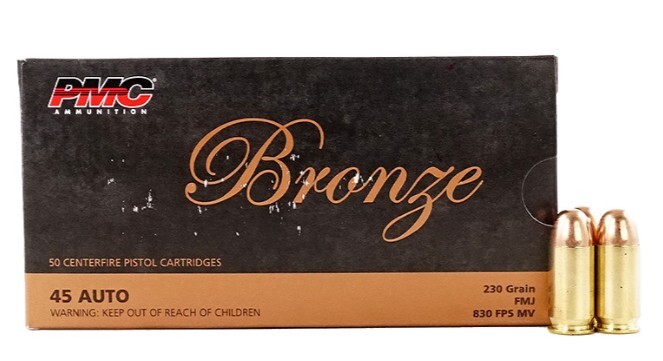
PMC Bronze stands as a go-to choice for folks who shoot regularly but don't want to empty their wallet. This brass-cased ammo hits the sweet spot between price and performance.
Many range regulars praise PMC for its consistent feeding and clean-burning properties. The brass cases also make it reloader-friendly for those who save their empties.
At under $25 per box in many stores, it's often among the more budget-friendly brass options without dipping into the questionable quality zone that plagues some ultra-budget brands.
Price: Varies by retailer and round count
Specs
- Caliber: .45 ACP
- Bullet weight: 230 gr
- Bullet type: FMJ
- Box size: 50 rounds
Features
- Standard 230 gr training weight
- Designed for range use
- Common brand availability
Pros
- Good range value
- Consistent practice load style
- Easy to stock for training days
Cons
- FMJ is not a defense round
- More pass-through risk than JHP
- No expansion design
Federal .45 ACP +P Tactical Bonded LE 230 gr JHP
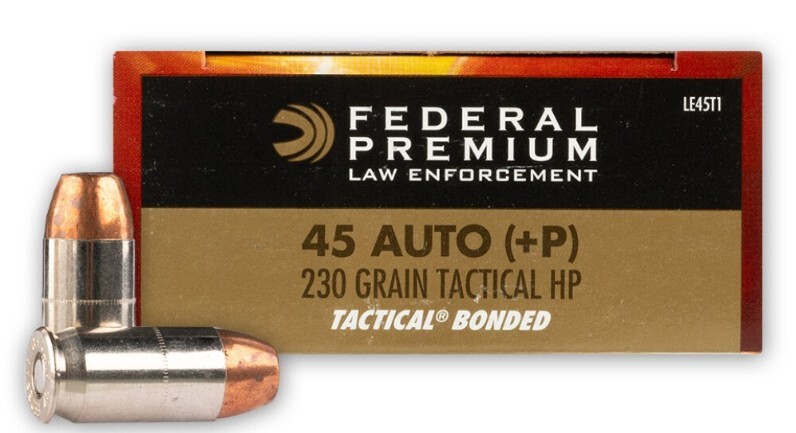
When standard pressure just won't cut it, Federal's +P Tactical Bonded LE steps up. This load pushes velocity higher while maintaining the classic 230 gr weight.
The bonded bullet design helps ensure the jacket and core stay together during expansion. It creates reliable terminal performance. In gel testing, it penetrated to an average of 14.6 inches – right in the FBI's sweet spot.
With expansion averaging 0.86 inches and velocity at 887 fps from a compact barrel, this round delivers serious performance for those who want maximum effect from their defensive .45.
Price: Varies by retailer and round count
Specs
- Caliber: .45 ACP +P
- Bullet weight: 230 gr
- Bullet type: JHP (bonded)
- Average penetration: 14.6 inches
- Average expansion: 0.86 inches
- Average velocity: 887 ft/sec
Features
- +P pressure
- Bonded bullet design
- Defensive intent
Pros
- Strong expansion in testing
- Penetration sits in the common 12–18 inch goal window
- Good option if you prefer +P loads
Cons
- +P can feel snappier in compact pistols
- Always confirm your firearm supports +P
- Higher cost than training FMJ
Sellier & Bellot XRG Defense .45 ACP 165 gr SCHP
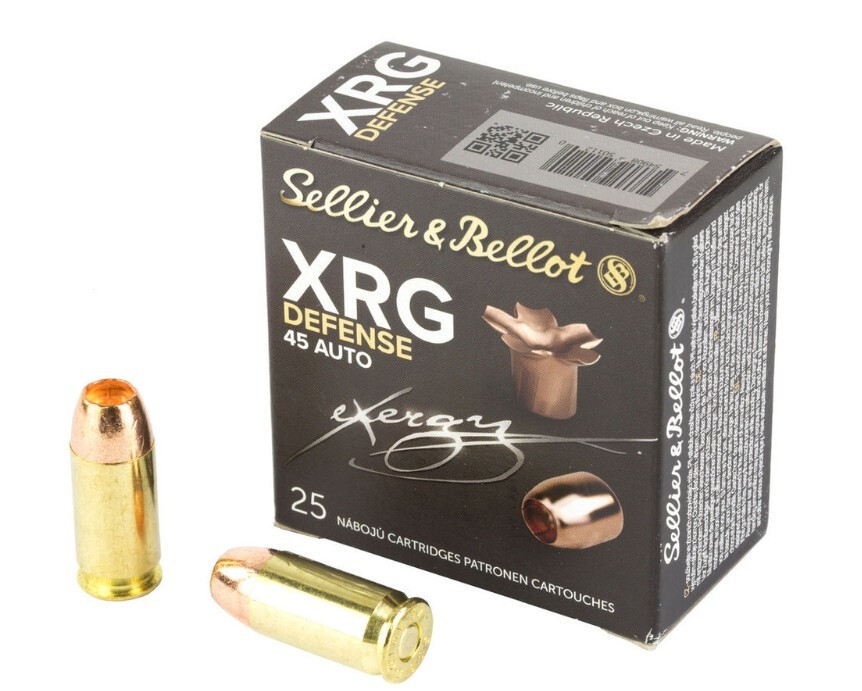
Sometimes lighter is faster. The S&B XRG Defense load takes the less-is-more approach with its 165 gr solid copper hollow point bullet.
This round stands apart from traditional lead-core JHPs by using solid copper construction. This creates a bullet that retains nearly 100% of its weight during expansion but may expand somewhat less than lead designs.
The lighter weight helps achieve higher velocities, which can be especially beneficial in shorter barrels that struggle to get heavier bullets up to optimal expansion speeds.
Price: Varies by retailer and round count
Specs
- Caliber: .45 ACP
- Bullet weight: 165 gr
- Bullet type: SCHP (Solid Copper Hollow Point)
- Casing type: Brass
Features
- Solid copper hollow point style
- Built for defensive use
- Faster-load concept vs heavier bullets
Pros
- Lighter recoil feel for some shooters
- Its lighter bullet can run faster, but real penetration/expansion depends on the exact load and your barrel length.
- Built for defense
Cons
- Expansion may be less than traditional JHP designs
- Availability can be inconsistent
- Needs real testing in your pistol
Blazer Brass .45 ACP 230 gr FMJ
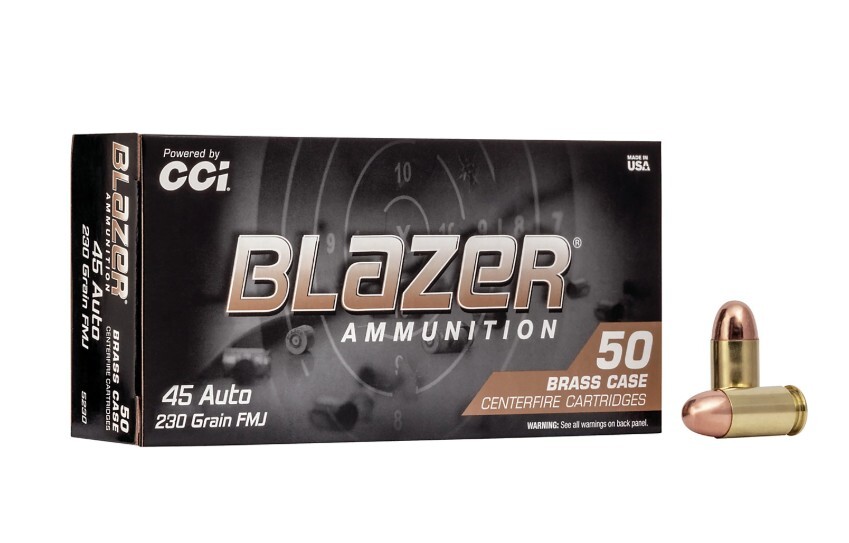
Blazer Brass has built its reputation on one thing: being affordable brass-cased ammo that actually works. For budget-conscious shooters, it's often the first box they grab.
The cases are somewhat harder than premium brands, which can make reloading more challenging, but this actually becomes an advantage in high-volume shooting classes where you can't collect brass anyway.
At around $25 per box, it typically runs a few dollars cheaper than competitor brass offerings, and those savings add up fast during long range sessions.
Price: Varies by retailer and round count
Specs
- Caliber: .45 ACP
- Bullet weight: 230 gr
- Bullet type: FMJ
- Casing: Brass
Features
- Brass case
- Standard FMJ profile
- Common training choice
Pros
- Usually one of the cheaper brass FMJ options
- Easy pick for range days
- Works well for volume practice
Cons
- Not a defense round
- No expansion
- FMJ can over-penetrate
Federal .45 ACP 230 gr HST JHP
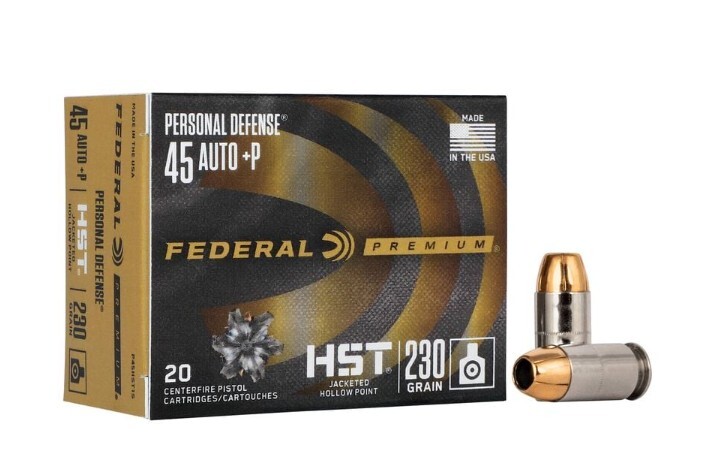
The Federal HST has earned its reputation as a top-tier defensive round through consistent performance in testing and real-world use. Law enforcement agencies across the country trust it for a reason.
In gel testing, HST averaged 14 inches of penetration – sitting comfortably in that 12-18 inch sweet spot that balances stopping power with reduced over-penetration risk. The expansion is impressive too, averaging 0.85 inches.
In one compact-barrel gel test, Federal 230gr HST averaged ~822 fps. It gives it the energy needed for reliable expansion through barriers like heavy clothing or light cover.
Price: Varies by retailer and round count
Specs
- Caliber: .45 ACP
- Bullet weight: 230 gr
- Bullet type: JHP
- Average penetration: 14 inches
- Average expansion: 0.85 inches
- Average velocity: 822 ft/sec
Features
- Modern defensive hollow point design
- Good performance from shorter barrel setup
- Full-weight 230 gr baseline
Pros
- Strong expansion in testing
- Penetration sits well inside the common 12–18 inch goal window
- Popular defensive pick
Cons
- Costs more than FMJ range ammo
- Some 1911s need feed testing with JHP
- Stock can vary
American Eagle .45 ACP 230 gr FMJ
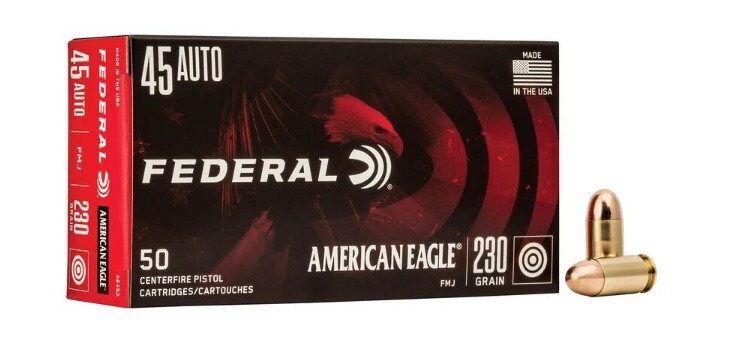
American Eagle represents the training line from Federal Premium Ammunition – a name known for quality. This makes it a natural choice for practice rounds that won't let you down.
The loads are consistent and clean-burning, which means less fouling in your barrel and action during extended range sessions. The cases are also prime candidates for reloading if that's your thing.
At $24 per box, it's positioned as a mid-range practice option – not the cheapest, but still affordable enough for regular training without compromising on quality.
Price: Varies by retailer and round count
Specs
- Caliber: .45 ACP
- Bullet weight: 230 gr
- Bullet type: FMJ
- Casing: Brass
Features
- Range-use FMJ load
- Standard 230 gr weight
- Common availability
Pros
- Solid everyday practice ammo
- Familiar training baseline
- Easy to stock for regular range use
Cons
- Not for home defense
- No expansion
- FMJ can pass through more than JHP
Speer .45 ACP 230 gr Gold Dot JHP
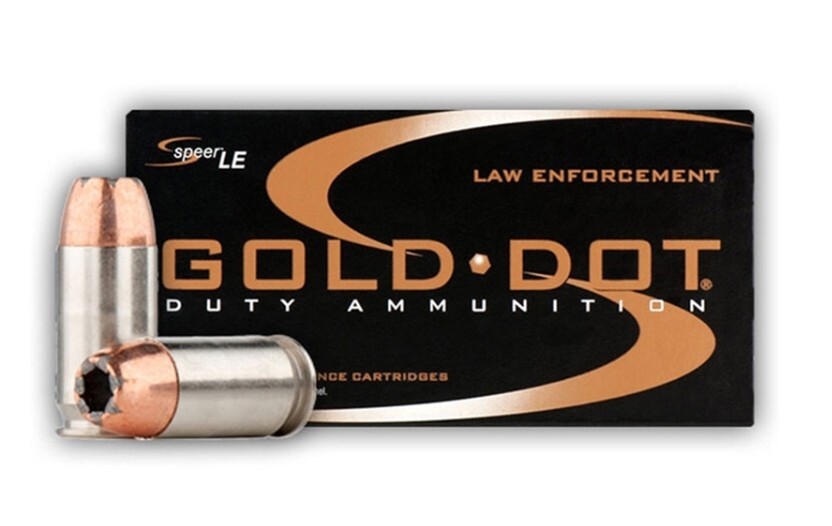
Speer Gold Dot has achieved almost legendary status among defensive ammunition choices. Its bonded construction and reliable expansion have made it a favorite of law enforcement and civilian carriers alike.
In testing, Gold Dot averaged 12.9 inches of penetration – on the lower end of the ideal window but still well within standards. At 12.9 inches in one heavy-clothing gel test, it’s near the lower end of the common 12–18” target, which some people prefer for reduced pass-through risk.
The 0.71 inch expansion creates an effective wound channel that maximizes energy transfer. Even with a velocity of 752 fps from compact barrels, it delivers consistent performance.
Price:Varies by retailer and round count
Specs
- Caliber: .45 ACP
- Bullet weight: 230 gr
- Bullet type: JHP
- Average penetration: 12.9 inches
- Average expansion: 0.71 inches
- Average velocity: 752 ft/sec
Features
- Bonded defensive JHP concept
- Full-weight 230 gr baseline
- Common carry and duty use
Pros
- Strong track record as a defense load
- Penetration meets the common minimum
- Good all-around defense choice
Cons
- More expensive than FMJ practice ammo
- Penetration is closer to the low end of the window
- Still needs testing in your pistol
Sellier & Bellot .45 ACP 230 gr FMJ
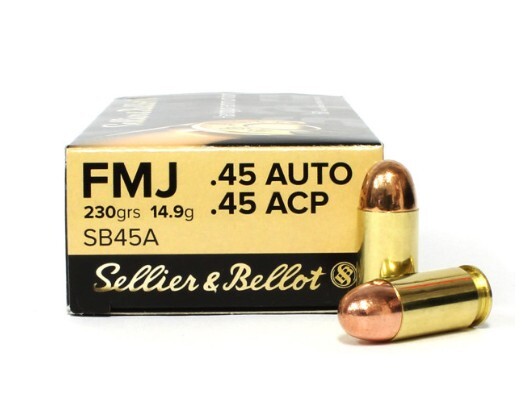
Sellier & Bellot has been making ammunition since 1825, and that experience shows in their products. Their .45 ACP FMJ load offers European quality at competitive prices.
The real value emerges when buying in bulk – where the per-round cost drops significantly compared to purchasing single boxes. This makes it a smart choice for high-volume shooters planning ahead.
S&B ammo has earned a reputation for consistent performance and good quality control, despite its budget-friendly price point when purchased in case quantities.
Price: Varies by retailer and round count
Specs
- Caliber: .45 ACP
- Bullet weight: 230 gr
- Bullet type: FMJ
- Casing type: Brass
Features
- FMJ practice profile
- Bulk-buy friendly
- Standard 230 gr weight
Pros
- Helps reduce training cost when bought in volume
- Common weight for practice
- Simple FMJ design usually feeds well
Cons
- Not a defense round
- FMJ can over-penetrate
- Ballistics may not match your carry JHP
Hornady Critical Defense .45 ACP 185 gr FTX JHP

Hornady went a different way with Critical Defense. You get a lighter 185 gr bullet, topped with their FTX (Flex Tip eXpanding) design. That tip is a polymer plug that sits in the hollow point cavity.
That polymer tip does two jobs. First, it helps stop the hollow point from getting packed with clothing or other barriers. Second, it helps kick off expansion when the round hits. So you get steadier results in more situations.
The lighter bullet also runs faster, around 1,000 fps. That speed helps you get expansion even from shorter barrels that may not push heavier bullets fast enough. It’s like giving the round a little extra push right when it counts.
Price: Varies by retailer and round count
Specs
- Caliber: .45 ACP
- Bullet weight: 185 gr
- Bullet type: FTX JHP
- Muzzle velocity: varies by barrel length
- Muzzle energy: 411 ft-lbs
- Casing type: Brass
Features
- Polymer-tipped hollow point concept
- Higher-speed lighter bullet approach
- Designed for defense
Pros
- Higher listed velocity for the caliber/weight
- Defense-focused design
- Can feel different than 230 gr loads for recoil and cycling
Cons
- Expensive in bulk pricing
- Different bullet weight may shift point of impact vs 230 gr training loads
- Still needs function testing in your pistol
How to Choose the Right Load for Your Pistol
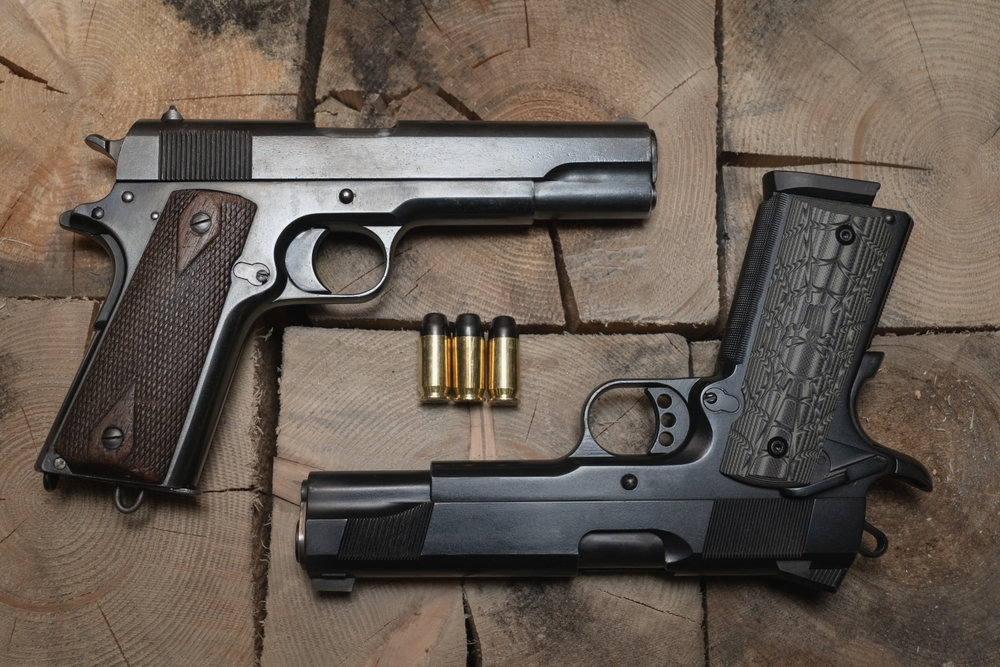
If you run a 1911
The 1911 platform has been around for over a century. And with that age comes a few quirks. Many 1911s were first tuned to feed full metal jacket rounds.
That can cause trouble with some hollow points. The sharp edge of a JHP can snag on the feed ramp. Then you get a jam. Not every 1911 does this. But it happens often enough that you should test your defense ammo before you trust it.
Many newer 1911s have better feed ramps. They tend to handle JHPs with fewer issues. Still, don’t assume your pistol will run smoothly right out of the gate. Run at least 50 rounds through your carry magazines before you trust any load with your life.
If you run a compact .45
Compact .45 ACP pistols create special challenges. Their shorter barrels reduce velocity, which can affect how hollow points expand.
Some JHPs need a minimum velocity to expand properly. If your short barrel drops the speed below that threshold, you might get a round that acts more like FMJ – penetrating deeply without expanding.
This is why compact-specific ammo like the Sellier & Bellot XRG or lighter rounds like the Hornady Critical Defense can make sense in smaller pistols. They’re built to run well at the lower velocities you get from shorter barrels.
If recoil control is your main issue
The .45 ACP has a name for stout recoil. But your bullet choice can calm it down.
Lighter bullets like 185 gr usually feel softer than standard 230 gr loads. You might give up some terminal performance. But if you shoot straighter and faster, that trade can pay off.
Some shooters say +P loads feel “sharper” instead of “pushier” than standard pressure rounds. Try both if you can. Your hands will tell you fast which one feels better.
How to Test .45 ACP Ammo Before You Rely on It
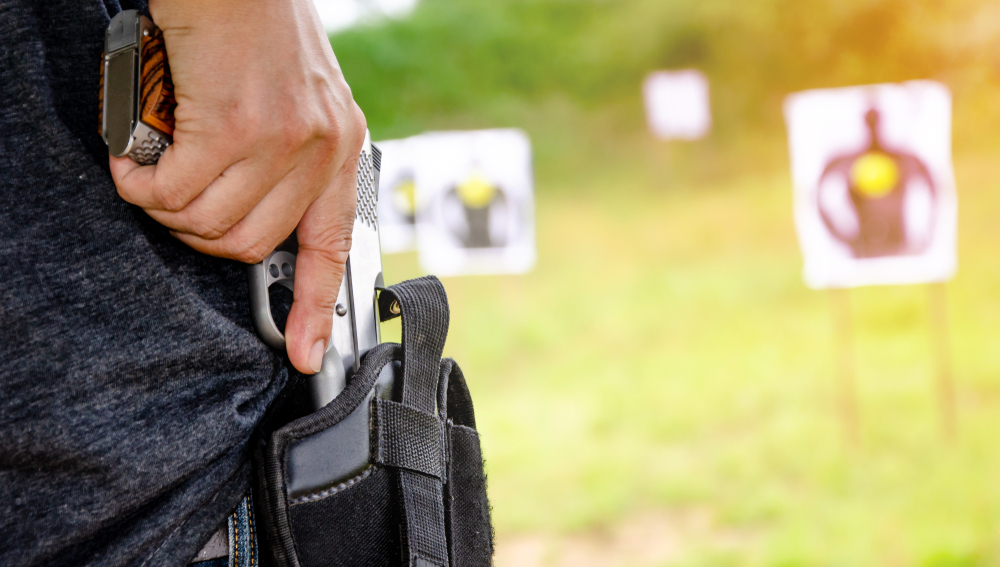
Want to make sure your ammo works when it matters? Follow these steps:
1. Buy two defense loads and one training load
Start with a couple different defense options plus an FMJ for practice. This gives you a backup if one defensive load doesn't run well.
2. Run a function test with your carry magazines
Feed at least 50 rounds of each defensive load through your actual carry magazines. Don't just test with range mags.
3. Confirm point of impact at common distances
Shoot groups at 7, 15, and 25 yards (or whatever distances you actually train at) and note any point-of-impact shift.
4. Shoot a small string fast to confirm cycling
Slow fire doesn't always reveal cycling issues. Run a few rapid-fire strings of 3-5 shots.
5. Repeat after your pistol is slightly dirty
Clean guns always run better. Test your ammo after 100+ rounds without cleaning.
6. Choose one defense load. Stick with it. Train with a close FMJ match
Pick your winner and stick with it. Then find an FMJ load that shoots to the same point of impact for affordable practice.
Final Thoughts
Choosing .45 ACP ammo doesn't need to be complicated. For defense, pick a proven JHP that cycles in your gun and penetrates 12-18 inches. For practice, grab an affordable FMJ that feeds reliably.
The key is testing. A fancy box and premium price mean nothing if the ammo doesn't run in your gun. Function tests everything before you trust it.
Keep it simple. One defense load. One practice load. Train often. That approach has worked for generations of .45 ACP shooters, and it still works today.
Research from many ammo tests shows one big thing. Consistency beats chasing the newest wonder bullet. Pick what runs well in your gun. Stick with it. Then put your time into practice, not endless ammo swapping.
Whether you’re choosing ammo for the range, hunting, competition, or personal protection, quality .45 ACP loads make all the difference. For specialist defensive loads that deliver dependable performance, check out our Best .45 ACP for Home Defense guide before finalizing your choices.

Federal Premium HST 45 ACP 230gr JHP
$34.21
at Pro Armory
Prices accurate at time of writing
Frequently Asked Questions (FAQs)
What is the best .45 ACP ammo for home defense?
Federal HST and Speer Gold Dot often do well in testing. They hit the ideal 12-18 inch penetration range. They also expand well. That combo helps you get strong results without a high risk of the round going too far.
Is 230 grain the best bullet weight for .45 ACP?
The 230 grain bullet is the classic .45 ACP choice. It runs well in most guns. Lighter bullets like 185 or 165 grain can move faster. They can also feel softer in recoil. But they can act different on impact. For most people, 230 grain gives a solid mix of control and effect.
Do FMJ rounds work for home defense?
FMJ (full metal jacket) rounds are not a good pick for home defense. They tend to push deep. They also do not expand much. That raises the chance of going through walls. JHP (jacketed hollow point) ammo is a better choice for defense.
Will hollow points feed in a 1911?
Some 1911s can be picky with hollow points. The feed ramp design plays a big role. Many modern 1911s feed JHPs fine. Older or GI-spec models can struggle. Test your defense ammo in your own 1911 before you trust it.
Is +P .45 ACP safe in my pistol?
Not every .45 ACP gun is rated for +P ammo. Check your owner’s manual first. Many modern pistols can handle some +P use. But constant use can wear parts faster, mainly in older guns or lighter-built models.
What is the ideal penetration depth for defense ammo?
The FBI standard calls for 12-18 inches of penetration in ballistic gelatin. Less than 12 inches may not reach vital organs through heavy clothing. It may also fall short on a larger attacker. More than 18 inches raises the risk of over-penetration. That can put people behind the target at risk.
About the Author
This article was written by the Pro Armory writing team. We used current research. We also used studies from sources like the Journal of Military Science, Firearms News, and the National Shooting Sports Foundation. We also used official defense publications. We checked guidance from groups such as the ATF, NRA, and manufacturer manuals.
Disclaimer: This review is for education only. Laws vary by state and city. Laws can change. Follow safe handling at all times. Read your owner's manual. Verify local rules before you buy or train.

Best Ammo Deals, Training, & Accessories
Subscribe to ProArmory sales and deals email.