 Pro Armory Editorial Team
Quick Answer
Lightweight concealable body armor works best when it's thin, flexible, and sized right. Most daily-wear options focus on handgun-level protection and prioritize comfort, low printing, and coverage you can actually keep on for hours. In this guide, we compare eight low-profile picks across on-body vests, armored apparel, and off-body bag setups—plus a simple fit-and-buy checklist.
Key Takeaways
- Choose on-body armor for consistent coverage; off-body options trade convenience for certainty.
- Prioritize verified standards and transparent testing over vague claims.
- Thin and light is only useful if the fit prevents shifting and printing.
- Heat management matters: breathable carriers and moisture layers improve daily comfort.
- Coverage beats marketing: protect vital zones, not just the easiest panel size.
- Match the system to your routine: work, commute, travel, or higher-risk environments.
A lot of people master concealed carry and basic EDC, then hit a new question: what if the threat is more than just a theft scenario? That's where low-profile armor enters the conversation. Concealable armor is not about looking tactical. It's about staying discreet. Staying mobile. Adding one more layer of protection that won't disrupt your daily routine.
What "Lightweight Concealable Body Armor" Actually Means
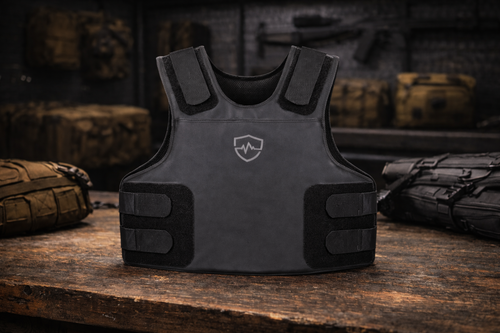
Concealable armor and overt armor are two very different things. Overt armor—picture plate carriers—sits on top of your clothes and announces itself. Concealable armor fits under normal clothing and keeps a low profile. You can walk into a grocery store and nobody has a clue.
Lightweight, for this category, means thin and flexible. You want panels that don't add visible bulk, carriers that move with your body, and coverage that stays in position through a full day. Off-body options like bags and backpacks take a different approach—they keep the armor separate from your body. The trade-off is real: protection depends entirely on where the bag sits relative to the threat. If it's not positioned between you and danger, it simply won't help.
Most concealable setups focus on handgun-level protection. That's the reality of thin, flexible soft armor. If you need rifle-level protection, your options get heavier and bulkier fast.
Protection Levels Made Simple (What to Expect from Slim Armor)
Soft armor is the backbone of concealable setups. It's flexible, thin, and built to stop handgun rounds. The included front and rear soft armor inserts measure 7.75 × 12.75 inches, giving you front-and-back soft-armor coverage without the bulk of a full vest.
The most important word to look for is "certified." NIJ-certified armor has been independently tested and confirmed to perform at a specific threat level. Anything claiming protection without clear certification info is a red flag. This is life-saving gear—not the place to trust vague product claims or unverified "tested-to" language. If a manufacturer doesn't list testing standards clearly and openly, that's your sign to keep looking.
How We Picked These 8 Options
Every pick on this list had to meet a clear bar, based on industry research and user feedback. The selection criteria:
- Easy to conceal in everyday clothing or normal bags
- Lightweight and realistic to wear or carry on a regular basis
- Easy to deploy or keep properly positioned throughout the day
- Covers vital zones in a meaningful way
- Stands out with design, comfort features, or real-world practicality
- Includes options across different budgets and body types
Quick Comparison Table
| Option | Carry Style | Best For | Main Trade-Off |
|---|---|---|---|
| Safe Life Defense Hyperline | On-body vest | Thin, comfortable daily wear | Added warmth and some bulk |
| BulletSafe VP3 | On-body vest | Best value entry-level vest | Comfort and fit may vary |
| Vertx Commuter + armored insert | Off-body | Covert everyday bag carry | Protection depends on positioning |
| DevCore PCB | Off-body backpack | Rifle-plate capable setup | Higher price and complexity |
| Premier Female Concealable Vest | On-body women's fit | Better contouring for women | Higher cost than entry-level options |
| Safariland Hardwire 68 + carrier | On-body panel system | Ultra-thin daily wear setup | Requires correct carrier pairing |
| Premier Concealable Vest | On-body vest | Maximum soft-armor coverage | More difficult to conceal |
| Premier Everyday Armor Shirt 2.0 | On-body apparel | Deep concealment under casual clothing | Heat buildup in warm conditions |
Best Lightweight Concealable Body Armor Picks
Safe Life Defense Hyper Concealable HYPERLINE Level IIIA
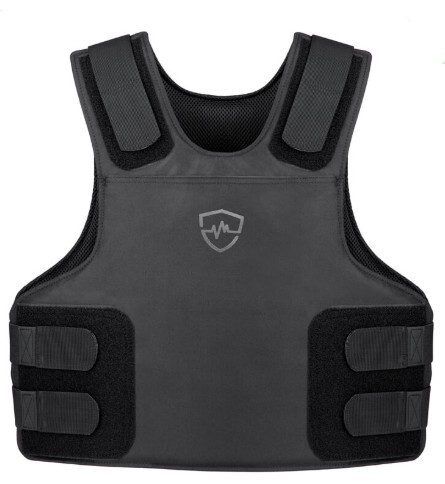
The Concealable HYPERLINE Level IIIA is built for one job: stay on your body all day without giving you away. Safe Life lists it at 0.19 inches thick, which makes it one of the thinnest soft-armor vest options in this category and helps reduce printing under everyday clothing. The nylon-style exterior paired with a mesh interior pushes some airflow through the vest, and that makes a real difference on longer wear days.
Independent testing shows the Hyperline holds up under real ballistic pressure. Adjustable Velcro straps let you dial in the fit so nothing shifts during daily movement. It stays snug without cutting off your range of motion. The trade-off is warmth—no soft armor vest fully escapes that reality—but the Hyperline manages heat better than most options in its class. A strong pick for anyone committed to daily vest carry.
Price: Approx $978–$1,053 retail depending on size and current sale pricing
Features:
- Level IIIA concealment-focused vest
- 0.19" thickness
- Adjustable Velcro fit system
- Mesh interior for airflow
Pros:
- Exceptionally thin for a full vest
- Consistent on-body coverage throughout the day
- Strong daily wear option
Cons:
- Premium price point
- Warmth during extended wear
- Some bulk compared to shirt-only setups
BulletSafe VP3 Level IIIA Bulletproof Vest
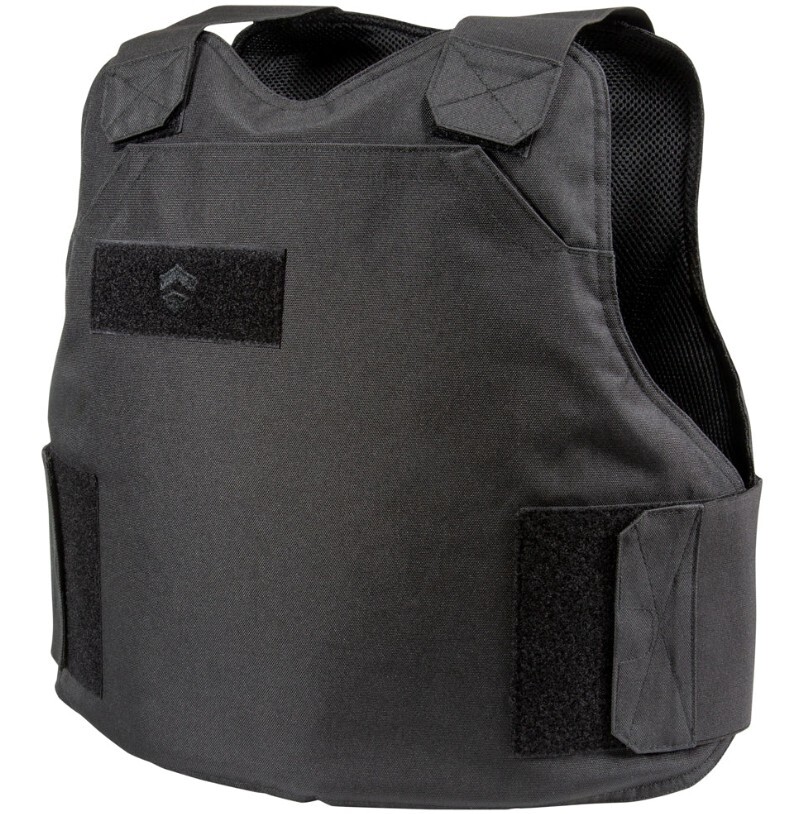
The VP3 fills the "get protected without overspending" lane and fills it well. It's a straightforward vest at a price that does not punish first-time buyers. For people who are not sure they'll actually wear armor daily, it's a smart way to test fit and comfort habits before committing big money to a premium system.
The approach is refreshingly simple: no complicated add-ons, no confusing size options. It's Level IIIA protection in a vest format that does what it's supposed to do. Comfort and concealment are not as refined as more expensive picks, and heat is still part of the experience. But as a baseline pick or a backup vest for travel, it holds its own without draining your wallet.
Price: approx $225–$250 retail depending on configuration and current availability
Features:
- Level IIIA vest
- Accessible, budget-focused construction
- Simple, approachable sizing
Pros:
- Best price in the category
- Good first-vest baseline
- No complicated extras
Cons:
- Less refined comfort than premium options
- Fit can vary more at this price tier
- Heat still applies like any vest
Vertx Commuter Sling 2.0 + Premier Body Armor Insert
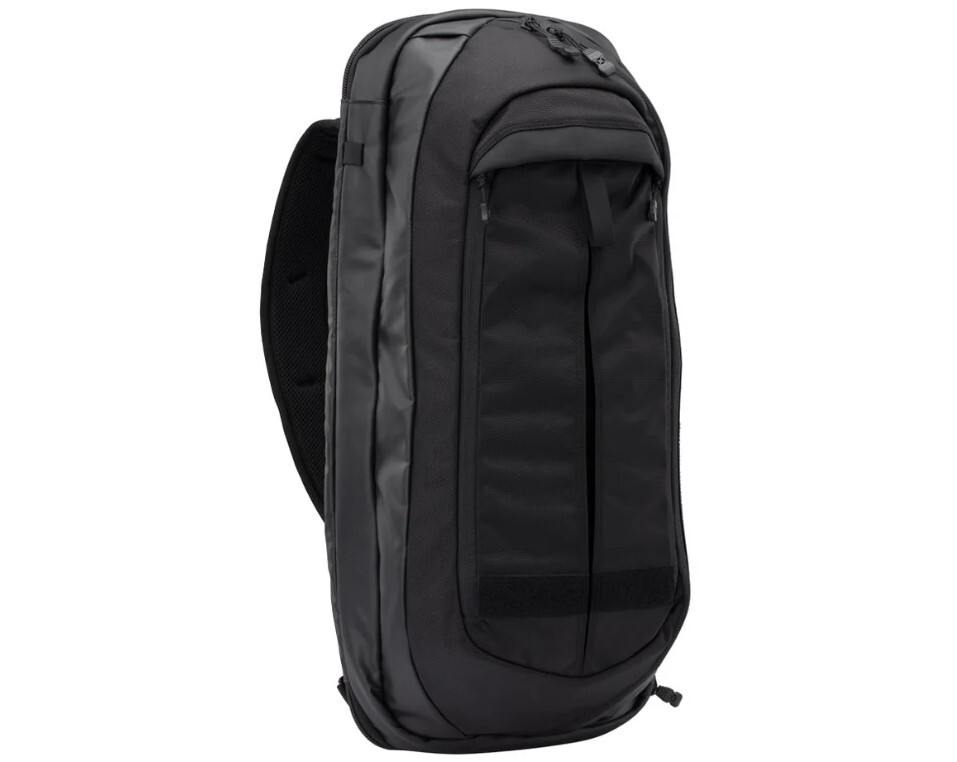
The Commuter Sling 2.0 is a stylish, well-built everyday carry bag with a hidden soft armor slot that most people would never notice. The armor stays close to your body inside a specially fitted compartment that zips shut—invisible unless someone knows exactly where to look. The bag works perfectly as a normal EDC sling on its own. The armor just comes along for the ride without changing anything about how the bag looks or functions.
The off-body reality deserves honest attention. Coverage depends entirely on where the bag sits and how it faces a threat. In practice, this is best understood as situational directional protection, not the kind of consistent coverage you get from an on-body vest. For commuters and travelers who already carry a sling bag daily, adding armor to the setup changes almost nothing about their routine—and that convenience is genuinely hard to beat.
Price: approx $395–$430 retail total depending on bag seller pricing and insert configuration
Features:
- Everyday-style sling bag format
- Specially fitted hidden armor compartment
- Insert designed to fit this specific bag
Pros:
- Very covert for EDC bag users
- Doubles as a highly practical daily carry bag
- Easy to add or remove the armor panel
Cons:
- Off-body positioning is not guaranteed under stress
- Typically one-direction protection
- Total cost rises significantly once you add the insert
DevCore Plate Carrier Backpack (PCB)
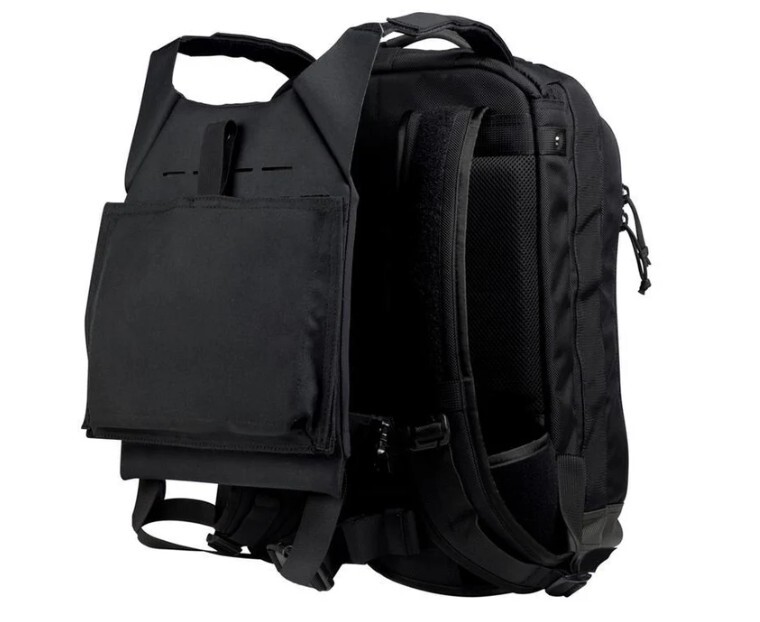
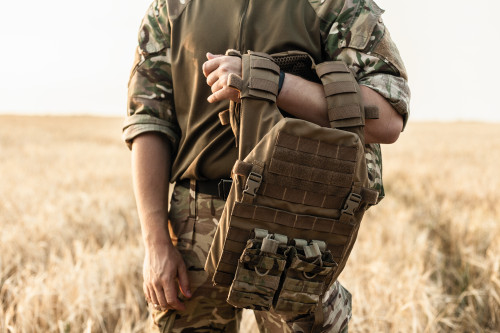
The DevCore PCB pushes the "bag with armor" concept much further than a standard sling setup. This is a full plate-carrier system built into a backpack—designed to carry hard armor plates and deploy protection quickly without looking overtly tactical. Front plates sit in a rear compartment. Hook-and-loop straps on the shoulder straps let you pull the plate forward against your body fast. It's a smart deployment concept packed into a bag that draws no attention.
The PCB is not built for casual errands or weekend runs. It is designed for discreet transport and rapid deployment of armor, including front and rear plates, in higher-risk travel or protection-oriented environments. It gets heavier when loaded with plates, costs more than nearly everything else on this list, and demands that you actually practice deploying it before you trust it in a real situation.
Price: approx $490 retail for the backpack only; armor plates and accessories increase the total cost substantially
Features:
- Plate-capable backpack design
- Quick-deploy front plate system
- Hidden compartments for organized gear
Pros:
- Higher protection potential with hard plates
- Low-profile look compared to overt plate carriers
- Organized, purpose-driven internal layout
Cons:
- Off-body armor until deployed
- Add-on costs climb fast
- Heavier and bulkier when fully loaded
Premier Body Armor Female Concealable Armor Vest – Level IIIA
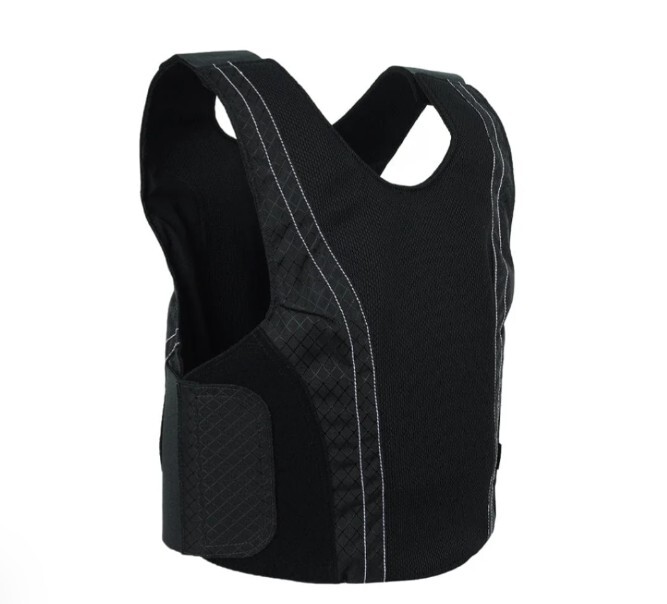
Most concealable vests are cut for a generic torso shape that tends to work far better for men. The Premier Female Concealable Vest addresses this directly with a curved, contoured design built around a woman's frame. That better fit shows up as less shifting, less printing, and more confidence that the vest stays where it belongs throughout the full day.
Consistent fit is the entire point of on-body armor. A vest that shifts out of position under daily movement stops being protection and starts being a problem. The cost is higher than value picks, and warmth is still a factor in hot climates—but for professional settings where concealment is non-negotiable, this vest earns its place on the list.
Price: approx $859 retail
Features:
- Women-specific curved design
- Level IIIA protection
- Liner materials built for daily wear comfort
Pros:
- Better fit directly reduces printing and shifting
- More confident concealment versus unisex cuts
- Strong daily-wear pick for women
Cons:
- Costs more than value vests
- Warmth in hot climates is still a factor
- Requires careful sizing to get right
Safariland Hardwire 68 Level IIIA Panels + Concealable Carrier
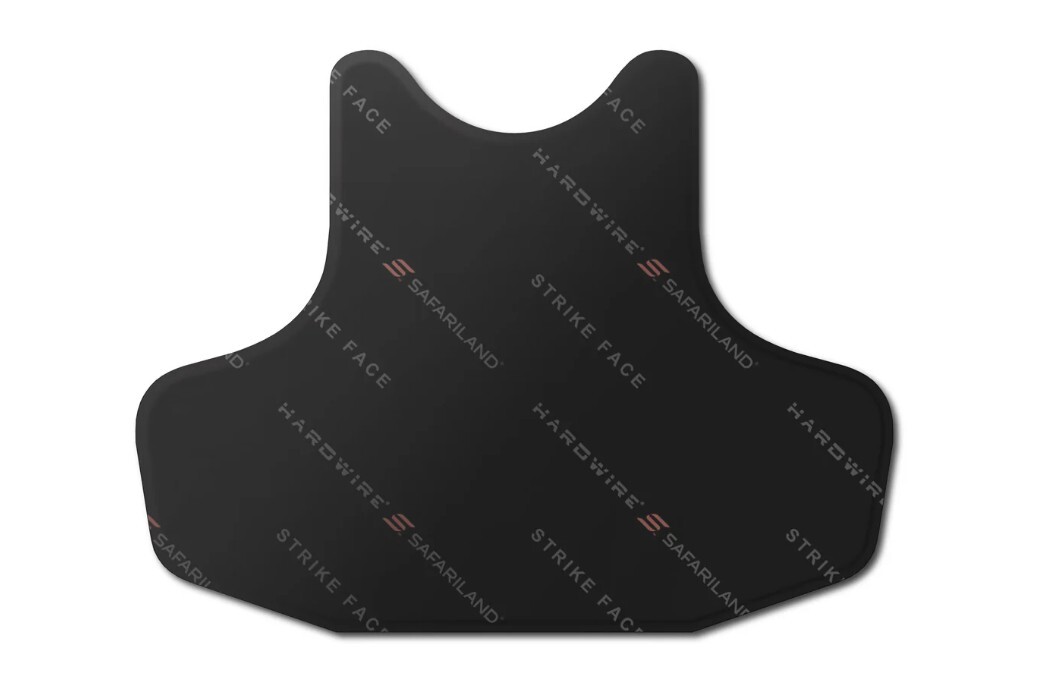
This is a panel-based system built around thinness and lightness above all else. The panels are marketed by Safariland as NIJ 0101.06 Level IIIA compliant/certified, and the system format—panels combined with a compatible carrier—gives buyers the flexibility to choose a carrier that actually fits their body shape and daily wardrobe. That flexibility is a real advantage at the daily wear level, where fit makes or breaks the whole setup.
The catch is complexity. Carrier choice matters enormously here. Pick the wrong carrier and you lose the thinness advantage entirely. Budget-wise, this sits firmly in professional-grade territory at $1,600 to $2,100 for the panel set. For maximum thinness in daily wear with strong spec transparency, it's a top-tier option—just go in with a clear plan for the full setup before you commit.
Price: approx $1,570–$1,965 retail through dealers for panel sets, with total system cost rising further once you add the carrier
Features:
- NIJ 0101.06 Level IIIA compliant panels
- Ultra-thin category design
- System approach: panels plus compatible carrier
Pros:
- Strongest thinness for daily wear use
- Flexible carrier pairing options
- Transparent, clearly published specs
Cons:
- Most expensive pick on this list
- More complex to buy correctly
- Carrier availability can vary by vendor
Premier Body Armor Concealable Armor Vest – Level IIIA
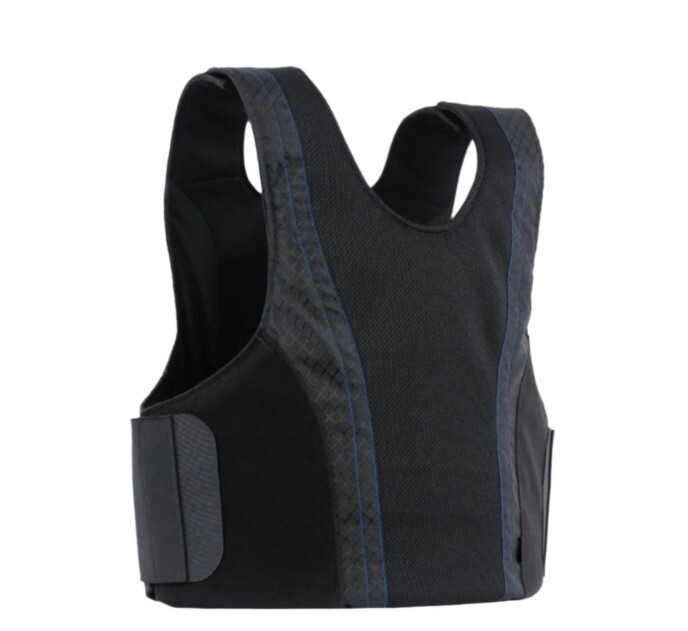
This vest is for people who put coverage above everything else. It's an NIJ Certified Level IIIA vest with a full torso footprint that covers sides and more total body surface than shirt-based or small-panel options can reach. It's a larger profile than minimalist picks, and concealing it takes more effort—but with six adjustment points and smart layering, it can disappear under the right clothing without much trouble.
A patterned overshirt does a lot of work here. Pull the vest tight to the body, layer over it smartly, and the bulk mostly drops away. A good flannel can work wonders. For anyone with a "coverage first" priority, this vest makes a lot of sense as their daily setup.
Price: approx $799 retail
Features:
- NIJ Certified Level IIIA vest
- Full vest format with six adjustment points
- Antimicrobial wicking interior layer
- Machine-washable exterior layer
Pros:
- More coverage than minimalist options
- Adjustable fit helps reduce printing
- Stable and predictable vest format
Cons:
- Harder to conceal than shirt-panel systems
- Warmth requires some planning
- Not a budget pick
Premier Everyday Armor T-Shirt 360 Bundle
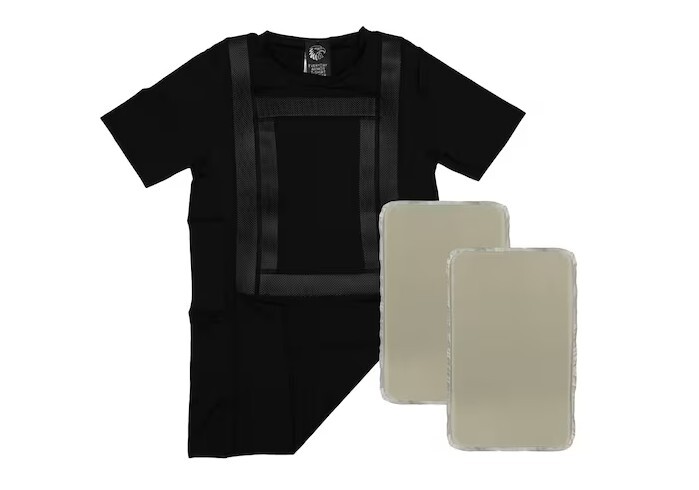
The Everyday Armor T-Shirt 360 rethinks how you carry armor entirely. Instead of a vest, it's a tight, fitted shirt with built-in pockets designed to hold front and rear soft armor inserts close to the body. The shirt's close fit keeps the panels from shifting and reduces printing without effort. A light overshirt on top and the whole setup disappears. No one around you would ever guess you're wearing protection.
The included front and rear soft armor inserts measure 7.75 × 12.75 inches, giving you front-and-back soft-armor coverage without the bulk of a full vest. The shirt material is stretchy and moisture-wicking, which helps throughout a long day. Heat is still the main downside—the armored panels hold warmth against the torso, and that adds up fast in hot climates. In cooler settings or air-conditioned environments, this is one of the most comfortable all-day armor options on the entire list.
Price: approx $295 for the Everyday Armor T-Shirt 360 Core or $395 for the Everyday Armor T-Shirt 360 (Armored)
Features:
- Fitted shirt with built-in armor pockets
- 7.75 x 12.75" front and rear inserts
- Stretchy, moisture-wicking fabric
- NIJ Certified panels
Pros:
- Very low-profile concealment under everyday clothing
- Good mobility throughout daily movement
- Simple wear-it-like-clothing workflow
Cons:
- Heat buildup in hot climates
- Front and back coverage only, not full wrap
- Fit must be correct to prevent panel shifting
How to Choose the Right Pick for Your Routine
The right choice starts with your actual daily life—not the "what if" scenario you hope never happens:
- If you will wear armor daily: choose an on-body vest or apparel system
- If you need the most discreet, "normal bag" look: choose an off-body setup
- If heat is a serious concern: prioritize breathable carriers and moisture-wicking layers
- If coverage matters most: choose a full concealable vest format
- If you need a women-specific fit: choose a female-contoured concealable vest
- If budget is the first concern: start with a value vest, learn your preferences, then upgrade from there
Fit, Concealment, and Comfort Tips That Prevent Buyer Regret
Sizing matters more than most first-time buyers expect. The armor needs to sit snug enough to stay in position all day—not so tight that it prints through your shirt. Get the size right before you trust the setup in any real situation.
Layering is your best concealment tool. Patterned fabrics break up panel edges far better than solid colors. A good flannel or structured overshirt hides lumps and body lines. Do a full movement check before you head out anywhere: sit, bend, reach, and twist. If it prints during any of those movements, adjust it before you walk out the door.
Heat is real and it compounds over long days. Moisture-wicking base layers and carriers with airflow channels help manage it. Stay well hydrated on warm days—wearing body armor raises your core temperature, and that catches some people off guard fast.
For off-body setups: practice orienting and deploying the bag under stress before you trust it in a real scenario. Knowing how to do it is not the same as doing it quickly under pressure.
Care and Maintenance (Keep It Ready)
- Store panels flat and avoid hard folds unless the manufacturer specifically says otherwise.
- Keep carriers clean to prevent odor and skin irritation. Wash outer layers per the manufacturer's care instructions.
- Inspect panels regularly for wear, fraying, or any signs of delamination.
- Replace anything that looks questionable. This is life-saving gear—do not gamble on a panel that may have taken damage.
Final Thoughts
Concealable armor solves a real problem: adding protection without turning your daily life into a tactical exercise. The best setup is the one you can actually wear—comfortable enough to keep on, low-profile enough to go unnoticed, and positioned correctly if you ever need it. Choose based on your routine, your climate, and your honest risk profile. Not just the specs on a product page.
Lightweight armor works well for daily wear and low-profile protection, but it’s not the only solution. Some situations call for higher protection levels or different configurations altogether. To explore a wider range of body armor systems, read Ultimate Guide to the Best Body Armor: Top 13 Picks.
Frequently Asked Questions (FAQ)
What is the best lightweight concealable body armor for everyday wear?
The best pick is the one you can actually wear every day. A thin vest, armored shirt, or panel system matched to your climate and wardrobe will serve you far better than a technically impressive setup you leave at home because it's uncomfortable.
Is off-body armor in a bag worth it?
It can be—but protection depends on positioning and how fast you can access and deploy it. It's a real trade-off between convenience and guaranteed coverage. For some routines it works well; for others, on-body is the smarter call.
Will concealable armor be uncomfortable in hot weather?
It can be. Heat is the most common complaint from regular wearers. Breathable carriers and moisture-wicking layers help considerably, but some warmth is unavoidable with on-body soft armor.
What matters more: thinness or coverage?
Coverage usually wins. Ultra-thin is great, but only if it actually protects your vital zones and stays in place. A slightly thicker vest with solid, consistent coverage beats a paper-thin panel that shifts out of position by mid-morning.
How do I avoid printing through my clothing?
Snug sizing, patterned or slightly heavier outer layers, and a full movement check before you head out. If it doesn't print during a sit, bend, and twist test at home, you're in good shape.
About the Author
This article was written by the ProArmory writing team based on current research, including studies from reputable sources like the *Journal of Military Science*, *Firearms News*, and the *National Shooting Sports Foundation*. We also referenced trusted information from official defense publications and respected firearm authorities such as the ATF, NRA, and manufacturer manuals.
Disclaimer: Before purchasing body armor, make sure to follow all local, state, and federal laws—restrictions vary by state and can change. Body armor selection is also deeply personal and context-dependent, so always confirm specifications, fit guidance, and verification details directly with the manufacturer before you buy or use anything.
Best Ammo Deals, Training, & Accessories
Subscribe to ProArmory sales and deals email.