 Pro Armory Editorial Team
Quick Answer
If you want one kit that covers long storage and better nutrition, start with Nutrient Survival. For a low-cost 30-day bucket, Augason Farms is hard to beat. For short trips and fast meals, Mountain House is the easiest win. ReadyWise fits families and bulk storage, plus a gluten-free option. For grab-and-go food that doesn’t require water to eat, SOS Emergency Food Bars are the simplest. Military-style MREs can be eaten cold too, but heater and accessory contents vary by seller and lot, so confirm what’s included before you buy.
Key Takeaways
- Pick kits by use case first, then by budget.
- Long shelf life is great, but water needs matter more.
- For travel, choose meals that need no cooking gear.
- For home storage, calories per day and variety matter most.
- Keep a no-water backup for cars and quick evacuations.
- Taste matters if you want to rotate stock and eat it.
Food is comfort, even on bad days. In an outage, evacuation, or storm, the right kit keeps you steady. The wrong kit becomes a dusty bucket you never open. This guide trims the noise and puts seven proven options into simple lanes, so you can buy once and store with confidence.
How We Chose These 7 Survival Food Kits
The two main situations
- Staying put at home with stored supplies
- Moving fast with limited time, gear, and water
The criteria we used
- Cost per day and cost per calorie
- Shelf life and storage style
- Water required or no-water use
- Prep time and gear needed
- Taste and variety for real-world use
- Diet needs, including gluten-free
Quick Use-Case Guide
Best for long-term home storage
- Nutrient Survival 30-Day Emergency Food Kit
- Augason Farms 30-Day Emergency Food Supply
- ReadyWise Emergency Food Supply Freeze-Dried Entrée Variety
- ReadyWise Gluten-Free Grab & Go Bucket
Best for camping and short emergencies
- Mountain House 3-Day Emergency Food Supply
Best for bug-out bags and fast travel
- MRE Meal Ready to Eat Military Surplus MRE
- SOS Emergency Food Bars
Survival Food Comparison Table
| Pick | Best For | Days Covered | Water Needed | Why It Made the List |
|---|---|---|---|---|
| Nutrient Survival 30-Day | Home storage, balanced meals | 30 | Yes | Strong flavor and texture with extended shelf life |
| Augason Farms 30-Day | Tight budgets, long-term storage | 30 | Yes | Low cost per day with high calorie count |
| Mountain House 3-Day | Camping, grab-and-go pouches | 3 | Yes | Fast prep, strong taste, convenient pouch meals |
| ReadyWise Entrée Variety | Families, bulk variety | Varies by kit | Yes | High serving count with long shelf life and practical mix |
| ReadyWise Gluten-Free | Gluten-free home storage | Varies by kit | Yes | Gluten-free option designed for long shelf life |
| Military Surplus MRE | No-water travel meals | 1 per MRE | No | Zero prep; heater and accessories typically included |
| SOS Emergency Food Bars | Car kit, bug-out backup | 3 | No | Compact calorie source for simple emergency use |
BEST Survival Food
Mountain House 3-Day Emergency Food Supply
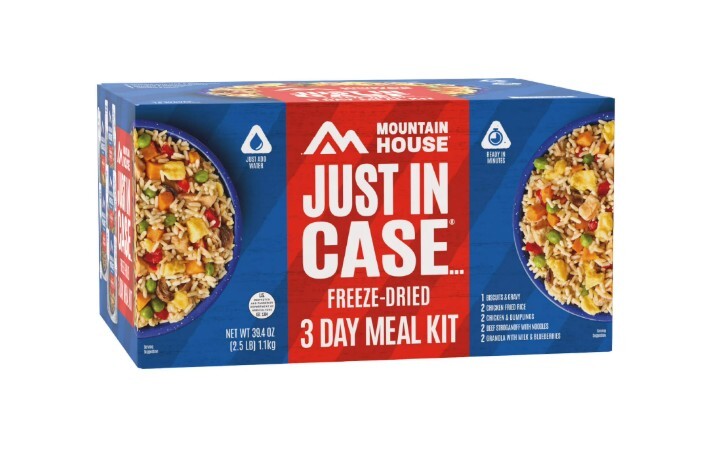
This is a classic 3-day kit made for quick meals on a camping trip or during a short emergency. Meals come in resealable pouches. You add water right in the pouch and eat from the bag. People like it because prep is fast. The meals also tend to taste better than many ration style options.
Mountain House meals are designed for hot water, but you can rehydrate with cooler water in a pinch. Expect longer wait times and less ideal texture compared to hot-water prep.
Price: $80–$100 depending on retailer and sales (example: $92 at one major emergency-food retailer)
Features
- Around 3 days of food for 1 person
- Around 1,700 calories per day
- Often listed at 30-year shelf life
Pros
- Easy pouches, low cleanup
- Strong taste compared to many survival foods
- Great for camping and short emergency planning
Cons
- Needs water
- Creates pouch trash
- Not a long-term month supply
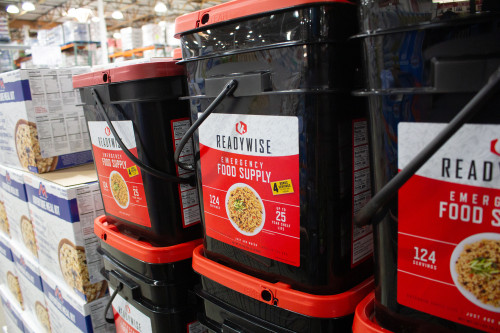
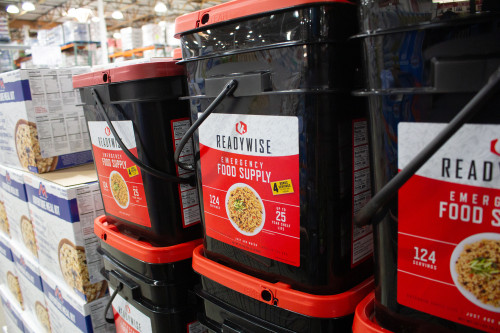
ReadyWise Emergency Food Supply, Freeze-Dried Entrée Variety
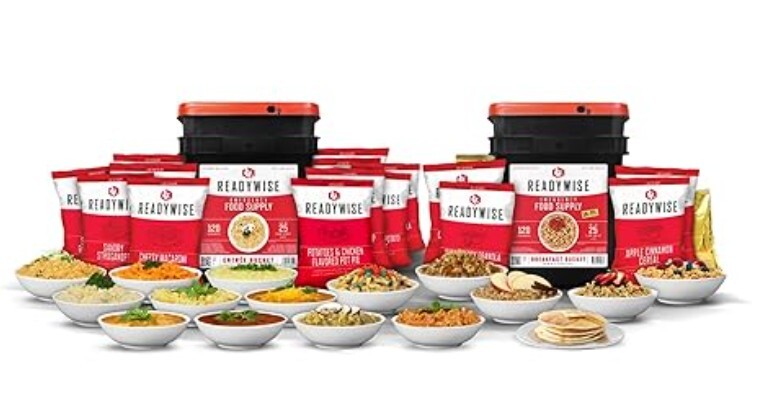
This is the bigger bucket-style option aimed at bulk storage and households. You get a lot of servings and a long shelf life. Prep is simple once you learn it, though some pouches can be tough to open and flavors can be mild.
The ReadyWise bucket includes foods like granola. It also includes pasta Alfredo and vanilla pudding. You get breakfast, lunch, dinner, and dessert in one container. The packaging may need scissors to open. But the cooking steps stay simple once you get used to it.
Price: approx $200–$300+ depending on retailer and sales (example: $299.99).
Features
- Serving counts vary by bucket/SKU. Example listing shows 120 servings and positions it as roughly a 13-day supply.
- 25-year shelf life is commonly listed
Pros
- High serving count
- Long storage plan
- Variety across meals and drinks
Cons
- Pouches may be hard to open
- Flavors can be light
- Needs water and a mixing container
SOS Emergency Food Bars
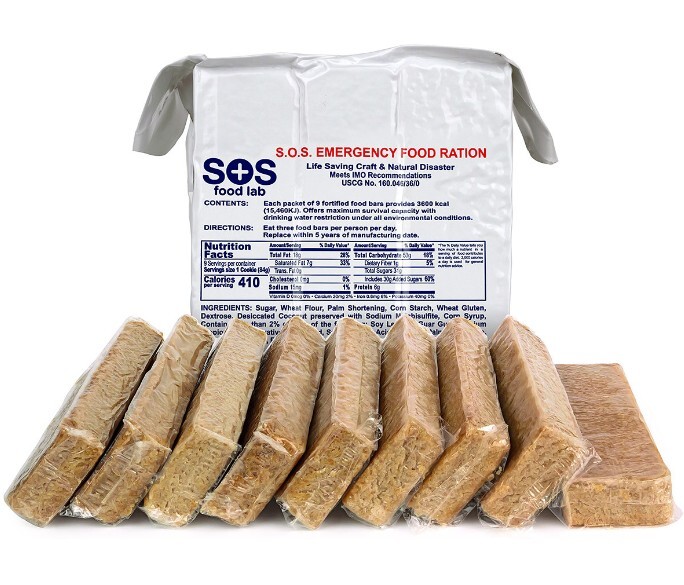
These are compact 72-hour emergency bars made for quick calories, not comfort meals. They taste sweet. They also feel dry and crumbly. Still, they store well. You do not need water. And they fit easily in a trunk or bug-out bag.
The SOS bars taste like strong vanilla graham crackers. They are not the cleanest snack. They break apart easily. But in a survival situation, neat eating is not the main goal. The important thing is they provide calories when you need them most.
Price: $10–$20 depending on pack size and retailer (example: $14.99 for one 3,600-calorie package).
Features
- About 3,600 calories per pack
- Designed for about 72 hours
- Around 5-year shelf life
- No water required
Pros
- Compact and easy to store
- Budget-friendly backup
- Zero prep
Cons
- Dry and crumbly
- Gets boring fast
- Not a real meal feel
Nutrient Survival 30-Day Emergency Food Kit
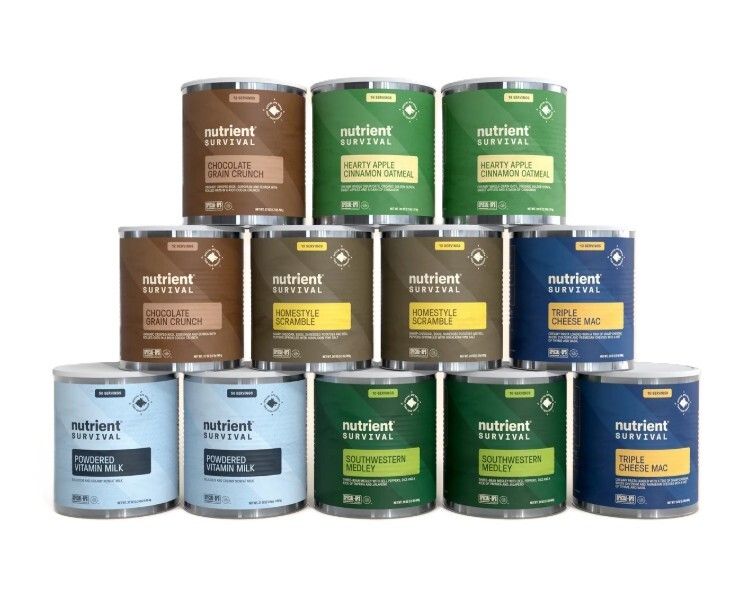
This is a premium 30-day kit focused on more complete nutrition and stronger eating quality. It's praised for better texture and flavor compared to many long-storage kits. You still need hot water and a simple setup to prepare it.
Nutrient Survival ranked high in taste tests. The meals also aim to cover the macros and vitamins you need to keep going. Nutrient Survival markets the kit as having ‘more nutrients’ than typical survival food and states it uses no artificial colors, preservatives, or flavors. Treat those as manufacturer claims, and verify labels if you have dietary needs. The meals come in reusable containers. That adds extra value after you finish the food.
Price: approx $500–$560
Features
- Designed for 30 days
- Example kit listing shows 40,480 total calories, which the brand positions as about 1,350 calories/day.
- Up to 25-year shelf life on many items
- Water required
Pros
- Better texture and flavor than many buckets
- Strong menu options
- Long shelf life
Cons
- Expensive
- Needs water and heat
- Not ideal for ultralight travel
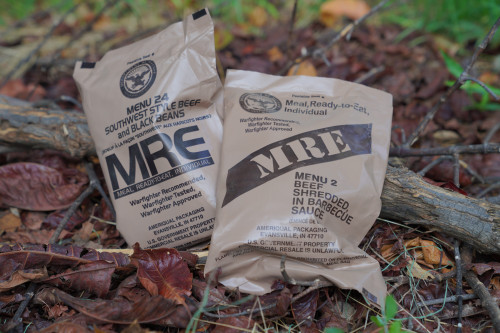
MRE (Meal Ready to Eat) Military Surplus MRE
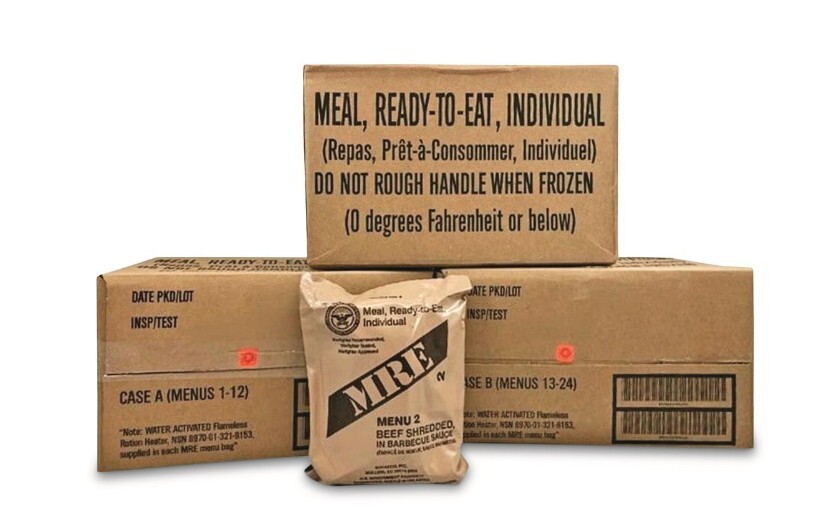
MREs are made for speed. You open the pack. Then you eat. No mixing and no waiting for food to soak. Most include a flameless ration heater plus utensils and extras. The taste can feel plain. But the trade is clear. You get convenience when you need it most.
Each MRE includes a main entree plus sides like cornbread, cheese spread, crackers, and drink mix. The accessory packet includes wet wipes and plastic cutlery. It also includes other small tools. The included FRH (flameless ration heater) gives you a way to heat food without fire or electricity.
Price: approx $10–$12 per MRE
Features
- Roughly 1,250–1,350 calories per MRE depending on menu
- No water required
- Shelf life varies with storage conditions
- May include an FRH heater and accessory packet, but surplus contents vary by seller, year, and lot, so confirm the case description.
Pros
- Works when water is limited
- Full meal system in one pack
- Great for evacuation, travel, and short emergencies
Cons
- Taste can be plain
- Lots of wrappers and trash
- Heavy for backpacking
Augason Farms 30-Day Emergency Food Supply
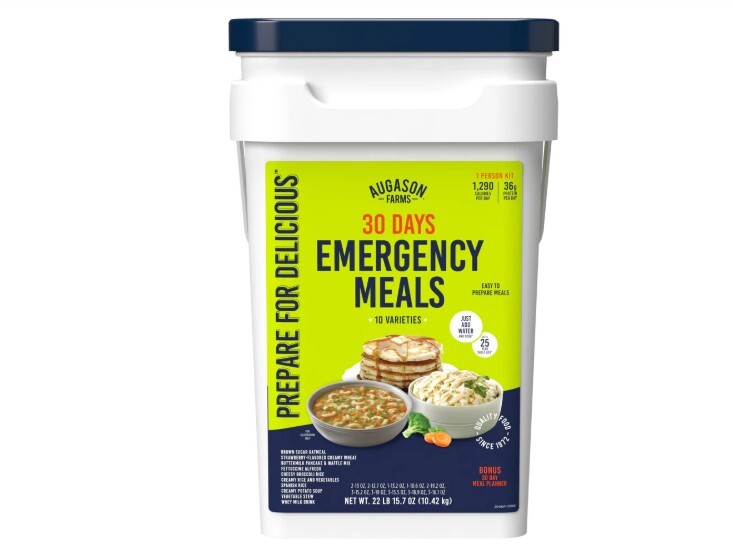
This is the budget-friendly month bucket idea: lots of calories per day for the money and long-term storage design. Taste is usually basic and some items can take more cooking effort than simple pour-and-wait meals.
Augason Farms packs a bunch of freeze-dried entrees into a bucket and seals the whole thing for long storage. The meals might be on the bland side but they're perfectly edible. Some items need to be simmered for 10-15 minutes before serving, so they're a bit more labor-intensive than other options.
Price: often $80–$110 depending on retailer and sales (example: $84.99)
Features
- Designed for 30 days
- About 37,080 total calories (roughly 1,236 calories/day if spread across 30 days).
- Shelf life often 5–30 years depending on items
- Water required
Pros
- Strong value per day
- Good base layer for storage
- Covers calories well
Cons
- Flavor can be bland
- Some meals need simmering
- Finding specific items inside can be annoying
ReadyWise Gluten-Free Grab & Go Bucket
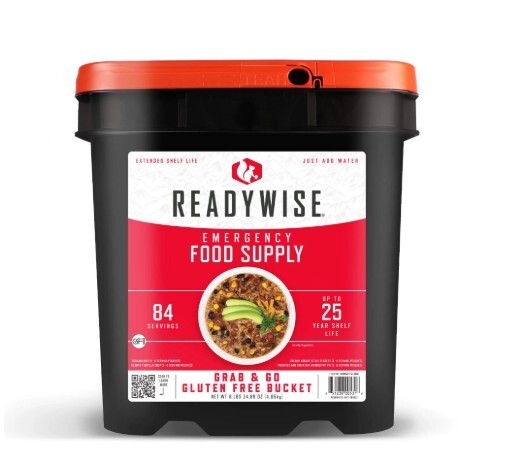
This is the gluten-free bucket option made for long storage. It's useful for households that need diet-friendly planning, but it may not include everything like breakfast, so add-ons may be needed.
This version of ReadyWise's emergency food supply bucket is extremely similar to their standard bucket, just without gluten. The 25-year shelf life means you can store it and forget it until needed. For those with dietary restrictions, this is one of the few options that provides long-term food security.
Price: $200–$300+ depending on sales and retailer (example: $299.99 for a 120-serving, 13-day bucket).
Features
- Days covered vary by the exact bucket/SKU, so verify the serving count and calories on the product listing before buying
- 25-year shelf life commonly listed
- Bucket storage
- Water required
Pros
- Fits gluten-free households
- Long shelf life
- Easy grab-and-store option
Cons
- No breakfast included
- Needs water
- Pricing varies a lot by seller
How to Choose the Right Survival Food Kit for Your Budget
Step 1: Pick your scenario first
Start by thinking about what you're preparing for. Are you planning for long-term home storage during an extended outage? Or do you need something for a quick evacuation? Maybe you just want meals for camping trips? Your scenario determines everything else.
Home storage kits should focus on variety and nutrition since you'll be eating them for days or weeks. Evacuation kits need to be lightweight and easy to prepare. Camping kits should balance taste with convenience.
Step 2: Check water and cooking needs
Water is the big divider in emergency food. Some kits need water for prep, others don't.
For home storage where you have water stored or can filter it, freeze-dried options work great. They're lighter and often taste better. But in evacuation scenarios where water might be scarce, no-water options like MREs or emergency bars make more sense. Always match your food's water needs to your water plan.
Step 3: Check calories per day and real portions
Don't get fooled by "serving counts" that promise hundreds of meals. Look at calories per day instead.
Most adults need at least 1,500-2,000 calories daily, more if physically active. A kit might claim to have 300 servings, but if those are tiny portions totaling only 800 calories per day, you're getting shortchanged. Always calculate the real daily calorie count to understand what you're buying.
Step 4: Shelf life and storage conditions
Most survival food advertises long shelf lives, but storage conditions matter hugely.
Heat kills shelf life. A 25-year kit stored in a hot garage might only last 5 years. Cool, dry spaces extend longevity. Check the temperature ratings on your food storage and find the right place in your home. Basements and interior closets often work best, away from exterior walls that heat up.
Step 5: Taste and rotation
Buy food you'll actually eat. This sounds obvious but gets overlooked.
If you hate the taste, you won't rotate your stock by eating older items and replacing them. Bad-tasting food also destroys morale in actual emergencies. Try single meals before buying bulk kits when possible. Some brands taste much better than others, even with similar ingredients.
Step 6: Diet needs and allergens
Special diets need special planning. Gluten-free, dairy-free, and other restrictions limit options.
Always check ingredient labels carefully if you have allergies or dietary needs. Some brands now offer specialized buckets for gluten-free diets. For other restrictions, you might need to build your own kit from individual components rather than buying pre-made options.
Common Mistakes to Avoid
Buying a 30-day kit with no water plan
Many freeze-dried kits require 1-2 gallons of water per day for rehydration. That's up to 60 gallons for a month! Plan your water storage or filtration to match your food needs, or you'll have unusable meals.
Storing kits in hot garages without checking limits
Most survival food needs temperatures under 75°F for full shelf life. Garages can hit 100°F+ in summer. An interior closet or basement works much better for long-term storage.
Ignoring prep time and fuel needs
Some meals need 15+ minutes of simmering. In a crisis, do you have the fuel to cook that long? Faster-prep meals might be worth paying extra for if fuel is limited.
Buying one kit type for every scenario
Home storage and evacuation needs differ greatly. Get no-water options for your car and bug-out bag, and larger freeze-dried kits for home. Mix your approach for complete coverage.
Never rotating stock, then discovering you hate it
Eat some of your supplies occasionally so you know what works. This also lets you rotate stock and practice preparation methods before you need them in an emergency.
Final Thoughts
The best survival food fits your needs and your budget. If you want home storage with strong nutrition, Nutrient Survival leads but it costs more. Augason Farms gives more calories for less money, so it fits many households. For grab-and-go, Mountain House works well for short trips if you have water. If water may be limited, MREs or emergency bars can make more sense. Start small. Test what you buy. Then build your supply step by step based on what works for you.
Frequently Asked Questions (FAQ)
What is the best survival food kit for a tight budget?
Augason Farms 30-Day Emergency Food Supply offers strong value for the cost. It gives about 1,850 calories per day for a month at around $94. If you need the lowest cost option, SOS Emergency Food Bars can cover three days for under $15. That makes them a simple starting point.
What survival food kit is best for a car emergency kit?
SOS Emergency Food Bars or Grizzly Gear Emergency Rations work well for a car kit. They do not need water. They also handle temperature changes better than many meals. They have 5-year shelf lives. You also get about 3,600 calories in a compact pack that can fit in a glove box.
Do I need hot water for freeze-dried survival meals?
Most freeze-dried meals work better with hot water. But they can still rehydrate with cold water if needed. Mountain House notes that you can use room-temperature water, which helps during power outages. Cold water takes more time. It also tends to taste less pleasant.
Are MREs better than freeze-dried meals?
MREs work better when water is limited or when you need food right away. They need almost no prep. Freeze-dried meals often taste better. They also weigh less and store longer. But they require water. So the better choice depends on your situation and your water supply.
How many days of food should I store at home?
FEMA recommends at least three days of food for evacuation. It also recommends two weeks for home storage. Many preparedness experts suggest 30 days as a safer target for home storage. That can help more in areas that face storms and other disasters.
How should I store survival food for the longest shelf life?
Store survival food in a cool and dry place away from sunlight. A range between 55-70°F works well. Avoid garages and attics. These places often swing in temperature. Interior closets and basements can work better. Also keep food off concrete floors. Concrete can hold moisture and that can shorten shelf life.
About the Author
This article was written by the ProArmory writing team using manufacturer nutrition panels, product specifications, and current retailer listings. We also referenced emergency-preparedness guidance and food-storage best practices from widely used public safety resources.
Disclaimer: The information provided is for educational purposes only. Product details, availability, and pricing may change over time. Always check manufacturer guidelines for proper storage and preparation of emergency food. Consult with healthcare providers about specific dietary needs before purchasing emergency supplies.

Best Ammo Deals, Training, & Accessories
Subscribe to ProArmory sales and deals email.