 Pro Armory Editorial Team
Quick Answer
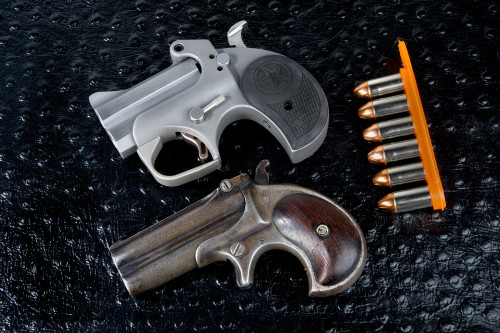
Derringers pack a serious punch in a tiny package. These are typically modern break-open pistols with two barrels and simple operation for close-range defense. Bond Arms leads with quality builds and interchangeable barrels, from the concealable Backup to the rangeable Ranger II. The DoubleTap offers an ultra-slim profile for deep carry, and the American Derringer M-4 Alaskan handles potent .45-70 loads. Choose based on your priorities: concealment, shootability, or pure power.
Key Takeaways
- Bond Arms dominates modern derringers with rugged builds and swappable barrels.
- Longer barrels improve accuracy and tame recoil in this category.
- Ultra-small models trade shooting comfort for easier pocket carry.
- Ammo choice affects both power and shootability in these tiny guns.
- Some models like the M-4 Alaskan can be hard to find but worth the search.
- Practice and proper holstering matter more with these simple designs.
A derringer hides easily and shoots big bullets. That's the appeal in a nutshell. These tiny guns fit places other firearms can't, yet deliver serious power when needed. But there's no free lunch – just two shots, basic sights, and hefty triggers. Your choice needs to match what you'll actually do with it, not just look cool in your collection. Let's find the right tiny terror for your needs.
How We Picked and Ranked These Derringers
What mattered most
We focused on real-world usability across different scenarios. Build quality comes first – a derringer needs solid lockup and consistent function. The trigger and hammer must be manageable for your hand strength. Barrel length affects both accuracy and comfort, so we considered how each model balances these factors.
Extractors matter too – some pop empties free easily; others need manual help. We looked at caliber options and how common the ammo is. For carry models, the gun's profile and potential snag points factored in. Finally, price and actual availability rounded out our considerations.
What a derringer is good for and what it is not
Derringers excel at simplicity and concealability. They fit into pockets, ankle holsters, or jacket compartments where bigger guns won't. The classic over-under design has few moving parts to fail. These qualities make them good backup guns, survival kit additions, or range curiosities.
They're not suited for beginners or high-volume shooting. Two shots means limited capacity. The short barrels and basic sights limit effective range. Loading and unloading takes more time than semi-autos or revolvers. Know these limitations before choosing one as a primary carry gun.
Derringers trace back to Henry Deringer's Philadelphia pistol from the 1850s – small, easily concealed handguns with a large bore. The name became genericized (with an extra "r") after countless copies appeared. Today's models maintain that same basic concept with modern materials and safety features.
Derringer Basics in Plain English
Single-action vs double-action
Most derringers use single-action triggers. This means you must cock the hammer manually before firing. This gives a lighter, crisper trigger pull but adds an extra step. Some modern designs like the DoubleTap use double-action or striker mechanisms that need just a trigger pull to fire. These offer faster deployment but typically have heavier trigger pulls.
The hammer style affects both safety and speed. External hammers let you verify they're cocked but can snag during draws. Internal hammers or hammerless designs draw smoother but give less visual feedback about the gun's ready state.
Break-open design, extractors, and why reloads vary by model
Derringers use a break-open action – push a lever, and the barrels hinge downward to access the chambers. Once open, extraction systems differ significantly between brands. Most derringers use an extractor that lifts the cases when you open the action. Some lift them high enough to grab easily, while others barely raise them, forcing you to pluck cases out with fingernails. True ‘ejectors’ that actively kick cases clear are less common in this category.
Better extraction systems speed up reloads, which matters when you only have two shots to begin with. Bond Arms models tend to have positive extractors that lift empties high enough to grab easily. Budget models might need a fingernail or tool to pry stubborn cases free.
Barrel length and sight radius
Barrel length changes how a derringer behaves. A short 2.5-inch barrel helps you keep the gun hidden. But it can also increase felt recoil. It can also increase muzzle blast, which some people notice right away. A longer 4+ inch barrel can soften recoil. It can also help with steadier shots. But it adds length. That makes concealment harder.
Sight radius is the distance between the front sight and rear sight. That distance shapes how well you can line up your sights. Derringers come with short sight radii. That is part of their design. So every bit of extra length can help. The Bond Arms Ranger II has a 4.25-inch barrel. It gives a more usable sight picture than many short 2.5-inch derringers.
Caliber reality check
Derringers come in calibers from .22LR to .45-70 Government. It is a wide spread. But a small gun cannot hide what recoil feels like. Big bullets in a tiny frame kick hard. A .45 Colt in a 20-ounce derringer feels sharp and sudden. In a 40-ounce revolver, that same round feels far less punishing.
Muzzle blast is the strong hit from gases leaving the barrel. Short barrels make that hit feel stronger and louder. So you should pick a caliber that fits your recoil tolerance. You should also match it to your main use. If you’re new to derringers, start with a more manageable chambering for your hands (often 9mm or .38 Special-class recoil), then work upward. Big-bore options like .45 Colt or heavy specialty chamberings can feel brutal in a tiny frame.
Quick Comparison
| Model | Standout Role | Common Chamberings | Why It's on the List |
|---|---|---|---|
| Bond Arms Snake Slayer | Outdoors utility | Most commonly .45 Colt / .410 (other Bond barrels available by model/frame) | Versatile caliber options with a practical barrel length |
| Bond Arms Backup | Deep concealment | 9mm, .45 ACP | Compact footprint from a well-known derringer manufacturer |
| Bond Arms Ranger II | Shootability focus | .45 Colt / .410 | Longer barrel for steadier aiming and improved control |
| Bond Arms Texas Defender | Balanced size | .357 / .38 or .45 Colt / .410 | Middle-ground dimensions with a strong feature set |
| DoubleTap Derringer | Slim carry concept | 9mm, .45 ACP | Hammerless design with spare rounds stored in the grip |
| American Derringer M-4 Alaskan | Maximum power | .45 Colt / .410, .45-70 Govt | Extreme chambering options in a very compact platform |
6 Best Derringers: Full Reviews and Who Each One Fits
1. Bond Arms Snake Slayer – Best Overall Outdoors Pick
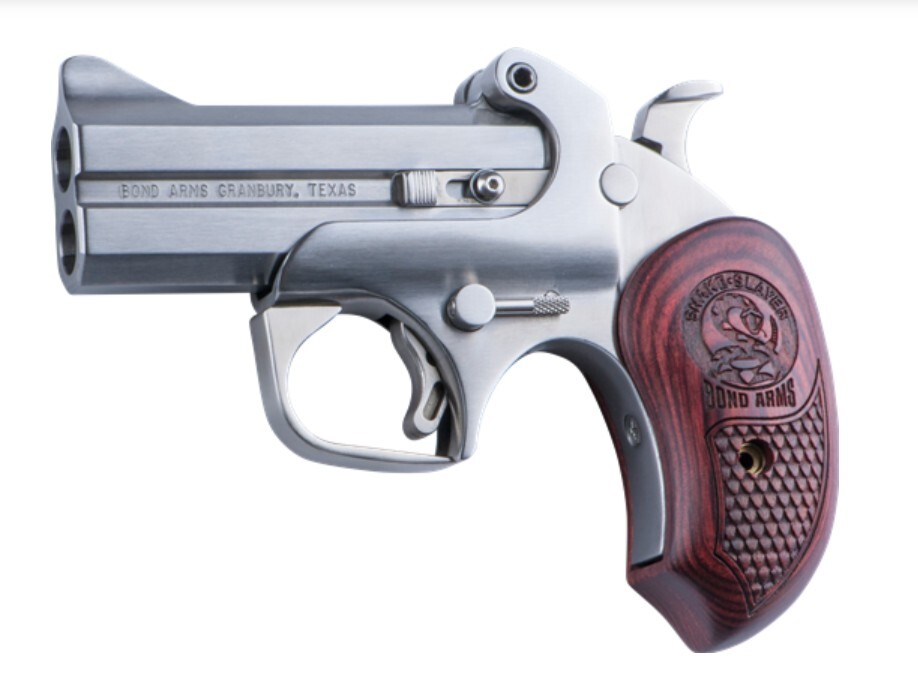
The Snake Slayer hits the sweet spot in the derringer world with its 3.5-inch barrel. This length offers better handling than pocket-sized models but keeps the package compact enough for field carry. The name hints at its intended role – a .410 shotshell or .45 Colt round handles venomous snakes and small pests without overkill.
Unlike cheaper derringers, the Snake Slayer features solid construction with a substantial frame and trigger guard. The build quality allows it to fire thousands of rounds without loose joints or timing issues. That helps most in the outdoors. Dust can coat everything fast. Moisture can show up without warning. Add rough handling and weak designs start to slip.
The barrel options give you more ways to use this platform. Most Snake Slayers come in either .357 Mag/.38 Special or .45 Colt/.410 shotshell configurations. The .357 version runs common revolver ammunition. It covers mild .38 target loads. It also covers full-power .357 Magnum defensive rounds. The .45/.410 variant offers the same mix of options. It takes potent .45 Colt bullets. It also takes .410 shotshells loaded with birdshot or buckshot.
Price: Typically $500–$650 depending on finish/variant and availability.
Specs
- Caliber: .38 Special, .357 Magnum, .45 Colt/.410
- Barrel Length: 3.5"
- Overall Length: 5.5"
- Weight: 22 oz.
- Capacity: 2
Features
- Cross-bolt safety mechanism
- Rebounding hammer design
- Extractor lifts cases on opening (you still remove them by hand).
- Interchangeable barrels
- Textured grips for secure handling
Pros
- barrel length balances control and size
- Multiple caliber options suit different needs
- Solid construction stands up to field use
- Simple, robust design with few failure points
- Can handle .410 shotshells for pest control
Cons
- Heavier than many pocket pistols
- Two-shot limit requires careful shot selection
- Stiff hammer spring takes effort to cock
- Sight radius still shorter than compact revolvers
- Premium price compared to budget derringers
2. Bond Arms Backup – Most Compact Option
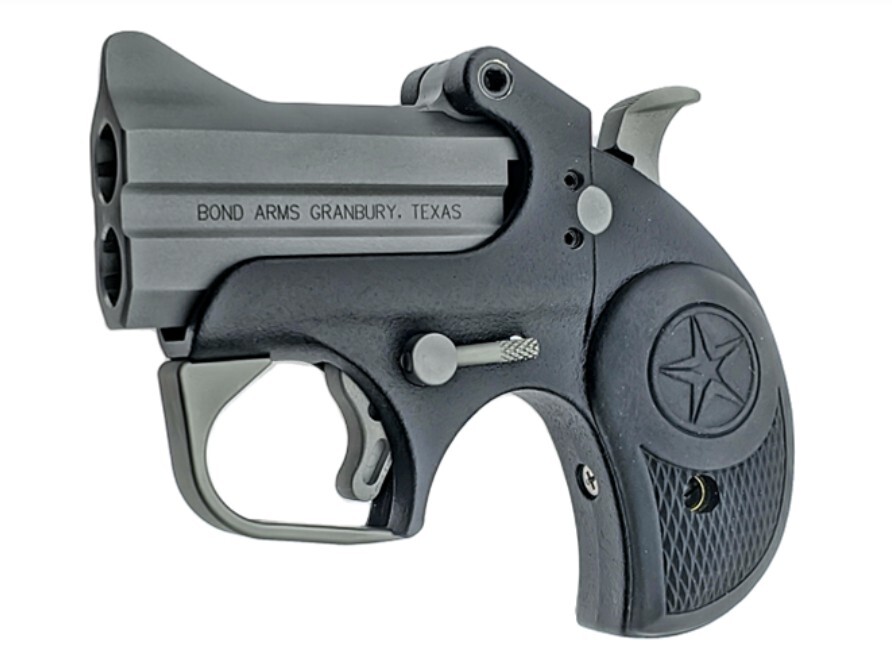
The Backup model lives up to its name as Bond's most pocket-friendly option. With a 2.5-inch barrel and 4.5-inch overall length, it disappears into spaces where larger guns can't go. This model targets deep concealment scenarios where absolute discretion matters more than extended shooting comfort.
Unlike the outdoors-focused models, the Backup comes chambered in common self-defense cartridges like 9mm and .45 ACP. This practical ammunition choice means your backup gun shares ammo with many popular primary carry pistols. No need to stock separate specialty rounds just for your derringer.
The smaller dimensions do create tradeoffs. The shorter sight radius makes precise aiming more challenging. Recoil feels sharper than on longer-barreled models. But these downsides matter less in the close-range defensive scenarios the Backup addresses. At "get off me" distances, the simplified aiming and extra kick become secondary concerns.
Price: $380–$450 depending on finish/availability.
Specs
- Caliber: .45 ACP, 9mm
- Barrel Length: 2.5"
- Overall Length: 4.5"
- Weight: 18.5 oz (varies slightly by variant).
- Capacity: 2
Features
- Cross-bolt safety
- Rebounding hammer
- Compatible with Bond Arms holsters
- Automatic extractor
- Stainless steel construction
Pros
- Highly concealable dimensions
- Uses common defensive calibers
- Solid build quality from a major manufacturer
- Simple manual of arms for stress situations
- Relatively lightweight for a steel derringer
Cons
- Very short sight radius limits precision
- Stiff recoil, especially in .45 ACP
- Hammer can be difficult to cock quickly
- Less comfortable for extended range sessions
- Two-shot capacity with no easy reload
3. Bond Arms Ranger II – Easiest to Shoot
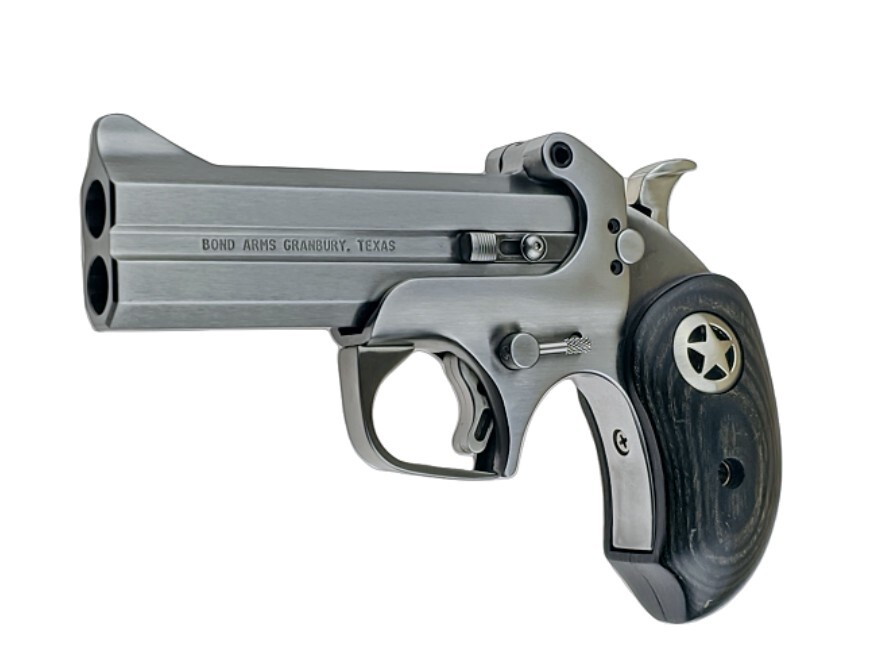
The Ranger II stretches the derringer concept with its 4.25-inch barrel – longer than many compact pistols. This added length serves a clear purpose: it makes the gun more shootable. The extended sight radius improves aiming precision. The longer barrel tames muzzle flip and reduces the sharp recoil bite common to shorter derringers.
Despite its larger dimensions, the Ranger II maintains the core derringer appeal of simplicity and ruggedness. The break-open action clears malfunctions instantly. The fixed barrels mean no slide to rack or magazines to insert. Just load, cock, and fire – a process that works even when partially obstructed by clothing or awkward positions.
This model works especially well with .45 Colt and .410 shotshell loads. The longer barrel pulls more velocity from these cartridges. It also cuts down the sharp muzzle blast you get from shorter models. So range time feels easier on your hands and ears. If you want a derringer you can practice with often, the Ranger II fits that role. It stays true to the classic derringer style. It just feels less harsh when you shoot it.
Price: $500–$700 depending on configuration and availability.
Specs
- Caliber: .45 Colt/.410
- Barrel Length: 4.25"
- Overall Length: 6.25"
- Weight: 23.5 oz.
- Capacity: 2
Features
- Extended barrel for improved ballistics
- Cross-bolt safety
- Rebounding hammer system
- Extractor lifts cases on opening.
- Interchangeable barrel compatibility
Pros
- Best sight radius of any Bond derringer
- Reduced felt recoil compared to shorter models
- Better velocity with all ammunition types
- More comfortable for extended shooting sessions
- Full-size grip provides secure handling
Cons
- Least concealable derringer in the lineup
- Heavier than compact models
- Two-shot capacity limitation
- Higher price point
- Too large for pocket carry
4. Bond Arms Texas Defender – Best All-Around Balance
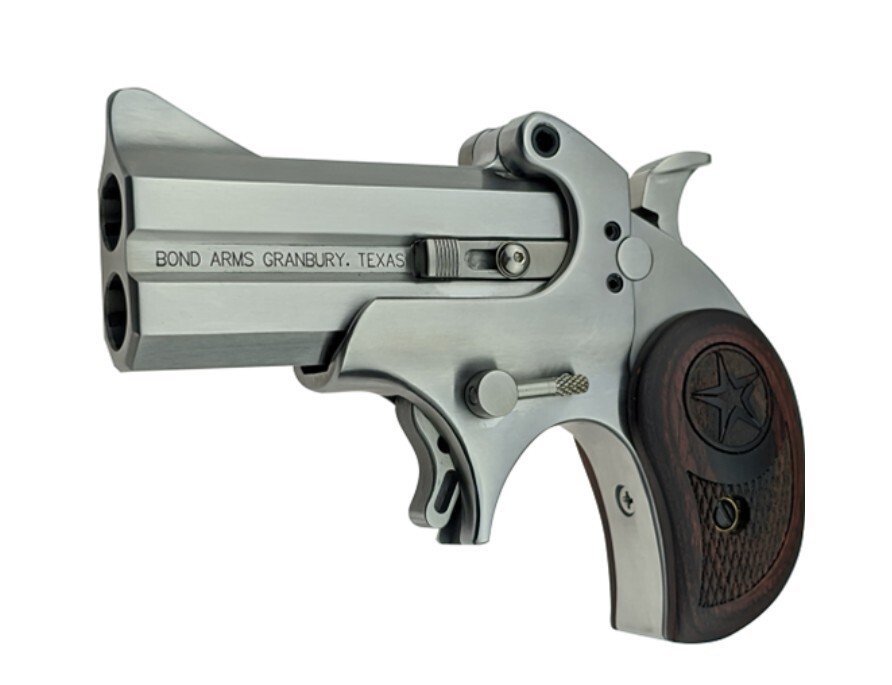
The Texas Defender hits the Goldilocks zone in the Bond Arms lineup with its 3-inch barrel. Not too big, not too small – just right for many users seeking one derringer that can serve multiple roles. The slightly shorter barrel than the Snake Slayer improves concealability while still offering better handling than pocket-sized models.
Like other Bond Arms products, the Texas Defender accepts interchangeable barrels. This flexibility lets owners adapt to different needs without buying multiple guns. You can switch to a longer barrel for range days or hunting trips. Then you can go back to the standard 3-inch barrel for everyday carry. The frame also supports several calibers. Options run from .22 LR up to .45 Colt/.410.
Build quality matters with small guns. The Texas Defender gets that part right. CNC-machined stainless steel parts help fight rust and wear. The checkered grip panels also help you keep control. That grip still feels secure with sweaty hands. These quality touches justify the higher price compared to budget derringers that might develop loose joints or timing issues.
Price: $480–$600 depending on finish/availability.
Specs
- Caliber: .45 Colt / .410 (other calibers possible via Bond’s interchangeable barrel system, depending on frame/barrel availability).
- Barrel Length: 3"
- Overall Length: 5"
- Weight: 20 oz.
- Capacity: 2
Features
- Cross-bolt safety
- Rebounding hammer
- Automatic extractors
- Interchangeable barrel system
- Textured grip panels
Pros
- Good balance between concealability and shootability
- Accepts multiple caliber options
- Solid construction from quality materials
- Effective trigger guard design
- Versatile platform for various uses
Cons
- Moderate weight for pocket carry
- Limited to two shots
- Premium price point
- Stiff hammer action requires practice
- Sight radius still limited compared to conventional pistols
5. DoubleTap Defense DoubleTap Derringer – Slimmest Modern Carry Option
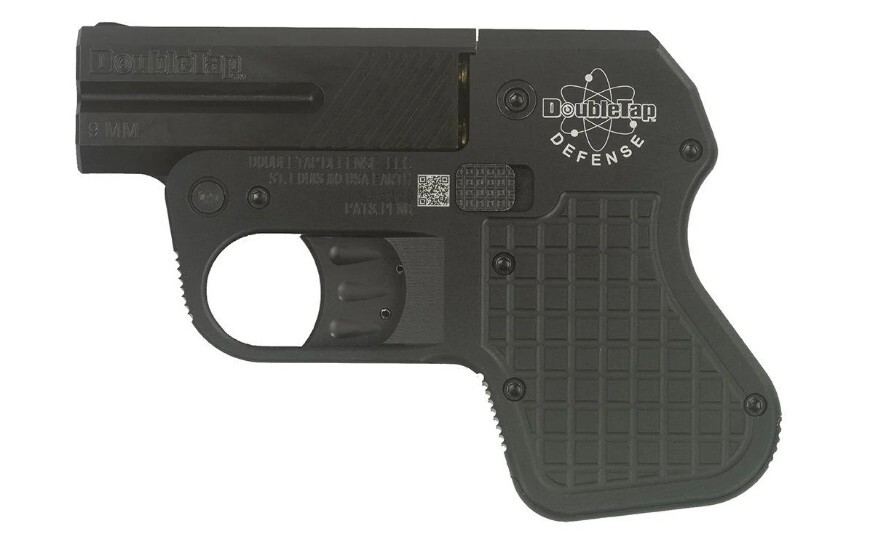
The DoubleTap breaks from traditional derringer design with its ultra-slim profile and hammerless operation. At just 0.665 inches wide, it may be the flattest centerfire defensive handgun available. This remarkable thinness lets it disappear in pockets or waistbands where even single-stack pistols print noticeably.
Unlike hammer-fired derringers, the DoubleTap uses an internal striker mechanism activated by a double-action trigger pull. This design eliminates the external hammer that can snag during draws. The streamlined, snag-free profile prioritizes smooth deployment in emergency situations – no external levers or hammers to catch on clothing.
A clever feature sets the DoubleTap apart from competitors: storage for two spare rounds in the grip. This doesn't increase the gun's capacity (still two shots), but it keeps reload ammunition immediately available. For a backup gun with limited capacity, having spare rounds literally in hand adds meaningful utility without increasing bulk.
Price: $600–$900, with wide swings because availability is inconsistent and the used market is common.
Specs
- Caliber: 9mm, .45 ACP
- Barrel Length: 3"
- Overall Length: 5.5"
- Width: 0.665"
- Weight: Varies by configuration (commonly listed around the low-to-mid teens in ounces).
- Capacity: 2
Features
- Hammerless, double-action design
- No-snag profile for clean draws
- Spare round storage in grip
- Aerospace-grade aluminum frame
- Titanium components in some models
Pros
- Thinnest centerfire defensive handgun
- No external hammer to snag
- Integral spare ammunition storage
- Lighter than all-steel alternatives
- Clean draw from deep concealment
Cons
- Heavy double-action trigger pull
- Limited production affects availability
- Higher price than comparable capacity options
- Recoil can be sharp, especially in .45 ACP
- Less aftermarket support than Bond Arms
6. American Derringer Model M-4 Alaskan – Heaviest Hitter
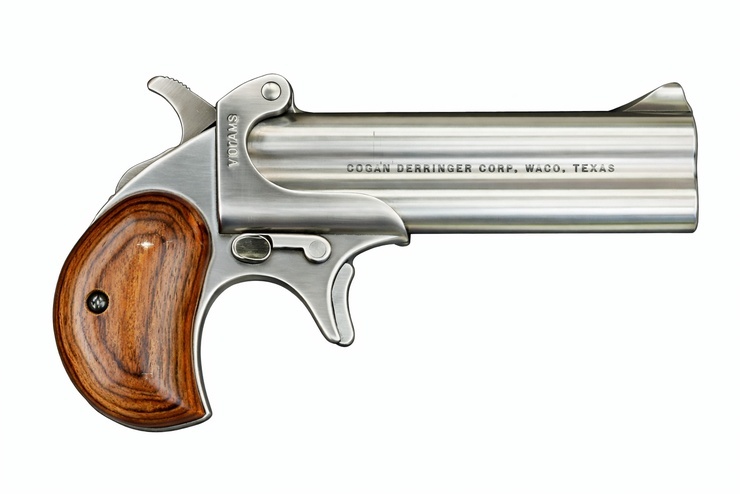
The M-4 Alaskan pushes derringer ballistics to extremes with its .45-70 Government chambering option. This 19th-century rifle cartridge delivers massive energy from the little gun's 4.1-inch barrels. No other production pocket pistol approaches this power level. It creates a unique niche for wilderness backup or pure novelty appeal.
Despite the potent chambering, the M-4 Alaskan maintains a surprisingly manageable 16.5-ounce weight. This lighter frame benefits carry comfort but amplifies felt recoil. Shooting full-power .45-70 loads produces dramatic muzzle flash, fierce recoil, and attention-grabbing noise – not for the recoil-sensitive shooter.
Practical applications exist despite the extreme nature of this derringer. As a last-ditch, ultra-compact option, it offers extreme cartridge power in a very small package, but the recoil and two-shot limit are major constraints. For survivalists, the .45-70 option handles large game at close range. The .45 Colt/.410 barrel configuration adds versatility for small game or pest control with appropriate shotshells.
Price: ~$800 (market varies)
Specs
- Caliber: .45 Colt/.410, .45-70 Govt.
- Barrel Length: 4.1"
- Overall Length: 6"
- Weight: 16.5 oz.
- Capacity: 2
Features
- Over/under barrel configuration
- Single-action operation
- Case extraction system
- Cross-bolt safety
- Chambered for rifle cartridges
Pros
- Unmatched power in derringer format
- Surprisingly lightweight
- Serious stopping power for defense
- Conversation-starting appeal
- Dual-caliber flexibility
Cons
- Punishing recoil with full-power loads
- Limited production and availability
- Premium pricing
- Two-shot capacity
- Less manufacturer support than current production guns
How to Choose the Right One for Your Use Case
Backup carry priority pick
If deep concealment drives your decision, the Bond Arms Backup or DoubleTap deserve serious consideration. The Backup offers proven reliability with traditional derringer ergonomics. The DoubleTap provides the slimmest profile possible with its hammerless design.
For backup carry, prioritize models under 5 inches in overall length. Weight matters too – keep it under 20 ounces to minimize fatigue during all-day carry. Consider how you'll access the gun – pocket carry benefits from hammerless designs, ankle carry allows slightly larger frames.
Don't overlook holster availability. Bond Arms offers dedicated holsters for their models. The DoubleTap works with generic pocket holsters. A proper holster protects the trigger, maintains consistent orientation, and prevents printing through clothing.
Range fun priority pick
For enjoyable range sessions, barrel length becomes crucial. The Bond Arms Ranger II shines here with its 4.25-inch barrel. The longer sight radius improves accuracy potential. The added weight and barrel length reduce felt recoil. These factors matter when you're shooting more than a few rounds.
Grip comfort gains importance for extended shooting. Bond Arms models feature substantial grips that fit most hands securely. Trigger reach and hammer accessibility affect shooting enjoyment too – test these aspects before purchasing if possible.
Caliber flexibility adds range value. Models that accept interchangeable barrels let you switch from mild .38 Special for comfortable practice to more powerful loads for specific purposes. This versatility turns one derringer into multiple range experiences.
Survival and outdoors priority pick
For outdoor and survival applications, the Snake Slayer and Ranger II stand out. Their .45 Colt/.410 chambering options handle both defensive needs and small game harvest with appropriate loads. The stainless steel construction resists corrosion in harsh environments.
Reliability trumps all other factors for survival use. Bond Arms' solid lockup and simple mechanism provide peace of mind when a gun might sit unused in a kit for months. The break-open design allows visual chamber checks and easy clearing of any obstructions.
For true wilderness backup in bear country, the American Derringer M-4 Alaskan brings hard-hitting power in a very small frame. Its .45-70 Government chambering gives you serious stopping power against large threats. That strength comes with a price. Recoil is sharp. Shot capacity is limited.
Conclusion
Derringers still fit certain roles in the modern firearm market. They stay popular for one main reason. They pack a lot of power into a very small gun. Their simple controls also help. That makes them useful for backup carry, outdoor kits, and even range time for those who enjoy their unique feel. Bond Arms stands out in this category due to strong build quality and flexible caliber options across its lineup.
For most people, the Snake Slayer gives the best mix of size, shootability, and overall value. Its 3.5-inch barrel helps you control the gun better. It also helps with aiming. And you still get a compact shape that carries well. The .45 Colt/.410 chambering supports defensive use and outdoor tasks.
If deep concealment is your top goal, look at the Bond Arms Backup or the DoubleTap. Both keep pocket-friendly dimensions. Both still offer strong caliber choices. If you spend more time at the range, the Ranger II makes sense. Its longer barrel and improved ergonomics make it easier to run. If your focus is raw power for remote areas, the American Derringer M-4 Alaskan may appeal. It fills a narrow role. It still delivers extreme punches.
No matter why you want one of these firearms, treat the choice with care. Train with it. Learn its limits. Low capacity and unique handling mean a derringer works best as a supplement. It does not replace a modern defensive pistol. Treat it like a specialty tool and it can do its job well.
Derringers continue to fill a niche for deep concealment and backup carry, especially for shooters who prioritize simplicity and minimal footprint. If you’re considering pocket-sized alternatives with expanded capabilities, read Guide to the Best Pocket Pistols for Your Concealed Carry Needs to explore additional concealed-carry options.

Federal Fusion 357 Mag 158gr
$27.29
at Pro Armory
Prices accurate at time of writing
Frequently Asked Questions (FAQ)
What is a derringer?
A derringer is a compact and often two-shot pistol with side-by-side or over/under barrels that break open for loading. Modern derringers trace back to Henry Deringer’s early pocket pistols from the 1850s.
Which derringer is easiest to conceal?
The DoubleTap Derringer and Bond Arms Backup hide the easiest. The DoubleTap’s ultra-slim 0.665-inch width keeps it very flat for pocket carry. The Backup’s compact 4.5-inch overall length also works well in ankle and pocket holsters.
Which derringer is easiest to shoot?
The Bond Arms Ranger II with its 4.25-inch barrel is often the easiest to shoot well. The longer sight radius helps you aim. The added weight also cuts felt recoil. The full-size grip gives you steadier control during firing.
Which derringer makes the most sense outdoors?
The Bond Arms Snake Slayer in .45 Colt/.410 offers strong outdoor value. It can cover defense needs. It can also support small game use with appropriate ammunition. Its stainless steel build also helps against wear from the elements.
Are mini revolvers the same as derringers?
No. Mini revolvers such as North American Arms models are not derringers. Mini revolvers use a rotating cylinder like larger revolvers. They often hold five rounds and fire through one barrel. Derringers use multiple fixed barrels that fire in sequence.
What should I check before carrying one in my area?
Check state and local laws on concealed carry permits, magazine capacity limits, and carry methods. Some areas also regulate derringer-style firearms or certain calibers. If you are unsure, speak with a local attorney who knows firearms law.
Are derringers good for beginners?
Derringers are not ideal first guns for many beginners. Short barrels and limited capacity raise the skill needed. Triggers can also feel heavy. And powerful calibers in small frames can kick hard. That combination can lead to bad habits, such as flinching.
But their manual of arms is simple. You load, cock, and press the trigger. That simplicity can help some new owners. If a derringer fits your needs, start with instruction. Then begin with mild loads such as .38 Special instead of .357 Magnum or .45 Colt.
Do longer barrels really matter on a derringer?
Yes. Barrel length can change how a derringer handles and performs. Each extra inch can help in a few ways:
- Better sight radius for improved aiming
- Less felt recoil due to added forward weight
- Higher velocity for improved terminal performance
- Less muzzle blast and flash
- More comfortable grip-to-trigger relationship
The jump from a 2.5-inch Backup to a 4.25-inch Ranger II can feel dramatic. Comfort improves. Practical accuracy often improves too. If you plan to shoot often or hunt, longer barrels help. If deep concealment is the goal, short barrels still make sense. You just accept the tradeoffs.
What makes one derringer safer to handle than another?
Modern derringers can include safety features that help reduce risk. Common examples include:
- Rebounding hammers that cannot contact firing pins unless the trigger is pulled
- Cross-bolt safeties that block the firing mechanism
- Half-cock notches that help prevent hammer drops
- Trigger guards that help reduce accidental discharges
- Modern metallurgy that handles higher pressures safely
Bond Arms builds several safety features into its designs. The DoubleTap uses a heavy trigger pull as a safety measure. Even so, safe habits matter most. Treat every firearm as loaded. Handle it with care every time.
What is the biggest mistake new buyers make?
Many new buyers underestimate recoil. They also expect more accuracy than a small derringer can deliver. A .45 Colt derringer can kick much harder than a heavier revolver in the same caliber. The short sight radius also makes precise shots hard past close range.
Another mistake is using a derringer as a primary defensive gun. Derringers have low capacity. Reloads are slow. And the controls require deliberate steps. Modern pistols usually handle primary defense better. A derringer works best as a backup or a specialty tool. If you buy one, match it to its strengths.
About the Author
This article was written by the ProArmory writing team using current research and manufacturer documentation across the derringer category. We used information from trusted firearms and safety sources such as SAAMI, NSSF, and ATF guidance. We also reviewed manufacturer specifications and published reviews from established industry outlets.
Disclaimer: This review is for education only. Laws vary by state and city and can change. Follow safe handling at all times. Read your owner’s manual. Verify local rules before you buy or train.
Best Ammo Deals, Training, & Accessories
Subscribe to ProArmory sales and deals email.