 Pro Armory Editorial Team
Quick Answer
Offset iron sights mount at a 45-degree angle on your AR-15. With that setup, you roll the rifle and take close shots fast when you run a magnified optic. A good set gives you a clean sight picture. It also holds zero after bumps and hard use. And it matches your style, either folding or fixed. Budget sets start around $36. Premium sets reach $300+. These seven picks cover casual range use and match use where fast transitions win points.
Key Takeaways
- Offset sights let you hit close targets without changing your main optic.
- Quality matters. Offset sights usually take more knocks than inline backup irons.
- Folding models help with snag control. Fixed models stay ready all the time.
- Choose a clear sight picture plus easy windage and elevation adjustments.
- Drill the roll and aim to move until it feels smooth.
You have seen it in matches. A shooter tips the rifle to the side and fires. That small roll is the main idea behind offset sights. Your scope may be set for long range. Then a close target pops up and time gets tight. You do not touch the scope. You also do not reach for inline sights. You roll the rifle about 45 degrees. Then you use the offset irons and take the shot. It feels like a quick lane change in traffic. Small move. Big time saved.
The Quick List
Looking for the short version? Here are our top picks for offset iron sights:
- Magpul MBUS Pro Offset — Best all-around folding offset BUIS
- SureFire Rapid Transition Sights — Toughest option for hard use
- Ade Advanced Offset Sights — Best adjustable budget set
- Ozark Armament 45-Degree Offset — Best fixed budget set
- Ultradyne C4 Offset BUIS — Best premium feature set
- Troy Industries 45° Offset BattleSights — Best proven folding alternative
- Knight's Armament 45° Offset Micro — Best duty-grade micro offsets
Comparison Table
| Offset Sight | Best For | Fixed / Folding | Price Tier |
|---|---|---|---|
| Magpul MBUS Pro Offset | Best overall balance | Folding | Mid |
| SureFire Rapid Transition | Maximum durability | Fixed-style transition set | Mid–Premium |
| Ade Advanced Offset | Adjustable budget option | Typically fixed-style | Budget |
| Ozark Armament 45° Offset | Fixed budget setup | Fixed | Budget |
| Ultradyne C4 Offset BUIS | Premium feature set | Folding | Premium |
| Troy 45° Offset BattleSights | Proven folding option | Folding | Mid–Premium |
| KAC 45° Offset Micro | Duty-grade micro setup | Folding | Premium |
How We Picked and Tested These Offset Iron Sights
What "view-through" means in real use
“View-through” in this guide means a fast, unobstructed sight picture when the rifle is rolled to the offset. Most sets use a traditional front post with a rear aperture. A few, like Ultradyne’s C4, use an aperture-style front that keeps more of the target visible through the sight picture.
The evaluation checklist
We researched and evaluated these sights based on several key factors: their ability to hold zero after bumps, the quality of their adjustments for elevation and windage, how well they resist snagging on gear, material quality, ease of installation, and overall value compared to their price.
Who these are for
Offset iron sights serve three main groups: folks who run magnified optics but need quick close-range capability, competition shooters who can't afford the time to flip up inline sights, and tactically-minded shooters who want a fast backup if their primary optic fails.
Best AR-15 Offset Iron Sights With View-Through Sight Pictures
Ultradyne C4 Offset BUIS
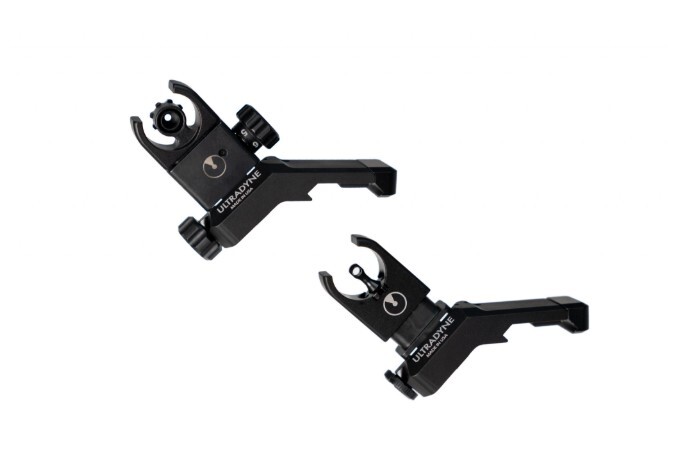
The Ultradyne C4 stands out with its unique dual-aperture design. Instead of just a standard post-and-hole setup, both the front and rear sights have apertures. This creates a sight picture where you can still see your target through both sights rather than covering it with a front post.
The C4 folds down flat when not needed, and therefore it keeps the rifle's profile clean. But flip them up, and the precision-machined sights give you a clear, uncluttered view. The C4 system is adjustable across longer-distance settings (often listed 200–600), which is more range than most shooters will use for offset irons, but it shows the precision built into the adjustment system.
Built from a mix of 4140 chrome-moly steel and 7075 aluminum, these are serious tools for serious shooters. They stay put once you set them and don't lose zero easily. The premium materials and construction explain the premium price tag.
Price: (approx retail) $314
Specs
- 45-degree offset, Picatinny compatible
- 4140 chrome-moly steel and 7075 aluminum construction
- Folding front and rear sights
- Windage and elevation adjustable
Features
- Dual aperture system for better target visibility
- Deployable/stowable design reduces profile when not in use
- Built to maintain zero in tough conditions
- Returns to zero when redeployed
Pros
- Exceptional sight picture clarity
- Premium materials and build quality
- Folds down for a cleaner profile
- Precise adjustments
Cons
- Very expensive compared to other options
- Overkill for casual range use
- Heavier than basic sets
Ozark Armament 45 Degree Offset Backup Sights
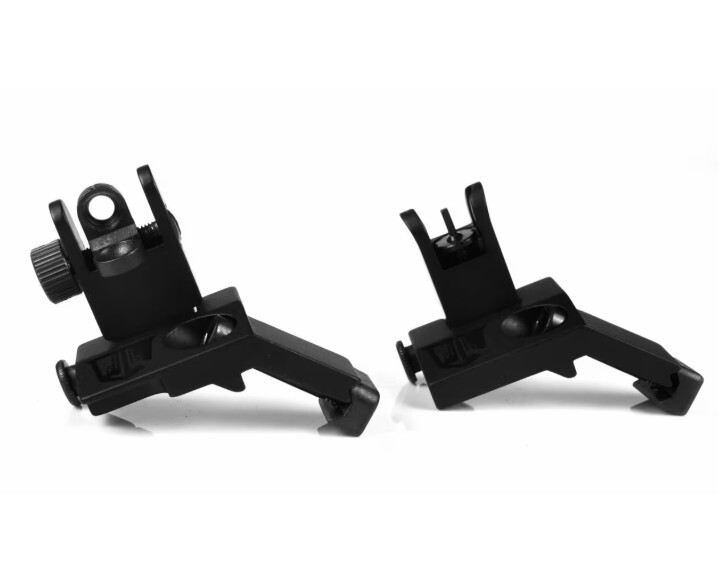
If you want simple, effective offset sights without dropping a big chunk of cash, the Ozark Armament set hits the sweet spot. These fixed sights give you an A2-style sight picture with a dual-aperture rear that works for both quick shots and precise aiming.
Despite the budget price, these are made from aircraft-grade aluminum with a hard anodized finish that resists scratches and corrosion. The front sight post adjusts for height, and the rear sight handles windage adjustments—just what you need without extra bells and whistles.
The fixed design means they're always ready—no flipping up needed—but they do create a permanent side profile that might catch on gear more than folding models. For many shooters, this trade-off is worth it for the simplicity and affordability.
Price: (approx retail) $36
Specs
- 45-degree offset for Picatinny rails
- Aircraft aluminum with hard anodized finish
- Fixed design (non-folding)
- Front post and rear aperture sights
Features
- Dual aperture rear sight (large for speed, small for precision)
- Adjustable front post height
- Rear windage adjustment
- Lifetime warranty
Pros
- Extremely affordable
- Always ready to use (no deployment needed)
- Simple, proven design
- Good sight picture for the price
Cons
- Fixed design can snag more easily
- Bulkier than premium folding options
- Less refined finish than higher-end models
Knight's Armament 45° Offset Folding Micro Sights
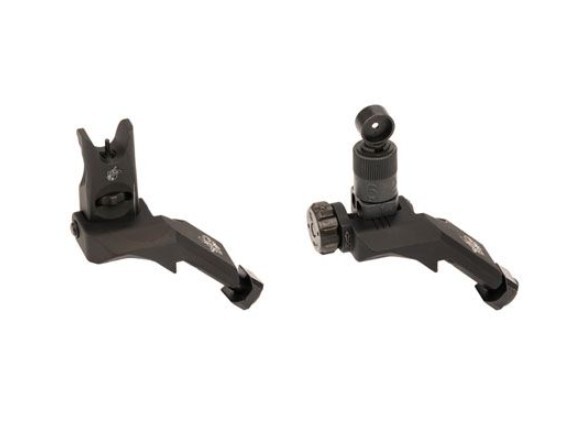
KAC's micro offset sights bring duty-grade quality to a compact package. These folding sights take up minimal rail space and present a very small profile when deployed, yet they're built to the same standards as equipment used by professional forces.
The micro design keeps the weight and bulk down without sacrificing function. When folded, they tuck neatly against your rail, and when deployed, they give you a clear sight picture that aligns naturally when you roll the rifle to the offset position.
The mounting system uses a clamp-style base that grips your Picatinny rail firmly. This design helps the sights maintain zero even through hard use and bumps. The price reflects the premium materials, tight tolerances, and battle-tested heritage.
Price: (approx retail) $284
Specs
- 45-degree offset folding micro design
- Fits standard Picatinny rails
- Folds to the right side of your top rail
- Adjustable for windage and elevation
Features
- Ultra-compact folding design
- Secure clamp-style mounting
- Precise adjustment capability
- Minimal profile even when deployed
Pros
- Extremely low profile
- Top-tier durability
- Clean, professional appearance
- Maintains zero through heavy use
Cons
- Very expensive
- Limited availability
- Smaller sight picture than full-size models
Ade Advanced Offset Sights
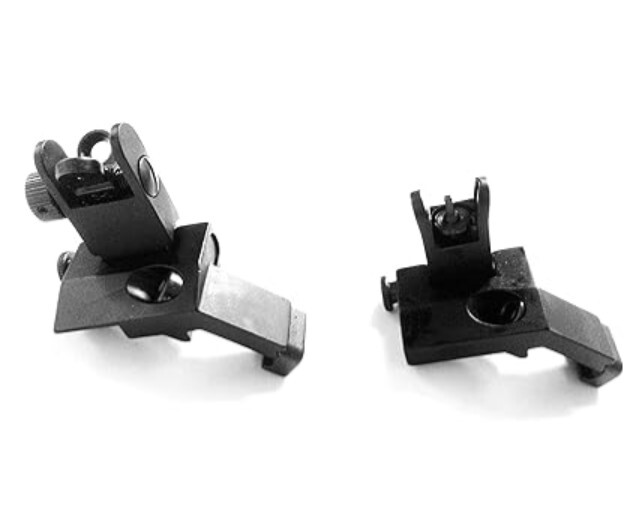
The Ade Advanced offset sights prove you don't need to spend a fortune to try offset shooting. These aluminum sights give you the basic offset experience at a price that won't make you hesitate to experiment with the concept.
With 1/2 MOA windage and elevation adjustments, you can dial in a usable zero for practical distances. The hard anodized finish on the 7075 aluminum construction gives decent durability for the price point, though they won't take the same abuse as premium steel options.
These sights give you a serviceable view-through picture that works fine for close-range shooting. They're an excellent starting point if you want to learn offset transitions without investing in high-end equipment right away.
Price: (approx retail) $39
Specs
- 45-degree offset for Picatinny rails
- 7075 aluminum with hard anodized finish
- 1/2 MOA windage and elevation adjustments
- Standard front post and rear aperture design
Features
- Front post and rear aperture sight picture
- Full adjustability for both windage and elevation
- Simple installation on standard rails
- Budget-friendly price point
Pros
- Very affordable entry point
- Fully adjustable for zeroing
- Good enough quality for learning and practice
- Clean sight picture for close-range work
Cons
- Not as durable as premium options
- Bulkier profile than folding designs
- Adjustment clicks less precise than high-end models
Magpul MBUS Pro Offset
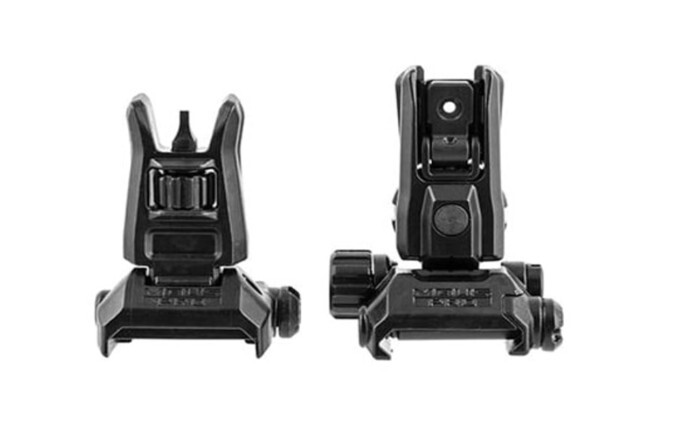
Magpul’s MBUS Pro Offset sights bring the same style and track record as the standard MBUS Pro line. They also fit the offset role well. These folding sights use steel instead of polymer. That choice gives you strong build quality. They also stay low to the rail when folded.
The MBUS Pro Offset sights give you tool free adjustments for windage and elevation. So you can correct your zero fast in the field. You do not need to carry extra tools for basic changes. When you do not need them, the sights fold down almost flat. That helps reduce snags on gear and clothing.
A Melonite QPQ finish protects the sights from rust and wear. This finish also holds up under hard use. The sight picture stays clean and simple to line up. You get a standard front post and a rear aperture that feels familiar to most shooters. Overall, this set gives you a strong mix of build quality, easy use, and fair price.
Price: (approx retail) $179 (often sold separately: Front ~$80 + Rear ~$99)
Specs
- 45-degree offset for Picatinny rails
- All-steel construction
- Melonite QPQ finish for corrosion resistance
- Folding design with low profile
Features
- Toolless elevation on the front sight and toolless windage on the rear makes zeroing straightforward without digging for tools.
- Spring-loaded deployment
- Compatible with most rail setups
- Front and rear sights sold separately or as a set
Pros
- Exceptional durability
- Clean, low-profile design
- Easy, precise adjustments
- Trusted brand reputation
Cons
- Mid-range price (not budget)
- Steel construction adds slight weight
- May need to purchase front and rear separately
Troy Industries 45° Offset Folding BattleSight Set
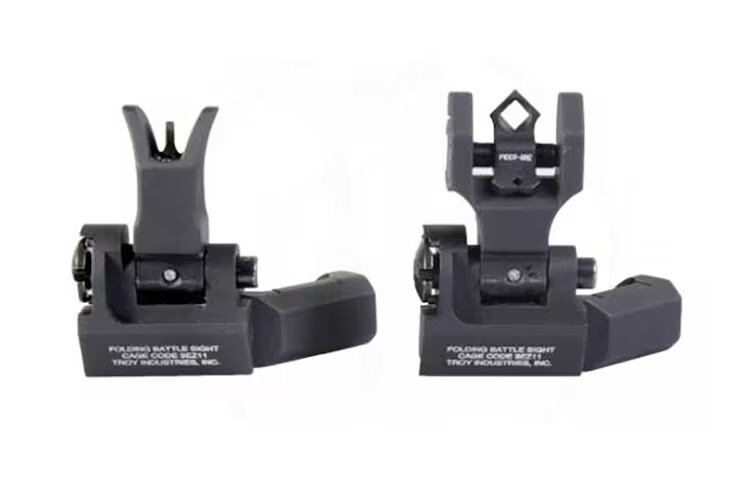
Troy's offset BattleSight set brings their proven design to the 45-degree world. Available in multiple front sight options (including HK-style), these sights fold down when not needed but deploy quickly with spring-assisted action when you want them.
The sight picture follows Troy's reputation for clean, usable designs. The round rear aperture pairs with your choice of front sight to create an intuitive sight picture that's easy to align when transitioning from your primary optic to your offsets.
Troy offers these in both standard and tritium-equipped versions. The standard set works great in normal lighting, but the tritium option adds low-light capability at a higher price point. The all-metal construction and tight tolerances ensure these will hold zero through hard use.
Price: (approx retail) $250–$315 (Non-tritium)
Optional: ~$460 (Tritium variant)
Specs
- 45-degree offset for Picatinny rails
- All-metal construction
- Folding design with spring assist
- Multiple front sight options available
Features
- Spring-loaded deployment
- Multiple front sight styles available
- Tritium option for low-light use
- Clean, proven sight picture design
Pros
- Well-established design history
- Folds down for low profile when not in use
- Quick, positive deployment
- Multiple configuration options
Cons
- Higher price point
- Many options can be confusing for buyers
- Heavier than some competitors
SureFire Rapid Transition Sight

SureFire’s Rapid Transition Sights (designed by 3-Gun champion Barry Dueck) come in right- and left-handed configurations, letting you choose which side you roll to based on your setup and dominant eye. They focus on speed. They also focus on strength. SureFire uses 7075 aluminum. That material is stronger than the common 6061 type.
These sights maintain a low profile, as it raises just 0.2 inches above your rail. This keeps them from interfering with your primary optic or adding unnecessary bulk. Despite their slim profile, they provide a clear, usable sight picture that aligns naturally when you roll your rifle.
The RTS sights come in right and left hand setups. So you can choose the side that fits your run and your setup. The shape supports fast use. It also handles rough matches and hard training. In a match, time matters. And gear takes hits. These sights aim to handle both.
Price: (approx retail) $189
Specs
- 45-degree offset for Picatinny rails
- 7075 aluminum construction (stronger than standard)
- Low-profile design (0.2 inches above rail)
- Available for both right and left-handed shooters
Features
- Extra-strong aluminum construction
- Minimal height above rail
- Fixed design for constant readiness
- Optimized for fast transitions from primary optic
Pros
- Extremely durable
- Very low profile
- Fast transition capability
- Left-handed options available
Cons
- Price varies widely between retailers
- Fixed design may snag more than folding models
- Limited adjustment compared to some options
Why Use Offset Iron Sights Instead of Just Your Scope
Fast close-range shots without hunting through magnification
The main reason people add offset sights is speed. When you've got a target at 15 yards but your scope is set for 200, you face a choice: fumble with the magnification ring or use a faster option. Offset sights let you simply roll the rifle 45 degrees and take the shot through iron sights that are already set for close range.
This roll-and-shoot technique takes practice, but it becomes second nature for most shooters after a few range sessions. The transition from scope to offset irons happens in a fraction of the time it would take to adjust your scope settings.
A backup plan if your optic fails
Optics can fail. Batteries die, lenses crack, electronics glitch. When your primary sight system goes down, offset irons give you an immediate backup without having to remove your optic or make any adjustments to your rifle.
Since offset sights mount at 45 degrees from your main optic, they stay out of the way during normal use but remain instantly available when needed. This dual-purpose role—quick close shots and emergency backup—makes them valuable for both competitive and practical applications.
Offset vs Inline Backup Iron Sights
Where offsets win
Offset sights shine when you need to switch rapidly between distance and close-range targets. There's no deployment step—they're either always ready (fixed) or just a quick flip away (folding). This saves precious seconds in competition or tactical situations.
Another advantage is that offset sights don't interfere with your primary optic. Inline sights typically sit underneath your main optic and must be deployed upward, sometimes interfering with the sight picture. Offsets stay completely out of your optic's way.
Where inline still makes sense
Inline sights keep your rifle's profile cleaner. With no sights sticking out to the side, you get less bulk and fewer things to snag on gear, vehicles, or barriers. For users who rarely need rapid transitions, this cleaner profile might be worth the slightly slower deployment.
Inline sights also feel more familiar to most shooters. The standard sight picture matches traditional rifle shooting, with no need to roll the gun. For users who don't practice regularly, this familiarity can outweigh the speed benefits of offsets.
How to Choose the Right Offset Sights
Pick your style first
Start by deciding between fixed and folding designs. Fixed sights stay ready all the time but create a permanent side profile that might snag. Folding sights tuck away when not needed but require an extra deployment step and have more moving parts that could potentially fail.
Your shooting environment should guide this choice. Competition shooters often prefer fixed for instant access. Tactical users who move through tight spaces might prefer folding to reduce snag hazards. Casual range shooters might choose based on aesthetics and budget.
Look for a clean "view-through" picture
The whole point of backup sights is seeing your target clearly and quickly. Look for a rear aperture that gives you a good field of view without being too large or too small. The front sight should be easy to center in the rear aperture without blocking too much of your target.
Some premium sights offer dual-aperture rear sights—a larger hole for quick, close shots and a smaller one for precision at distance. This versatility helps across various shooting scenarios but comes at a higher price point.
Build quality and mounting matter more than you expect
Offset sights take more abuse than inline sights because they stick out from the side of your rifle. They bump against barricades, catch on gear, and generally see more physical contact. This makes material quality and solid mounting crucial.
Steel sights generally hold up better than aluminum but add weight. Whatever material you choose, make sure the mounting system clamps securely to your rail and won't loosen from recoil or impacts. Loctite on the mounting screws isn't a bad idea.
Avoid common fitment headaches
Before purchasing, check that you have enough rail space near your optic mount for the offset sights. Some scope mounts have large bases that limit rail space. Also verify clearance with your scope's turrets—some larger scopes have adjustment knobs that might interfere with offset sight placement.
If you run other accessories like lights or lasers, map out your rail space carefully. Offset sights need specific positioning to work effectively, so plan your rail layout before buying.
Setup Tips (Mounting and Zeroing)
Where to mount offsets for fastest use
Mount your offset sights where you can roll the rifle and find the sight picture fast. You should not strain your neck. You should not shift your grip. Many people place them just forward of the main optic. That said, your best spot can change based on your stance and body mechanics.
Test your plan before you tighten everything down. Hold the rifle in your normal stance. Then roll it to the angle you use for offsets. Your eye should land on the sights without extra effort. If it feels forced, move the sights and test again.
Zeroing offsets without wasting ammo
Start at close range, around 25 yards or less. This helps you get a rough zero fast. Fire a few shots. Adjust. Repeat until you hit your point of aim. Then move to your main zero range. Many people choose 50 to 100 yards for final work.
Write down your zero distance and your hold data. That saves time later if you need to re set things. Also remember offsets do not match your main optic. They sit at an angle to the bore. So your holdovers will not match your primary sighting system.
Training drills that make offsets feel natural
You need practice to move from your main optic to offset sights smoothly. Start with dry fire drills. Work on the roll motion first. Keep it controlled. Focus on staying steady as you rotate the rifle just enough to line up the sights.
Then move to live fire. A simple drill helps a lot. Place two targets at two distances. Use the main optic for the far target. Use offsets for the near target. Then move back and forth. Track your time so you can see progress.
Common Problems and Fixes
Problem: "I can't find the sight picture fast"
Fix: Adjust the mounting position slightly. Most shooters place offsets too far forward or back. Also practice the exact amount of rifle rotation needed—45 degrees often feels like more rotation than expected.
Problem: "It snags on gear"
Fix: Consider folding sights if you're using fixed ones. If already using folding sights, check they're fully folded down when not in use. You might also need to adjust gear placement to create a clear path for your rifle movement.
Problem: "Zero keeps drifting"
Fix: Check mount torque and rail interface. Use blue Loctite on mounting screws. Verify the rail itself isn't loose. For adjustable sights, some models have set screws to lock adjustments—use them.
Problem: "Feels awkward left-handed"
Fix: Some models offer left-handed versions that mount on the right side of the rifle. If those aren't available, you might need a different offset angle (35° instead of 45°) to find a more natural position for left-handed shooting.
Final Thoughts
Offset iron sights solve a common problem for many AR-15 owners. They let you shift from distance to close range fast. You do it without changing optics. The right choice depends on your budget. It also depends on how you use your rifle. Your preference for folding or fixed sights matters too.
For many users, the Magpul MBUS Pro Offset offers a strong balance of build quality and ease of use. If you need a lower cost option, look at Ozark or Ade. If you want top tier options, Ultradyne C4 and Knight’s Armament are worth a look.
No matter what you buy, practice matters more than gear. Fast transitions come from repeat work. When you train often, the roll motion starts to feel normal. Put in the time and the movement becomes second nature.
Back-up iron sights provide confidence and durability, but pairing them with the right optic unlocks the full capability of your rifle. If you’re ready to upgrade your setup, read Top AR-15 Optics for Every Shooter: From Red Dots and Magnifiers to LPVOs to find the best fit for your build.

PPU Rangemaster 5.56x45mmNATO 55gr FMJBT 20 Per Box
$13.81
at Pro Armory
Prices accurate at time of writing
Frequently Asked Questions (FAQs)
Are 45-degree offset iron sights worth it with a magnified optic?
Yes, if you frequently engage targets at varying distances. They let you switch instantly from magnified to close-range shooting without adjusting your scope. For users who mostly shoot at consistent ranges, they may be unnecessary.
Do offset sights work well as a true backup if a red dot fails?
Yes. Since they're completely separate from your primary optic, they function as an independent sighting system. They're particularly effective as backups for magnified optics where the inline backup sights might be blocked.
What's the best zero distance for offset iron sights?
Most users zero offset irons at 50 yards, which provides a practical compromise for close to medium ranges. Some competition shooters prefer 25-yard zeros for even faster close work, accepting more drop at distance.
Are folding offsets better than fixed offsets?
It depends on your needs. Folding offsets reduce snag hazards and protect the sights when not in use. Fixed offsets are always ready and have fewer moving parts to fail. Choose based on your shooting environment and personal preference.
Will offset sights interfere with my scope mount or turrets?
Possibly. Check clearance between your specific scope, mount, and the offset sights you're considering. Some large-turret scopes or extended scope mounts may limit positioning options for offset sights.
How much training does it take to get fast with offsets?
Most shooters see significant improvement after 3-5 dedicated practice sessions. The rifle rotation becomes natural with repetition. Dry fire practice at home dramatically speeds up this learning curve without burning ammunition.
About the Author
This article was written by the ProArmory writing team, a group of firearms experts with over 40 years of combined experience in the shooting sports industry. The team includes former military personnel, competitive shooters, and firearms instructors who bring practical knowledge to each review.
Disclaimer: This review is for education only. Laws vary by state and city and can change. Follow safe handling at all times. Read your owner's manual. Verify local rules before you buy or train.

Best Ammo Deals, Training, & Accessories
Subscribe to ProArmory sales and deals email.