 Pro Armory Editorial Team
Quick Answer
For most gun owners, 9mm is the better all-around handgun caliber. It offers lower recoil, higher magazine capacity, lower training cost, and strong modern defensive performance. .40 S&W still delivers a heavier bullet and more recoil-driven energy, but for concealed carry, home defense, and regular practice, 9mm is usually the more practical and manageable choice.
Key Takeaways
- 9mm is easier to shoot well under pressure.
- .40 S&W hits harder, but recoils more sharply.
- 9mm usually offers higher magazine capacity.
- 9mm is typically cheaper for training and bulk practice.
- Modern 9mm defensive loads narrowed the gap significantly.
- For most civilians, 9mm is the better all-around pick.
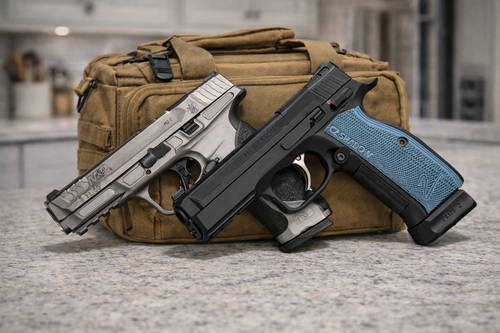
You are standing at the gun counter. Two handguns are right in front of you. One is a 9mm. The other is a .40 S&W. The clerk tells you the .40 hits harder. Your buddy tells you 9mm makes more sense. This scene is common, and it pulls a lot of buyers into the same debate.
This is one of the most talked about topics in the handgun space. The old bigger is better line still hangs around like a song that refuses to leave your head. But bullet width alone does not settle the matter. Recoil plays a part. Magazine capacity plays a part. Ammo cost also matters. So does shot placement. And modern bullet design has changed a lot over time. That is why it makes more sense to compare the facts and see which option fits most people better.
What's the Difference Between 9mm and .40 S&W?
At its base, 9mm uses a narrower and lighter bullet. The .40 S&W uses a wider and usually heavier bullet. Both are well known defensive handgun calibers. Both have been used for years by law enforcement and private owners. But the choice between them is not just a simple size contest.
The actual issues come down to recoil, magazine capacity, ammo cost, follow-up shot speed, and how modern defensive loads perform in each caliber. When you weigh all that together, the gap between these two rounds is not nearly as wide as it once was.
| Factor | 9mm | .40 S&W |
|---|---|---|
| Recoil | Lower | Higher / snappier |
| Magazine Capacity | Higher | Slightly lower |
| Practice Ammo Cost | Usually lower | Usually higher |
| Bullet Weight | Usually lighter | Usually heavier |
| Shootability | Easier for most shooters | Harder for some shooters |
| Modern Defensive Performance | Strong | Strong |
Why Was .40 S&W Created in the First Place?
The .40 S&W did not appear out of thin air. It was developed in 1990 through a joint effort between Smith & Wesson and Winchester. The FBI’s post-1986 Miami shootout review pushed the Bureau to re-evaluate service handgun ammunition performance, especially around penetration and terminal consistency. That process led to the FBI’s interest in 10mm Auto performance, and later influenced the development path that produced .40 S&W
The path to the .40 S&W ran through the 10mm Auto first. The 10mm performed extremely well in ballistic testing and met all the FBI's requirements — but it was too punishing for many agents to handle in real field conditions. A reduced-power version of the 10mm was later explored, and during that process, engineers realized the same ballistic performance could fit in a shorter cartridge case.
The final design shortened the 10mm case by about 3.6mm, creating a cartridge that delivered similar “FBI-lite” 10mm performance in a shorter package that fit 9mm-sized duty pistols. It fit inside a medium-frame 9mm pistol platform, cycled cleanly, and quickly earned wide law enforcement adoption across North America. For nearly two and a half decades, it held that ground — until advances in ammunition technology began shifting the balance back toward 9mm.
Is 9mm Easier to Shoot Than .40 S&W?
Yes. For most people, it is easier by a good margin. In similarly sized pistols, 9mm typically produces noticeably less recoil impulse and softer “snap” than .40 S&W, which helps many shooters keep sights flatter and run faster follow-up shots. The exact difference varies by load, gun weight, and shooter, but the practical takeaway is consistent: 9mm is easier for most people to shoot well, faster. That difference matters more than it may sound. It helps you shoot again faster. It also reduces arm fatigue in long practice sessions and helps more people shoot with better accuracy. If you are a newer gun owner, or if your hands are smaller, the .40 S&W can feel snappy in a hurry.
That recoil difference also grows more noticeable in smaller guns. A full-size pistol naturally absorbs more kick than a compact carry gun. So in a sub-compact .40 S&W, the snap becomes even harder to control. Experienced gun owners can handle the .40 S&W well — but "can handle" is very different from "performs best under stress." When fast, accurate follow-up shots matter most, 9mm has a clear edge for most people.
Does .40 S&W Have More Stopping Power Than 9mm?
On paper, yes. The .40 S&W fires a wider, heavier bullet. Using typical factory FMJ ballistics as a reference point, .40 S&W loads (for example, 165gr) often show higher muzzle energy than common 9mm FMJ loads (for example, 115gr). Exact numbers vary by manufacturer and barrel length, but the general “paper” advantage in raw energy usually leans .40. The .40 S&W moves more energy downrange — that part is not up for debate.
But "stopping power" is not a clean measurable stat. A handgun round works based on shot placement, penetration depth, bullet expansion, and recoil control. A heavier bullet does not help much if your next shot lands off target. That is where modern 9mm has made up ground. Today’s 9mm hollow-point loads offer steady penetration and good expansion that can match .40 S&W much more closely than before. Years ago, the gap looked larger. Now it does not. The bigger round still keeps a slight edge on paper. In daily use, though, that edge is much smaller than it was in 1990.
What matters more than caliber alone? Four things consistently come up in ballistic research and field analysis: consistent penetration, strong bullet expansion, controllable recoil, and accurate shot placement. These factors matter far more than bullet diameter in any real defensive outcome.
Which Caliber Offers Better Magazine Capacity?

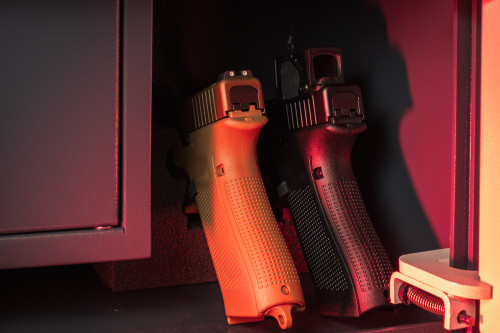
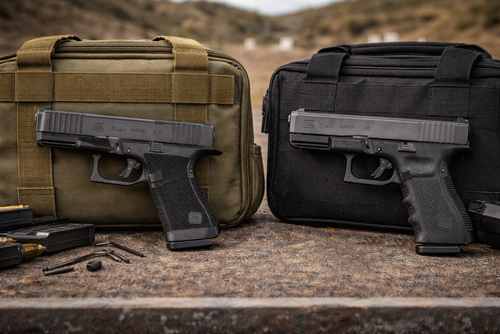
9mm wins this comparison cleanly. In similarly sized pistols, 9mm almost always gives you more rounds. The 9mm Glock 17 holds 17 rounds stock. The .40 S&W Glock 22 holds 15. That is only a two-round difference, but in a real defensive scenario, those two rounds can matter — a lot. In compact carry guns, the capacity gap becomes even more significant. More rounds in the same size package is a straightforward, practical win for 9mm. It is one of the main reasons 9mm has become the dominant choice for both duty and carry use across the country.
Is 9mm Cheaper Than .40 S&W for Training?
In most cases, yes. Retail training ammo costs move constantly, but the long-term pattern is stable: 9mm is usually cheaper than .40 S&W. As a practical retail snapshot (bulk FMJ/ball):
9mm commonly lands around the mid-$0.20s per round in bulk deals.
.40 S&W commonly lands around the low-to-mid $0.30s per round in bulk deals.
Premium defensive JHP pricing often tightens up between calibers, but the real training budget is driven by bulk FMJ. Lower cost usually means more reps, and more reps usually beats a small caliber “paper advantage.”
Premium defensive hollow-point ammo is priced more closely between the two — both calibers run near $1.00 per round for quality loads. But the bulk of any serious training program relies heavily on practice ammo, not carry ammo. When practice costs less, you log more range time for the same budget. More reps build better trigger discipline, sharper draw strokes, and greater confidence under pressure. That is a real performance benefit — not just a financial perk.
Why Did the FBI Return to 9mm?
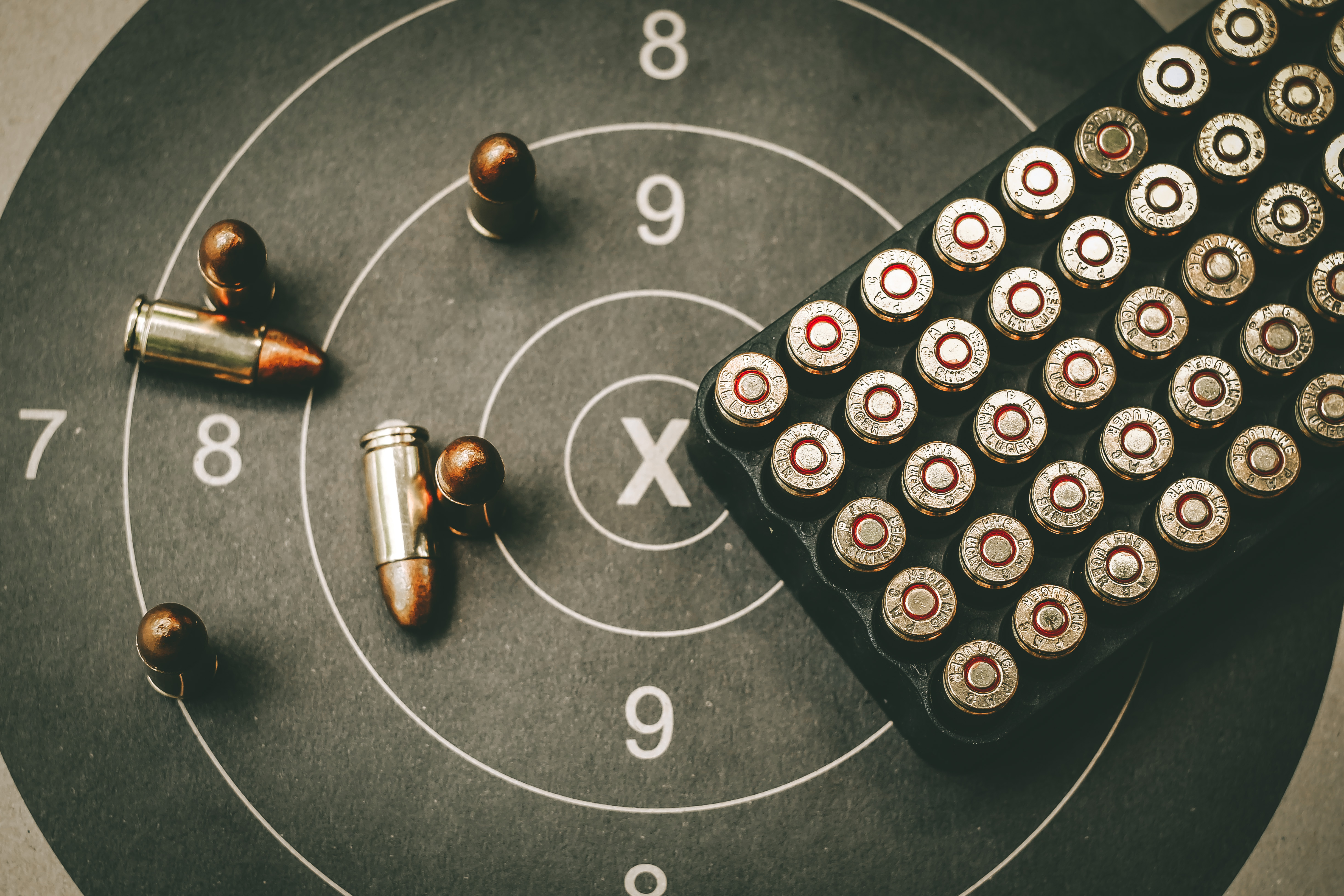
The FBI helped shape the early rise of the .40 S&W. It carried the round for years and supported its spread across law enforcement. Then in 2014, the bureau switched back to 9mm. That change carried weight. Agencies across the country noticed it right away. Many returned to 9mm soon after.
The shift was driven by several converging factors. Modern 9mm defensive loads had improved dramatically over the years. Recoil was far more manageable for a broad range of agents. Field qualification scores improved. Follow-up shots were faster and more accurate. And when you are running large-scale training programs across thousands of personnel, lower recoil and cheaper ammo make a real operational difference. The move was not a rejection of the .40 S&W as a cartridge — it was a recognition that 9mm technology had improved enough to tip the practical balance in its favor.
Is .40 S&W Still Relevant Today?
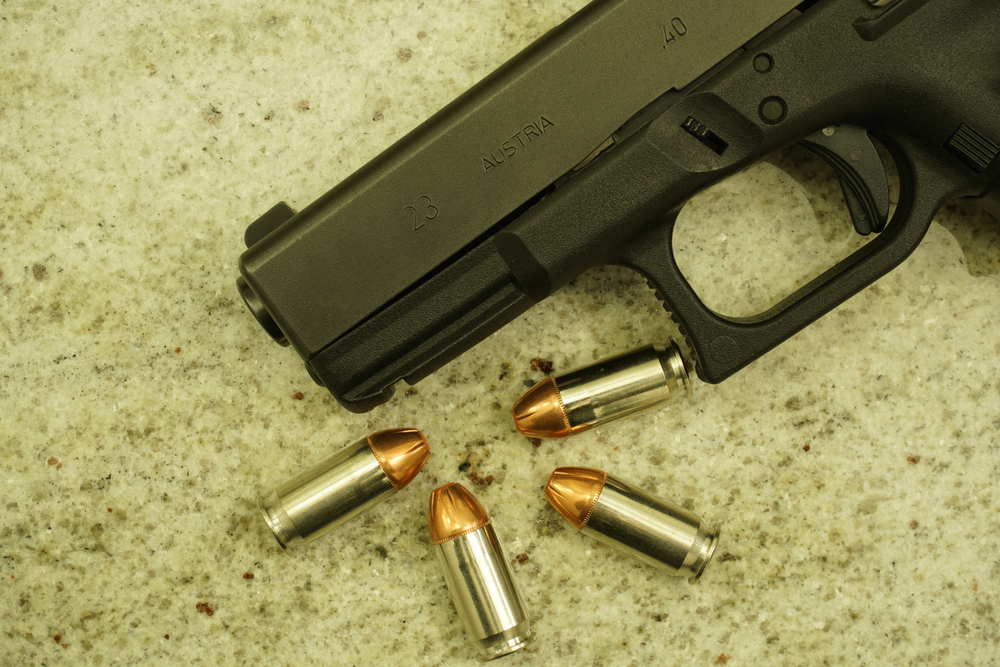
Absolutely. A drop in government and agency popularity does not erase decades of proven performance. The .40 S&W is still a capable defensive round when paired with quality ammo and consistent shot placement. It also carries one very attractive practical advantage right now: price on the used market.
As law enforcement agencies traded in their .40 S&W service pistols, the used market got flooded with police trade-in Glocks. A barely-used Glock 22 or 23 can be found for around $300, and sometimes even lower during a good sale or bulk purchase. By contrast, a used 9mm Glock 17 or 19 rarely drops below $400. For budget-focused buyers who can manage the recoil, that price difference is hard to ignore. The .40 S&W is not fading away — it has simply found a new home with a different audience.
Which Is Better for Concealed Carry?
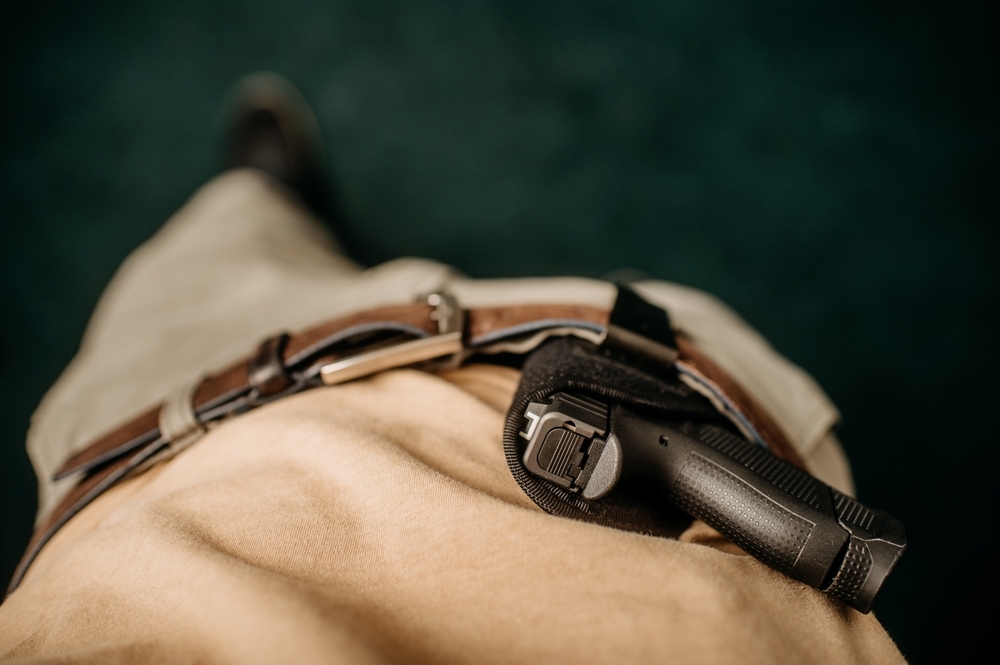
For most people, 9mm is the better option for concealed carry. Compact and sub compact 9mm pistols kick less than same size .40 S&W guns. That means better shot placement in a public scenario, where accuracy is not just important — it is a legal and moral obligation. Higher magazine capacity adds more rounds in a smaller package. And the wide variety of 9mm carry guns on the market gives buyers far more options. They can find something that fits their hand, their carry style, and their budget.
If you already carry .40 S&W well, you may not need to switch. Some experienced carriers shoot it with strong control and steady results. If your shot placement is solid and your practice has stayed consistent, .40 S&W remains a sound carry option. But for most people, 9mm is simpler to manage and simpler to train with often. It is also sold in a much broader range of guns. That can make your choice easier, especially if you are new to carry.
Which Is Better for Home Defense?

Both calibers can work well for home defense with the right defensive ammo. But for most households, 9mm gets the practical edge. Home defense situations are high-stress by nature, and under stress, recoil control becomes critical. The round you can place accurately matters far more than raw bullet weight.
The 9mm's lower recoil helps most people stay on target through multiple shots in a tight, dark space. Higher magazine capacity is also a real benefit when seconds matter and reloading mid-situation is a terrible prospect. The .40 S&W's heavier bullet and extra energy are genuine advantages — but they only translate into better outcomes when shots land where they need to. For most home defenders, 9mm is the more manageable and practical choice.
9mm vs .40 S&W: Pros and Cons
9mm Pros
- Lower recoil
- Higher magazine capacity
- Lower practice ammo cost
- Widely available in most stores
- Easier for newer and smaller-handed gun owners to manage
9mm Cons
- Lighter bullet than .40 S&W
- Some people prefer a larger caliber for added peace of mind
.40 S&W Pros
- Heavier, wider bullet
- Strong defensive track record in law enforcement
- Often available in police trade-in pistols at very attractive prices
.40 S&W Cons
- Sharper, snappier recoil
- Slightly lower magazine capacity
- Higher training ammo cost
- Less common in today's market
Final Verdict — Which Handgun Caliber Is Better?
For most people, 9mm is the better all around choice. It stands out for ease of use, lower cost, higher magazine capacity, and strong defensive use in many situations. Modern 9mm defensive loads have narrowed the terminal performance gap. So the old power case for .40 S&W does not carry the same force it once had. The FBI moved back to 9mm in 2014. That was not a short lived shift. It came after years of practical data from one of the most closely watched law enforcement agencies in the country.
That said, .40 S&W is far from finished. It is still a capable defensive round. And the used market can make it a good buy for the right person. If you already own a .40 S&W and shoot it well, there is no urgent need to change. But if you are picking between the two for the first time, 9mm is the smarter and more practical place to start for most people. If you want the most useful all purpose option, go with 9mm. If you already shoot .40 S&W well and like its heavier bullet, it remains a solid defensive choice.
Both 9mm and .40 S&W remain strong choices for defensive handguns, but they’re only part of the broader handgun caliber ecosystem. For a deeper look at how these cartridges compare to others, read Guide to Pistol Calibers before making your final decision.

Eotech EFLX Reflex Sight 6 MOA Tan
$359.00
at Pro Armory
Prices accurate at time of writing
Frequently Asked Questions (FAQs)
Is .40 S&W more powerful than 9mm?
Yes. The .40 S&W fires a heavier, wider bullet and produces more muzzle energy than standard 9mm loads. But greater energy on paper does not automatically mean better results for everyone — especially when recoil affects accuracy and follow-up shot speed.
Why do many people prefer 9mm over .40 S&W?
Most prefer 9mm because it has lower recoil, higher magazine capacity, and lower training costs. Modern 9mm defensive loads also offer strong terminal performance that rivals what the .40 S&W delivers.
Is .40 S&W still good for self-defense?
Yes. The .40 S&W remains a capable defensive caliber when paired with quality ammunition and consistent, accurate shot placement.
Is 9mm better for concealed carry?
For most people, yes. It is easier to control in compact pistols and generally provides more rounds with less recoil — two important factors for daily carry.
Did the FBI switch from .40 S&W back to 9mm?
Yes, in 2014. The decision reflected improved 9mm ammunition performance, better qualification scores across agents, and practical handling advantages at operational scale.
About the Author
This article was written by the Pro Armory writing team using current research and widely known defensive handgun standards. That includes trusted industry sources, ballistic reference material, and official guidance when needed. We reviewed established information on cartridge history, recoil, capacity, and ammunition performance. Sources such as SAAMI, law enforcement context, and major manufacturer data helped keep this comparison practical, balanced, and easy to use.
Disclaimer: This review is for education only. Laws vary by state and city and can change. Follow safe handling at all times. Read your owner's manual. Verify local rules before you buy or train.
Best Ammo Deals, Training, & Accessories
Subscribe to ProArmory sales and deals email.