 Pro Armory Editorial Team
Quick Answer
The best CCW position depends on three things: concealment, comfort, and access. For most everyday carriers, IWB, appendix carry, and hip carry offer the best balance. Pocket, ankle, bra, thigh, shoulder, and off-body methods also work in specific situations — depending on clothing, body type, activity level, and how quickly you may need to draw.
Key Takeaways
- The best CCW position depends on your body type, clothing, and daily routine.
- IWB and appendix carry offer the best overall balance for most carriers.
- Pocket, ankle, and off-body carry work best in more limited situations.
- Comfort matters — uncomfortable setups lead to inconsistent carry habits.
- Fast access is important, but safety and concealment still come first.
- A quality holster and regular dry-fire practice matter as much as position choice.
You wake up, check the day ahead, and start getting dressed. It's hot outside. Fitted shirt. Slim jeans. Long drive at noon, then a client meeting after that. The carry position you trained with at the range last week? It doesn't quite work today. That's the real challenge with concealed carry. No single position is best for every outfit, every situation, or every body type. The best one is always the one that fits your life right now.
Picking where to carry your firearm is almost as important as picking the firearm itself. The right position affects how fast you can draw, how comfortable you'll be after hours of wear, and whether anyone around you can even tell you're carrying at all.
There's no universal answer here. The right spot depends on your body shape, daily clothing, how long you spend seated or driving, and the size of your handgun. This guide breaks down 13 carry positions — from the widely used IWB and AIWB to more specialized options like thigh carry and crossdraw — so you can find what actually fits your day-to-day life.
What Makes a CCW Position Work?
Before getting into specific positions, it helps to understand what you're actually comparing. Three factors drive most of the decision: concealment, comfort, and access. But none of them matter without safe holster use and consistent firearm control.
Concealment
Concealment means keeping your firearm hidden. "Printing" is what happens when clothing reveals the gun's shape beneath — even without fully exposing it. Some positions conceal better than others, but your clothing choices, body shape, and holster design all affect the outcome. A position that disappears under a winter jacket might print badly in a summer t-shirt. Pick a position that holds up across your typical wardrobe, not just your ideal scenario.
Comfort
Discomfort kills carry consistency. If your setup digs, pinches, or shifts throughout the day, you'll eventually leave the gun at home — which defeats the purpose entirely. Comfort ties directly to holster quality, firearm size, body frame, and time spent sitting or driving. A setup that feels great on a short errand might become miserable after six hours at a desk.
Fast Access
Concealment without access is just dead weight on your waistband. Your ability to draw quickly and safely under stress is what makes carrying practical. Standing access and seated access differ significantly between positions. AIWB is fast from a vehicle seat. Small of back carry is not. Dry-fire practice closes the gap between a good position and one that's actually fast when every second matters.
Safety and Holster Quality
No carry position is safe without a proper holster. Full trigger guard coverage is non-negotiable. The holster must hold its shape so reholstering stays safe and clean every time. Never carry loose — in a bag, pocket, or console — without a dedicated holster. This rule applies across every position on this list.
Quick Comparison Table
| CCW Position | Best For | Concealment | Comfort | Access Speed | Main Limitation |
|---|---|---|---|---|---|
| AIWB | Everyday carry | High | Varies | Very Fast | Body-type dependent |
| IWB | Everyday carry | High | Moderate | Fast | May require looser pants |
| OWB | Comfort or open carry | Low–Moderate | High | Very Fast | Harder to conceal |
| Hip Carry | Users familiar with traditional draw | Moderate | Moderate | Fast | May print without proper cover garment |
| Shoulder Holster | Jacket wear or seated carry | Moderate | High | Moderate | Dependent on clothing |
| Pocket Carry | Summer or casual carry | High | High | Moderate | Limited to small firearms |
| Belly Band | No-belt carry setups | High | Moderate | Moderate | Not ideal for heavier guns |
| Bra Carry | Dress-specific concealment | High | Varies | Moderate | Limited to small firearms |
| Thigh Carry | Dresses or skirts | High | Moderate | Moderate | Dependent on outfit choice |
| Ankle Carry | Backup firearm | High | Moderate | Slow | Slow draw when standing |
| Small of Back | Occasional carry preference | High | Low | Slow | Poor seated access |
| Crossdraw | Driving or seated carry | Moderate | Moderate | Moderate | Requires retraining draw stroke |
| Off-Body Carry | Wardrobe flexibility | Very High | Very High | Slow | Risk of separation from firearm |
The 13 Best CCW Positions
AIWB — Appendix Inside the Waistband

Appendix carry places the handgun at the front of the waistband, usually between the belly button and hip bone, commonly around the 12 to 2 o’clock area for right-handed carriers. It keeps the gun near the centerline, which is one reason many carriers like it for concealment and fast access. With the right holster and a stiff belt, many people can conceal a surprisingly capable handgun this way.
Comfort varies by body type, holster setup, and how much time you spend seated. A wedge or claw can help rotate the grip inward and reduce printing. Reholstering demands deliberate care every time, with a rigid holster that fully covers the trigger guard. With a quality setup and regular practice, AIWB remains one of the strongest everyday carry options for many people.
Comfort varies by body type and pants rise. A wedge or claw attachment on the holster helps rotate the grip inward and push the muzzle out — that small fix solves most printing and comfort problems. The reholstering process demands real care and discipline every time, no exceptions. With a quality holster and consistent dry-fire work, AIWB earns its place as one of the strongest everyday carry options available.
Pros:
- Excellent draw speed
- Strong concealment potential with the right setup
- Easy to monitor and retain the firearm
Cons:
- Not comfortable for every body type
- Harder to manage when seated for some carriers
- Strict reholstering discipline is required
IWB — Inside the Waistband
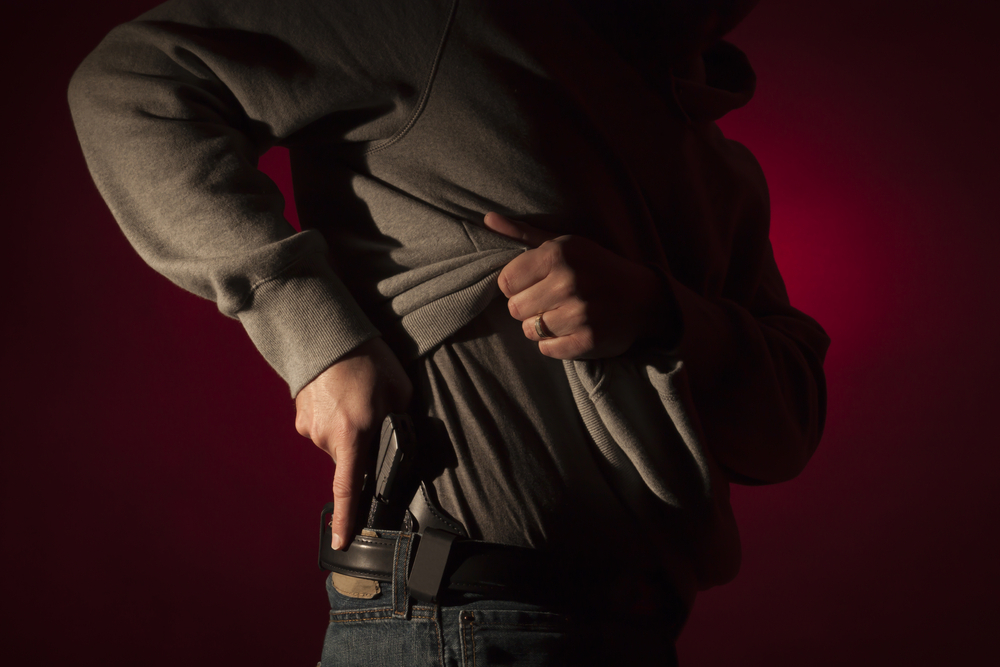
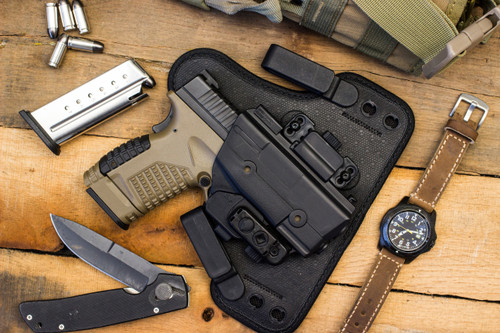
IWB carry places the holster between the pants and the body. It's one of the most common concealed carry positions because it balances concealment, comfort, and adaptability across most daily situations. It can be worn at multiple positions around the waist depending on your needs.
The gun rides close to the body and stays hidden under most shirts and jackets. Holster quality makes a significant difference here — a poor holster digs, shifts, and prints. A good one stays stable all day. One small trade-off: IWB sometimes requires pants one size up from your usual fit. For most people, that's a minor adjustment worth the payoff.
Pros:
- Excellent all-around concealment
- Adaptable to multiple waist positions
- Works across most everyday outfits
Cons:
- May require slightly larger pants
- Can feel uncomfortable during long seated periods
- Holster quality directly affects comfort and concealment
OWB — Outside the Waistband
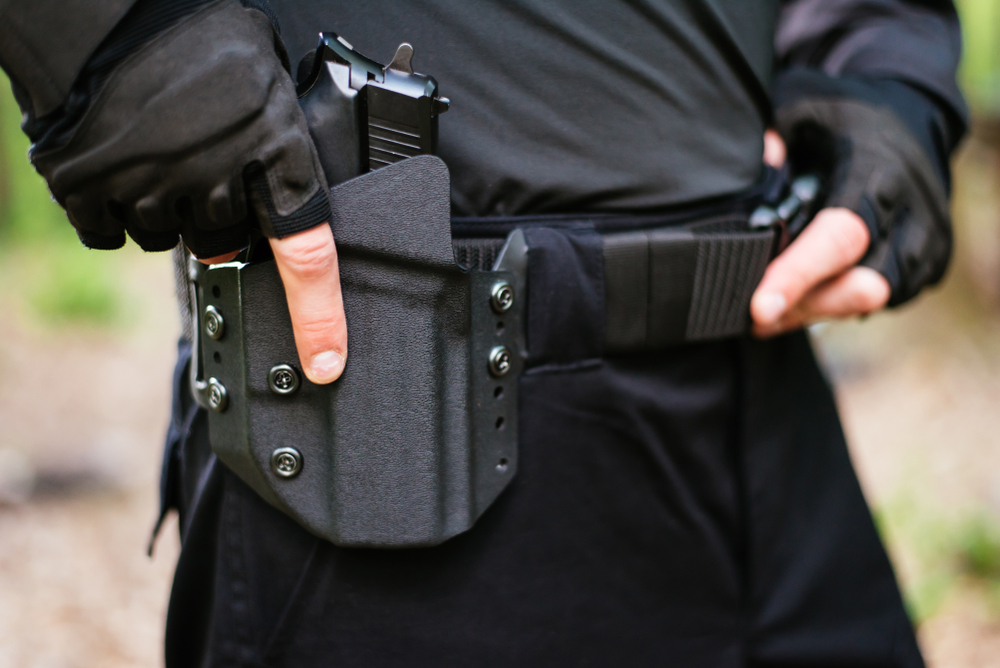
OWB positions the holster outside the waistband, typically at the 3 to 4 o'clock position. It's one of the most comfortable carry methods physically — nothing wedged inside the waistband, no internal pressure. Full-size pistols sit and draw naturally from this position.
The challenge is concealment. OWB needs a cover garment — jacket, overshirt, or vest — to stay hidden. In summer heat or fitted clothing, keeping OWB truly concealed gets difficult fast. It's an excellent choice when your wardrobe allows for it, but it asks more of your clothing choices than IWB or AIWB will.
Pros:
- Very comfortable for all-day wear
- Fast and natural draw path
- Works well with full-size handguns
Cons:
- Harder to conceal without outer layers
- Clothing-dependent for real concealment
- Prints easily without a proper cover garment
Hip Carry

Hip carry puts the gun at the 3 o'clock position for right-handed carriers. It's a familiar starting point for many people and translates well from military or law enforcement training backgrounds. It works with IWB or OWB depending on the situation.
The draw feels natural and intuitive — standard arm movement, no awkward angles. Under stress, familiar movements hold up better than new ones. Seated vehicle access can be a limitation, and the gun can dig or shift during long drives. Shirt length also matters here — short shirts and hip carry don't mix well.
Pros:
- Natural and intuitive draw
- Works IWB or OWB
- Familiar for experienced carriers
Cons:
- Seated access can be awkward
- Prints without the right cover clothing
- Shirt length and fit matter significantly
Shoulder Holster

A shoulder holster positions the firearm under the support-side arm and is most practical under jackets, coats, or open overshirts. Many carriers prefer it when they spend long periods seated or driving because it keeps the waistband clear and can be easier to reach than some belt positions in a vehicle.
The draw crosses the body, so it takes deliberate practice to present safely and efficiently. It is also more dependent on outerwear than waistband carry. Shoulder holsters make the most sense as a specialized option for people who wear covering garments consistently or spend a lot of time seated, rather than as the default answer for most daily carry.
Pros:
- Comfortable for seated and driving use
- Good access under outerwear
- Keeps the waistband completely free
Cons:
- More visible draw motion
- Heavily dependent on clothing choices
- Less practical for casual everyday wear
Pocket Carry

The draw is usually slower than waistband carry, and the pocket should be dedicated to the firearm only. That means no keys, coins, or other loose items in the same pocket.
Pocket carry only works well with smaller handguns and a proper pocket holster that keeps the trigger covered and the gun oriented consistently. For lightweight options like a compact .380 or small 9mm, it can be a practical everyday carry method.
Pros:
- Excellent concealment
- Comfortable for everyday use
- Great for summer and casual situations
Cons:
- Slower draw speed
- Limited to small firearms only
- Pocket must stay completely clear
Belly Band Carry
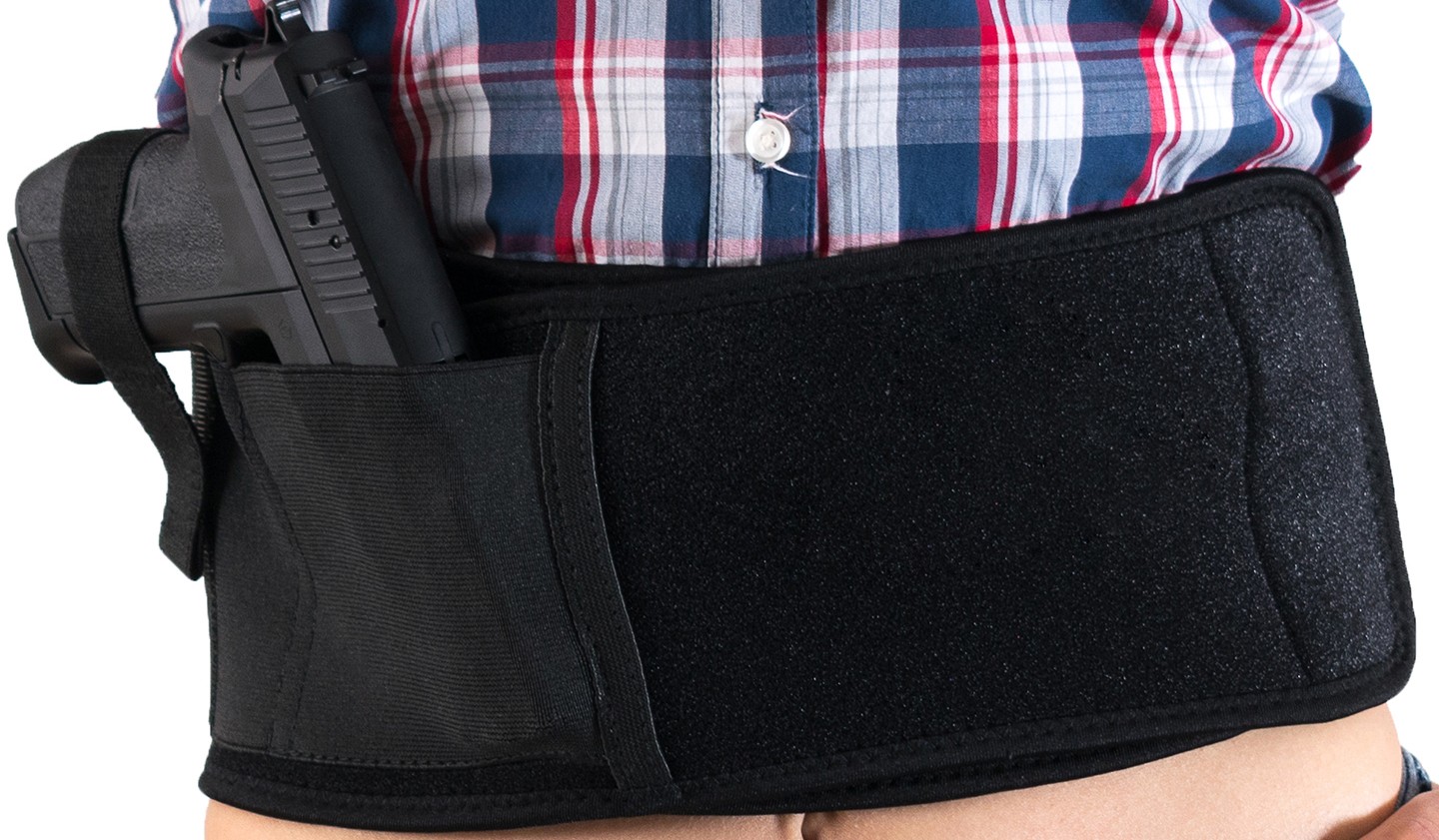
A belly band wraps around the torso and holds the gun against the body without needing a belt. It's useful for athletic wear, dresses, and outfits where belt-mounted holsters aren't practical. No belt, no clips, no waistband fuss.
Lighter firearms work best here. A heavier compact pistol can cause the band to sag or shift during movement. Retention also varies significantly by design quality. For carriers with active lifestyles or wardrobes that change frequently, a belly band adds real flexibility that standard holsters simply can't match.
Pros:
- No belt required
- Works with athletic and casual clothing
- Solid wardrobe flexibility
Cons:
- Less ideal for heavier pistols
- Retention quality varies widely
- Draw can be slower depending on placement
Bra Carry
Bra carry uses a specialized holster positioned near the chest area — either centrally below the bra line or off to one side. It's a niche option, but useful when clothing makes waistband carry impractical. Keeping the gun on-body is one of its core strengths over off-body alternatives.
Access varies significantly based on garment type and holster placement. Some setups allow a reasonably smooth draw under loose tops. Others require adjusting clothing before reaching the gun. Bra carry is best for smaller handguns and specific outfit types — not a daily solution for most situations, but a solid gap-filler when other options don't apply.
Pros:
- Keeps the firearm on-body
- Strong concealment with the right clothing
- Useful when waistband carry is not practical
Cons:
- Limited to small handguns
- Draw speed varies widely
- Specialized holster required
Thigh Carry
Thigh carry straps a holster to the upper thigh. It's primarily used with dresses, skirts, and some loose garments — outfits where there's no stable waistband or pockets available. It keeps the gun on the body when most other carry methods simply won't apply.
Smaller, lighter firearms work best. A heavier handgun can shift and bounce during movement, creating both comfort and security problems. Fit is everything here — a loose or poorly adjusted thigh holster slides around with every step. For the right outfit and situation, this position fills a gap that very few others can address.
Pros:
- Practical for dress or skirt carry
- Keeps the gun on-body
- Better than off-body carry in many situations
Cons:
- Best for smaller firearms only
- Can shift significantly with movement
- Strictly outfit-dependent
Ankle Carry

Ankle carry straps a small holster around the lower leg, typically with soft lining for comfort during long wear. It's a deep concealment option, commonly used for backup guns. Looser-fitting pants are a must — slim jeans simply won't work.
The standing draw is slow. You're bending all the way down, which takes real time. In some seated or grounded positions, accessing the ankle can actually be easier than reaching behind the hip — that's one of its underrated advantages. Ankle carry is best treated as a secondary option rather than a primary carry method.
Pros:
- Deep concealment
- Good backup-gun option
- Frees up the waistband completely
Cons:
- Slow draw when standing
- Requires specific clothing fit
- Limited to smaller firearms
Off-Body Carry
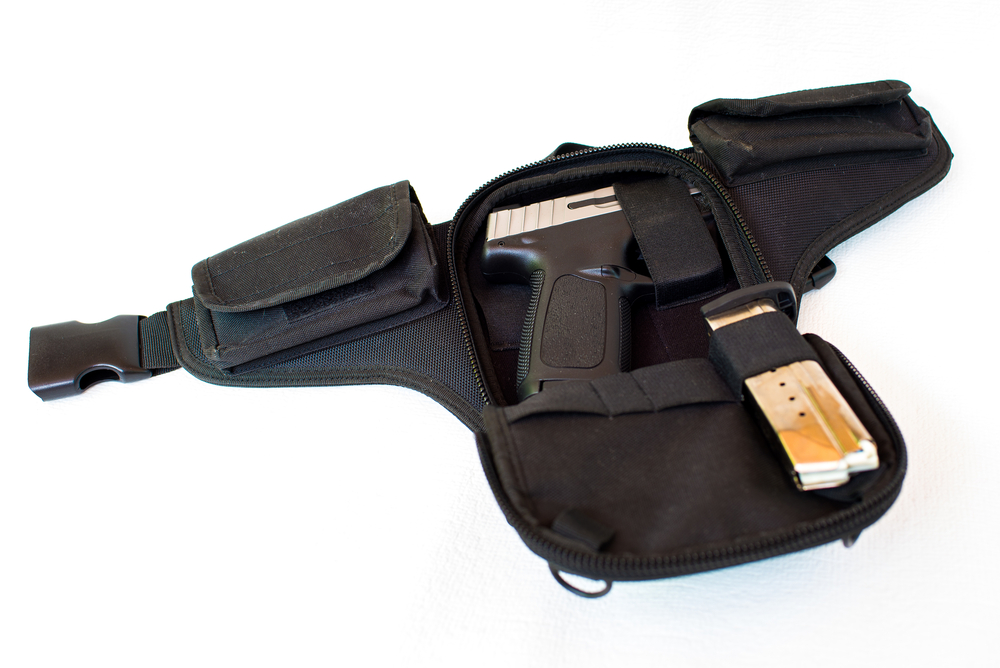
Off-body carry includes purses, backpacks, sling bags, briefcases, and similar items. It offers strong concealment and removes all body pressure — no printing, no waistband dig, no clothing limitations. For some routines and wardrobe styles, it's the most realistic option available.
The biggest risk is separation from the firearm. If the bag is set down, left unattended, or taken from you, the gun is no longer under your direct control. The firearm should be secured in a dedicated holster or dedicated carry compartment inside the bag, not loose among other items. Drawing from a bag is also slower and requires specific practice because the access path is very different from on-body carry.
Pros:
- Very strong concealment
- No body pressure or printing
- Excellent wardrobe flexibility
Cons:
- Separation risk is real and serious
- Slower access than body carry
- Requires specific training for the draw
Crossdraw Carry

Crossdraw places the holster on the non-dominant side for a cross-body draw. It's an uncommon first choice but has genuine value for people who spend long hours driving or who have shoulder or arm mobility issues that limit a standard strong-side draw.
The draw motion is different from strong-side or appendix carry, so it requires deliberate practice before it becomes reliable under stress. Poor technique can increase the risk of sweeping parts of your body or others during presentation. Crossdraw is best treated as a specialized option for long periods of driving, seated work, or users with mobility limitations, not as the default carry method for most people.
Pros:
- Better access from seated positions
- Useful for people with mobility limitations
- Can reduce seat belt interference
Cons:
- Different motion requires significant retraining
- Risk of flagging without proper technique
- Not practical as a primary carry method for most
Small of Back Carry

Small of back carry positions the handgun along the spine at the 6 o'clock spot. It conceals well under loose garments and keeps the gun away from the front waistline. From a standing position with the right clothing, it can disappear completely.
Seated access is the major problem. Once you are in a car, at a desk, or otherwise seated, reaching the gun becomes awkward and slow. The draw also requires more shoulder and arm movement than stronger carry positions. Another concern is fall risk: landing on a rigid object positioned over the spine can increase the chance of injury. This makes small-of-back more of an occasional or situational method than a primary everyday carry choice for most people.
Pros:
- Good concealment under loose garments
- Keeps the gun away from the front waistline
- Can work well when standing
Cons:
- Very poor access when seated
- More awkward draw motion
- Not practical for most daily routines
Which CCW Position Is Best for Concealment?
Off-body carry hides a gun most completely — but brings the separation risk described above. For on-body carry, IWB and AIWB consistently offer the best blend of deep concealment and real-world access. Pocket, bra, thigh, and ankle carry can excel in specific wardrobe situations. OWB struggles under light clothing without cover garments. For most carriers, IWB or AIWB is the strongest answer.
Which CCW Position Is Best for Comfort?
OWB is often the most physically comfortable because nothing sits inside the waistband. Belly bands and some off-body setups can also reduce pressure points depending on clothing and activity. For IWB-style carry, comfort depends heavily on holster quality, belt support, body shape, and how much time you spend sitting or driving. In practice, comfort is highly personal, which is why real-world testing matters more than theory.
Which CCW Position Is Best for Fast Access?
OWB gives the clearest, most unobstructed draw path. AIWB runs close behind and often outperforms in seated positions. Hip carry stays fast and intuitive for those who've practiced it consistently. Pocket, ankle, and off-body methods are generally the slowest of the group. For vehicle access specifically, AIWB and crossdraw typically outperform traditional hip or small of back positions.
Best CCW Positions by Situation
Everyday Carry
- IWB, AIWB, hip carry
Driving or Long Seated Periods
- AIWB, crossdraw, shoulder holster
Summer or Light Clothing
- Pocket carry, AIWB, belly band, bra carry, thigh carry
Deep Concealment
- Pocket carry, ankle carry, bra carry, off-body carry
Smaller Handguns
- Pocket carry, ankle carry, belly band, thigh carry, bra carry
So, What Is the Best Overall CCW Position?
There's no single right answer for every person. For most daily carriers, IWB, AIWB, and hip carry offer the strongest combination of concealment, comfort, and draw speed. They adapt across most clothing types, most body shapes, and most daily routines better than anything else on this list.
The best position is the one you can conceal safely, wear comfortably all day, and draw from smoothly when it matters. That decision comes from knowing your own wardrobe, your body, and your actual daily routine — not from picking whatever looks most popular at the range. Choose based on real life. Train consistently. Carry every day.
Tips for Choosing the Right CCW Position
- Start with your real wardrobe, not your best-case range outfit
- Match the carry method to your actual firearm size
- Always use a holster with complete trigger guard coverage
- Test the setup while sitting, bending, and driving — not just standing
- Practice draws with an unloaded firearm before carrying live
- Check concealment from multiple angles — front, side, and behind
- Stay consistent with one position before experimenting with others
Common CCW Carry Mistakes to Avoid
Choosing comfort and ignoring access time is one of the most common mistakes new carriers make. The opposite also happens — obsessing over draw speed and ending up with a setup that prints badly or causes pain all day. Neither extreme works in real life.
Other mistakes include using a poor-quality holster that shifts or fails to cover the trigger, picking a handgun that's too large for the chosen carry position, and skipping draw practice entirely. Off-body carriers who set bags down without thinking about separation are one moment away from a serious problem. Switching carry positions too often without retraining also creates dangerous confusion under stress.
Conclusion
CCW positions aren't about trends or what someone else swears by online. They're about what genuinely works on the actual days you carry. The right position fits your clothes, your body, and your schedule. It lets you access your firearm safely and draw it smoothly when it counts most. Start with IWB or AIWB if you're unsure. Test it during real days in real clothing. Adjust based on honest feedback from your own experience. Train consistently — and carry every day.
Many concealed carriers prefer inside-the-waistband carry because it provides a balance of concealment and accessibility. If you’re exploring this carry method, Guide to the Best IWB Holsters covers some of the best holster designs available today.
Frequently Asked Questions
What is the best CCW position for most people?
For everyday carry, IWB or AIWB offers the best balance of concealment, comfort, and access for most body types and daily routines.
Is appendix carry safer than other methods?
With a quality holster and careful reholstering habits, appendix carry is as safe as other positions. The reholstering step is where the most attention is needed.
What is the most comfortable concealed carry position?
OWB is typically the most physically comfortable, but belly bands and off-body options remove almost all body pressure. Comfort is personal and varies by body type and activity level.
What is the easiest CCW position to conceal in summer?
Pocket carry, AIWB with the right holster, and belly bands work best when clothing is light or fitted.
Is pocket carry good for self-defense?
Yes, for small firearms with a proper pocket holster. The draw runs slower than waistband carry, so deliberate practice is more important here than with other positions.
When does off-body carry make sense?
When on-body carry is genuinely impractical because of clothing, activity, or physical limitations, and only when the bag stays under your control at all times. Off-body carry should use a dedicated holster or dedicated compartment and requires specific draw practice.
What carry position works best while driving?
AIWB and crossdraw typically provide the best access from a seated position in a vehicle.
Do smaller guns make concealed carry easier?
Yes. Smaller, lighter firearms open up more carry options and conceal better under light or fitted clothing.
About the Author
This article was written by the ProArmory writing team based on current research, including studies from reputable sources like the *Journal of Military Science*, *Firearms News*, and the *National Shooting Sports Foundation*. We also referenced trusted information from official defense publications and respected firearm authorities such as the ATF, NRA, and manufacturer manuals.
Disclaimer: This article is for educational purposes only and does not constitute legal advice. Concealed carry laws vary by state and locality — always verify your local laws before carrying. Handle all firearms safely at all times. Always use a proper holster with complete trigger guard coverage.
Best Ammo Deals, Training, & Accessories
Subscribe to ProArmory sales and deals email.