 Pro Armory Editorial Team
Quick Answer
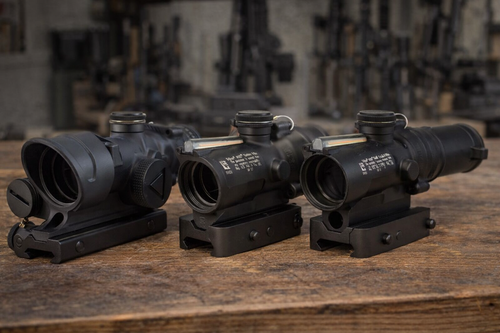
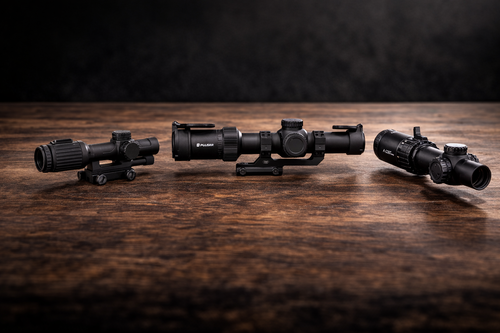
The best ACOG scopes are rugged fixed-power Trijicon optics built for combat, training, and hard field use. The TA31 remains the classic benchmark. The TA02 and TA110 add adjustable illumination. The TA33 improves eye relief. The TA648 gives you more magnification. The right choice depends on your rifle setup, distance needs, reticle preference, and what you want most from an optic.
Key Takeaways
- ACOG scopes are fixed-power optics built for hard use.
- The TA31 is the classic all-around ACOG choice.
- The TA33 is a strong pick if eye relief matters.
- The TA02 and TA110 give you more brightness control.
- The TA648 is best for those who want more magnification.
- The TA44-C is compact but more specialized.
- Reticle, rifle setup, and use case matter more than hype.
Some optics look impressive on paper. Others earn their reputation the hard way. The Trijicon ACOG belongs to the second group. It built its name through hard use, rough training cycles, and real-world service with military and law enforcement units. Once you start shopping the lineup though, the real question gets simple fast: which ACOG is actually right for your rifle?
What Is an ACOG Scope?
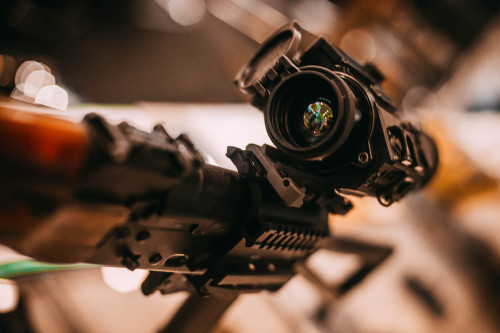
ACOG stands for Advanced Combat Optical Gunsight. It is not a single optic but a family of Trijicon fixed-power scopes offered in a wide range of magnification levels, reticle patterns, calibers, and mounting configurations. The lineup includes dozens of model and reticle combinations, so choosing the right one takes more than just picking a magnification level.
These are fixed-power optics with no zoom dial, and that is part of the appeal. Fewer moving parts means fewer potential failure points. ACOG optics use two primary illumination systems: traditional dual illumination, which combines fiber optics and tritium without a battery, and battery-powered LED illumination with user-adjustable brightness settings. Each system has real trade-offs. Dual illumination is simple and battery-free, while LED models give you more control in mixed lighting conditions.
Why People Still Trust ACOG Scopes
The ACOG built its reputation in rough environments. Long field deployments, hard training cycles, and demanding real-world use put these optics through punishment that most glass wouldn't survive. They kept working. They held zero. That track record doesn't come from marketing copy.
The fiber optic and tritium illumination means no battery to lose in the field. The fixed-power format keeps the design clean. The glass is genuinely clear, and the reticle choices are practical. Fixed magnification gets dismissed by people who want LPVO flexibility, but that flexibility adds moving parts, weight, and complexity. The ACOG trades flex for toughness, and for many setups, that's exactly the right call. Fewer failure points mean more confidence in the field.
How We Chose the Best ACOG Scopes
These picks are based on use case, design strengths, and real trade-offs drawn from in-depth research and industry feedback. The key evaluation factors include:
- Ruggedness and field credibility
- Reticle design and usefulness
- Illumination system type
- Eye relief and head position
- Size and weight on the rifle
- AR-15 compatibility
- Close-range usability
- Distance capability
"Best" depends on role, not just popularity or price. Some models are solid general-purpose picks. Others shine in specific, narrower roles. Matching the optic to your actual needs matters more than chasing the most expensive name on the list.
Best ACOG Scopes at a Glance
| Model | Magnification / Objective | Best For | Illumination | Standout Strength | Main Trade-Off |
|---|---|---|---|---|---|
| TA31 | 4×32 | All-around use | Fiber optic + tritium | Proven benchmark durability and performance | Short eye relief |
| TA02 | 4×32 | Manual brightness control | LED (AA battery) | User-adjustable illumination | Battery dependence |
| TA648 | 6×48 | Longer-range shooting | Fiber optic + tritium | Higher magnification capability | Heavy and expensive |
| TA11F | 3.5×35 | General-purpose use | Fiber optic + tritium | Balanced magnification and usability | Less distinct niche compared to others |
| TA44-C | 1.5×16 | Close-quarters and compact setups | Fiber optic + tritium | Lightweight and compact | Limited magnification range |
| TA33 | 3×30 | Improved eye relief setups | Fiber optic + tritium | More forgiving head position | Lower magnification than some alternatives |
| TA110 | 3.5×35 | Premium LED use | LED (AA battery) | Long battery life with brightness control | Heavier and more expensive |
Best ACOG Scopes
1. Trijicon TA31 4x32 ACOG
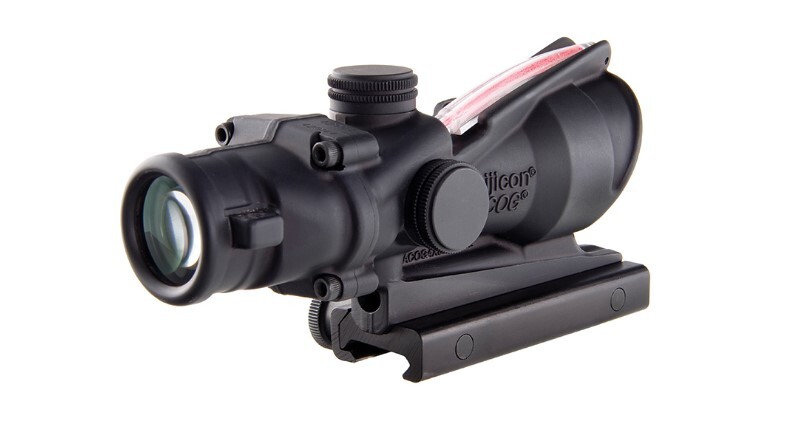
The TA31 is the model most buyers picture first when they hear "ACOG." The 4x32 format hits a solid middle ground between speed, clarity, and practical distance work. The BDC reticle is tuned for 5.56 NATO and .223 setups with holdovers extending out to 800 meters. The fiber optic and tritium illumination requires no battery at all. Pick it up, aim, and shoot. That simplicity is a big part of why it has lasted so long.
For most buyers, the TA31 is the right starting point and the right ending point. It's been the go-to model for military and serious duty use for years. Industry feedback consistently puts it at the top of the ACOG lineup for general-purpose use. If you don't have a specific reason to look at another model, the TA31 is your answer.
Price: Typically $1,200 to $1,400 depending on reticle and mount configuration
Specs
- Magnification: 4x
- Objective lens: 32mm
- Illumination: Fiber optic + tritium
- Eye relief: About 1.5 inches
- Weight: About 9.9 oz
Features
- Classic fixed-power ACOG format
- Battery-free illuminated reticle system
- BDC reticle for 5.56 and .223
- Rugged forged housing with combat-oriented build
- RMR-compatible configurations available
Pros
- Classic and proven ACOG design
- Strong all-around choice for AR-platform rifles
- Excellent field reputation
- Clear glass with practical reticle options
Cons
- Short eye relief
- Less forgiving head position than newer models
- Fiber-optic brightness can bloom in harsh light
2. Trijicon TA33 3x30 ACOG
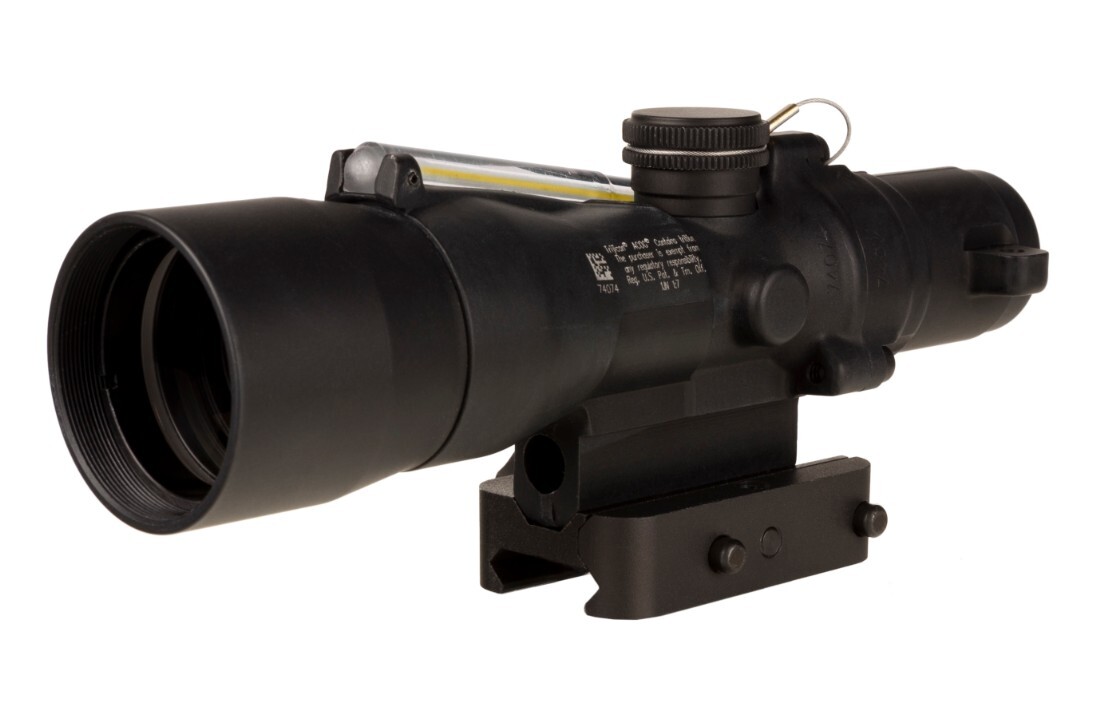
The TA33 solves one of the most common ACOG complaints: eye relief. At about 1.9 inches, it gives you more breathing room than the TA31. The head position is more forgiving. For buyers who found other ACOG models tight or uncomfortable to use consistently, this one is worth a serious look.
The 3x30 setup gives up a small amount of reach compared to the 4x models, but the core ACOG strengths stay fully intact. Tritium and fiber optic illumination runs without a battery. The Bindon Aiming Concept works on this model for close-range use. The rugged construction sits exactly where you'd expect from Trijicon at this price range.
Price: Typically $1,300 to $1,600 depending on reticle and variant
Specs
- Magnification: 3x
- Objective lens: 30mm
- Illumination: Fiber optic + tritium
- Eye relief: About 1.9 inches
- Weight: About 11.6 oz
Features
- Compact ACOG footprint
- Longer eye relief than many traditional ACOGs
- Bindon Aiming Concept compatible
- Battery-free illumination
- Built for military and law-enforcement-style use
Pros
- Better eye relief than many ACOG models
- Lighter and easier to run on compact rifles
- Good balance of speed and magnification
- Keeps the rugged ACOG formula
Cons
- Less magnification than 4x and 6x models
- Not ideal for maximum reach
- Still a fixed-power optic
3. Trijicon TA110 3.5x35 LED ACOG
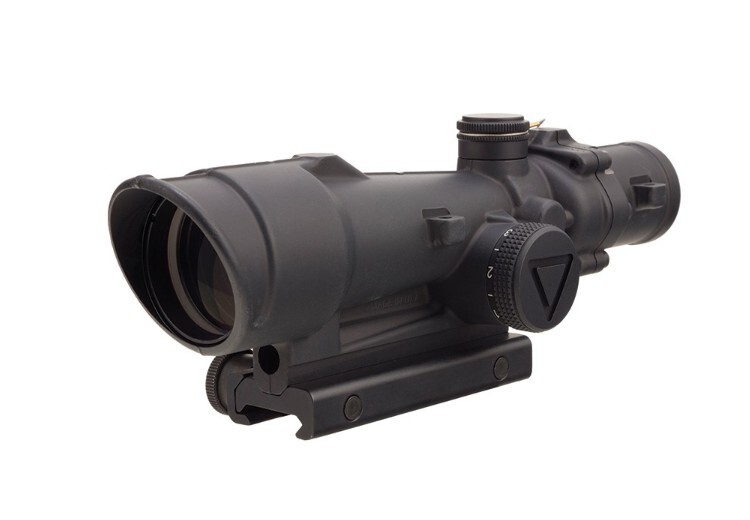
The TA110 is the premium, modernized take on the ACOG formula. It keeps the fixed-power concept but adds LED illumination on a single AA battery. That gives you something most ACOGs skip entirely: user control over brightness. The battery life is rated beyond 12,000 hours on setting four, which is genuinely impressive for a battery-powered optic.
The LED system also sidesteps the tritium fade issue that affects older models over time. Eye relief sits at about 2.4 inches, which is more comfortable than the TA31. If your budget allows and you want the most current version of the ACOG concept, the TA110 is a serious option for duty-style builds.
Price: Typically $1,600 to $1,900 depending on configuration
Specs
- Magnification: 3.5x
- Objective lens: 35mm
- Illumination: LED
- Battery type: AA
- Eye relief: About 2.4 inches
- Weight: About 20.8 oz
- Battery life: 12,000+ hours on setting four
Features
- User-selectable brightness settings
- Off positions between brightness levels
- Night vision compatible design
- LED system avoids tritium fade concerns
- Compatible with 3.5x35 ACOG accessories
Pros
- Much better brightness control than traditional models
- Long runtime from a common AA battery
- Premium modernized ACOG option
- Strong fit for serious duty use
Cons
- Expensive
- Still a fixed-power optic
- Not the lightest ACOG choice
4. Trijicon TA648 6x48mm ACOG
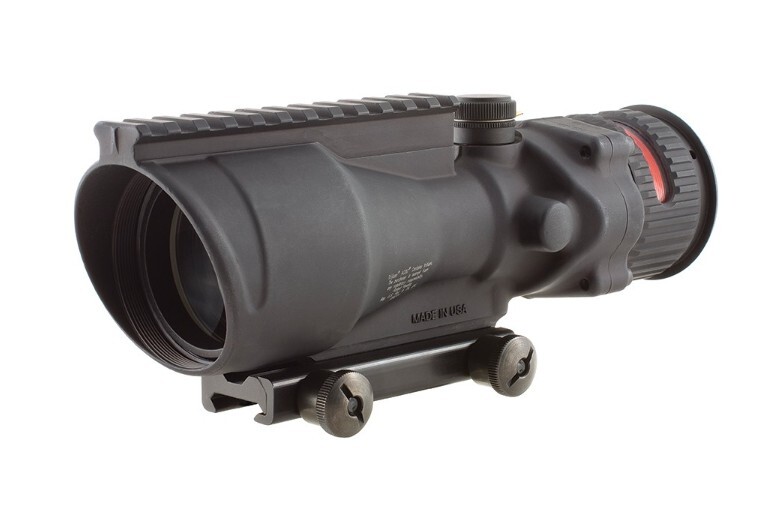
The TA648 is a big, heavy, high-magnification optic. It weighs about 36.9 oz and runs about 9 inches long. That bulk is the direct trade-off for 6x magnification inside a combat-grade ACOG housing. If you want the most reach in this entire lineup, this is where you look.
The fiber optic and tritium illumination runs without a battery. The housing is exactly what you'd expect from Trijicon at this price point. This isn't a quick-handling optic. It's a stable, reach-focused piece of glass for buyers who want more magnification and can accept the weight to get it. The price is steep, but the build quality is genuinely hard to argue with.
Price: Typically $2,200 to $2,800 depending on reticle and availability
Specs
- Magnification: 6x
- Objective lens: 48mm
- Illumination: Fiber optic + tritium
- Eye relief: About 2.7 inches
- Weight: About 36.9 oz
- Length: About 9 inches
Features
- High magnification for longer-distance work
- Extremely rugged housing
- BAC-capable design
- Large rail space relative to smaller ACOGs
- Built for hard use and larger rifle roles
Pros
- Most magnification in this list
- Very rugged and confidence-inspiring build
- Good fit for those who want more reach from an ACOG
- Stable shooting feel on the rifle
Cons
- Very heavy
- Very expensive
- Not ideal for lighter carbines or fast handling
5. Trijicon TA02 4x32 ACOG
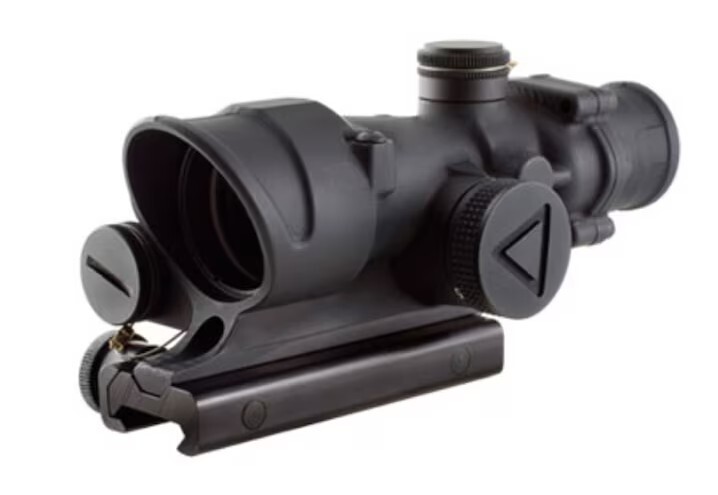
Think of the TA02 as the TA31 with a better illumination system. It keeps the familiar 4x32 size and feel but swaps the fiber optic and tritium combo for a single AA battery-powered LED. That change solves a real problem. Traditional dual-illumination can give you a reticle that's too bright outside or too dim inside a structure. The TA02 lets you set it exactly where you want it.
The brightness system also places an off position between each level, which is a genuinely smart feature that most optics don't bother with. It was the first ACOG to offer user-selectable brightness levels, and it still handles the job cleanly today. If you want 4x in an ACOG body with better light control, the TA02 is the easy recommendation.
Price: Typically $1,300 to $1,500 depending on configuration
Specs
- Magnification: 4x
- Objective lens: 32mm
- Illumination: LED
- Battery type: AA
- Eye relief: About 1.5 inches
- Weight: About 18.1 oz
- Battery life: 12,000+ hours on setting four
Features
- Classic 4x32 ACOG size and feel
- User-selectable brightness settings
- Off positions between brightness levels
- Reticle options for .223 and 5.56 setups
- RMR-style top mounting option
Pros
- Better control in changing light conditions
- Keeps the familiar 4x32 ACOG format
- Strong fit for general-purpose carbines
- Avoids fiber-optic bloom issues
Cons
- Still has short eye relief
- More expensive than many buyers expect
- Less set-and-forget than battery-free ACOGs
6. Trijicon TA44-C 1.5x16mm ACOG
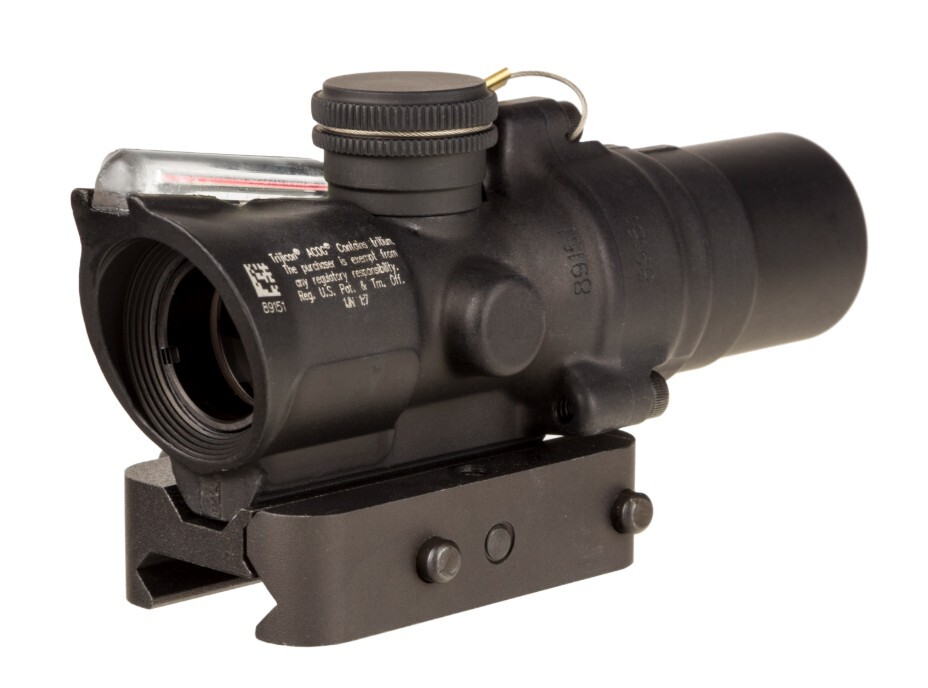
The TA44-C is the most specialized pick in this roundup. At 1.5x magnification and just 4.9 oz, it's the smallest and lightest ACOG available. It lands in an odd spot between a red dot and a magnified scope, and that in-between nature is both its appeal and its clear limitation.
The concept is close-range speed inside a rugged ACOG package. The green illuminated reticle is bright and clear. But the eye relief requirements still apply here, and that slows down target acquisition compared to a true red dot. Trijicon markets it for CQB teams and competition use, but most buyers will get better results from a dedicated red dot at this magnification level. Cool concept. Niche application.
Price: Typically $1,000 to $1,200 depending on reticle and mount configuration
Specs
- Magnification: 1.5x
- Objective lens: 16mm
- Illumination: Fiber optic + tritium
- Eye relief: About 2.4 inches
- Weight: About 4.9 oz
Features
- Very compact ACOG body
- Low magnification for quick engagement
- Bright illuminated reticle
- Q-LOC mount options on some models
- Fixed-power simplicity in a tiny package
Pros
- Extremely compact and light
- Fast concept for close-range use
- Retains rugged ACOG construction
- Interesting alternative to full-size ACOGs
Cons
- Not a true replacement for a red dot
- More specialized than most buyers need
- Eye relief still affects usability
7. Trijicon TA11F 3.5x35mm ACOG
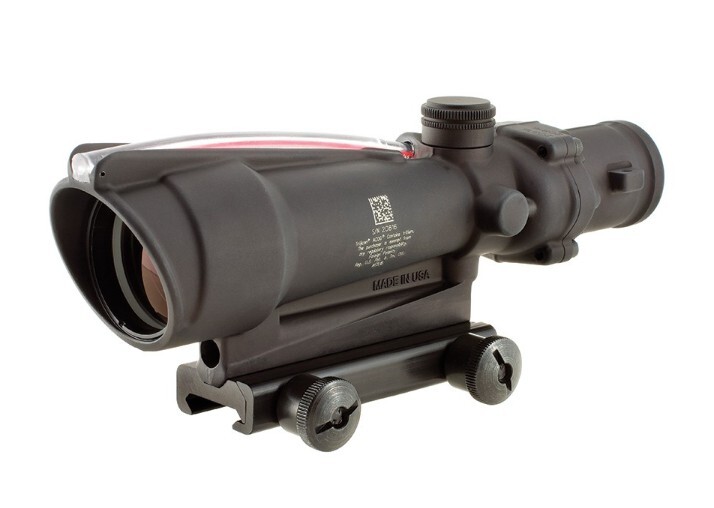
The TA11F holds a balanced spot in the ACOG lineup without trying to be the headline option. The 3.5x magnification is a small step down from 4x, but most buyers will not notice much difference in practical field use. The longer fiber optic channel helps gather more ambient light, which can improve daytime reticle visibility depending on conditions.
The BDC reticle is tuned for M193-style 5.56 loads in the appropriate configuration. Dual illumination handles both day and low-light use without a battery. It is not the most distinctive model on this list, but it remains a solid, dependable option and a strong alternative if you want more eye relief than the TA31.
Price: Typically $1,200 to $1,500 depending on reticle and configuration
Specs
- Magnification: 3.5x
- Objective lens: 35mm
- Illumination: Fiber optic + tritium
- Eye relief: About 2.4 inches
- Weight: About 14 oz
- Length: About 8 inches
Features
- Mid-power magnification for general rifle use
- Dual-illumination reticle system
- BDC reticle for 5.56 and .223 variants
- Durable compact design
- Classic ACOG feel in a 3.5x format
Pros
- Balanced magnification
- Strong everyday ACOG usability
- Field-oriented design
- Good alternative to the TA31
Cons
- Less distinctive than other models in this list
- Still expensive
- Eye relief isn't its main strength
Which ACOG Scope Is Best for Your Needs?
Best ACOG for Most Buyers
The TA31 is the default answer for most buyers. It offers the classic ACOG format, a proven field record, practical reticle options, and a price that is still easier to justify than the more specialized premium models. If you do not have a specific reason to choose another ACOG, this is the logical place to start.
Best ACOG if You Want Adjustable Brightness
The TA02 is the first pick for battery-powered brightness control at the 4x32 size. The TA110 steps it up with better eye relief, longer battery life, and a more premium overall build. Your budget and your rifle's role will guide the final call.
Best ACOG for Better Eye Relief
The TA33 is the clear choice here. The more forgiving head position makes a real difference in consistency and comfort, especially for buyers who found traditional ACOG eye relief too tight.
Best ACOG for Longer-Range Shooting
The TA648 is the only 6x option in this list. Be prepared for the weight though. At nearly 37 oz, it changes how the rifle feels and handles. If you need the reach and can accept the bulk, it delivers.
Best Compact ACOG
The TA44-C is the smallest and lightest option in this roundup. It's also the most specialized. Most buyers will be better served by something else, but if you have a specific close-range role in mind and you want ACOG-level toughness in a tiny package, it has a place.
ACOG Reticles, BDCs, and Why They Matter
A BDC reticle, or bullet drop compensator, gives you preset aiming points for different distances. Instead of doing math in the field, you line up the matching holdover mark and put the shot on target. It's a simple concept that works very well when the reticle actually matches your setup.
The key point here is that ACOG reticles are tuned for specific ammo types, barrel lengths, and ballistic paths. A reticle built for a 20-inch M16A4 barrel with M855 won't behave the same way on a 16-inch carbine with M193. Getting the right model for your rifle directly affects how the BDC system performs at distance. Many ACOG reticles also include built-in rangefinder marks sized to match an average adult's shoulder width at specific distances. It's a rough field tool, but a practical one that doesn't require anything extra to use.
Can You Use an ACOG Up Close?
This is one of the most common questions about ACOGs, and the answer is yes with the right approach. The Bindon Aiming Concept, or BAC, was developed by Trijicon founder Glyn Bindon. It lets you shoot with both eyes open through the optic. Your dominant eye looks through the scope. Your non-dominant eye takes in the wider field of view. The brain combines both images and places the illuminated reticle over the target, similar to how a red dot feels. It takes practice to get right, but experienced ACOG users report it works well at close range. Not every ACOG reticle is BAC-compatible, so check the specs before you buy.
If you'd rather not rely on technique alone, a mounted RMR on top of the ACOG gives you a true backup red dot for fast close-range work without lifting your head off the stock.
ACOG Eye Relief, Weight, and Other Trade-Offs
Eye relief is the most common practical complaint across the ACOG lineup. Most models sit around 1.5 to 2.4 inches. That's shorter than many LPVOs, and the learning curve to position your head correctly every time can be real and frustrating.
Fiber optic and tritium illumination is simple and battery-free, but it self-regulates based on ambient light. In very bright conditions, the reticle can bloom brighter than comfortable. Aim into a darker area from a bright spot and the reticle stays too bright to see a target inside that shadow clearly. Battery-powered models solve this problem at the cost of battery dependency. Tritium also has a finite lifespan. It fades over years of use. The LED-based models avoid this concern entirely, but they add cost and weight.
Weight is the other big factor. The TA648 and TA110 both push well beyond 20 oz. The TA648 nearly doubles that number. Fixed magnification is also a real limitation if your needs shift between distances.
Should You Add an RMR to an ACOG?
Some ACOG setups accept a Trijicon RMR on top via a simple mounting plate. The idea is practical and smart. Keep the ACOG for distance work. Use the RMR for fast, close-range shots. The Trijicon RMR is widely considered the most robust mini red dot on the market, which makes it a strong pairing with the equally tough ACOG housing.
The trade-offs are real though. Adding an RMR raises the overall optic stack height, adds weight, and adds cost to an already expensive setup. If budget and weight are tight, skip it. If you operate in environments where both close-range speed and medium-distance accuracy matter, the setup genuinely earns its place.
Are ACOG Scopes Still Worth It?
Yes. The ACOG still makes a strong case for any buyer who wants rugged, simple, and dependable glass on a working rifle. The fixed-power format keeps things clean and uncomplicated. The battery-free illumination options remove one more thing to manage under pressure. And the service track record across military and law enforcement use speaks louder than any spec sheet ever could.
They won't work for every buyer. If you need variable magnification or pure red-dot speed, an ACOG isn't the right tool for that job. But if you want an optic that's been stressed, dropped, soaked, and frozen and still holds zero afterward, the ACOG line earns its place every single time.
Final Verdict: The Best ACOG Scopes for Hard Use
The TA31 remains the go-to choice for most buyers. It delivers the classic ACOG format with a proven track record and a practical reticle. For better brightness control, the TA02 or TA110 step in cleanly. For better eye relief, go with the TA33. For more reach at the cost of weight and price, the TA648 is the answer.
Compare the best ACOG scopes by reticle, eye relief, illumination style, and rifle role before you choose the right Trijicon optic for your setup.
The ACOG remains a top-tier optic for durability and mid-range performance, but it’s not a one-size-fits-all solution. If you’re not completely sold on it, take a look at Top AR-15 Optics for Every Shooter: From Red Dots and Magnifiers to LPVOs to compare other options that may better fit your needs.

PMC X-tac 5.56x45mm 55 Grain FMJ 20 Round Box
$15.00
at Pro Armory
Prices accurate at time of writing
Frequently Asked questions (FAQ)
What is the best ACOG scope overall?
The TA31 is the classic all-around choice for most buyers. It's the benchmark model that the entire lineup gets measured against.
Which ACOG scope has the best eye relief?
The TA33 is one of the strongest options if eye relief is a priority, with about 1.9 inches of clearance in a compact, lighter package.
What is the best battery-powered ACOG?
The TA02 and TA110 are the strongest battery-powered choices. The TA02 keeps the familiar 4x32 size. The TA110 adds better eye relief and a more premium build overall.
Are ACOG scopes good for AR-15 rifles?
Yes, especially when the reticle and ballistic setup match the rifle's barrel length and ammo type. Matching the model to your actual build matters a lot here.
Can you use an ACOG for close-range shooting?
Yes, with practice using the Bindon Aiming Concept. Many buyers also add an RMR backup on top for faster close-range work without technique adjustment.
What is the downside of an ACOG scope?
The biggest drawbacks are short eye relief on many models, fixed magnification, illumination quirks in certain lighting conditions, and high price across the full lineup.
Is the TA31 still worth buying today?
Yes. If you want the classic rugged ACOG setup with a proven reticle and a long field record, the TA31 delivers exactly that.
About the Author
This article was written by the Pro Armory writing team based on current product research, manufacturer specifications, and industry knowledge surrounding Trijicon ACOG optics, reticle options, and common rifle applications.
Disclaimer: The information in this article is for educational and reference purposes only. Always follow all local, state, and federal laws regarding firearm ownership, use, and optic selection. Use all equipment responsibly and in accordance with manufacturer guidelines.

Best Ammo Deals, Training, & Accessories
Subscribe to ProArmory sales and deals email.