 Pro Armory Editorial Team
Quick Answer
The best .300 Win Mag rifles combine power, reach, and hunting-ready accuracy. The right pick depends on weight, recoil control, terrain, and budget. Lightweight rifles help in steep country, heavier rifles tame recoil better, and precision-focused models shine at distance. This guide covers seven strong options for big game hunters and long-range precision buyers, plus what makes .300 Win Mag such a proven all-around magnum.
Key Takeaways
- .300 Win Mag remains one of the most capable big game cartridges available.
- The best rifle depends on your hunting style, distance, and recoil tolerance.
- Lightweight rifles carry easier, but heavier rifles usually shoot softer.
- Budget, premium, and precision picks each serve different buyers.
- .300 Win Mag offers more speed and energy than .308 at longer range.
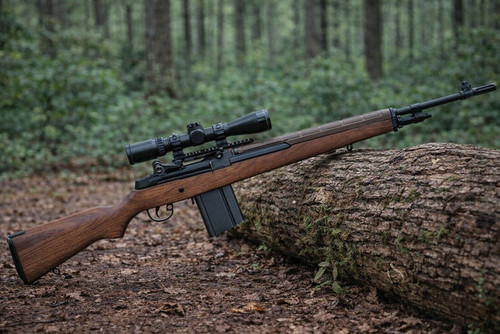
Picture glassing a far ridge before sunrise. Cold air, elk tracks, and a shot opening up at 400 yards. That is not the moment to second-guess your cartridge. The .300 Winchester Magnum has built its reputation in exactly these situations. It hits hard, carries energy well past the distances where many cartridges start to fade, and fits into a standard long-action rifle without requiring a specialty platform.
The .300 Win Mag has served hunters and long-range precision buyers since the late 1960s. It was designed to cover the full range of North American big game in one cartridge. It does that job well. This article focuses on rifles only. Ammo gets its own guide. Here you will find seven picks covering lightweight mountain builds, budget options, premium hunting rifles, and precision platforms. Each rifle fits a different buyer type, and that is exactly the point.
Why .300 Win Mag Still Matters
The .300 Win Mag was built to fill a real gap. Hunters needed a cartridge strong enough for elk and moose, accurate enough for longer shots in open country, and compact enough to fit into a standard long-action rifle. It delivered all three, and that combination has kept it in strong demand for more than 50 years.
At 500 yards, a typical 180-grain .300 Win Mag load still carries significantly more velocity and energy than common .308 Winchester loads. Depending on the specific ammunition, it can retain roughly 2,000 feet per second of velocity and around 1,800 to 2,200 foot-pounds of energy at that distance.
By comparison, a .308 Winchester firing a 168 to 175-grain bullet will typically fall closer to 1,700 to 1,900 feet per second and around 1,100 to 1,400 foot-pounds of energy at the same range. That performance gap is the reason .300 Win Mag remains a go-to choice for hunters who need more reach and terminal energy on larger game. The tradeoff is increased recoil, which is something buyers should plan for.
What to Look For Before You Buy
Rifle Weight and Carry Comfort
Lighter rifles are easier to carry in steep terrain, but they deliver more felt recoil. Heavier rifles absorb more recoil and often shoot more comfortably over a long day. Know your terrain and hunting style before you decide.
Barrel Length and Velocity
Longer barrels generally help magnum cartridges reach better velocity. Most .300 Win Mag builds use 24 to 26-inch barrels. Shorter barrels can be handier in the field, but velocity takes a small hit in exchange.
Recoil Management
Recoil matters more with .300 Win Mag than with smaller hunting rounds. Stock design, rifle weight, recoil pads, muzzle brakes, and suppressor-ready threading all affect how comfortable the rifle feels over a long shooting session.
Intended Role
Mountain hunting, general big game use, budget hunting, long-range crossover, or premium precision work each call for a different kind of rifle. Get clear on your role first. It narrows the list fast.
Accuracy Expectations
Most hunters look for around 1 MOA performance from a quality rifle and load. Precision-focused builds often promise sub MOA results. Field accuracy and bench accuracy differ, so know what kind of shooting you will do most before buying.
Price and Value
Budget rifles can still be solid hunting tools. Premium rifles usually offer lighter weight, better fit and finish, and stronger accuracy features. The right choice depends on your budget and how often you hunt.
Quick List: The 7 Best .300 Win Mag Rifles
- Best Overall: Christensen Arms Ridgeline
- Best Budget Hunting Rifle: Mossberg Patriot
- Best High-End Precision Rifle: Barrett MRAD
- Best Hunting and Precision Crossover: Bergara B-14 Wilderness HMR
- Best Premium Hunting Rifle: Browning X-Bolt 2 Speed
- Best Lightweight Mountain Rifle: Savage 110 Ultralite Pro
- Best Rugged Field Rifle: Ruger Hawkeye FTW Hunter
The 7 Best .300 Win Mag Rifles
Browning X-Bolt 2 Speed
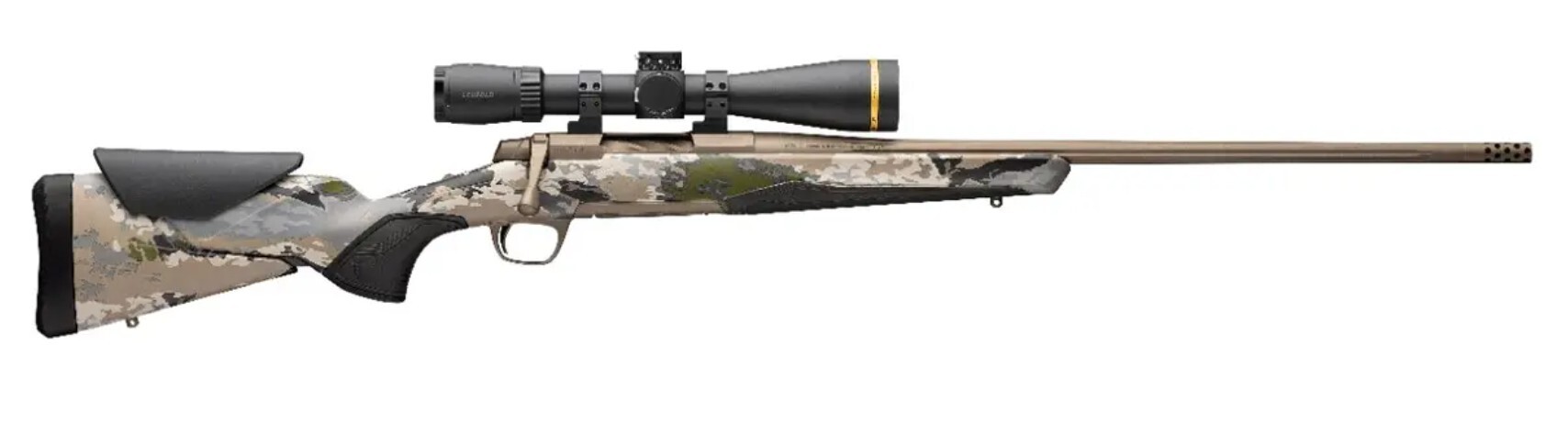
The Browning X-Bolt 2 Speed is a strong fit for hunters who want a premium .300 Win Mag rifle that still feels field ready rather than bench heavy. Compared with basic bolt guns, it offers a more refined action, cleaner fit and finish, and a noticeably smoother overall feel. Browning lists the .300 Win Mag X-Bolt 2 Speed with a 26-inch barrel, 7 pounds 2 ounces of weight, and a 3-round magazine. That profile works well for big game hunting and shots out to longer distances in open terrain.
The 60-degree bolt lift is one of the features that separates it from older designs. It gives you better scope clearance without forcing a grip change between shots. Hunters who want a rifle that feels built to a higher standard will appreciate what the X-Bolt 2 brings. The price reflects its premium positioning, but for those who want a refined hunting rifle without jumping to a full chassis setup, it earns its spot on this list.
Price: Typically $1,500 to $1,700 depending on configuration and availability
Specs:
- Chambering: .300 Win Mag
- Barrel length: 26 inches
- Weight: 7 lbs 2 oz
- Magazine capacity: 3 rounds
- Twist rate: 1:10
Features:
- Premium hunting bolt action design
- Smoother bolt operation than earlier X-Bolt generations
- 60-degree bolt lift for better scope clearance
- Built for modern handling without heavy chassis rifle weight
Pros:
- Premium fit and finish
- Good balance of carry comfort and capability
- Strong all-around hunting option
- More refined feel than budget rifles
Cons:
- Costs much more than entry-level rifles
- Not as specialized for long-range precision as heavier rifles
- Lighter weight can make recoil feel sharper in .300 Win Mag
Bergara B-14 Wilderness HMR
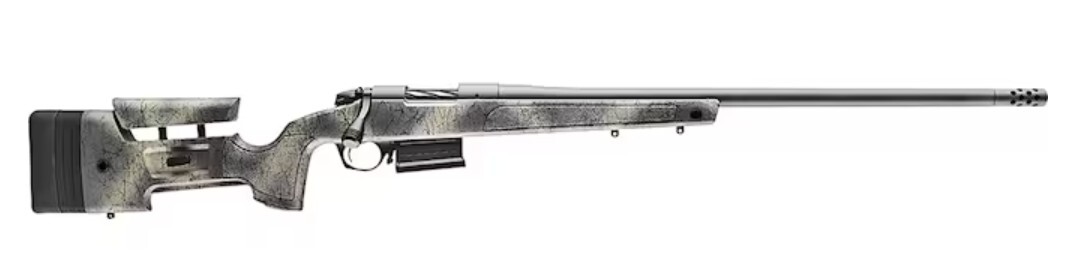
The Bergara B-14 Wilderness HMR is the crossover pick in this lineup. It works well for hunters who also spend time at longer distances and want a rifle that feels more stable than a lightweight sporter. This model gives the list a more range-friendly option without going fully into the heavy precision category. Bergara lists the .300 Win Mag Wilderness HMR with a 26-inch barrel, 9.9 pounds, a 1:10 twist, and a 5-round AICS-style detachable magazine.
That weight is not ideal for long mountain carry days, but it pays off in steadier field positions and better recoil control during longer sessions. The AICS detachable magazine adds practical convenience for hunters who want faster reloading without fumbling for individual rounds. For someone who splits time between the range and the field, this rifle fills that middle ground well and does so without demanding the full premium price of a dedicated precision build.
Price: Typically $1,300 to $1,500 depending on configuration
Specs:
- Chambering: .300 Win Mag
- Barrel length: 26 inches
- Weight: 9.9 lbs
- Twist rate: 1:10
- Magazine: 5-round AICS detachable
Features:
- Precision-leaning hunting rifle design
- Mini-chassis support system
- AICS detachable magazine
- Heavier build for steadier positions and better recoil control
Pros:
- Good crossover for hunting and long-range practice
- More stable than lightweight mountain rifles
- Added weight helps manage recoil
- Detachable magazine adds reload convenience
Cons:
- Heavy for steep terrain and long carry days
- Less ideal for minimalist backcountry hunts
- More expensive than entry-level options
Mossberg Patriot
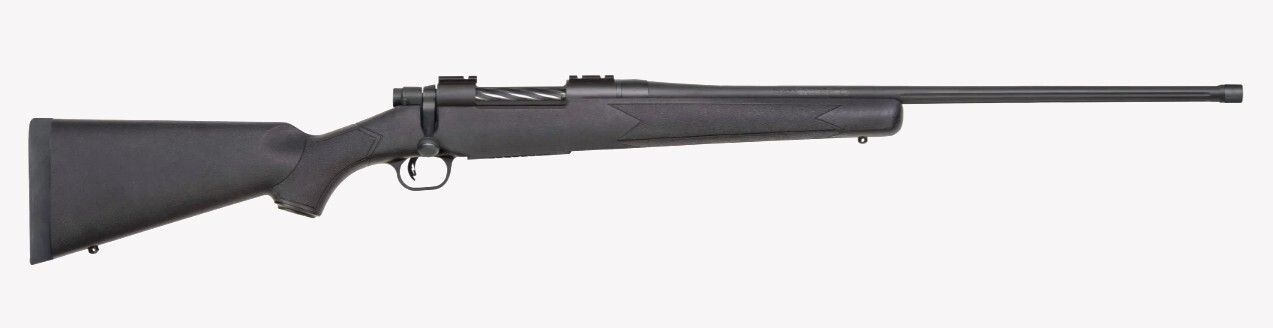
The Mossberg Patriot fills the budget role in this roundup. It remains one of the more accessible ways to step into .300 Win Mag without overthinking the buy. Mossberg lists .300 Win Mag Patriot variants in different configurations, including a 20-inch Carbine and 24-inch models, so treat this as a value-focused family rather than one fixed spec. It is a practical, no-frills hunting rifle that does the job without a premium price tag attached.
For hunters who want function over refinement, the Patriot covers the basics cleanly. It won't impress anyone with its finish, but it can put shots on big game at reasonable field distances without hitting your wallet hard. That is exactly what a budget hunting rifle should do, and the Patriot does it consistently across the variants in this line.
Price: Typically $450 to $650 for base models, with scoped packages running higher depending on configuration
Specs:
- Chambering: .300 Win Mag
- Barrel length: 20 or 24 inches, depending on variant
- Capacity: 3+1
- Bolt action hunting rifle platform
Features:
- Affordable entry into .300 Win Mag
- Straightforward hunting-first design
- Available in multiple Patriot variants
- Practical choice for function-focused buyers
Pros:
- Very affordable compared with premium rifles
- Good entry point for big game hunters
- Simple and practical
- Gets the job done in the field
Cons:
- Less refined than premium rifles
- Basic feature set throughout
- Not well suited for dedicated long-range precision use
Savage 110 Ultralite Pro
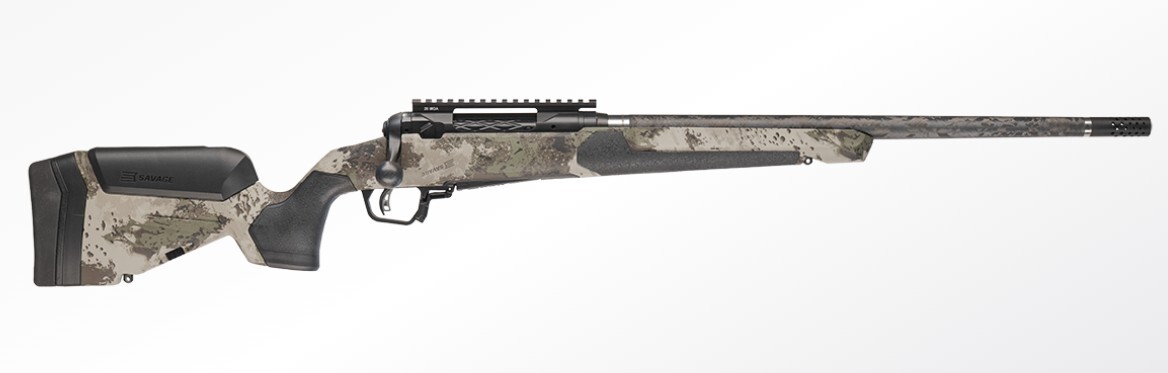
The Savage 110 Ultralite Pro is the mountain-hunting pick of this group. It is built for hunters who watch every pound on long approach hikes and steep climbs where every ounce matters. Pairing .300 Win Mag power with a genuinely lightweight platform is not easy, and the 110 Ultralite Pro takes that challenge seriously. Savage lists the .300 Win Mag version with a 20-inch barrel, 6.93 pounds of weight, and a 3-round capacity.
At under 7 pounds, this rifle carries well on all-day walks over rough terrain. Felt recoil is sharper than it would be in a heavier build, and extended bench sessions can get uncomfortable fast. But for hunters who spend more time on their feet than behind a bipod, the weight savings are a genuine advantage in the field. The 110 Ultralite Pro keeps magnum capability without turning into a burden on the way to your glassing spot.
Price: Typically $1,500 to $1,800 depending on configuration
Specs:
- Chambering: .300 Win Mag
- Barrel length: 20 inches
- Weight: 6.93 lbs
- Capacity: 3 rounds
Features:
- Backcountry-focused lightweight design
- Built to cut carry weight in rough terrain
- Better suited to mobile hunting than prolonged bench sessions
Pros:
- Excellent for mountain and backcountry hunting
- Easier to carry than heavier .300 Win Mag rifles
- Keeps magnum capability in a lighter package
Cons:
- Felt recoil can be sharp
- Less comfortable for extended range sessions
- Not ideal for buyers who want maximum bench stability
Christensen Arms Ridgeline
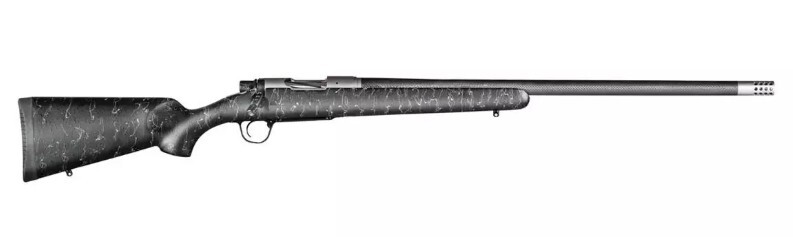
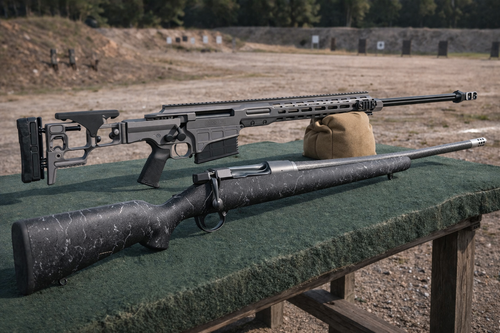
The Christensen Arms Ridgeline is the balanced premium hunting pick in this lineup. It carries a carbon-fiber-wrapped barrel, a TriggerTech trigger, and a sub MOA accuracy guarantee. Christensen lists the Ridgeline with a threaded barrel design and a premium composite stock built to handle rough-country conditions well. At around 6.75 pounds, it sits in a strong spot between ultralight mountain builds and heavier precision rifles.
The carbon-fiber barrel keeps the weight down without sacrificing the accuracy performance buyers expect at this price level. The sub MOA guarantee backs up the accuracy claim with something concrete rather than a vague promise. For hunters who want a rifle that performs at distance and won't drag them down on a steep approach, the Ridgeline is a strong answer in .300 Win Mag. It represents the kind of premium build that justifies the price for serious big game hunters.
Price: Typically $1,800 to $2,200 depending on configuration and finish
Specs:
- Chambering: .300 Win Mag
- Barrel length: commonly 26 inches on .300 Win Mag listings
- Sub MOA accuracy guarantee
- Premium composite stock system
- Threaded barrel design
Features:
- Carbon-fiber-wrapped barrel
- TriggerTech trigger
- Premium hunting-first build
- Weight savings with strong accuracy potential
Pros:
- Excellent blend of light weight and premium features
- Sub MOA accuracy guarantee
- Good fit for rough-country hunting
- More refined than mainstream sporters
Cons:
- Expensive compared with entry-level rifles
- Lightweight .300 Win Mag builds still recoil firmly
- Not the cheapest route into a capable hunting rifle
Ruger Hawkeye FTW Hunter

The Ruger Hawkeye FTW Hunter is the rugged field rifle of this lineup. It brings a traditional big-game-rifle feel with useful long-range touches that keep it relevant in a modern .300 Win Mag context. Ruger lists the .300 Win Mag FTW Hunter with a 24-inch barrel, 8.1 pounds, a 3-round capacity, a 1:10 twist, and 5/8x24 threading. The H-S Precision stock with an aluminum bedding block sets it apart from basic sporters right out of the box.
The 20 MOA Picatinny rail is ready for precision optics straight from the factory. The Ruger Muzzle Brake System takes a meaningful edge off felt recoil, which matters a lot with .300 Win Mag over a full day of field use. This rifle is built for hunters who want something tough, capable, and ready for hard terrain. It leans on a traditional controlled-round-feed action design that has earned trust in big game circles for a long time.
Price: Typically $1,700 to $1,900 depending on configuration
Specs:
- Chambering: .300 Win Mag
- Barrel length: 24 inches
- Weight: 8.1 lbs
- Capacity: 3 rounds
- Thread pattern: 5/8x24
- Twist rate: 1:10 RH
Features:
- Controlled-round-feed action design
- 20 MOA Picatinny rail
- Ruger Muzzle Brake System
- H-S Precision stock with aluminum bedding block
Pros:
- Rugged and field-oriented build
- Muzzle brake helps manage recoil well
- Good mix of traditional toughness and modern features
- Strong choice for hunters who prioritize field durability
Cons:
- Heavier than mountain-focused rifles
- Expensive compared with standard hunting options
- Less carry-friendly than ultralight builds
Barrett MRAD

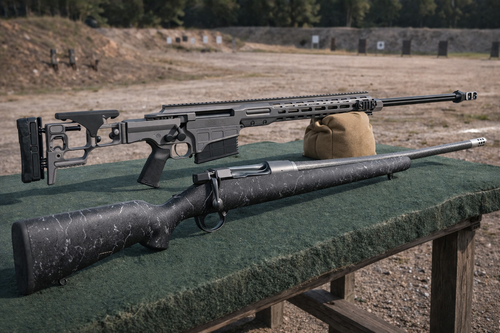
The Barrett MRAD is the precision specialist of this list. It sits at the top end of the pricing ladder and is clearly aimed at buyers who want elite long-range performance rather than a conventional hunting setup. Barrett built the MRAD as a modular precision platform that supports .300 Win Mag alongside other calibers. Accuracy from this platform with quality match-grade loads can reach less than half MOA, which puts it in a different category from every other rifle on this list.
The MRAD is overbuilt for most hunting situations. It is heavy and expensive. It thrives at precision shooting events and long-range sessions rather than in the backcountry on a pack-in elk hunt. Buyers who want the top-end long-range hardware in .300 Win Mag will find the MRAD delivers without compromise. Just know what you are buying it for before committing to that price point.
Price: Typically $5,500 to $7,000+ depending on configuration, barrel kits, and accessories
Specs:
- Chambering: .300 Win Mag supported in the MRAD platform
- Modular precision-rifle system
- Configuration and dimensions vary by build
- Heavy platform designed around precision use
Features:
- Modular multi-caliber platform
- Precision-focused chassis design
- Built for long-range and match use
Pros:
- Outstanding long-range capability
- Sub-half-MOA accuracy potential
- Modular design allows caliber swaps
- Top-tier hardware for serious precision buyers
Cons:
- Expensive for most hunters
- Heavy for field carry
- Overbuilt for general hunting use
Side-by-Side Comparison
| Rifle | Best For | Strength | Trade-Off | Price Tier |
|---|---|---|---|---|
| Christensen Arms Ridgeline | All-around premium hunting | Lightweight with sub-MOA guarantee | High cost | Premium |
| Mossberg Patriot | Budget big game hunting | Affordable entry point | Basic feature set | Budget |
| Barrett MRAD | Precision long-range shooting | Sub-half-MOA accuracy potential | Heavy and very expensive | High-End |
| Bergara B-14 Wilderness HMR | Hunting and range crossover | Stable platform with detachable magazine | Heavier to carry in the field | Mid-to-Premium |
| Browning X-Bolt 2 Speed | Refined premium hunting | Excellent balance and finish | Higher cost | Premium |
| Savage 110 Ultralite Pro | Mountain and backcountry hunting | Extremely lightweight carry | Sharper felt recoil | Premium |
| Ruger Hawkeye FTW Hunter | Rugged field use | Durable build with included muzzle brake | Heavier and more expensive | Premium |
How .300 Win Mag Compares to .308 Win and .30-06
The .300 Win Mag outperforms the .308 Winchester at longer ranges in a clear and consistent way. With typical hunting loads, it maintains higher velocity, flatter trajectory, and significantly more retained energy past 300 to 500 yards. The exact numbers vary depending on bullet weight, barrel length, and load selection, but the performance gap becomes more noticeable as distance increases.
The .30-06 still handles most North American hunting situations effectively and remains a versatile option. However, when the goal is more reach on larger game or consistent performance beyond 400 yards, the .300 Win Mag provides a measurable step up in both energy and trajectory.
That added performance comes with increased recoil. In rifles of similar weight, the .300 Win Mag produces noticeably more recoil than both .308 Winchester and .30-06. That is a real tradeoff and something buyers should factor into rifle weight, recoil management, and overall shooting comfort.
Where .300 Win Mag Shines Most in the Field
Elk, Moose, and Larger Big Game
The .300 Win Mag was designed for exactly this. Its energy at distance and wide range of bullet weights make it one of the most trusted cartridges for elk, moose, and other large North American animals. It carries enough energy at range to cleanly take large game without running into the limits that smaller cartridges can hit at longer distances.
Open-Country Hunting
Long shots happen in open terrain. When shots stretch past 300 or 400 yards in western hunting situations, the .300 Win Mag's flatter trajectory and high retained energy give hunters a real advantage over what smaller cartridges can offer at those distances.
Long-Range Practice and Precision Use
The cartridge has built a strong following in long-range precision circles. Its accuracy potential and ability to reach 1,000 yards with quality loads have made it a go-to factory choice for precision buyers who want to push past the limits of smaller cartridges.
Situations Where It May Be More Than You Need
For deer hunting at close to moderate range, the .300 Win Mag is often more than necessary. Recoil is firmer, ammo costs more, and a smaller cartridge handles deer just as cleanly. Some hunters carry it for deer anyway because they also hunt elk and want one rifle for everything. That reasoning is sound. But if deer is your only target, a smaller cartridge is usually the more practical choice.
Is .300 Win Mag Too Much for Deer?
Not technically. The .300 Win Mag takes deer cleanly with the right load and proper shot placement. A 150-grain projectile at deer-hunting distances gets the job done without question. The bigger issue is practicality. The cartridge brings more recoil, more muzzle blast, and higher ammo costs than most deer hunters need. Hunters who pursue multiple species and want one rifle that covers deer, elk, and moose often choose the .300 Win Mag for exactly that reason. That logic is solid. But if deer is your only target at typical ranges, a smaller cartridge is usually the smarter and more comfortable choice.
How We Chose These Rifles
This list was built to cover different buyer types rather than crown the same kind of rifle seven times. The selection process looked at hunting practicality, long-range potential, recoil management, rifle weight, overall feature set, price tier, brand reputation, and field-role suitability. Every rifle on this list earns its place because it does something specific better than the others for a specific kind of buyer. A budget hunter has different needs than a precision buyer. A mountain hunter needs a different tool than a plains elk hunter. The list reflects that range of real needs.
Final Verdict
- For most hunters: Christensen Arms Ridgeline
- For value-focused buyers: Mossberg Patriot
- For premium precision: Barrett MRAD
- For crossover hunting and range use: Bergara B-14 Wilderness HMR
- For refined premium hunting: Browning X-Bolt 2 Speed
- For mountain carry: Savage 110 Ultralite Pro
- For rugged field use: Ruger Hawkeye FTW Hunter
The .300 Win Mag remains one of the most serious hunting cartridges on the market. It hits hard, reaches far, and handles a wide range of big game well. The best rifle from this list comes down to how you hunt, how far you shoot, and how much recoil you are willing to manage. Get those answers sorted first, and the choice becomes much clearer.
The .300 Win Mag platform offers exceptional versatility across hunting and long-range shooting, but choosing the right rifle ultimately comes down to your primary use case. If your focus is big game hunting, read Best .300 Winchester Magnum for Hunting to compare top options.
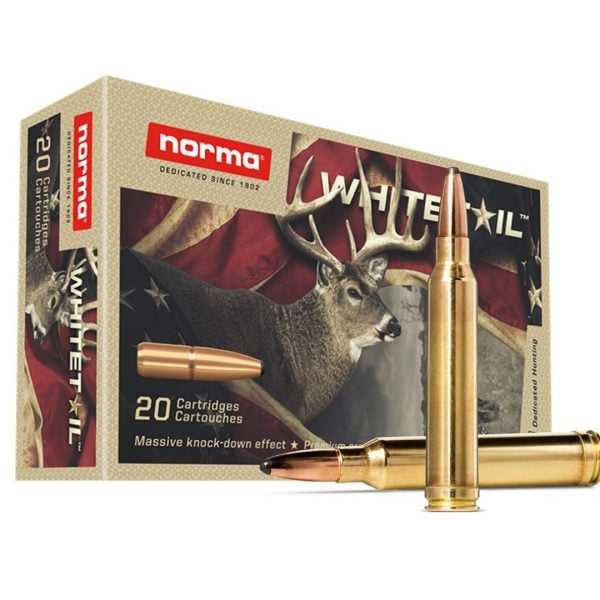
Norma Whitetail .300 Winchester Magnum 150 Grain
$45.00
at Pro Armory
Prices accurate at time of writing
Frequently Asked Questions (FAQ)
What is the best .300 Win Mag rifle for hunting?
The Christensen Arms Ridgeline is the top all-around pick. It balances light weight, premium features, and a sub MOA accuracy guarantee in a hunting-focused build.
Is .300 Win Mag good for long-range work?
Yes. The .300 Win Mag is accurate, carries energy well at distance, and has proven effective at 1,000 yards with quality match loads.
What is the best budget .300 Win Mag rifle?
The Mossberg Patriot. It delivers a practical and affordable entry into the cartridge without unnecessary extras.
Is .300 Win Mag too much for deer?
It can take deer cleanly, but it is often more cartridge than most deer hunters need. It makes more sense when one rifle needs to cover multiple species.
Which .300 Win Mag rifle has the least felt recoil?
Heavier rifles like the Ruger Hawkeye FTW Hunter and the Bergara B-14 Wilderness HMR tend to manage recoil better due to their weight. The Ruger also includes a factory muzzle brake system, which further helps reduce felt recoil.
What should I look for when buying a .300 Win Mag rifle?
Focus on rifle weight, barrel length, recoil management, intended hunting role, accuracy expectations, and budget.
Is a lightweight .300 Win Mag rifle a good idea for mountain hunting?
Yes, for carry comfort. The Savage 110 Ultralite Pro is a solid example. Just know that felt recoil increases as rifle weight drops.
How does .300 Win Mag compare to .308 for hunting?
The .300 Win Mag carries more speed and energy at long range. At 500 yards, it hits with nearly twice the energy of the .308. The tradeoff is more recoil and higher ammo cost.
About the Author
This article was written by the ProArmory writing team based on current product research, manufacturer specifications, and industry knowledge surrounding .300 Win Mag rifles, hunting applications, and long-range shooting performance.
Disclaimer: This article is for informational purposes only. Firearm laws vary by state and region. Always follow safe handling practices, read your owner's manual, and verify local regulations before purchasing or using any firearm. ProArmory assumes no liability for actions taken based on the content of this article.

Best Ammo Deals, Training, & Accessories
Subscribe to ProArmory sales and deals email.